For a campsite, buy the 2500-watt machine two owners called quieter than the generator they already had
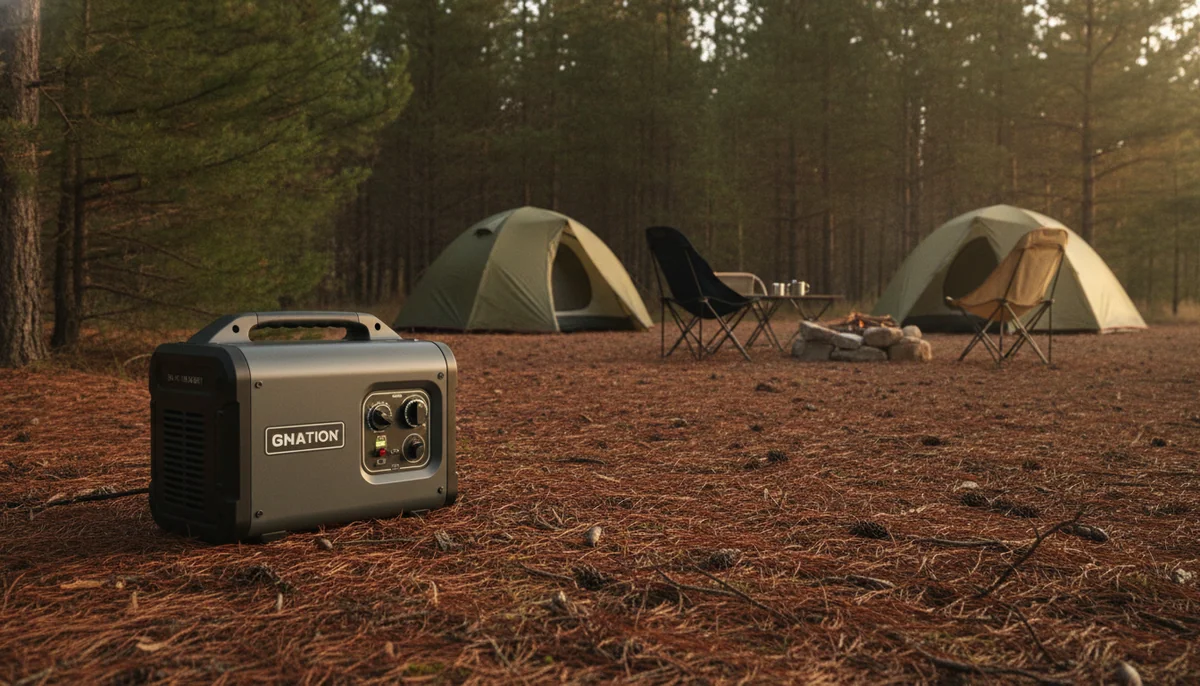
Quiet is the only thing anybody is actually shopping for in this class, and it is the one specification nobody can check. Six of the eight machines on this page are enclosed inverter generators in the 1200 to 3800 watt range, and between them they offer three decibel figures, all supplied by the brand, none of them measured by a lab, a magazine or a forum poster with a meter. Specific Load has not stood next to any of these machines with a sound level meter either, and we are not going to pretend a marketing bullet is a measurement.
So the useful question changes. Not which one is quietest on paper, but which quiet claim has anything behind it. On that test there is one winner and it is not close: the RINADURS 2800 is the only gas generator here that owners have put next to inverter generators they already owned. One said it was quieter than the 2000-watt unit already in his garage. Another said it was noticeably quieter than his Champion, and that the difference mattered both while he worked around it and during an outage. Neither of them was reading a sticker.
Everything else on this page exists because 2500 running watts is not always enough, because a tailgate is a different problem from a campsite, and because two of these are batteries that make no noise at all and cannot power the thing you were planning to plug in.
| A small gas inverter is the right answer if | It is the wrong answer if |
|---|---|
| You want a fridge, a coffee maker, a heater or a couple of tools running for hours at a time. | Your list is phones, a laptop, a fan and some lights, in which case you are buying an engine you will never load. |
| You can stand it twenty feet away on grass with the exhaust pointing at nobody. | The only place you could put it is under the canopy, in the truck bed or beside the tent door. |
| You accept a noise floor around the level of a conversation, forever, for as long as it runs. | The site enforces quiet hours all night, or bans generators outright, which a lot of the good ones do. |
| You will fuel it, oil it and load it properly within the return window. | You want to buy it now, leave it sealed, and trust it in three years. |
What a 58 dBA sticker is measured at
The industry quotes noise at 23 feet, which is seven metres, and it quotes it at a load that flatters. That is not a conspiracy, it is a convention, and it is why your driveway and the box disagree so violently. PowerSmart is the only brand on this page that publishes both ends of it: 59 dBA at 23 feet at quarter load, and 70 dBA at 23 feet at full load. Those two numbers are the same machine on the same day. Eleven decibels is not a rounding error, it is roughly the difference between somebody talking nearby and somebody vacuuming nearby, and every other maker here quotes you only the first figure or no figure at all. We have gone into what these ratings are taken at at more length elsewhere; the short version is that the sticker describes a generator loafing.
| Machine | The claim | Checked by anyone outside the brand? |
|---|---|---|
| Efurden 2800 | 58 dBA at 23 feet, load unstated | No, and nothing else about the unit has been metered either |
| Aceup Energy 1500 | 55 dBA at 23 feet, load unstated | No |
| Aceup Energy 4000 | "Super quiet" in the title, no figure in the bullets | Yes, and it lost: judged the loudest of three in the one side-by-side listening test |
| PowerSmart 3800 | 59 dBA at quarter load, 70 dBA at full load, both at 23 feet | No, but it is the only maker here that admits the second number |
| AMERISUN 4500 | No figure anywhere on the listing | No, and it is an open frame with no acoustic shell at all |
| RINADURS 2800 | No figure, only a claim that eco mode reduces noise | Yes, by ear, against two other inverter generators their owners already had |
| EcoFlow TRAIL Plus 300 | Silent, because there is no engine | Not applicable |
| DaranEner R100 | Silent, no fan of any kind | Not applicable |
Size down, because the quiet lives in the throttle
An inverter generator is quiet when its engine is allowed to be slow, which is what eco mode does and what a light load permits. Load it hard and the engine goes to full speed and stays there, and no amount of enclosure fixes that. This is the argument for buying the smallest machine that covers your list rather than the biggest one you can carry, and it runs directly against the way these products are titled, because the number on the box is always the surge figure. Buyers see through it, and one of them put it plainly on a thread about a rival 2800: the big number is there to catch your eye.
| Machine | Number in the title | Running watts | Plan on |
|---|---|---|---|
| Aceup Energy 1500 | 1,500 | 1,200 | 1,080 |
| Efurden 2800 | 2,800 | 2,000 | 1,800 |
| RINADURS 2800 | 2,800 | 2,500 | 2,250 |
| Aceup Energy 4000 | 4,000 | 3,200 | 2,880 |
| PowerSmart 3800 | 3,800 | 3,200 | 2,880 |
| AMERISUN 4500 | 4,500 | 3,800 claimed, never instrumented | 3,000 |
| EcoFlow TRAIL Plus 300 | 300 | 300, DC only, no AC outlet exists | 300 into USB-C and 12V |
| DaranEner R100 | 100 | 100 across both AC sockets | 100, for about three quarters of an hour |
Two badges reading 2800, 500 watts apart. That gap is the single most useful line in the table, and why the number on the box was never the power you get is worth ten minutes before you spend anything. For scale at the small end, somebody riding out a tornado aftermath ran a house fridge, a garage chest freezer, a door opener and a sump pump off a borrowed 2500-watt inverter. That is what the RINADURS class does. It is a real job, and it is not the whole house.
The decibels you get for free
Distance is the cheapest improvement available and nobody uses enough of it. So is the ground: the one tester who compared these small inverters side by side pointed out that grass instead of concrete or gravel makes a genuine difference at conversational range. Point the exhaust away from where people sit rather than away from your own tent, keep the load light enough that eco mode can hold the revs down, and you have done more than any purchase decision on this page will do for you.
Buy the cable to match. The most upvoted diagnosis in a long argument about a portable air conditioner that would not run off a generator was not the generator at all, it was extension cord gauge, with 16 gauge good for about five amps at three percent drop and a hundred-foot run of it under real load asking for trouble. A cheap cord is how people end up writing a one-star review about the wrong component.
The eight, and who each one is actually for
Four of these are enclosed petrol inverters small enough to carry, one is an open frame that has no business at a quiet campground and is here for a different reason, two are batteries, and one is the bigger enclosed machine you buy when 2500 watts has already failed you once. Two of them, incidentally, sit in Amazon's Power Take Off Generators category, which is a filing artefact and not a description of anything: a real PTO generator hangs off a tractor and none of these has ever been near one.
Start with the machine that shows you how the category's pricing works. Efurden's 2800 is a 40-pound enclosed carry with two household sockets, a USB-C, a USB-A and a 12V, a 1.1 gallon tank and a runtime figure hedged three ways in a single breath: up to ten hours, at 25 percent load, in eco. Twenty-five percent of 2000 watts is 500 watts, so the headline runtime describes a fridge and nothing else. Its quiet rating is the brand's own, its warranty is one year, and its engine has been sitting with factory test fuel in the carburettor since before it left the building, which the listing says out loud in a bullet and again in an FAQ.
The cautionary example: an enclosed 40-pound carry with nothing standing behind the quiet
It earns its place as the clearest illustration of what this class charges you for, because the 58 dBA figure is the only thing separating it from a bigger, cheaper open frame wearing the same badge, and that figure has never been confirmed by anyone.
The 2800 on the title is surge and the machine runs 2000 watts, which is 500 fewer than the other 2800 on this page, and the high-altitude adjustment screw that camping at elevation needs is not in the box.
The AMERISUN 4500 is the opposite proposition and it is on this page under protest. It is an open frame, meaning no acoustic shell, no sound-deadening panel and no realistic claim on a campground after dark, and the listing does not print a decibel figure because there is no flattering one to print. What it does have is the only genuine load test anybody has performed on any machine here: two portable air conditioners together, a circular saw, a 15-amp table saw, both saws at once, then a wood chipper, and it would not stumble. It is more machine than the money usually buys, and it is a lottery, because on the largest pool of owner feedback for this class of AMERISUN, two thirds gave five stars and roughly one in six gave one. Our full review of it works through the failure pattern month by month.
The jobsite and driveway machine, wrong for a tent and honest about it
The one person who ever put a real load on one fed it two air conditioners, two saws simultaneously and a wood chipper without upsetting it, which is a competent 120V inverter generator at a price that is not really competing with anything.
It is an open frame with no acoustic enclosure at all, and on the biggest owner pool for this machine class roughly one buyer in six gave it a single star, with the failures clustering in the first days or the first three months.
Aceup's 4000 is the one to want if you like knowing what your generator is doing. The panel reports volts, hertz, amps, load percentage, engine RPM, fuel level, running hours and lifetime hours, alongside two household sockets, a genuine 30-amp RV receptacle, a 12V socket and parallel posts. Owners at a year and at eighteen months both report first or second pull starting, and one rode out three days of outage with a fridge, a deep freezer and phone charging on it. Two things spoil it. Its fuel tank has collapsed inward on owners who closed the cap vent with petrol still inside and let the temperature drop, a failure the manual never warns about, and the one tester who set it against a Pulsar and a Wen at 23 feet across the load range called it the loudest of the three and higher pitched. The pitch complaint is corroborated from a second direction, since a soundproofing channel metering an Aceup sibling against a Honda found the same character even where the raw numbers were close. Pitch is what carries across a campsite, more than volume does. The long version is here.
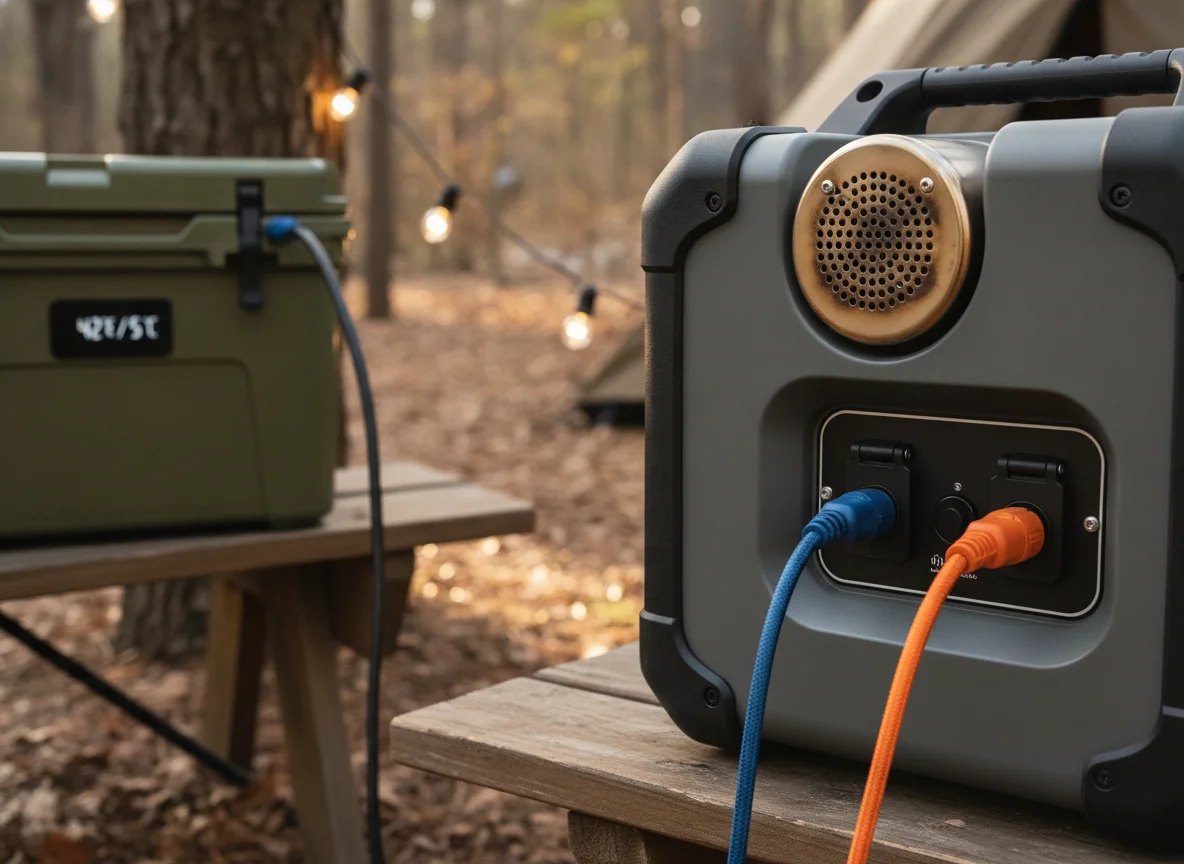
The instrument panel pick, for someone who would rather watch the load than guess at it
Volts, hertz, amps, load percentage, RPM, fuel and lifetime hours on one screen, plus a real 30-amp receptacle and unusually consistent first-pull starting past the one-year mark, is a great deal of generator for what it asks.
It was the loudest and most high pitched of the three machines in the only side-by-side listening test anyone has run, and its fuel tank can suck itself flat overnight if you close the cap vent with petrol in it, which is exactly what the brand's own shutdown routine tells you to do.
Which brings us back to the RINADURS. On paper it is unremarkable: a 122cc engine, 2800 peak and 2500 running, under three percent distortion, a 1.5 gallon tank, 45.6 pounds, two household sockets plus USB-A, USB-C and 12V, a CO shutdown, a low-oil shutdown and a one-year warranty. The record is what makes it the pick. Beyond the two owners who found it quieter than generators they already owned, one is past 300 hours with oil that barely darkens between changes, running lights, a television, an occasional large microwave and a pellet stove, getting about twelve hours a tank in eco. Another ran three refrigerators, a chest freezer and an oil furnace off it. That same 300-hour owner supplies the best operating advice on this page and it is not in any manual: leave eco mode for lights and chargers and constant draws, and switch out of eco before you start anything with a big inrush, because in eco the voltage dips far enough to visibly dim the lights while the engine catches up.
The failures are equally specific and you should read them before you buy. One unit sputtered and cycled its output on and off after two hours, upsetting a power station and a television badly enough that both needed resetting, and its owner reports being unable to return it. One would not start at all and was swapped by Amazon inside two days. One arrived with a Torch F7 plug fitted where the manual calls for a series 5, with the porcelain shattered around half the plug, and started first pull on an NGK from the local farm store. That last one is worth committing to memory, because a hard-starting, rough-running, stalling new generator reads as a dead machine and is often a five-dollar part or an unopened fuel path.
The campsite pick, and the only quiet claim here that has a second opinion
Two owners set it against inverter generators they already owned, a Champion and a 2000-watt unit, and both said this one was audibly quieter, which is the only noise evidence on this page that did not come out of a marketing department.
The same eight-review record holds a machine that failed inside two hours and one that arrived with a shattered factory spark plug of the wrong heat range, so unbox it and load it properly while you can still send it back.
Silence has a ceiling, and it is lower than a slow cooker
People arrive at tailgating power wanting a battery, for obvious reasons: no fuel, no fumes, no engine drone behind the conversation. The r/tailgating version of the question is a television and a few slow cookers for six hours with no petrol and no propane involved. The arithmetic kills it. A television and two slow cookers is comfortably 500 watts, and neither battery on this page holds an hour of that. Both are excellent at what they actually are, and neither is a generator substitute for a car park in October. If a battery genuinely is your answer, the capacities that do this job live in the solar generator roundup, and the usable watt-hours after inverter losses are the number to shop on.
EcoFlow's TRAIL Plus 300 is the better of the two here and the more misleadingly sold. Its own listing calls it an emergency battery generator in the first bullet and a solar generator in the second, then concedes in an asterisk at the end of the sixth that it is DC output only with no wall outlet. What it does not concede anywhere is that you cannot charge it from a house socket either without going through a USB-C brick, which took an owner to say out loud. Three USB-C ports at 140 watts, two USB-A, a 12V car socket for a compressor cooler, 288Wh, and a hooded lamp on top that is the one feature every single owner praises, including the one who wanted to send his unit back. Our review goes through the defect record, which is the reason it is not higher on this page.
The silent one for inside a tent, provided nothing you own has a plug on it
It makes no noise whatsoever, its hooded lamp is the detail owners keep singling out, and the 110W solar input claim holds up in the field, which makes it the right object for a small camp running USB-C gear and a 12V cooler.
There is no AC outlet and no way to fill it from a wall socket without a USB-C brick, and three of the eight owners on record received a unit with an out-of-box fault.
The DaranEner R100 is a different scale of object again: 89.6Wh of LiFePO4 in two and a half pounds, roughly the footprint of a paperback, with two AC sockets sharing a 100 watt ceiling, a 45W USB-C, two USB-A, a 60W DC output and a three-year warranty. Run the maker's own conversion figure and you get about 85 usable watt-hours, and since the AC side shuts itself down with a tenth of the pack left, plan on roughly 76 watt-hours through the socket. That is a laptop charge and change. Specific Load has not handled one and no owner account of living with it reached us, so what you are getting above is arithmetic on the published specification and nothing more.
The glovebox battery with a real socket on it, for a laptop and a string of lights
Eighty-nine watt-hours of LiFePO4 in two and a half pounds, with an actual AC outlet, a 45W USB-C port and a three-year warranty, is the smallest honest way to have silent power in a tent.
Eighty-nine watt-hours is about one laptop charge, the AC side cuts out with a tenth of the pack still in reserve, and no owner account of living with this model reached us at all.
Back to petrol, at both ends of the size range
Aceup's 1500 is the lightest engine here by a distance: 30.4 pounds, 1200 running watts, a 0.6 gallon tank, one household duplex, a 12V socket, USB A and C, and a claimed 55 dBA at 23 feet. The owners who like it are consistent about why, and they are the exact buyers this page is for: tailgaters, campers, one person keeping batteries topped up and a coffee maker running in the woods, another who says people at the tailgate keep stopping to ask what it is. The listing also does something the others do not, which is state its break-in requirement outright: about 25 hours, never above 75 percent of rated capacity, and drain the fuel system before any storage over 30 days. That is real instruction, and worth pairing with the first oil change nobody tells you about. Note the internal contradiction while you are there, since the bullets promise six hours at half load on 0.6 gallons and the description says five hours on 0.635.
The 30-pound one you lift out of the boot with one hand
At 30 pounds and 1200 running watts it is the easiest machine here to carry and the least likely to annoy anybody, and the owners using it describe the same three things over and over: it starts, it barely drinks, and it runs lights, chargers and a coffee maker without making itself the centre of attention.
One owner had the starter cable fail at around thirty hours and called the machine noisy and closer to 800 usable watts, another had to override the governor by hand before it would settle, and the whole record behind it is 27 ratings.
At the other end, the PowerSmart 3800 is the machine you buy when 2500 watts has already let you down. Two household sockets, a 30-amp RV receptacle, a 12V outlet, two USB, 50 pounds, eco mode, low oil shutdown, and the honesty about full-load noise that opened this page. Owners get six to seven hours in eco, and two of them raised the small tank unprompted; one docked a star for the wattage claim, pointing out that 3800 is surge and 3200 is what it makes; one reported his started smoking after twelve hours. The listing also names a parent, an address and a service network, which almost nothing else in this price bracket does. Read that as a claim rather than a promise: PowerSmart was founded by AMERISUN, whose after-sales record we documented above, and the relationship between the two badges is worth understanding before you treat the repair-centre count as insurance. What a budget inverter generator's warranty is actually worth is the more general version of that warning.
The one for a trailer or a market stall, where you need the 30-amp socket and a company with an address
It is the only machine here whose maker prints the full-load decibel figure next to the quarter-load one, and the only one that names a headquarters town and a parts channel, which counts for something in a field of badges with nobody behind them.
The 3800 in the title is surge and the running figure is 3200, the tank is small enough that owners raise it without being asked, and one unit started smoking after twelve hours.
One last thing about parallel kits, since four of these advertise the capability. Parallel operation is brand-locked, the kit is always sold separately, and Efurden states plainly that its machine may only be paired with compatible Efurden units. Buying a small quiet generator with a plan to add a second one later is really a decision to buy that brand twice, at whatever that brand looks like in two years. If your real requirement is a rooftop air conditioner or a trailer's full hookup rather than a quiet evening, size up now instead: the RV guide and the wider inverter roundup cover machines with a service structure attached, and whether a rooftop unit will start at all depends on its locked rotor amps rather than the number on any of these frames.
The stance has not moved. For a campsite, the RINADURS 2800 is the machine with the only quiet claim on this page that somebody other than its manufacturer has vouched for, and the way to buy it is with the return window treated as the warranty. If you need more than 2500 watts or a 30-amp socket, the PowerSmart is the more grown-up purchase and the noisier one under load, which is the trade it is honest enough to print on its own listing.
Frequently Asked Questions
Which of these can you actually camp next to?
The RINADURS 2800 is the best bet on this evidence, because it is the only petrol machine here that owners compared by ear against inverter generators they already owned and found quieter.
Is a 4000-watt generator ever genuinely quiet?
Not in the way a 1200-watt one is, since the noise comes from an engine doing work, and the only machine at that output anybody has listened to alongside rivals came last of three.
How do I make one quieter without spending anything?
Move it further away and stand it on grass rather than concrete or gravel, point the exhaust away from where people sit, and keep the load light enough that eco mode can hold the revs down.
Can I run it under the canopy at a tailgate if it has a CO sensor?
No, because a carbon monoxide sensor is a backstop for a mistake rather than permission to move the machine closer, and these belong out in the open with the exhaust aimed away from people, as the siting guide sets out .
My brand-new one will not start or keeps stalling, is it faulty?
Check the fuel path and pull the spark plug before you conclude anything, since one RINADURS arrived with its factory plug shattered and the wrong heat range fitted, and Aceup buyers keep failing to find a black fuel knob on a black panel.
Are PowerSmart and AMERISUN the same company?
Yes, PowerSmart's own listing states it was founded by AMERISUN Inc of Itasca, Illinois, so choosing one badge over the other does not change who is behind the machine.
Why do some of these appear under power take off generators?
Because Amazon's category label is a filing artefact rather than a description, and nothing on this page has a tractor shaft anywhere near it.
Can I parallel two of them for more power?
Yes on the models that advertise it, with a kit sold separately, and only with a matching unit from the same brand, which quietly commits you to buying that brand a second time.
What should I do before it goes back in the shed?
Shut the fuel off and let the engine run itself dry, because a carburettor full of stale petrol is what kills these machines long before the engine wears out.
Could one of the batteries here replace a generator at a tailgate?
Not these two, because a television and a pair of slow cookers will draw more in one hour than either of them holds in total.
Sources (4)
- Amazon listings and customer reviews
- Owner reports across r/Pecron, r/Generator, r/tailgating threads
- Owner and reviewer video, 3 channels
- Woot — Article — tools.woot.com