A real power take-off generator has no engine of its own, and every machine ranked in this Amazon category has one
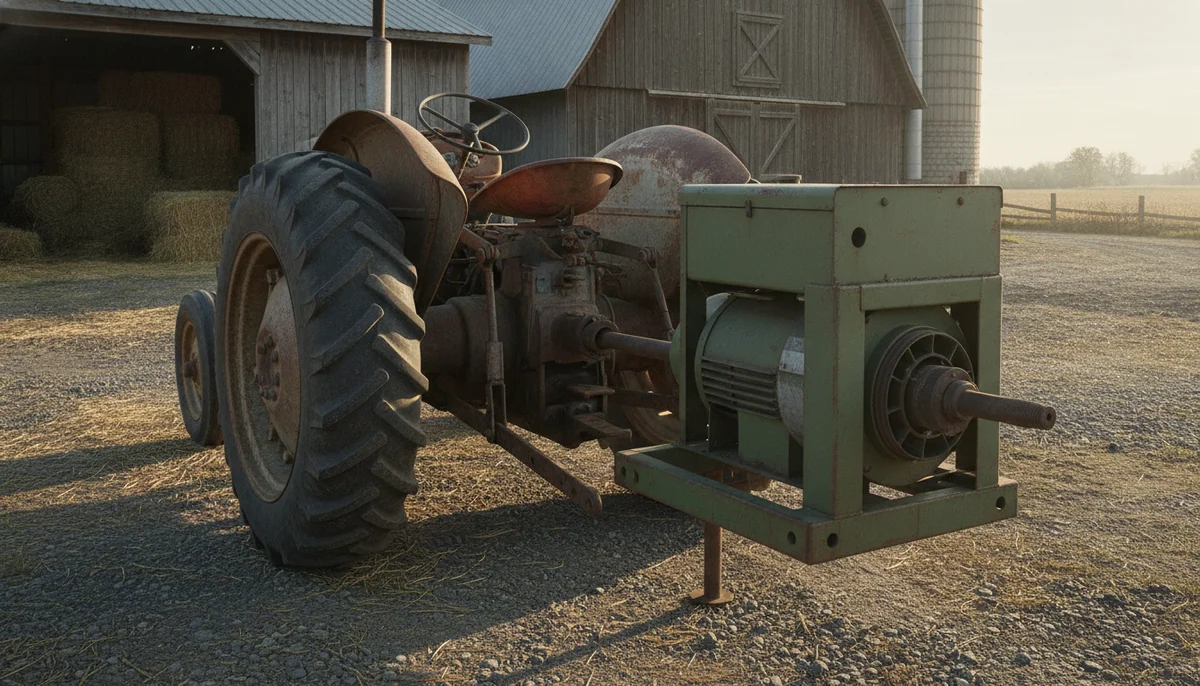
A power take-off generator is an alternator with no engine. That is the whole definition, and it is the thing every listing in this category fails. The unit is a bare generator head on a driveshaft, mounted to a tractor's three-point hitch and spun by the tractor's own engine through the splined stub at the back, which on most agricultural tractors turns at 540 rpm and on larger machines at 1,000. You already own the engine. What you are buying is the part that turns rotation into electricity, plus a gearbox to step the shaft speed up to whatever the alternator needs, a control panel and some receptacles. There is no fuel tank, no carburettor, no spark plug, no recoil cord, no oil to change. Park the tractor, engage the PTO, hold the engine at the rated speed on the tachometer, and the thing makes power for as long as the tractor has diesel in it.
That design exists for one reason, and it is a good one. A farm already has a hundred-horsepower engine sitting in a shed, and a hundred-horsepower engine can drive a very large alternator. A PTO unit therefore gets you 15, 25 or 50 kilowatts for a fraction of what the same output costs when it arrives with its own motor attached, at the price of tying up the tractor for the duration and listening to a diesel run at a fixed speed outside. If you have livestock to water and a milking parlour to keep alive, that is a trade worth making. If you live on a suburban lot, you do not own the engine half of the equation, and the whole economic argument collapses.
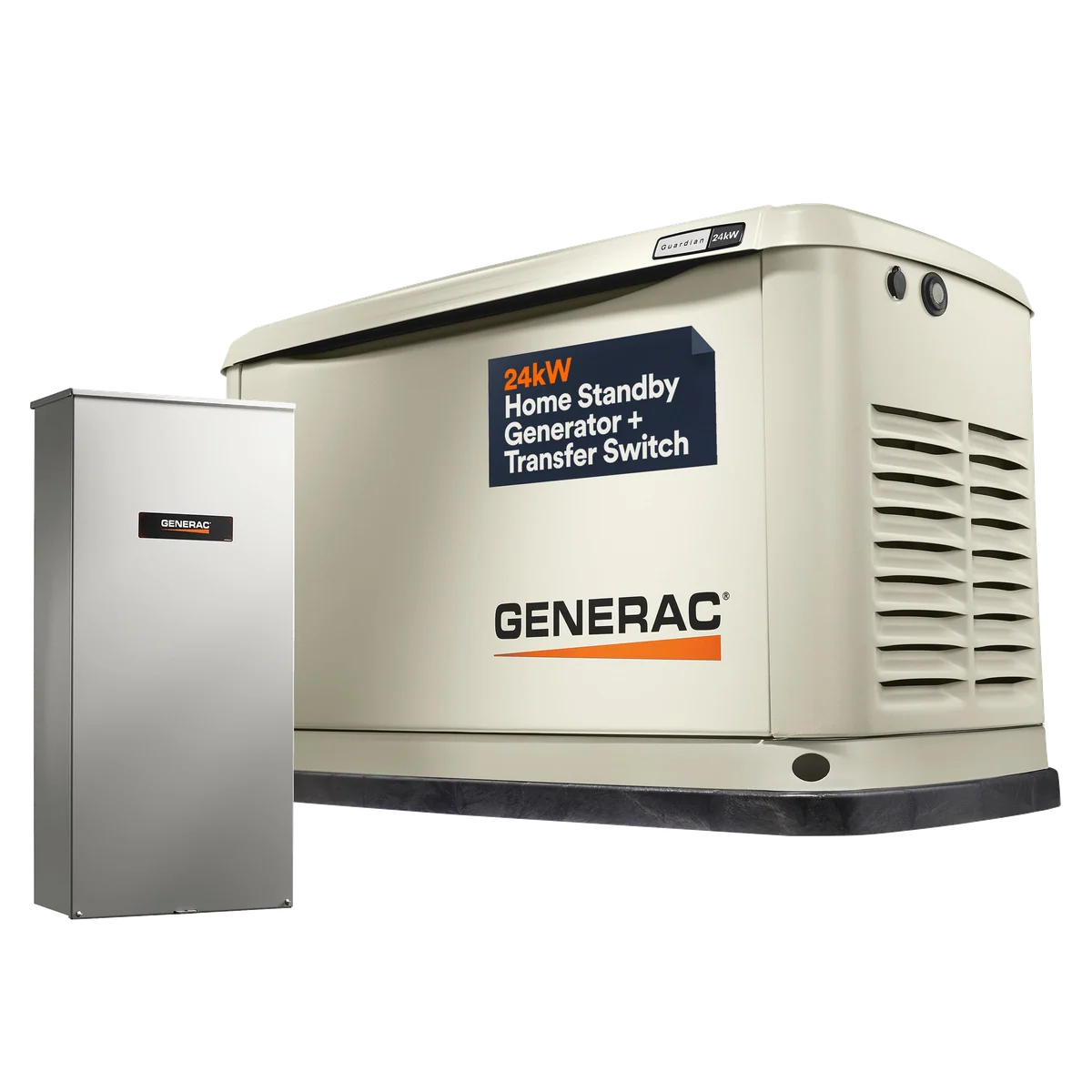
Now look at what Amazon actually ranks under that heading. The top of the category is a GENMAX portable with a 458cc four-stroke engine of its own, a 6.9 gallon tank, two wheels and a carrying handle. Sixteenth is a Generac Guardian home standby that bolts to a concrete pad, plumbs into your gas supply and starts itself within seconds of sensing an outage. None of these attach to anything. The category is a shelf label somebody hung on the wrong aisle, and the machines under it are perfectly ordinary generators that have wandered in.
What is on this shelf, and what a real one would have looked like
The fastest way to settle this is to read the four best-known listings against their own copy. Every one of them advertises, in its own marketing, the exact component that disqualifies it.
| Listing | What spins the alternator | What it needs before it makes a watt |
|---|---|---|
| GENMAX GM9000iED | Its own 458cc four-stroke | Petrol or a propane bottle |
| Gidrox 11000W tri-fuel | Its own engine, feeding an 8.7 gallon tank | Petrol, propane or a natural gas line |
| Aceup Energy AI4000s | Its own 149cc four-stroke, started by pulling a cord | A gallon and a third of petrol |
| Generac Guardian 24kW | Its own G-Force engine on your gas meter | A pad, a permit and a licensed electrician |
A genuine PTO generator would read differently in every row. Instead of a displacement figure you would see a required tractor horsepower, usually quoted as a rough two horsepower for every kilowatt you want out, so a 15kW head wants something in the region of a 30 horsepower tractor and a 25kW head wants a good deal more than that. Instead of a fuel tank you would see a hitch category. Instead of a start type you would see a shaft speed to hold on the tachometer, and instead of a runtime you would see nothing at all, because the runtime is however long the tractor lasts. Instead of noise ratings taken at 23 feet you would get silence on the subject, because the noise is the tractor and the manufacturer did not build it.
Specific Load has yet to find a single listing under this heading that carries any of those figures. That absence is the proof. A category full of products that cannot answer the category's own basic questions is not a category, it is a bin.
The label has escaped, and buyers are now searching for it
This would be a harmless piece of retail housekeeping if it stayed on the shelf, and it has not. Autocomplete learns from what people type, and people type what they see, so the phrase has now bonded itself to individual brand names in the suggestion box. Buyers are being offered searches that combine a manufacturer of pull-start petrol inverters with a category of tractor implements, and some of them are typing it in, and the retailer obligingly returns the same engine-driven machines, which reinforces the whole loop. Nobody lied to anyone. A taxonomy error simply grew into a phrase, and the phrase now looks like a product.
Why here, of all places? Because the category is nearly empty. Sellers choose the browse node their listing lands in, real PTO equipment mostly sells through farm dealers rather than general retail, and a thinly populated node is a cheap place to be ranked first. Being the number one bestseller in a category that almost nobody stocks is a considerably easier badge to win than being the tenth bestseller in portable generators. That is not evidence of dishonesty about the products themselves, and none of the four listings above hides what it is; the Generac description opens by calling itself a home standby generator connected to your existing LP or natural gas supply. But it does mean the ranking tells you nothing. Treat a category rank here the way you would treat a trophy from a race with two entrants.
If you actually came for shaft-driven power
Then the honest thing to say is that this site cannot sell you one, and that the machines below are not substitutes dressed up as alternatives. What we can give you is the short list of questions that separate a real unit from a listing that has drifted into the wrong aisle: what tractor horsepower does it require, what hitch category does it fit, what PTO speed does it rate its output at, and does the price include a driveshaft. If a listing cannot answer all four, it is not the thing you are looking for, whatever the heading above it says. Farm and tractor supply dealers are where these live, and their sizing advice is worth more than any general retailer's search results because the machine has to match your tractor rather than your house.
One warning before you go, because it is the failure that catches people who buy on price. A PTO generator makes clean power only when the tractor holds its rated speed exactly. Frequency is a direct function of shaft speed, so a tractor that sags under load drops your hertz with it, and anything with a microprocessor in it will object. Some units carry voltage regulation to smooth this out and cheap ones do not. If the plan involves a furnace control board or a well pump, that regulation is not optional.
And if what you actually wanted was backup power for a house
Most people who land here fall into this group, having searched for the category name because it was what they saw, not because they own a tractor. The four machines under this label are worth different things to different households, and the differences are large.
The GENMAX GM9000iED is the one we would put in most driveways. It carries a 50 amp receptacle that actually matches what the alternator can push, remote start, and a pressure-fed oil system with a screen you can pull and clean, which is not a thing budget generators normally bother with. The drawback is specific and it is not about power output: the worst owner accounts in its record describe machines that failed while stored rather than while working, one buyer finding both of his units dead at the control panel after a winter in the garage. It also ships with the neutral bonded to the frame and no instructions for unbonding it, so settle that question before you wire anything to a transfer switch, and treat monthly exercise as part of the purchase rather than as advice.
The Gidrox 11000W tri-fuel is the ambitious one, and it ships with the natural gas and propane hoses in the box, which matters because a gas line is the only fuel that does not run out on day four of an outage. Buy it only if you will load it up inside the return window, because its evidence base is a few weeks old and the one owner who pushed it reports it giving up somewhere around 5,500 watts against a 9,000 watt running claim. Nobody has resolved that against the owner who says it ran his whole house, and until somebody does, the meter in your hand is the only referee.
The Aceup Energy AI4000s is the cheap, honest, occasional machine: a 149cc recoil-start inverter with a real 30 amp RV socket and a digital panel better than its price deserves. One owner ran a fridge, a deep freezer and phone charging on it for three straight days without complaint, which is exactly the job it is for and exactly the size of job it is for. Its real fault is a fuel tank that has collapsed inward on more than one owner when the cap vent was closed with petrol still inside, and the manual never warns you, so leave that vent open or run the machine dry at shutdown. It will not carry a house; 3,200 running watts covers circuits, not homes.
The Generac Guardian 24kW is a different purchase entirely, and the only one here that is genuinely automatic. Buy it if you are project-managing the installation yourself and hiring install-only labour, which owners report saves thousands against a turnkey package. The drawbacks are all in the process rather than the engine: the starting battery is not in the crate, freight damage runs through the retained reviews, and one buyer waited eight weeks for a permit only to find the engine seized after the return window had shut. Crank it in the driveway while you can still send it back. What the finished job costs once every trade is paid is the number to settle before the pad is poured, and what the extra money over a large portable actually buys is the decision underneath it.
Two of those need a fuel decision before anything else, and what each fuel costs you in watts and runtime is the piece to read first. If none of the four fits, the full home backup comparison lines them up against machines that never got filed in the wrong aisle, and what a warranty from an unfamiliar brand is actually worth is the question that decides more of these purchases than wattage does.
Frequently Asked Questions
What does PTO stand for on a generator?
Power take-off, meaning the splined output shaft on a tractor that transmits engine power to an implement, which in this case is a bare alternator with no engine of its own.
Is any of these Amazon listings a tractor-driven unit?
No, every one of them advertises its own engine in its own marketing copy, from a 149cc pull-start up to a permanently installed home standby on a gas line.
How much tractor do I need for a real one?
Roughly two horsepower per kilowatt of output as a working rule, so a 15kW head wants something around a 30 horsepower tractor and anything larger scales from there.
Why is a portable inverter ranked first in a category built for farm equipment?
Because sellers choose which category their listing sits in and this one is nearly empty, so a first-place rank here is a much cheaper badge to win than a mid-table place among portable generators.
Does the wrong category mean the seller is dishonest?
Not by itself, since none of these listings pretends to be tractor-driven anywhere in its own text, but it does mean the bestseller ranking on the page tells you nothing worth acting on.
Can a power take-off generator run a house?
Yes, and a large one will run a farmstead, but it needs the same transfer switch and the same wiring work as any other generator plus a tractor parked and running for the whole outage.
Will one of these give me cleaner power than a PTO unit?
Generally yes, because an inverter machine holds its frequency electronically while a PTO generator's hertz follow the tractor's shaft speed and sag whenever the engine is dragged down.
My generator keeps tripping its breaker, is that because I bought the wrong kind?
Almost certainly not, and the usual causes are oil level, a gummed carburettor, a tired extension cord or every load sitting on one leg rather than anything to do with what the machine is called.