The whole-house pick is the Generac Guardian 24kW, and most people reading this should buy the GENMAX instead
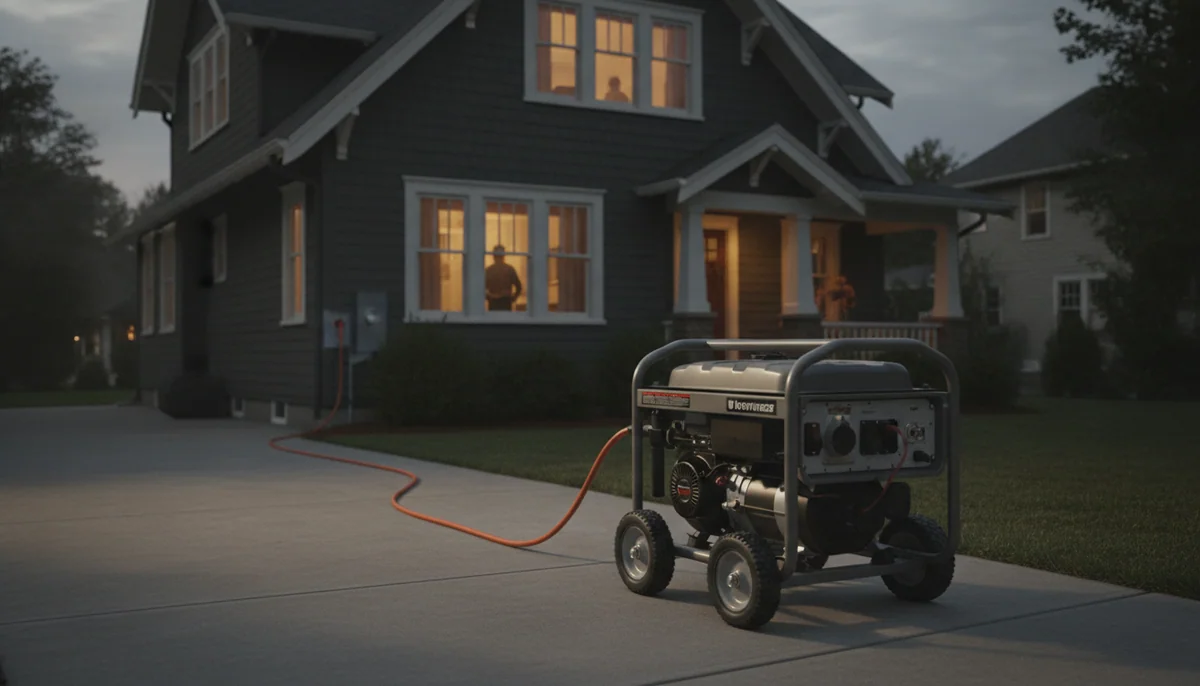
Start with the arithmetic, because it decides everything else and nobody selling you a power station wants to do it in front of you. EcoFlow publishes a runtime chart for its 4,096Wh Delta Pro 3, and if you multiply each row back out (110 watts for 29.8 hours, 1,000 watts for 3.3 hours, and so on) every line lands between roughly 3,240Wh and 3,410Wh. That is the company's own admission of about a fifth lost to conversion, and it is a good pack: an independent bench drain pulled 3,830Wh out of it at a steady 800 watts, better than most stations manage. Call it three and a bit kilowatt-hours at the outlet. Now look at what EcoFlow says a single 20 lb propane bottle is worth through the engine it sells alongside: up to 24kWh.
One bottle of gas from the hardware store, roughly six full recharges of the most honest large battery in this class. That is the whole ranking. For an outage measured in hours, storage wins on silence, safety and the fact that it works while you sleep. For an outage measured in days, storage is a buffer and combustion is the answer, and the only real question left is where the fuel comes from and how the power gets into your panel.
The best version of that answer is a machine wired to your gas supply that nobody has to go outside and start. An owner who replaced a fourteen-year-old 17kW Guardian with the 24kW put the case better than any spec sheet: on the old unit, with an all-electric house apart from the furnace, he had to limit which appliances ran at once, and on the new one there would be no limits. That is what the top of this list buys. It is also the most expensive answer here by a wide margin, it involves a pad, a permit and an electrician, and Specific Load's review of it found that almost everything painful about the purchase happens before anyone gets to switch it on.
- Buy the standby if your house is electric enough that a smaller unit would have you choosing between the well pump and the oven, and you have somewhere for it to live permanently.
- Buy the big portable if you want most of that coverage for a fraction of the money and you are willing to walk outside once, start it, and flip an interlock.
- Buy a battery if your outages are overnight rather than week-long, or if the equipment you are protecting cannot tolerate a gap or an engine.
- Walk away from the standby if you want one invoice and one phone number when something fails, because a dealer package costs more and buys exactly that.
- Walk away from a battery-only plan if your worst case is five days without a grid, since no capacity you can afford will bridge it.
- Walk away from all of this if what you actually need is a fridge, a freezer and some lamps, in which case the cheap end of this list is genuinely enough and the sizing you have not done yet will save you a four-figure mistake.
One piece of housekeeping, because it is how a lot of readers land here. Several of these listings sit in Amazon's power take off generators category, and not one of them is a power take off generator. A PTO unit is a bare alternator on a driveshaft that borrows a tractor's engine. Everything on this page has its own engine or its own battery. If a tractor is genuinely part of your plan, the explanation of why those listings carry that label is the page you want, and this one is not it.
What "whole house" costs you before you buy anything
Three things decide whether any of these machines does the job, and none of them appear on a product page. Work through them first and the list below sorts itself.
What each answer runs out of
Every backup plan fails at a different point, and the useful exercise is naming yours before the storm does.
| What you own | What it runs out of | What stops you first |
|---|---|---|
| Standby on natural gas | Nothing, until the utility loses pressure | The install: permit, pad, electrician, and very likely a bigger gas meter |
| Big portable on propane or natural gas | Bottles, or nothing at all if it is plumbed in | You, walking outside to start it and manage the load |
| Battery plus generator | Fuel, eventually, but silently overnight | Where you can legally stand a running engine |
| Battery alone | Roughly one disciplined day | Day two |
The condenser decides your budget, not the appliance list
People size generators by adding up fridges and lamps, and then the air conditioning trips the whole thing. The number that matters is on the data plate of your outdoor unit, and it is not the running figure: it is locked rotor amps, the draw at the instant the compressor turns over. Work it out and the scale becomes obvious, as the r/Generator regulars do routinely for people arriving with a 5,000 watt machine and a central condenser: ninety-five locked rotor amps at 240 volts is something like 22,800 watts of inrush, and even after allowing for voltage droop you are still asking for around eleven kilowatts. That is why exactly one machine on this page starts central air, and why the LRA and soft start explainer is worth ten minutes before you spend anything.
A soft start changes the arithmetic but not the physics. An owner who researched the GENMAX for over a month before buying fitted a soft start to his condenser and measured the locked rotor draw falling from 94 amps to 34, which lands inside that machine's 37.5 amp peak with almost nothing to spare. Three or four tons with a soft start is a real proposition on a big portable. Five tons is not, whatever the listing says.
How the power actually gets into your panel
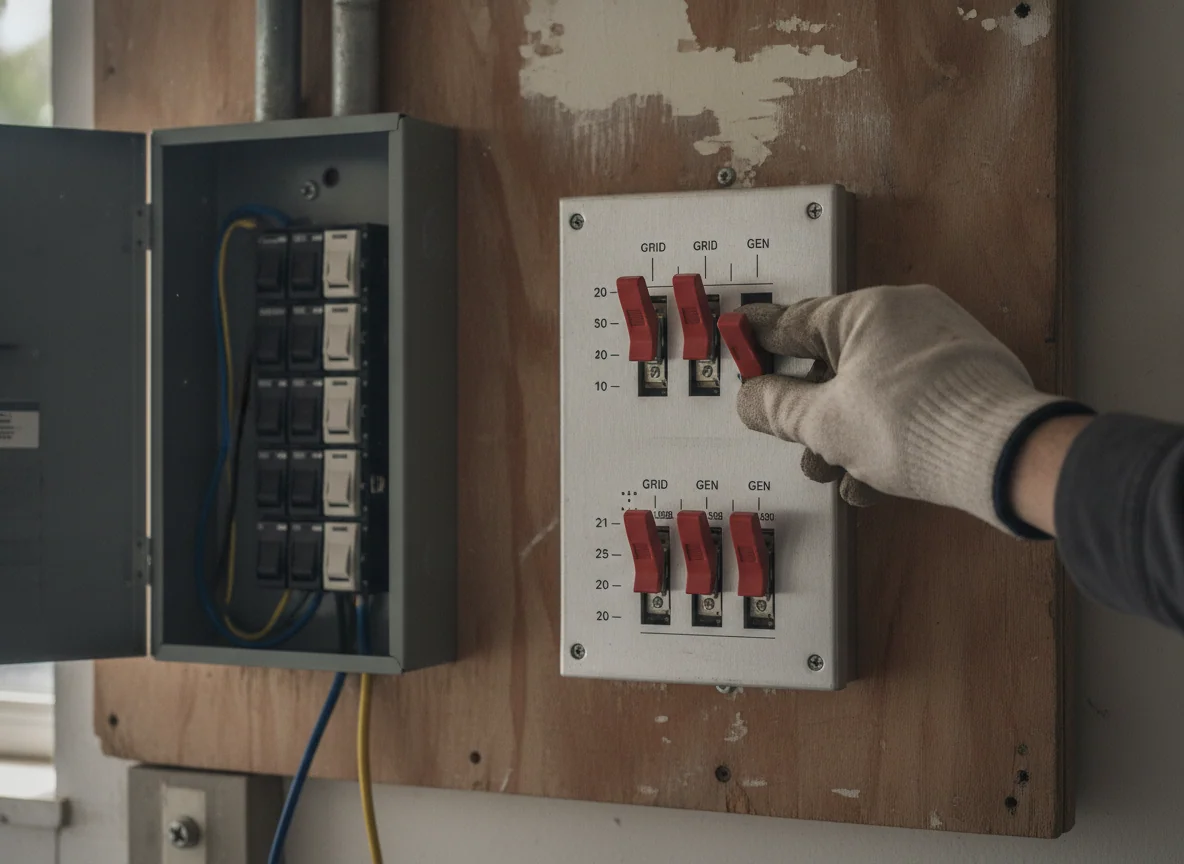
Extension cords are a different product category from home backup, and the moment you want circuits rather than cords you are in an electrician's world. An inlet box with an interlock on your main panel is the cheap, legal route for a portable, and the comparison of transfer switch, interlock and the backfeeding you must not do covers the vocabulary your electrician will use. Two specifics that catch people out at this size are worth naming here.
The first is the neutral. The GM9000iED ships with its neutral bonded to the frame and GENMAX supplies no instructions for floating it, which is what a transfer switch installation needs; owners worked out where the bond lives on their own, on a metal rail behind the electrical panel near the LPG inlet, and describe it as awkward to reach. The Gidrox does not state its configuration at all, which is a genuine gap on a machine marketed for transfer switch duty. Neither is a dealbreaker, both are a multimeter and an hour, and how to tell which one you have is a five minute read you should do before anybody opens a panel.
The second is the gas meter, and it is a budget line nobody prints on the box. A 24kW air-cooled standby at load wants more gas than a standard residential meter passes. Owners in the Generac threads report being moved from a 250 CFH meter up to 425 CFH, one of them for about three hundred dollars and another free after a phone call, and the same discussion carries a warning about newer electronic meters shipping with a high-flow cutoff that only the utility can reset. Ask the utility what your meter passes before the pad is poured, not after, and the installed cost breakdown is the honest place to start budgeting.
The failure that actually happens is dormancy, not overload
Read enough owner records for this category and one pattern outranks every mechanical complaint: these machines fail while sitting still. The single most detailed report on the PowerSmart 4400 belongs to a buyer whose unit ran an RV air conditioner for about forty-five minutes exactly as the manual described, sat for three weeks, and then ran roughly thirty seconds before shutting down with the overload light on and nothing plugged in, on propane and then on gasoline both. The most alarming line in the Generac record is a buyer who waited eight weeks for a permit and discovered on the day it cleared that the engine would not turn over and appeared seized, by which point the return window had closed.
Two different price classes, one lesson. Uncrate it, fuel it, load it and run it while you can still send it back, then put a quarterly reminder in your phone. Storing a backup generator so it starts when the power goes out is the other half of every purchase on this page, and on the cheaper machines Specific Load would treat it as mandatory rather than optional. Batteries need the same discipline in a different flavour: Anker's own instructions ask you to check the charge weekly, top it up below thirty percent and take it to full every three months.
The seven, ranked by the job they actually do
The order below runs from most house to least, not from best to worst. A machine at the bottom of this list is the correct purchase for a great many households and a ruinous one for others, which is the whole reason the sizing section comes first.
One open question before the top pick, because it is the sharpest disagreement in the entire Generac record and nobody selling one will raise it. Owners of units installed in 2018 and late 2024 describe them as bulletproof, while owners of the recent ECM-driven machines report repeat failures, replacement units and months without working backup, and one buyer offered the choice between the older design and the new one on a 24kW deliberately took the older. Nothing establishes which design any given listing ships. Treat it as a question to put to the seller, and keep the fault code walkthrough bookmarked either way.
The only machine here that ends the load-juggling, for the buyer willing to run the project themselves
It starts itself within seconds of the utility failing, runs off your existing gas supply for as long as that supply lasts, and arrives with the expensive half of the electrical work in the crate: a 200 amp service-rated transfer switch in an outdoor aluminium enclosure.
The starting battery is not included, three of the eight retained owner reviews describe freight damage, and permit timelines routinely outlast the return window on a machine you cannot test until an electrician has been.
Buy it and hire install-only labour rather than a turnkey package and you save thousands, by the account of an owner who did exactly that. What you absorb in exchange is the freight lottery, the parts sourcing and a dealer network that did not sell you the machine. The full accounting, including the transfer switch that arrived with the wrong lug screws, is in our review of the 24kW Guardian, and the battery, T1 fuse and cold-kit chain is the page to read before your first winter rather than during it.
The whole-house answer for people who are not remodelling the side of their house
Pressure-fed oiling with a cleanable screen, a 50 amp receptacle that matches what the alternator can actually push, remote start and dual fuel put this a clear class above its price, and one owner's small all-LED house ran its lighting, fridge, electronics and central air off it through an inlet and interlock.
The neutral is bonded from the factory with no conversion instructions supplied, and the harshest owner accounts describe units that failed while stored rather than while working.
Two honest corrections to its own listing. The advertised 15,200 running watts in parallel is capped in practice by the single 50 amp outlet the pair runs through, which is 12,000 watts at 240 volts and not the figure on the box. And the ceiling on one machine is 7,600 watts continuous, which is 32 amps at 240 volts: real whole-house coverage for a modest, efficient house, and rationing for a large one. The full review goes through the oil screen argument, the CO sensor failure mode and what a three-year warranty is worth when the object weighs 250 pounds.
The tri-fuel option, for a buyer who will treat week one as an acceptance test
Natural gas capability with the hoses in the box is exactly the right shape for an outage measured in days, and the carburettor bowl drain and oil drain tubing suggest somebody at Gidrox has read the complaints that kill stored generators.
No independent load test of this machine exists, the only owner who reports pushing it says it stops working somewhere between 5,000 and 5,500 watts against a 9,000 watt running rating, and no natural gas output figure is published anywhere.
That contradiction is not resolvable from here: a second owner reports powering a whole house without issues and attaches no load figure, no house size and no duration to it. The listing also claims 62 to 65 dB is quieter than a normal conversation, which is arithmetically backwards, and markets 5-ton central air compatibility while mentioning no soft start. Specific Load's position is in the full review: buy it only if you will load it up with a clamp meter inside the return window, and buy the GENMAX if you would rather somebody else had already done that.
The one to buy if the first night matters more than the third day
Genuine split-phase 240V at 6,000 watts from a single box, silent and indoors with no exhaust, and the Plus generation finally widened the solar input enough that ordinary MC4 panels work instead of only Anker's own.
The bundled 400W panel supplies about an eighth of the solar input this machine will accept, and 3,840Wh is roughly one disciplined day of fridge, lights and devices rather than a house.
The 240V is the argument, and it is a strong one: most stations in this class give you 120V receptacles and get to 240 only by pairing two units through a combiner, which is why this one keeps turning up in conversations about well pumps and dryers rather than campsite kettles. Two cautions. The socket sold as a 30 amp RV outlet is capped at 3,000 watts, and one owner's camper air conditioning trips the unit after about five minutes even with a soft start fitted. And if solar recharging is the point, buy the bare unit and choose your own panels, which is the recommendation in our review and the arithmetic in sizing an array to a power station.
The battery that refuels itself, if an engine can legally stand within sixteen feet of it
The station watches its own charge, wakes the engine's starter battery and starts it when the number drops, and gives solar priority so the engine only runs when it must, which is the one thing on this page you cannot assemble yourself from parts.
The cable joining the two halves is sixteen feet and cannot be extended, and in freezer testing the automatic start frequently failed on gasoline because the engine has no choke.
Buy this one intending to run it on propane. That costs about 300 watts of output against gasoline and buys back the automatic start in exactly the weather that causes outages, which is the entire feature you are paying extra for. Measure the run from the safe engine position to wherever the battery lives, around corners rather than across the lawn, before you order anything: the distance an engine needs from a house does not negotiate with a cable length. The review goes further on the warranty discrepancy and the after-sale record, and we have set the two big batteries head to head for whole-home backup.
The cheapest honest way to keep a fridge, a freezer and the furnace fan alive
Every owner in the record who mentions starting says it fires on the first pull, on gasoline or propane, from a machine light enough for one person to load into a car.
This is an open-frame generator rated by its own listing at 76 dB from 23 feet at its lightest load, and PowerSmart's answer to the one documented failure was that the owner should find a repair shop, ship it there at his own cost and hope for reimbursement afterwards.
Judge it as an insurance policy rather than a house generator and it makes sense: 3,600 rated watts covers essential circuits and one substantial appliance at a time, and propane in the corner of the garage never goes stale. Judge it as something to leave untouched until the lights go out and the record does not support you. If a recoil rope is the part that worries you, the LIFAN 4800W with remote start is a step up in the same category, and the dual fuel roundup lines the class up properly. Who actually makes PowerSmart is a separate question worth knowing the answer to.
A quiet, frugal 120 volt machine that the words "home backup" on its title oversell
Owners beat the maker's own runtime claim comfortably at the loads people actually connect, one of them reporting ten hours on two gallons in eco mode carrying a light household load overnight.
It produces 120 volts only, with no 240 volt outlet and nothing to feed a transfer switch, so it runs extension cords rather than a panel.
Within its actual lane it is the best value on this page, and its serviceability details are better than the price implies: a removable in-tank fuel filter, a fuel shutoff so you can run the carburettor dry and a drain screw on the float bowl. Two owner accounts also disagree flatly about whether it carries an RV rooftop air conditioner, which suggests it sits right at the edge of that load and loses the margin in heat. For a concentrator, a CPAP or anything where silence and certainty beat raw watts, the medical equipment page is the better starting point, and the full review has the rest.
Frequently Asked Questions
How many watts do I actually need to back up a whole house?
Less than the number you are about to buy unless your house is all-electric, since 7,600 continuous watts has been reported carrying a small efficient house including its central air, while a large all-electric home is the case that genuinely justifies stepping up to a 24kW standby.
Will a battery get me through a multi-day outage?
Not on its own, because roughly 3.3kWh at the outlet is about one disciplined day of fridge, lights and devices, which is why the serious battery products now ship with a generator port or a generator.
Do I need a bigger gas meter for a 24kW standby?
Very probably, since a standard residential meter passing 250 CFH will not feed a 24kW unit at load and owners report being moved up to 425 CFH by the utility.
Will any of these start my central air conditioner?
Only the standby, because a residential condenser's locked rotor inrush runs into five figures of watts and no soft start turns a 9,000 watt portable into eleven kilowatts.
Are solar generators a real answer for an outage?
They are a real answer for the first night and for anything that must run indoors or silently, and they are the wrong tool for a week without a grid, which is the whole argument in solar generator versus gas generator .
Why does my generator trip its breaker as soon as I put the house on it?
Usually because everything landed on one 120 volt leg, or because a motor's starting draw is several times its running draw, and the diagnostic ladder works through the rest in order.
The engine runs but nothing comes out of the outlets, is it dead?
Almost certainly not, since on these machines it is normally a voltage transfer switch in the wrong position or a tripped breaker rather than a failed alternator, and the no-output walkthrough covers the sequence.
Is a power take off generator what I am shopping for?
Not unless you own a tractor, because a genuine PTO unit is a bare alternator driven by a driveshaft and everything on this page has its own engine or its own battery.
Our Top Recommendation
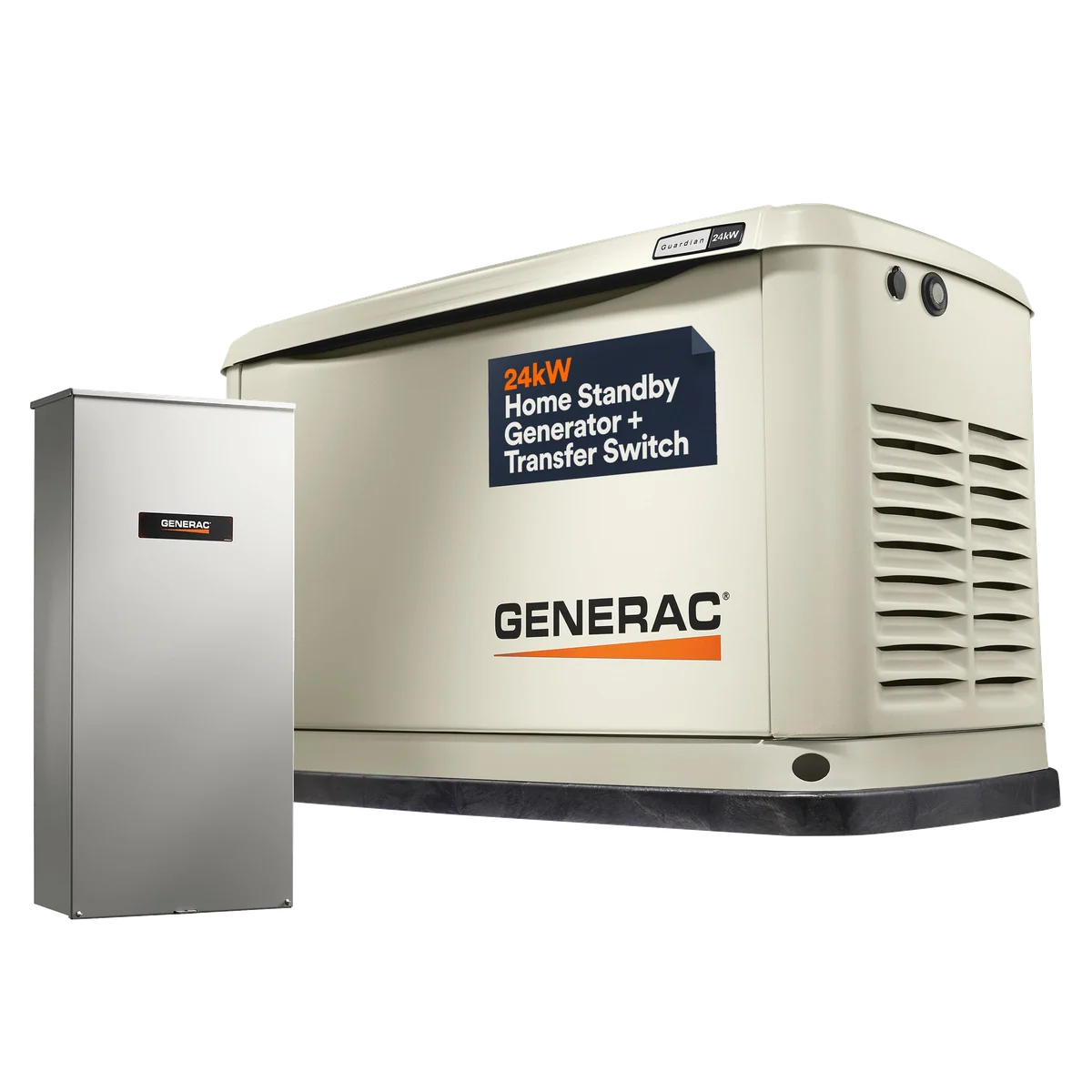
Based on our research, the Generac Guardian 24kW is our top pick — home backup.
Sources (7)
- Amazon listings and customer reviews
- Owner reports across r/Generator, r/Generac_Generators threads
- Owner and reviewer video, 1 channel
- EcoFlow — Article — us.ecoflow.com
- Powerequipmentforum — Article — www.powerequipmentforum.com
- Thesolarlab — Article — www.thesolarlab.com
- Cnet — Article — www.cnet.com