A 30-amp trailer cannot draw more than 3,600 watts, which disqualifies most of what gets sold to tow behind one
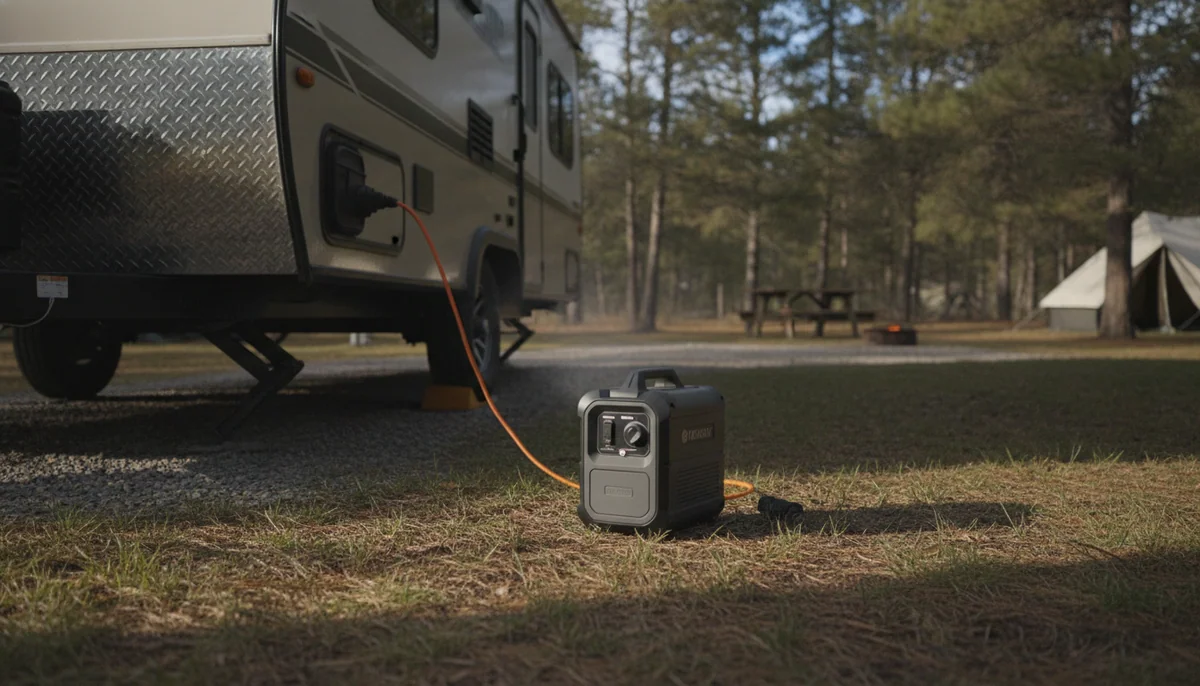
Here is the number that settles most of this before you have read a single specification. A TT-30 shore cord is thirty amps at 120 volts, which is 3,600 watts, and that is not the generator's limit. It is the trailer's. It does not move when you buy a bigger generator, it does not move when you pay for remote start, and it does not move when the listing says 9,000 watts on the front of the box. Plug a 9,000-watt machine into a 30-amp trailer and the trailer takes 3,600 watts and the generator carries the rest around the campsite for you, in the form of weight, fuel and noise.
There is one honest counterargument and it deserves stating properly, because it is the reason people oversize. A rooftop air conditioner does not fail to start because the generator lacks running watts. It fails because the compressor's locked-rotor draw, for a second or so, is several times its running draw, and that momentary demand is answered by peak watts, by a soft start on the compressor, or by both. It is not answered by five thousand running watts you can never push through the cord. The data plate on your own rooftop unit is what decides this, and the people who size generators for a living keep saying the same thing to anyone who asks: read the LRA figure, not the wattage on the carton. We take the arithmetic apart in what an air conditioner actually demands at startup, and why the number on the box is not the power you get is the ten minutes that saves most people the wrong purchase.
The exception is real and it is narrower than the market pretends. A 50-amp rig is two 120-volt legs at fifty amps each, which is 12,000 watts of service, usually feeding two rooftop units, and that genuinely is a job for a big machine. So is the household that wants one generator to cover both the fifth wheel in the driveway and the panel in the garage, which is a legitimate reason to tow something heavy and is properly the subject of our home backup page rather than this one.
Buy in the 4,000 to 4,500 watt class if you tow a single-air-conditioner travel trailer with a 30-amp cord and you want the lightest thing that will still start the rooftop unit.
Buy heavy if your rig is 50-amp, or the generator has a second job at the house, and you have somewhere to put 250 pounds that is not the bed of your truck every weekend.
Buy a battery instead if you boondock without running the air conditioner, because silence, no exhaust and no fuel rotation are worth more than watts you were never going to use.
Walk away from all of it if you are shopping on peak wattage alone, since the peak figure is the one number on these listings that nobody outside the factory has ever verified.
What a trailer actually asks for, in the order it asks
An RV is a more demanding customer than a job site and a less demanding one than a house, and it asks for its requirements in a specific sequence. The socket comes first, because if the cord does not fit, nothing else matters. Then the air conditioner, because that is the load everything else is sized around. Then fuel, then noise, then where the thing rides while you tow it.
The socket, and whether you are buying a dogbone with it
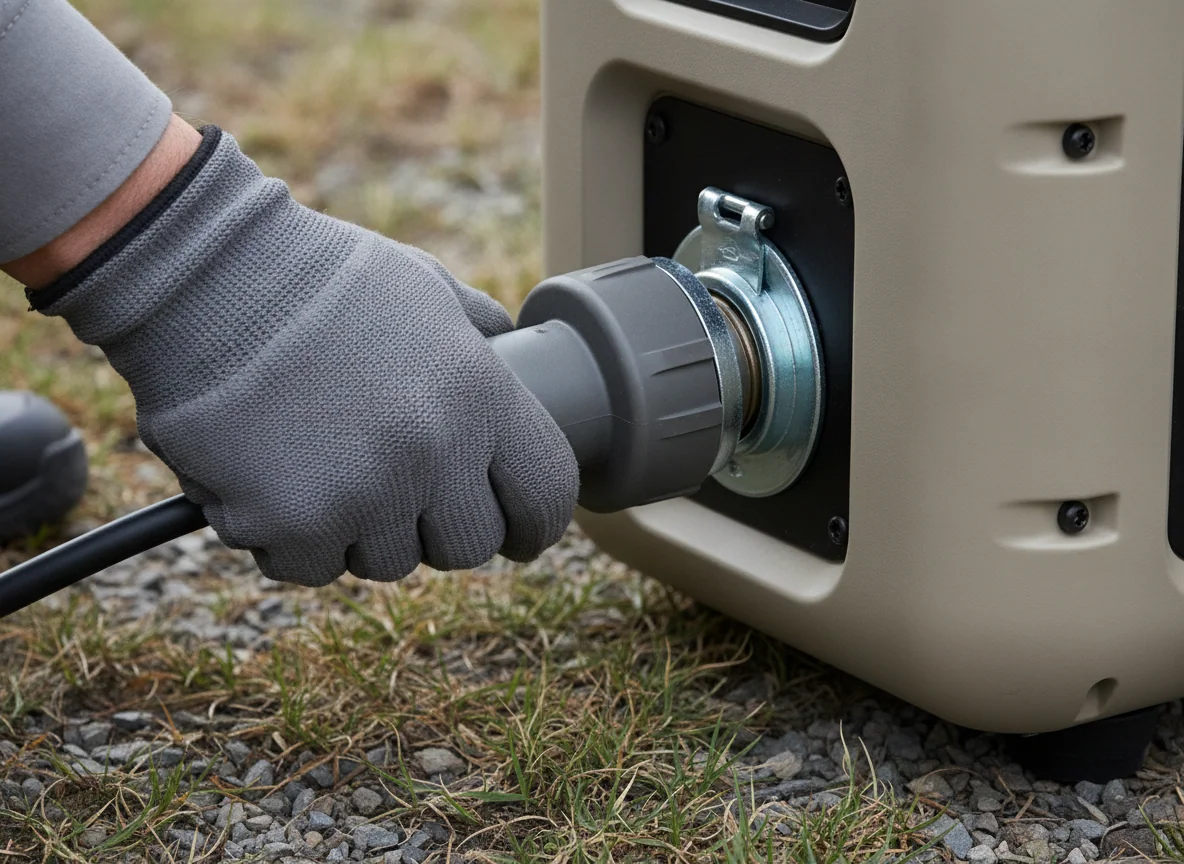
Plenty of machines in this wattage bracket make you adapt a 5-20 household outlet up to your trailer's plug, which works and is one more chain of connectors to fail. A generator with a TT-30 receptacle on the panel takes your shore cord directly, and the practical test an owner offers for the LIFAN is the right one for any of them: if the trailer runs on 30-amp shore power, it runs on this. Here is what each machine on this page puts on its face.
| Machine | RV connection on the panel | Rated running output behind it |
|---|---|---|
| LIFAN 4800W | TT-30, no adapter | 3,800W on gasoline, 3,400 or 3,500 on propane depending which part of the listing you read |
| Oxseryn 5000 | 30A outlet, 120V only | 4,000W rated, 5,000 peak |
| Aceup Energy 4000 | RV receptacle on the panel | 3,200W rated |
| GENMAX GM9000iED | 50A receptacle, built in | 7,600W rated, 9,000 peak |
| PowerSmart 4400 | Not stated anywhere in the listing | 3,600W rated on gasoline, no propane figure published |
| Anker SOLIX F3800 Plus | TT-30R, capped at 3,000W | 6,000W total, but not through that socket |
| GENMAX GM4500iSAD | TT-30R, no adapter | 4,000W on gasoline, 3,600 claimed on propane |
| Gidrox 11000W | 14-50R plus L14-30R | 9,000W claimed, and see below |
Two rows deserve a second look. The PowerSmart is sold for camping and never tells you what its outlets are, which for an RV buyer is the single most useful line on a specification sheet and the one it omits. And the Anker's TT-30 is a 30-amp plug on a 3,000-watt leg, so the connector promises more than the socket delivers.
The air conditioner is the whole argument
Everything else a trailer runs is small. Work out the list honestly and the ceiling arrives faster than people expect.
| Load | Running draw |
|---|---|
| 13,500 BTU rooftop air conditioner | 1,300 to 1,800W once running |
| 15,000 BTU rooftop air conditioner | 1,600 to 2,000W once running |
| Converter and battery charger | 300 to 700W |
| Microwave | 900 to 1,500W |
| Water heater on its electric element | Around 1,400W, which is why you leave it on propane |
| Residential fridge | 150 to 250W |
| Coffee maker, kettle or hair dryer | 900 to 1,500W, one at a time |
Add the air conditioner, the converter and the microwave and you are at roughly 3,000 to 3,900 watts, which is the cord's ceiling and the reason the 4,000 to 4,500 class is right-sized rather than merely cheap. What sits above that line is not more capability for your trailer, it is capability for a different trailer.
The startup moment is a separate problem with a separate solution, and the record here is unusually clear about what that solution is. The LIFAN owner who ran a 12,000 BTU rooftop unit alongside a microwave and a converter had an aftermarket soft start fitted, and said so; he believes it would have started the unit without one, and that belief is an opinion rather than a test. The Oxseryn owner who started a 13,500 BTU rooftop unit from 1989 had no soft start at all, watched it kick the generator out of eco mode, and reported no fault. A different Oxseryn owner in Arizona, on the hottest day of the year, watched his cut out repeatedly under his travel trailer's air conditioner. Both of those accounts are internally coherent, which is the finding: heat derates an engine and its inverter, so peak output on a 115-degree afternoon is not the peak output on the carton. Fit a soft start. It is the cheapest watts you will ever buy.
Propane is the RV owner's fuel, and it costs you watts
Dual fuel matters more in a trailer than anywhere else, for a reason nobody puts in the marketing. The propane inlet on these machines is a standard 3/8-inch SAE flare, so a quick-disconnect and a right-angle swivel adapter let you feed the generator from your rig's onboard tanks and skip the supplied regulator entirely, which turns a weekend of jerry cans into a hose. The same owner supplies the caveat: your propane also runs the fridge and the stove, so carry a small spare bottle before you find out what running dry costs you.
The bill for that convenience is output. The LIFAN drops from 3,800 watts on gasoline to somewhere between 3,400 and 3,500 on propane by its own listing. GENMAX publishes 4,000 on gasoline and 3,600 on propane for the GM4500iSAD. That derate is normal and it is documented in what each fuel costs you in watts and runtime. It also lands in exactly the wrong place, because propane is what you want to be running on when the air conditioner is the load, and the air conditioner is where the margin has already gone.
Quiet is measured at a quarter load, and your air conditioner is not a quarter load
Every noise figure on this page carries the same footnote. The GM4500iSAD claims 62 dB at 25 percent load. The GM9000iED claims 62 dBA at 25 percent load at 23 feet. The Oxseryn claims 70 dB at 23 feet. The PowerSmart claims 76 dB from 23 feet at 25 percent load, which is a loud open-frame machine describing itself with the word "super quiet" in the same sentence. Gidrox goes furthest and claims 62 to 65 dB is quieter than a normal conversation, which it is not, since a normal conversation sits around 60.
None of those numbers describes a generator carrying a rooftop air conditioner at nine in the evening, which is the only condition a campground neighbour cares about. What the record does supply is more useful than the ratings: an Oxseryn owner put theirs thirty feet behind the camper, could barely hear it inside, and held a conversation outside without raising their voice. A LIFAN owner reports the rooftop unit drowning out roughly 98 percent of the generator from inside, to the point of having to stop and work out whether he was on shore power. That is the resolution to the noise question for most trailer owners: if the air conditioner is running, the air conditioner is the noise. If it is not, you are the loudest thing in the loop, and the quiet camping picks are where to shop instead. What a 23-foot dBA rating is actually measured at explains why two machines with the same sticker sound nothing alike.
Where it rides, and the fuel cap vent that cuts both ways
A generator that travels inside a bay or a truck bed has a fuel-vapour problem that a garage generator does not. The LIFAN's closable cap vent is genuinely good at this, well enough that its owner rates it above his own jerry cans for containing fumes. The Aceup shows you the other edge of the same blade: close the vent with fuel in the tank, let the evening cool it down, and the vacuum can pull the internal tank inward on itself, which two separate owners have reported and the manual does not warn about.
So the rule for anyone who tows one of these is one sentence long. Close the vent to travel, open it before you run, and never leave it closed overnight with fuel in the tank. Better still, kill the fuel at the valve and let the carburettor run dry at the end of a trip, which is the habit in storing a generator so it starts when you next need it and removes the question entirely. The other thing that travels badly is weight: 51 pounds goes in a bay, 60 goes in with help, and 250 goes wherever you first put it and stays there.
What each of these is actually for
One piece of housekeeping first, because it explains an oddity you will notice. Three of the eight machines below are filed by Amazon under power take off generators and not one of them is a power take off generator, which is a tractor-driven alternator on a driveshaft rather than a self-contained engine with a pull cord. We wrote up why those listings carry that label separately. Judge the machine, not the shelf it landed on.
The 30-amp trailer generator you can start from bed without going out in the rain
It puts a genuine TT-30 on the panel and a working key fob in your hand at a price where remote start normally does not exist, and its one loaded owner ran a 12,000 BTU rooftop unit, a microwave and the converter together with the voltage dipping for only a couple of seconds.
Its starter battery ships disconnected and hidden behind a frame rail with the mating plug around a blind corner, and the manual the listing tells you to consult does not mention any of it.
Lifan knows about that battery, incidentally, because the listing's own first bullet now leads with connecting it and its FAQ opens in the voice of an annoyed buyer asking whether the unit is defective. The fix went into the marketing copy instead of the documentation, which costs the company nothing and costs every buyer an evening. Budget that evening, buy a quart of 10W-40 before the box lands, and read the hidden battery plug, the invisible switch and the closed cap vent so you recognise the symptoms when they arrive.
The frugal camper generator that beats its own runtime claim at the loads people actually connect
Its maker promises six hours at half load and its owners report roughly ten hours on two gallons in eco mode at a light load, with a real 30-amp outlet and enough quiet that thirty feet behind a camper is inaudible inside it.
A rooftop air conditioner sits right at the edge of what it can do, and one owner's unit cut out repeatedly under that load in Arizona heat after melting a prong on his trailer's power cord.
The boondocking machine for everything except the air conditioner
Three thousand two hundred running watts through a genuine 30-amp receptacle covers heat, lights, the converter and devices for eight hours on a tank, and it carries a digital meter reporting volts, hertz, amps, load percentage and lifetime hours that machines twice its price delete.
Nothing in its record establishes whether it will start a rooftop air conditioner at all, and its internal fuel tank has collapsed inward on owners who closed the cap vent with fuel inside.
That gap in the record is not a hedge, it is the finding. One Aceup owner ran heat and lights in an RV happily and then described his plan for the air conditioner, which was to buy a second unit and parallel the pair. The panel does carry parallel posts, and 3,200 watts is a fine number for a trailer whose air conditioner stays off. If yours is the reason you are shopping, size up.
The one for a 50-amp fifth wheel that doubles as the house generator
A 50-amp receptacle is built into the panel, so a large rig plugs in without an adapter chain, and 7,600 running watts with dual fuel, remote start and pressure-fed oiling through a cleanable screen is a class of machine no 30-amp trailer will ever exercise.
It weighs about 250 pounds, and the harshest accounts in its ownership record describe units that failed while stored rather than while running, which is the opposite of what an occasional-use generator should do.
The owner who bought it for whole-house backup states the honest ceiling better than the listing does: maximum running output at 240 volts is 32 amps, and the 50-amp plug exists so a long cord can be run without voltage drop rather than because the machine makes fifty amps. If you buy one, exercise it monthly under real load. That is the whole difference between the owners who love this generator and the ones who do not.
The cheapest route on this page to dual fuel and a rooftop unit's worth of watts
Every owner in its record who mentions starting says it fires on the first pull on either fuel, it is a genuine one-person carry at about 61 pounds, and one owner ran his RV air conditioner on it for roughly forty five minutes on propane.
It is an open-frame machine rated by its own listing at 76 dB from 23 feet at a quarter load, which is not a generator to take into a campground with quiet hours.
The rest of that owner's story is the reason this one sits where it does. The unit that ran his air conditioner for forty five minutes then sat for three weeks, and when he came back to it before a trip it ran about thirty seconds and shut down with the overload light on with nothing plugged in, three times, and then did the same on gasoline. He bought a different generator for the trip, and the company's answer was to find a repair shop, ship it there himself and hope for reimbursement. One unit out of 360 ratings is not a failure rate. It is, however, exactly the failure a trailer generator exists to not have, and it is why what a warranty is worth at this tier is worth reading before you decide how much risk you are carrying.
The silent option for anyone who has already accepted the air conditioner is out of scope
Nearly four kilowatt-hours of battery runs a trailer's lights, fridge, chargers and fans overnight with no exhaust, no fuel to rotate and no noise at all, and one owner reports getting three days out of a trailer on a single charge.
Its 30-amp RV socket is capped at 3,000 watts, and one owner's Grey Wolf trips the unit off after about five minutes of air conditioning even with a soft start fitted.
That owner's own summary is the most useful sentence anyone has written about buying a battery for a camper: on paper it should work, with a soft start it still should, and in practice it does not. He kept it for the loads it does cover, which is the right call and the right expectation. If silence is the point and the air conditioner is not, this is a better instrument than any engine here, and the rest of the power station field is worth comparing before you commit. Check what a battery really gives a fridge after inverter losses too, because nameplate watt-hours and delivered watt-hours are different animals. It also wants storing to a schedule rather than shoved in a bay until August.
The only machine here an owner has run a rooftop air conditioner on across both fuels
At 51.4 pounds with a TT-30R on the panel and dual fuel, it produced the single most relevant account on this page: an owner ran the 15,000 BTU unit on his fifth wheel on gasoline and then on propane, switching fuels easily, at roughly six hours per tank across multiple days.
The tank holds under a gallon, and the only other owner on record says it overloads at about 2,200 watts on propane against a claimed 3,600 running, which is a contradiction nobody has resolved.
Those two accounts cannot both be right, because a 15,000 BTU rooftop unit draws considerably more than 2,200 watts once it is running. One of them had a better machine, or a different definition of overload, or a different propane setup, and with three ratings in total there is nobody else to break the tie. That is the uncomfortable shape of this page's best-fitting product: it matches the job description more closely than anything else here and has the thinnest evidence behind it. Which means you are the test. Load it on propane in week one, with the air conditioner running and the return window open, and find out which owner you are.
The wrong shape for a travel trailer and the right shape for a big rig parked near a gas line
A 14-50R and an L14-30R with tri-fuel hoses in the box means a 50-amp rig plugs in directly and a household natural gas line can feed it indefinitely, which is the one thing no tank and no bottle can offer during a long stay.
The only owner who reports loading it says it stops working somewhere between 5,000 and 5,500 watts against a 9,000-watt running claim, and no independent load test of it exists anywhere.
Its own record is about four weeks old, and the reviews that sound like a consensus are mostly first impressions of packaging and assembly rather than accounts of use. The listing also markets it for 5-ton central air conditioning while never publishing a natural gas output figure, which is the fuel its best argument depends on. For a trailer, none of this is your problem, because a trailer cannot use the capacity either way.
Specific Load has not towed, started, metered or owned any of these generators, and nothing above is a measurement we took. What this page is built from is each product's published listing and the owner reviews behind it, read in full and set against arithmetic that does not depend on anybody's opinion. Where two owners of the same machine contradict each other, as they do twice here, we have left the contradiction standing rather than picking the account that made a cleaner story.
Frequently Asked Questions
How many watts can my 30-amp trailer actually use?
About 3,600, because thirty amps at 120 volts is the ceiling on your entire shore service no matter how large the generator behind it is.
Will a 4,000-watt generator start my rooftop air conditioner?
Usually yes on gasoline and less certainly on propane, though the deciding number is the locked-rotor figure on your own rooftop unit's data plate rather than anything printed on the generator.
Do I need a soft start?
Fit one if you can, because it is the cheapest way to buy startup headroom and the owner accounts here that combine an air conditioner with a microwave all have one in circuit.
Can I run the generator off my trailer's own propane tanks?
Yes, since the propane inlet on these machines is a standard 3/8-inch SAE flare, so a quick-disconnect and a 90-degree swivel let you feed it from the onboard supply and skip the included regulator, provided you keep a spare bottle because that same propane runs your fridge and stove.
Why does my generator go into overload or shut down with the air conditioner on?
Heat, a marginal connection or a load sitting right at the machine's ceiling will all do it, and the diagnostic order for a generator that trips or stalls under load works through the rest.
Is a battery power station enough for a camper?
For lights, fridge, chargers, fans and a night of silence it is better than any engine here, and for a rooftop air conditioner it is the wrong tool at any capacity, as one owner on this page found out five minutes into trying.
How quiet is quiet, really?
Quieter than the air conditioner it is running, which is why owners barely hear these from inside a trailer, and considerably louder than the number on the box, which is measured at a quarter load rather than at the load you will actually apply.
What should I buy for a 50-amp fifth wheel with two air conditioners?
Something with a 50-amp receptacle on the panel and at least 7,000 running watts behind it, which on this page means the two heaviest machines and nothing else.
Should I just parallel two small generators instead?
It works and several of these carry parallel ports, but you are then towing, fuelling, starting and maintaining two engines to get what one right-sized machine gives you, so do it only if you already own the first one.
Is it worth paying for dual fuel on an RV generator?
Yes, more than on any other kind of generator, because propane never turns to varnish in a carburettor over a winter of storage and your rig is already carrying tanks of it.
Where do I put it while it is running?
Well away from the trailer with the exhaust pointed elsewhere, since a carbon monoxide sensor on the generator is a backstop rather than permission to move it closer, and the distances and the rain question are covered separately.
Our Top Recommendation
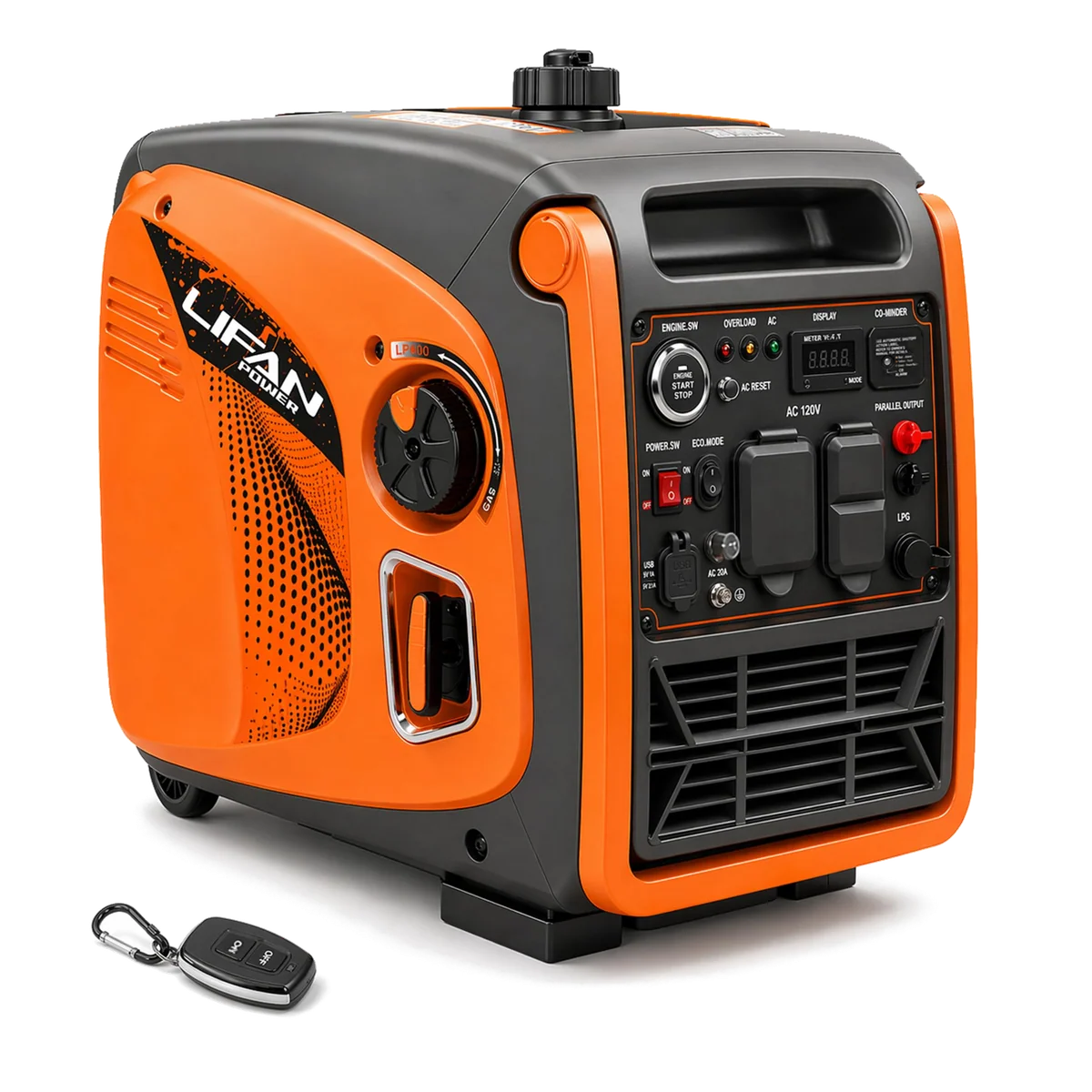
Based on our research, the LIFAN 4800 dual fuel generator is our top pick — rv.
Sources (3)
- Amazon listings and customer reviews
- Owner reports across r/Generator threads
- Ankersolix — Article — www.ankersolix.com