The best dual fuel and tri-fuel generators are bought for the propane, not for the number on the box
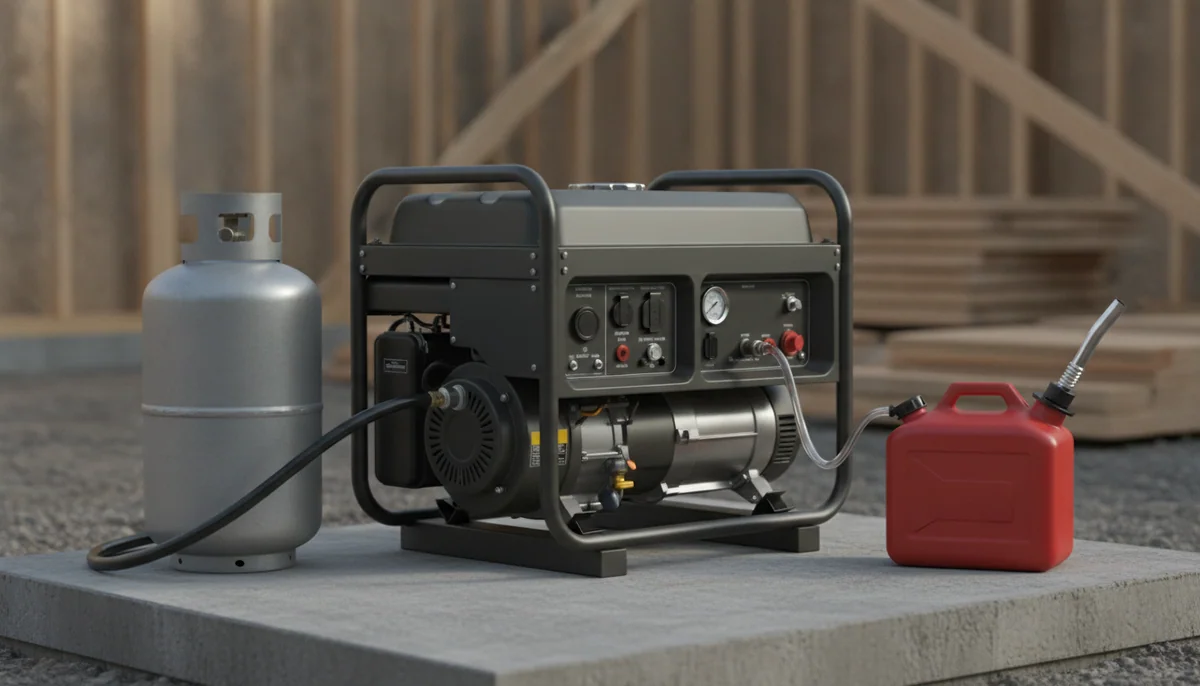
That is the whole argument of this page, and it is worth being blunt about why. Read enough owner accounts of generators in this class and the failures sort themselves into two piles. The small pile is machines that broke while working. The large pile is machines that worked, were put away, and were dead months later. GENMAX's own record contains two owners in that second pile, one who unboxed a unit eight months after buying it and could not keep it running, and one who bought two, exercised them in January and found neither functioning by the spring. A propane hose does not make you immune to that, but it removes the single most common cause of it, and it is the reason the machines on this page are worth a premium over their gasoline-only siblings.
What a propane hose does not do is make the headline wattage true. Every number in the tables below is a manufacturer's claim. Specific Load has not put any of these six on a load bank, nobody independent appears to have done so either, and in the one case where an owner went looking for the ceiling he found it at roughly sixty percent of the rating. Buy on the assumption that the rated running figure is optimistic and the peak figure is a half-second event, and you will not be the person standing in a dark garage arguing with an overload light.
Buy one of these if
- You will start it and load it once a month, which is the condition attached to every recommendation on this page.
- You want a machine that keeps running when the filling stations have no power, which is what the second fuel is genuinely for.
- You have somewhere outdoors, well away from the house, that a running engine can legally and safely occupy.
Walk away if
- You want to buy it, put it in the shed and trust it, in which case a permanently installed standby unit is the honest answer and the Generac Guardian 24kW is the version of it we have looked at closely.
- Your problem is a CPAP, an oxygen concentrator or anything else where silence and certainty beat raw watts, because a battery is the better instrument and the medical equipment page explains why.
- You need central air conditioning, which nothing on this page starts without a soft start on the compressor and which most of it will not start at all.
One piece of housekeeping, because it is how a lot of readers arrive. Amazon files three of these six under a heading for power take off equipment, and none of them is one. A genuine PTO unit is a bare alternator on a driveshaft that borrows a tractor's engine; every machine here has its own engine, its own tank and its own cabinet, and we have written up why the listings carry that label anyway.
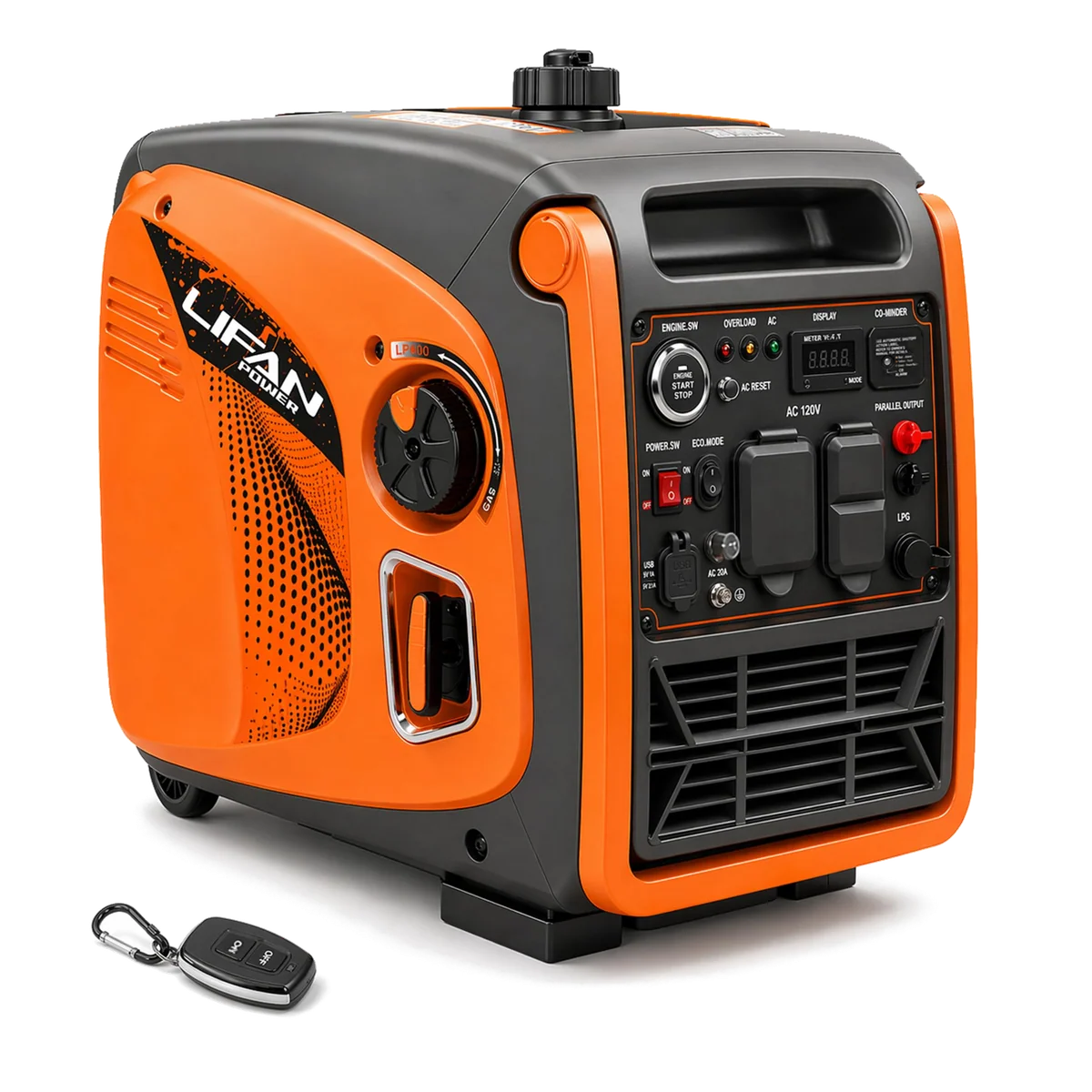
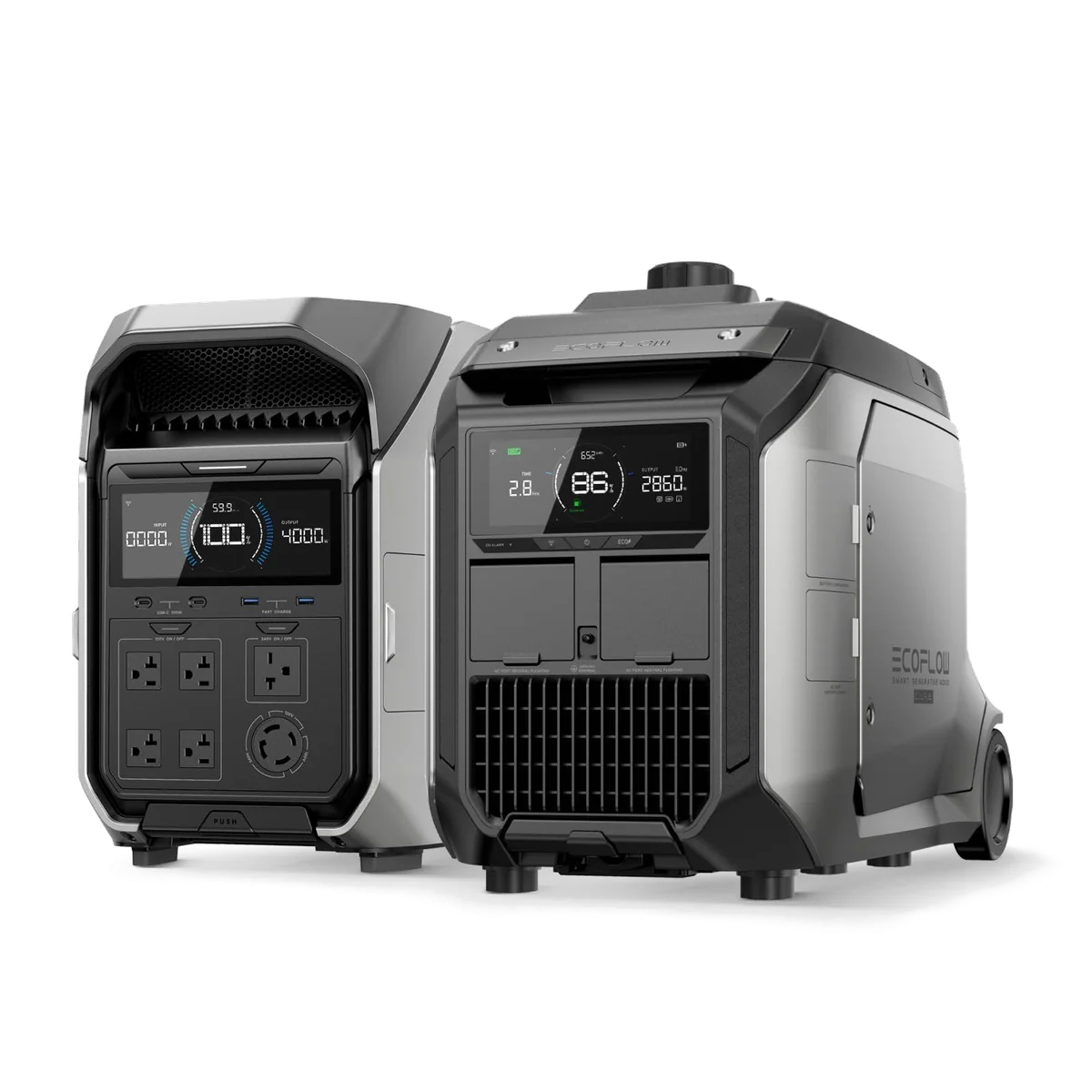
Quick Picks at a Glance
| Feature | Editor's Pick GENMAX GM9000iED | Gidrox 11000W tri-fuel inverter generator | PowerSmart 4400 dual fuel generator | LIFAN 4800 dual fuel generator | EcoFlow Delta Pro 3 smart generator |
|---|---|---|---|---|---|
| Price Range | $1,500–$3,000 | $1,500–$3,000 | $200–$500 | $500–$1,000 | $3,000+ |
| Finish | Black | Yellow | Red+Black | — | Grey |
| Power | 9000 W | 000 W | 4400 W | 4800 W | 3200 W |
| Check Price on Amazon | Check Price on Amazon | Check Price on Amazon | Check Price on Amazon | Check Price on Amazon |
The six, and who each one is actually for
These are ordered by how much machine you get, not by how much we like them, and the two things that separate them are voltage and honesty. Note which column below is empty.
| Machine | Running watts, gasoline | On propane | 240 volts? | The job it fits |
|---|---|---|---|---|
| GENMAX GM9000iED | 7,600 W, 9,000 peak | Not published | Yes, with a 50 A socket | A house, through an inlet and an interlock |
| Gidrox 11000W tri-fuel | 9,000 W claimed, 11,000 peak | 8,100 W, per the maker's own page | Yes, 50 A and L14-30 | A house with a gas line, if the rating holds |
| GENMAX GM4500iSAD | 4,000 W, 4,500 peak | 3,600 W claimed | No | A fifth wheel or a quiet campsite |
| LIFAN 4800W | 3,800 W, 4,800 peak | 3,400 W, or 3,500 W, depending which part of the listing you read | No | A 30 amp travel trailer |
| PowerSmart 4400 | 3,600 W, 4,400 starting | Not published | Not stated anywhere | Fridge, freezer, lights, one big thing at a time |
| EcoFlow Delta Pro 3 pair | 3,200 W engine, 4,096 Wh battery | 2,900 W engine | Yes, from the station | The first night in silence, then indefinitely |
Two listings sell dual fuel in the title and publish only gasoline figures. That is not a rounding error, it is the specification you would use to size the thing, missing from the page that is asking for your money.
The one to buy if you will genuinely run it every month
Nothing else on this page puts a built-in 50 amp outlet, pressure-fed oiling with a cleanable screen and remote start inside one quiet enclosure, and the owners who work it hard are consistently the ones who like it most.
The neutral ships bonded to the frame with no conversion procedure in the manual, so wiring it to a transfer switch means finding that bond yourself on a rail behind the electrical panel or paying an electrician to do it while they fit the inlet.
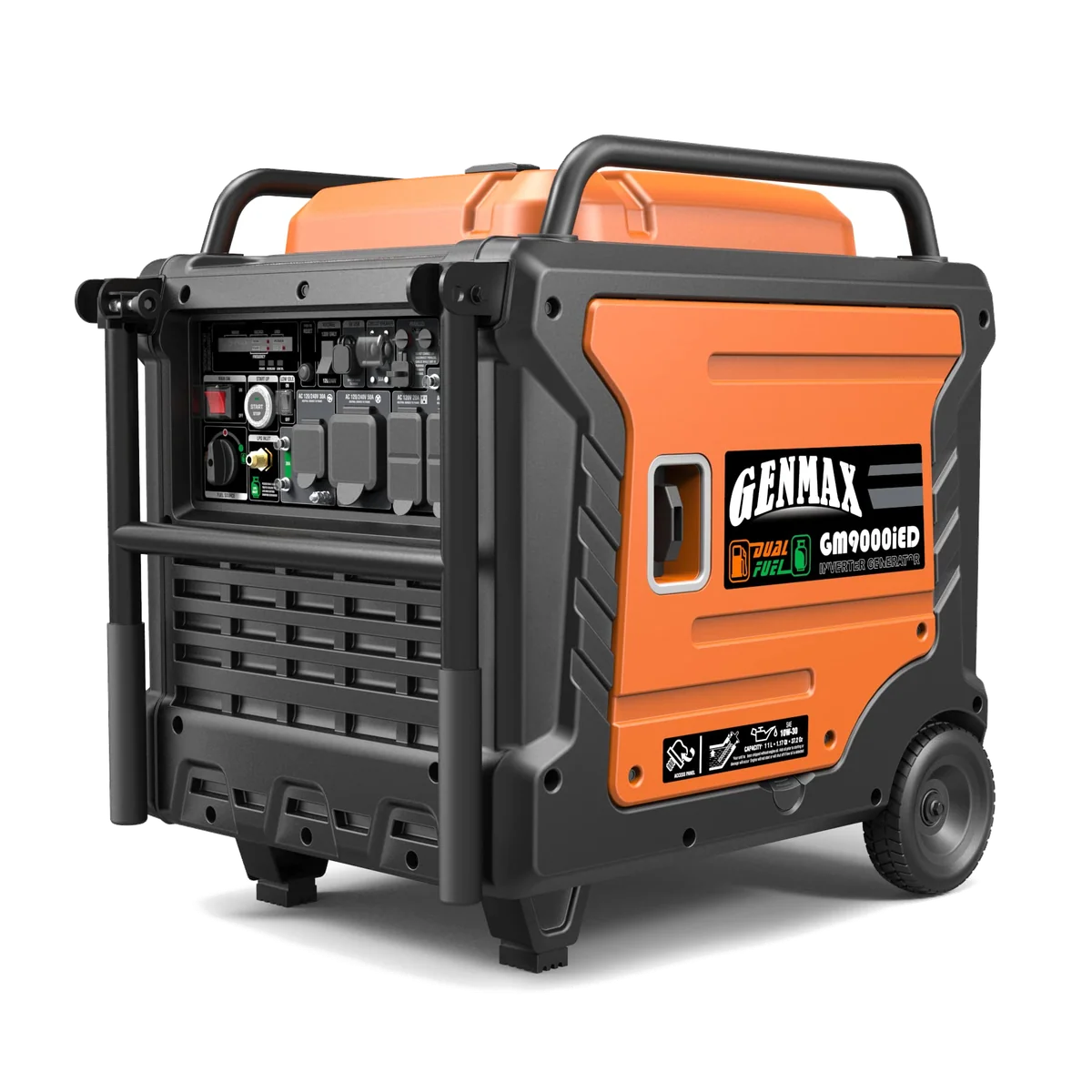
The GM9000iED is the machine here with a real owner base behind it, and its record splits along duty cycle rather than build quality: a mobile grooming business putting ten hours a day into one reports no trouble at all, while the units that sat under tarps waiting for a hurricane are the ones filing one-star reviews. Its engineering deserves the attention it gets, because pressure-fed lubrication with a filtration screen is genuinely unusual in a class where a dipper flinging oil round the crankcase is the norm, and the parts list settles the argument even where the marketing copy contradicts it. Two claims on the box do not survive contact with the hardware, though. The advertised 15,200 running watts from a parallel pair is capped by the 50 amp outlet the pairing runs through, which is 12,000 watts at 240 volts. And the hour meter resets when the engine restarts, quietly killing one of the five readouts in the panel's advertised data centre. The full review works through the bonded neutral, the CO sensor and the warranty, and the last of those is the part that matters most: warranty service on a quarter-ton object means getting it to a service centre yourself.
Tri-fuel, and a bet on a brand with a four-week reputation
A natural gas line is the only fuel supply that does not run out on day three, and this is the one machine here that ships with the hose to reach one.
The only owner who has described pushing it says it stops working somewhere between 5,000 and 5,500 watts against a 9,000-watt running rating, and no independent test exists to settle whether he had a bad unit or an honest ceiling.
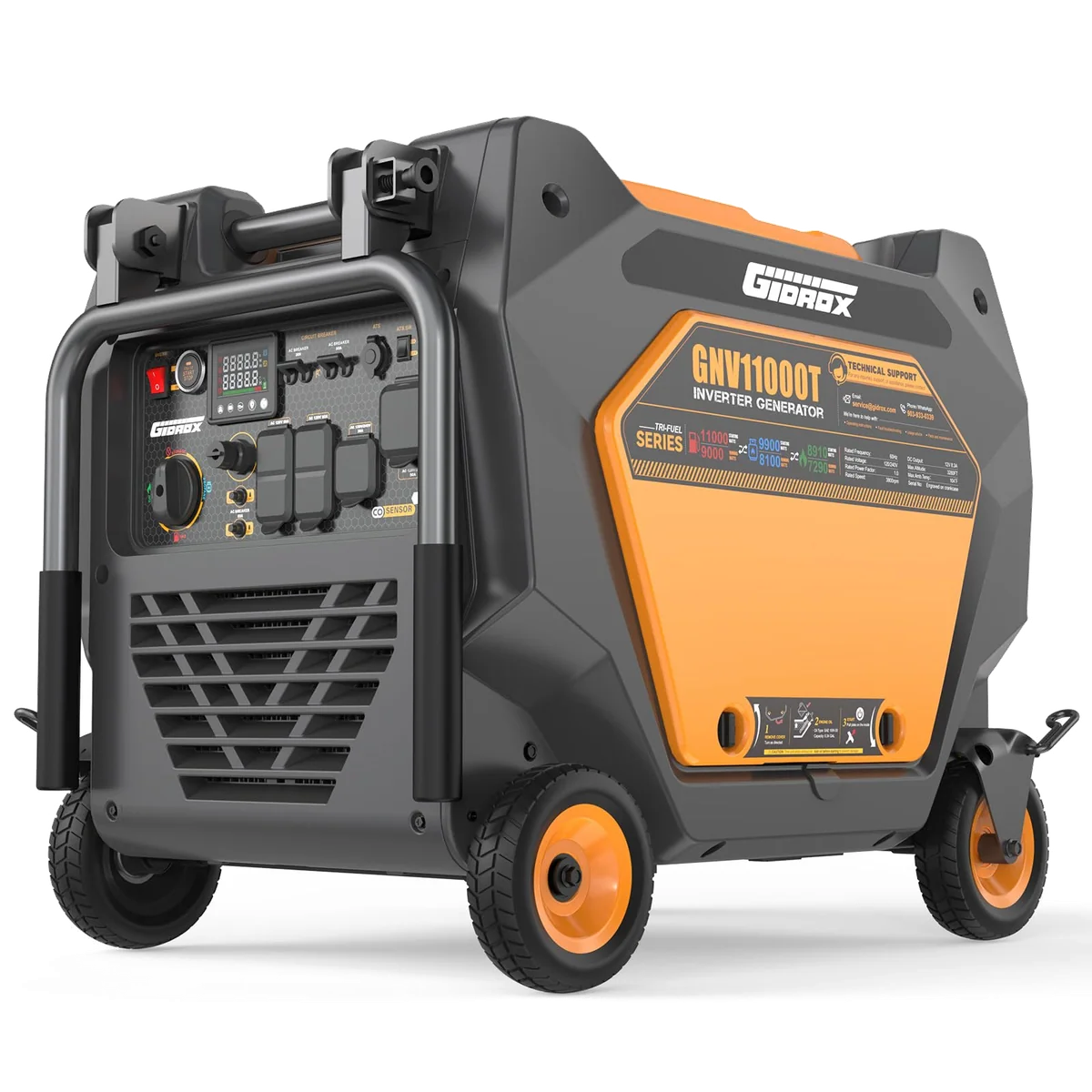
Everything attractive about the Gidrox is structural and everything worrying about it is evidential. The carburettor bowl drain and the oil drain tubing are countermeasures to the exact failure that kills stored generators, and an owner with other machines to compare against noticed them unprompted. Against that, the listing claims 62 to 65 dB and calls it quieter than a normal conversation, which is arithmetically backwards since a conversation is about 60 dB, and it gives no measuring distance at all. The tri-fuel argument is the reason to want it and also where the omission bites hardest: no natural gas output figure appears anywhere, on a generator whose best case is running off a house supply for a week. Our review sets out the week-one acceptance test that this purchase genuinely requires.
The cheapest honest way to keep a fridge and a freezer alive
Every owner in its record who mentions starting it says it fires on the first pull, on gasoline or propane, from a machine one person can lift into a car.
It is a 76 dB machine by its own listing, there is no electric start to fall back on when the recoil rope frays, and the owner whose unit failed after three weeks was told to find a repair shop and pay the freight himself.
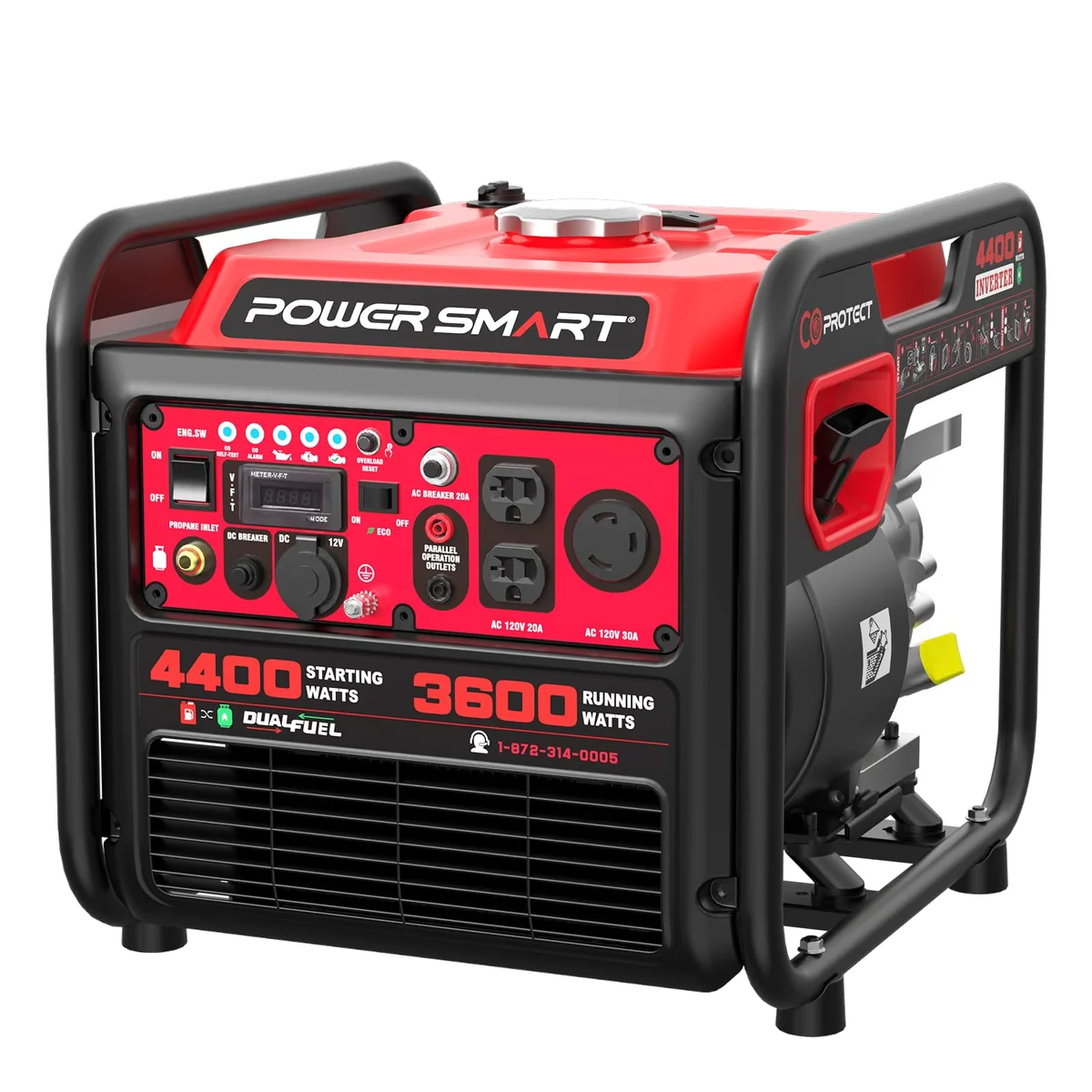
Judge this one as insurance rather than as equipment and it makes sense. Three thousand six hundred rated watts covers a fridge, a chest freezer, lights, a router and one substantial appliance at a time, which is what backup power actually means in most households, and one owner ran an RV rooftop air conditioner on propane with it for about forty five minutes. The listing is careless in ways that tell you which tier of the market you are in, promising eleven hours of runtime in a bullet and ten in the paragraph directly below it, and listing a 7,000-watt product on a 4,400-watt page. The one owner who came back to his after three weeks found it cutting out at thirty seconds with an overload light and nothing plugged in, on both fuels, which is the failure a backup generator exists not to have. The full review takes that story apart, and who actually builds these is worth ten minutes before you commit.
A travel trailer's generator, once you have survived the first hour
The TT-30 socket on the front takes a 30 amp trailer cord with no dogbone and no adapter stack, and the one owner who has genuinely worked it ran a 12,000 BTU rooftop air conditioner, a microwave and the converter together with only a brief dip on the voltage readout.
The starter battery ships disconnected with its plug hidden behind a frame rail that the manual never mentions, the box contains no oil, and there is no 240 volt outlet anywhere on the machine.
Four of the five written reviews on this listing are about the unboxing rather than the generator, which is its own kind of verdict. Lifan knew about the battery problem well enough to pre-empt it in a marketing bullet and in the listing's own FAQ, and still did not print the paragraph in the manual. The same listing publishes two different weights for the same machine, 68 lb in a bullet and 42 lb in the A+ copy, and quotes 58 dB at 23 feet in a way that quietly drops the 25 percent load condition when it wants to talk about air conditioning. None of that makes the machine bad. It makes it a machine you should read the first-hour walkthrough for before the box arrives, along with a quart of 10W-40.
The light one, for a fifth wheel and a campsite with neighbours
At a claimed 51.4 pounds it is the easiest machine on this page to move alone, and the one owner who has loaded it ran a 15,000 BTU RV air conditioner on both fuels for around six hours a tank.
That tank holds under a gallon, and the only other owner in a two-review record reports it overloading at about 2,200 watts on propane against a claimed 3,600 running watts on that fuel.
This is the thinnest record on the page and it should be read that way: two reviews, one delighted and one carefully unimpressed, with nothing else behind them. The specification is attractive for camping, with a TT-30 outlet, a duplex household pair, a 12 volt port and a claimed 62 dBA at quarter load from a 145cc engine. But it starts by hand only, and the propane complaint is the one to weigh, because it is the fuel most people buy a dual fuel machine to use. If quiet is the whole point of the purchase, the wider field is on the camping list, and the size question is an RV question before it is a wattage one.
Not really a generator, and the only thing here that covers the first night in silence
The battery takes the quiet, unattended hours and the 3,200 watt engine wakes itself when the charge drops, which is the one job no fuel-burning machine on this page can do at three in the morning.
The cable joining the two halves is sixteen feet and cannot be extended, which has to bridge the distance between a battery indoors and an engine far enough from the house to be safe.
What the premium buys here is the handshake rather than the watts: the station watches its own charge, starts the engine below a floor you set, feeds power backwards to wake the engine's starter battery, and gives solar priority so the thing runs less. The arithmetic underneath it is the honest argument for every machine on this page, because one 20 lb propane bottle carries roughly 24 kWh through that engine while the pack holds 4 kWh, and a full battery is a brick by the second evening. Run it on propane rather than gasoline, because the engine has no choke and its automatic start frequently failed in cold-weather testing on petrol. The review measures the cable, the derate and the support record, and if you want the battery half without the engine, the power station picks are the right page.
How this list was built, and what it cannot tell you
Specific Load has not run any of these six generators. Nobody here has started one, loaded one, metered its harmonic distortion or stood twenty-three feet away with a sound level meter, and no sentence above should be read as though we had. What this page is built from is each product's own record: the Amazon listing and its specifications, every customer review Amazon retains, the manufacturers' published figures where they exist, and the forum and subreddit threads where owners argue about these machines in front of each other. Where a listing contradicts itself, this page says so rather than quoting the flattering number.
The evidence is uneven in a way worth naming, because it should change how much weight you give each recommendation. The GM9000iED has 133 ratings and eight substantive reviews behind it. The Gidrox has twenty-five ratings and roughly four weeks of collective ownership. The GM4500iSAD has three ratings and two reviews. The EcoFlow bundle has eight ratings, which is noise rather than a verdict. A high average from a handful of opening-week impressions tells you about packaging and first starts, and that is all it tells you.
Nothing here was tested against a competitor we do not cover, and where the honest answer to a reader's problem is a different kind of machine, this page says so instead of ranking one of these into a job it cannot do. The rest of our coverage is in the resources index, the method is on the about page, and the gas-only field sits on the portable inverter list.
Settle these four things before you spend anything
Whether you need 240 volts, which decides half the list
A well pump, an electric range and a central air condenser all run on 240 volts, and three of the six machines above cannot supply it at any price. If a transfer switch or an interlock is anywhere in your plan, you are shopping in the top two rows and nowhere else, and the inlet box, interlock and backfeed comparison is the piece to read before an electrician is standing in your driveway. The GM9000iED's 7,600 rated watts works out to about 32 amps continuous at 240 volts, which is the number to size against; its 50 amp socket is cord headroom for a long run, not extra capacity.
There is a second question that no listing on this page answers properly, and it costs people money. A generator's neutral is either bonded to its frame or floating, and feeding a house panel through a transfer switch usually means the bond has to come out, because the panel already provides one. GENMAX ships this machine bonded and supplies no procedure. Gidrox does not say either way. Put a multimeter across neutral and ground and look for continuity, which means bonded, and read the full walkthrough before you assume.
What the load actually is, rather than what the box says
The conventional rule is to hold continuous load at about 80 percent of the rated running figure, which turns 9,000 into 7,200, 3,800 into roughly 3,000, and 3,600 into something that is a fridge, a freezer and a few circuits. Then subtract again for propane. Then remember that motors ask for several times their running draw for the half second they break free, which is the entire subject of why the number on the box is not the power you get.
Air conditioning is where this bites hardest. Read the data plate on your own outdoor unit rather than any watt figure, including ours: a 95 LRA condenser is nominally 22,800 watts at 240 volts, and even allowing for voltage droop during the start it still lands somewhere near 11 kW of demand. A soft start on the compressor is the fix, and on the GM9000iED one owner's Micro-Air unit brought his starting draw from 94 amps to 34, which is inside what the machine can hand him. An RV rooftop unit is a different and far more achievable proposition, and the long version of that arithmetic lives here.
What the second fuel costs you
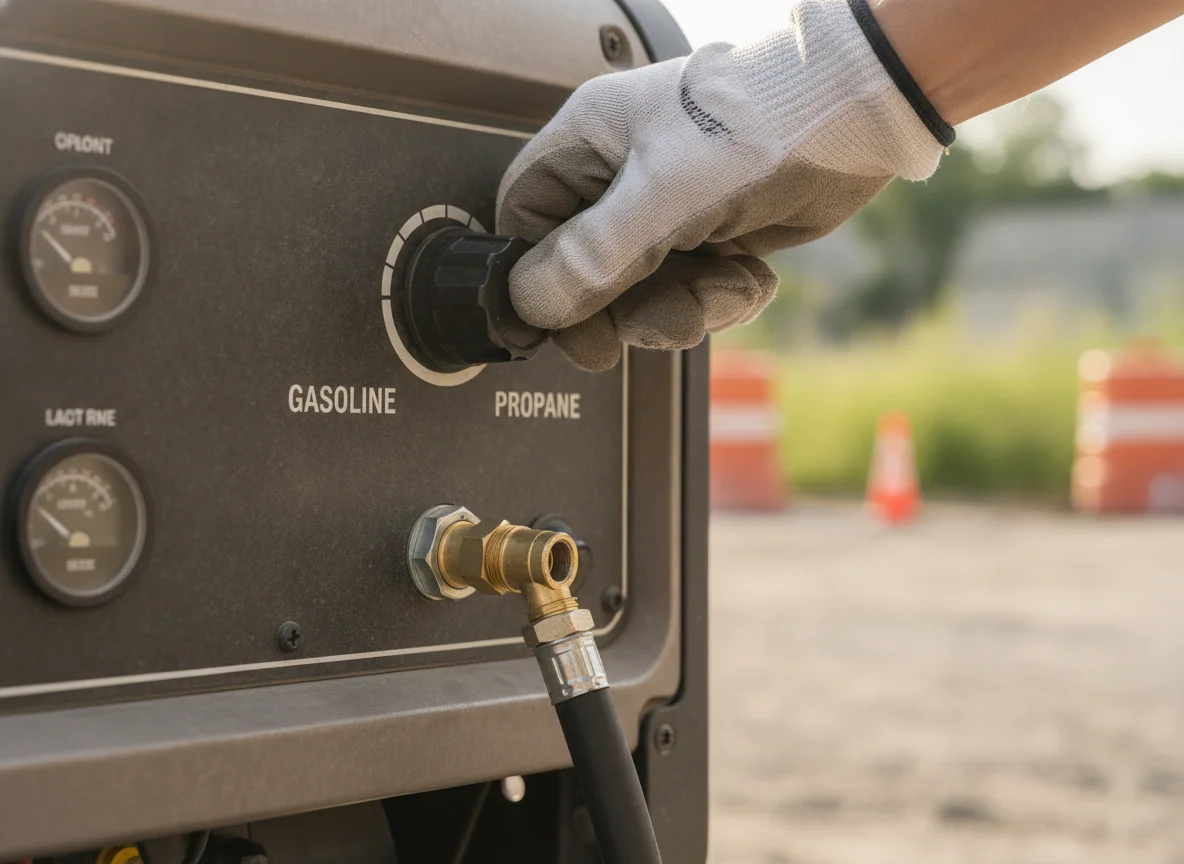
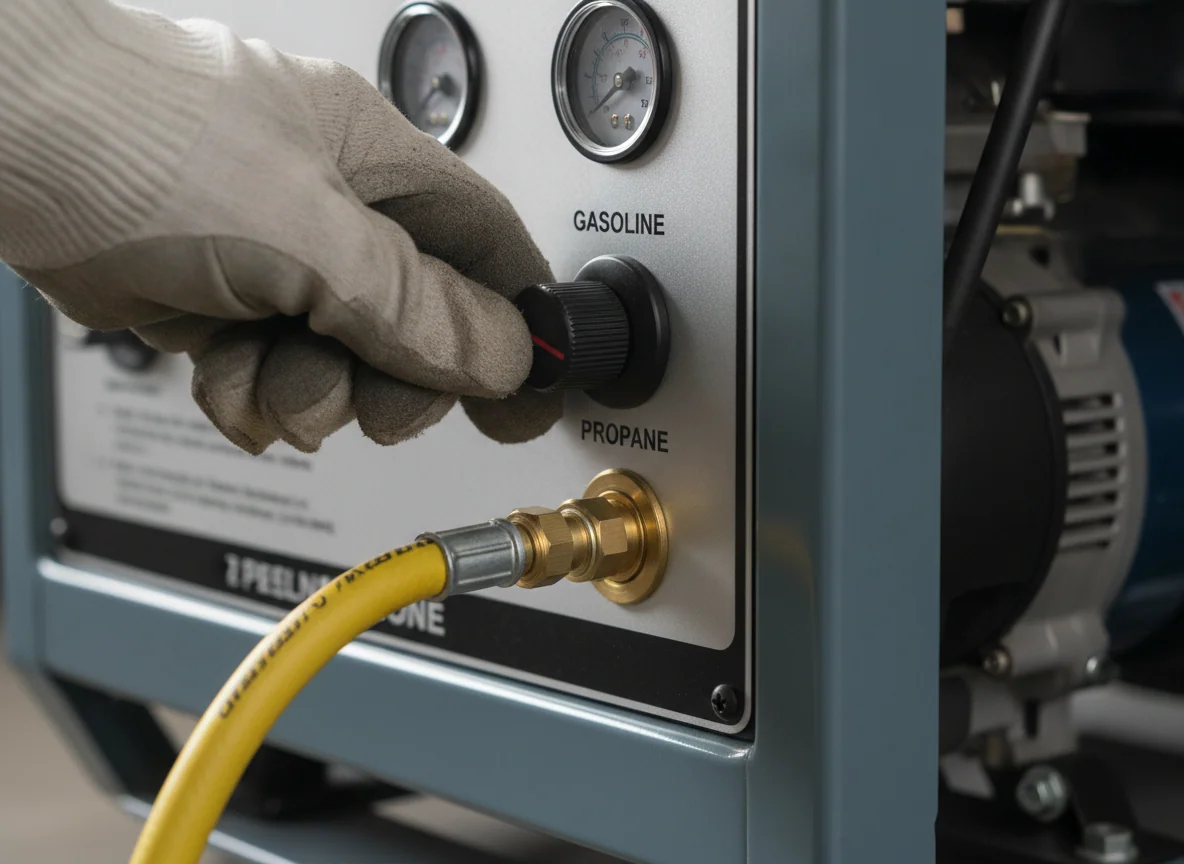
Propane trades output for storage life, and the machines here that publish both numbers put the trade at roughly ten percent: 4,000 down to 3,600 on the GENMAX 4500, 3,800 down to 3,400 on the LIFAN, 3,200 down to 2,900 on the EcoFlow engine. That is the honest price of a fuel that does not go stale, does not gum a carburettor and does not need a working filling station, and on a machine that spends 360 days a year doing nothing it is a bargain. Natural gas sits lower again, and if you are plumbing for it, what each fuel costs in watts and runtime is the calculation to do first.
How loud it really is, and against what
| Machine | Claimed | At what load and distance |
|---|---|---|
| LIFAN 4800W | 58 dB | 25% load at 23 feet |
| GENMAX GM9000iED | 62 dBA | 25% load at 23 feet |
| GENMAX GM4500iSAD | 62 dBA | 25% load, no distance given |
| Gidrox 11000W | 62 to 65 dB | No load and no distance given |
| PowerSmart 4400 | 76 dB | 25% load at 23 feet |
Two things fall out of that table. The PowerSmart is an outlier by fourteen decibels at the same measurement condition, which is what its own listing tells you about a machine sold with the word quiet in the title, and its owners call it quiet because they are standing next to open frame contractor generators rather than next to enclosed inverters. And every figure in it is taken at a quarter load, which is not what an outage looks like. If a neighbour or a campground is the constraint, what a rating at 23 feet is actually measured at will save you an argument.
Frequently Asked Questions
How much power do you lose running on propane?
Roughly ten percent on the machines here that publish both figures, which is the price of a fuel that stores indefinitely and cannot gum a carburettor.
Is tri-fuel worth paying for over dual fuel?
Only if you have a natural gas line at the house and are willing to pay someone to plumb it, because that is the fuel that turns a two-day machine into a two-week one.
Why does a generator start and then shut down a few minutes later?
On these machines the usual suspects are a carbon monoxide sensor doing its job or failing, a closed vent screw on the fuel cap starving the engine as vacuum builds, and low oil, in roughly that order of frequency.
Why does one trip its breaker well below its rated output?
Most often because the whole load is sitting on one 120 volt leg of a 120/240 volt machine, which asks half the generator to do all the work, and the other causes are worth knowing before you blame the engine.
Is Lifan a brand worth buying a generator from?
It is an established Chinese engine manufacturer with a US arm, and the pattern across a decade of its machines is that the engines earn praise while the fuel system plastics, the quality control and above all the documentation earn the complaints.
Are these the tractor-driven units Amazon's category name suggests?
No, every machine on this page has its own engine and its own tank, and nothing here bolts to a driveshaft.
Which of these will run central air conditioning?
Only the top two rows have any chance, and only with a soft start fitted to the compressor, because a residential condenser's locked rotor inrush runs into five figures of watts.
What is the single thing most likely to make one of these fail me?
Leaving it alone, which is why every recommendation here is conditional on starting it and loading it once a month and following a real storage routine rather than a hopeful one.
Our Top Pick
The GENMAX GM9000iED is our #1 recommendation.
Check Price on Amazon: GENMAX GM9000iEDSources (3)
- Amazon listings and customer reviews
- Owner reports across r/Generator threads
- Powerequipmentforum — Article — www.powerequipmentforum.com