Anker builds the better battery, EcoFlow sells the better answer to a three-day outage
For whole-home backup, buy the EcoFlow bundle if you can safely run an engine within sixteen feet of wherever the battery is going to live and you intend to feed it propane, and buy the Anker if you cannot, because the F3800 Plus is the stronger electrical machine sold with the wrong accessory rather than the right one.
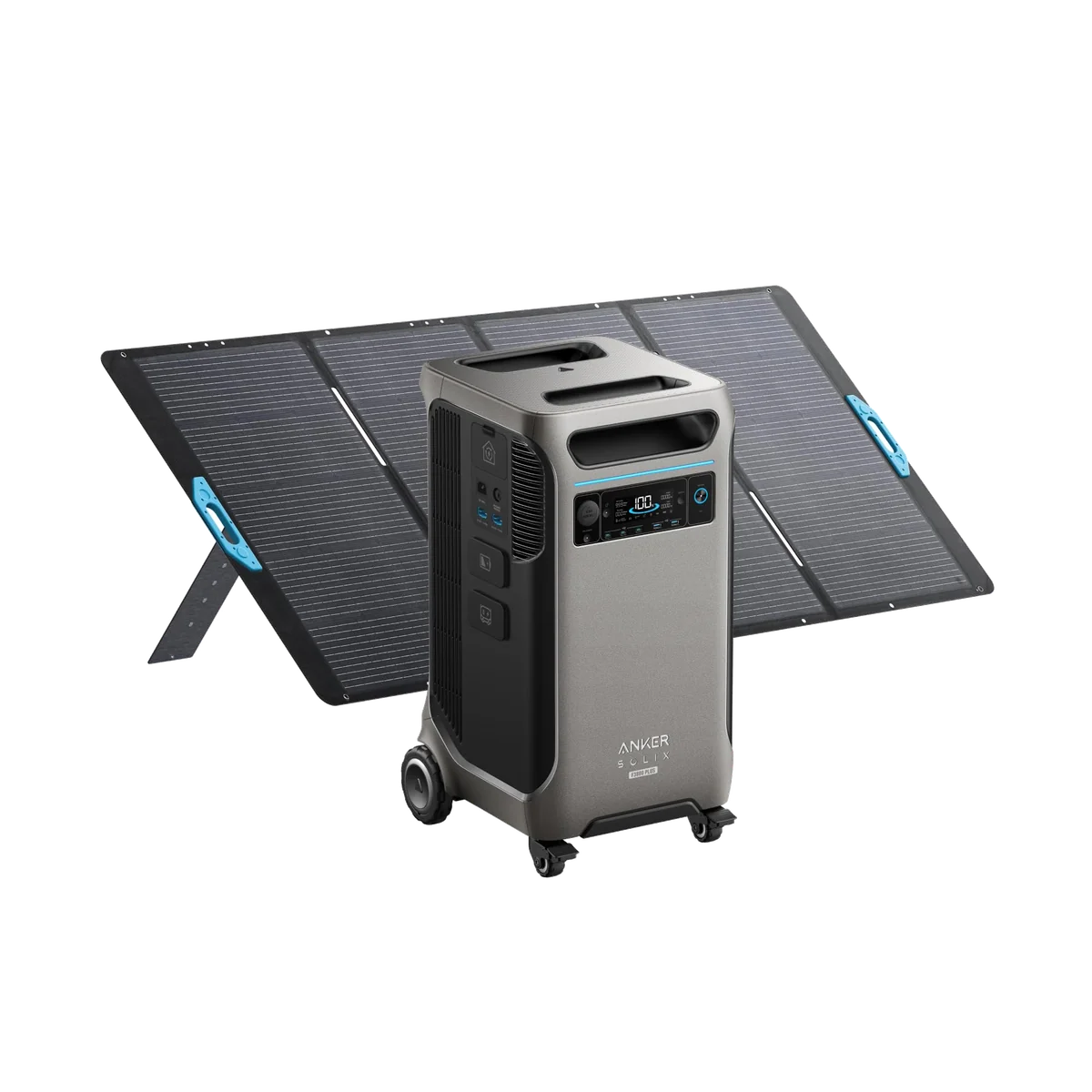
Anker SOLIX F3800 Plus
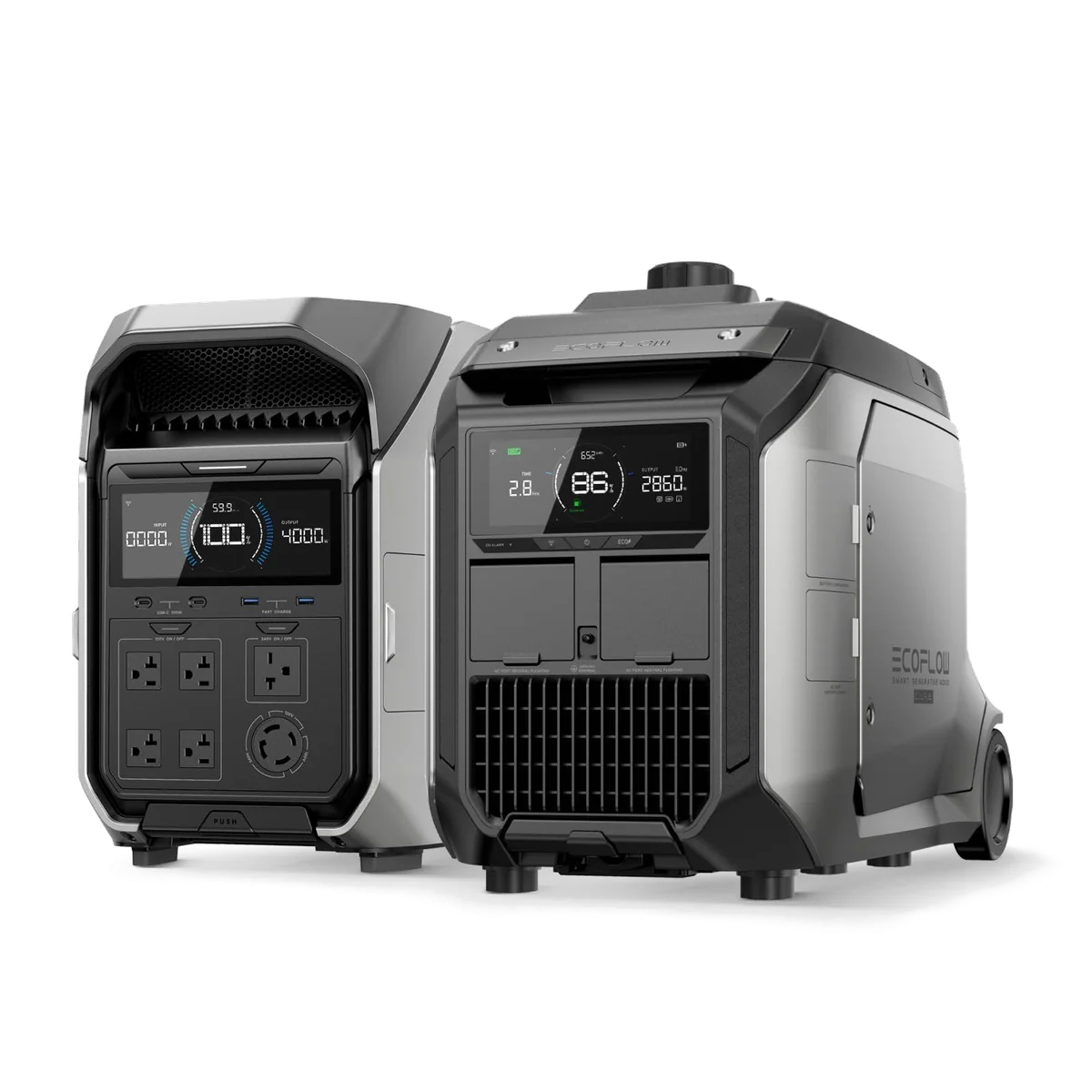
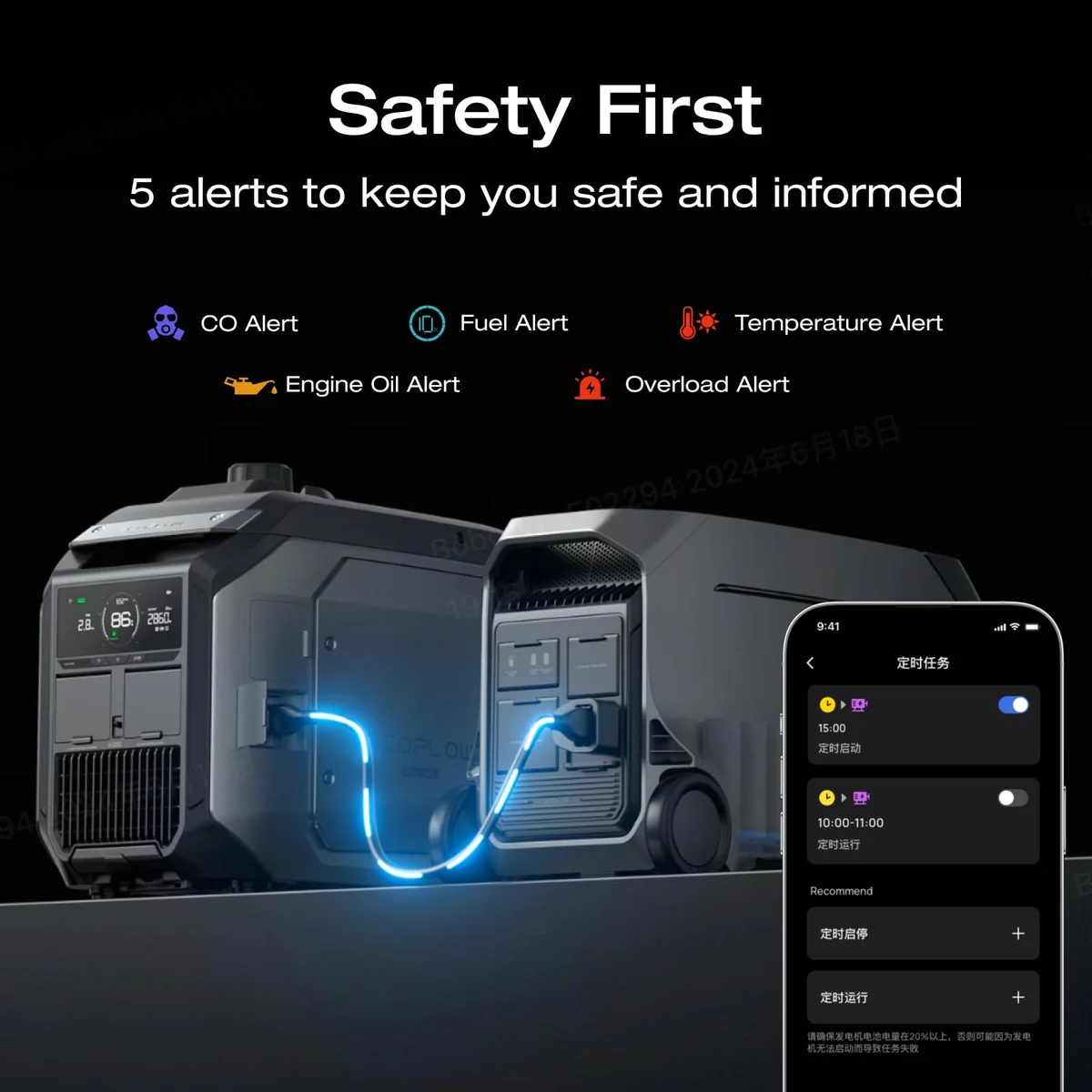
EcoFlow Delta Pro 3 smart generator
Both of these listings are a battery plus a second box, and the second box is the whole argument. Anker ships 3,840Wh with a 400W folding solar panel. EcoFlow ships 4,096Wh with a 3,200W dual fuel engine that starts itself when the pack runs low and stops when it is full. On capacity, inverter quality, app polish and build, these two are close enough that most buyers would be happy with either. On the question a multi-day outage actually asks, which is what puts the energy back in, they are not close at all.
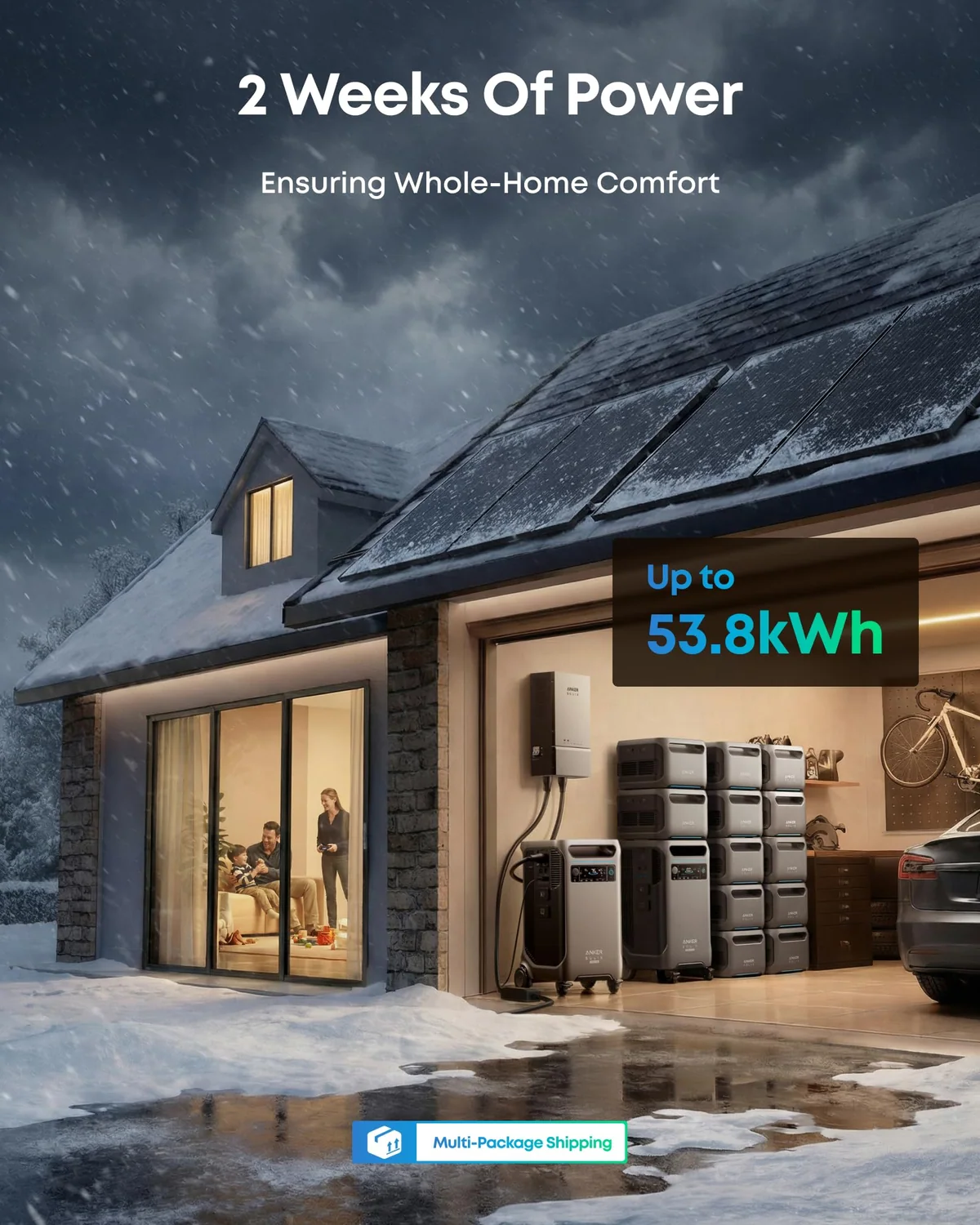
Both listings also use the phrase whole-home, and both are stretching. EcoFlow's copy promises two to four days of it. The strongest case anyone has made for the Anker platform is built on genuine split-phase 240V, and even that case runs on a stack of expansion batteries rather than the one unit in this box. Roughly 4kWh is a disciplined day of fridge, freezer, lights, router and phones. It is not a house, and neither of these two will be a house on its own overnight.
- The EcoFlow bundle, if
- You have a legal, safe outdoor position for a running engine that measures under sixteen feet to the battery, you will keep 20 lb propane bottles rather than jerry cans, and your outage problem is measured in days. That combination is what the premium buys, and nothing else in this comparison replaces it.
- The Anker, if
- Your only outdoor space is a shared driveway or a detached garage, you want 6,000W of split-phase from a single chassis, or you are building a system in stages and want the headroom to keep adding to it. Buy it for the machine and choose your own panels, because the one in the box is the weakest part of the package.
One asymmetry to declare before any of the detail, because it shapes what this page can honestly say. The Delta Pro 3 has been put on a bench and drained through a meter; the F3800 Plus, at the time of writing, has not, and the most technical review of it says plainly that deeper testing was still to come. Specific Load has tested neither, and where one machine has numbers and the other has only a spec sheet, that gap is reported rather than papered over.
Anker SOLIX F3800 Plus
EcoFlow Delta Pro 3 smart generator
At a Glance
| Feature | Anker SOLIX F3800 Plus | EcoFlow Delta Pro 3 smart generator |
|---|---|---|
| Price Range | $3,000+ | $3,000+ |
| Finish | Black | Grey |
| Power | 400 W | 3200 W |
| Check Price on Amazon | Check Price on Amazon |
The refill decides it, and everything else is detail
Start with the arithmetic that the marketing copy on both listings walks past. A 400W panel, held at its full nameplate output without a cloud or a bad angle, needs the better part of ten hours to put 3,840Wh back. Panels do not hold nameplate output, and the owner of this exact bundle who bought extra panels reported they never reached advertised figures even aimed straight at the sun in clear conditions. Meanwhile the machine that panel is bolted to will accept 3,200W across two inputs. The bundle supplies about an eighth of what the battery can swallow.
Now the other box. One 20 lb propane bottle, through EcoFlow's engine, is worth roughly 24kWh, and a single tank of petrol roughly 8kWh.
| Source | Energy it represents | Refills of a ~4kWh pack |
|---|---|---|
| Anker's bundled 400W panel, one clear day | Under 4kWh at an uninterrupted nameplate that no panel holds | About one, weather permitting |
| EcoFlow's engine, one petrol tank | ~8kWh | ~2 |
| EcoFlow's engine, one 20 lb propane bottle | ~24kWh | ~6 |
That is the comparison in three rows. A bottle of gas from a hardware store carries several times what either pack holds, and it does it in November, at night, under a weather system, which is exactly when the panel is worth nothing and exactly when the grid goes down. The counter-argument for batteries has always been the things an engine cannot do: start instantly, run silently, produce no carbon monoxide, and need no one standing outside in the rain. Every prepper who recommends a power station names the carbon monoxide first. Bolt an engine back on and you reintroduce that hazard, which is why the distance an engine needs from a house is not negotiable and why the sixteen-foot cable is a specification and not a footnote.
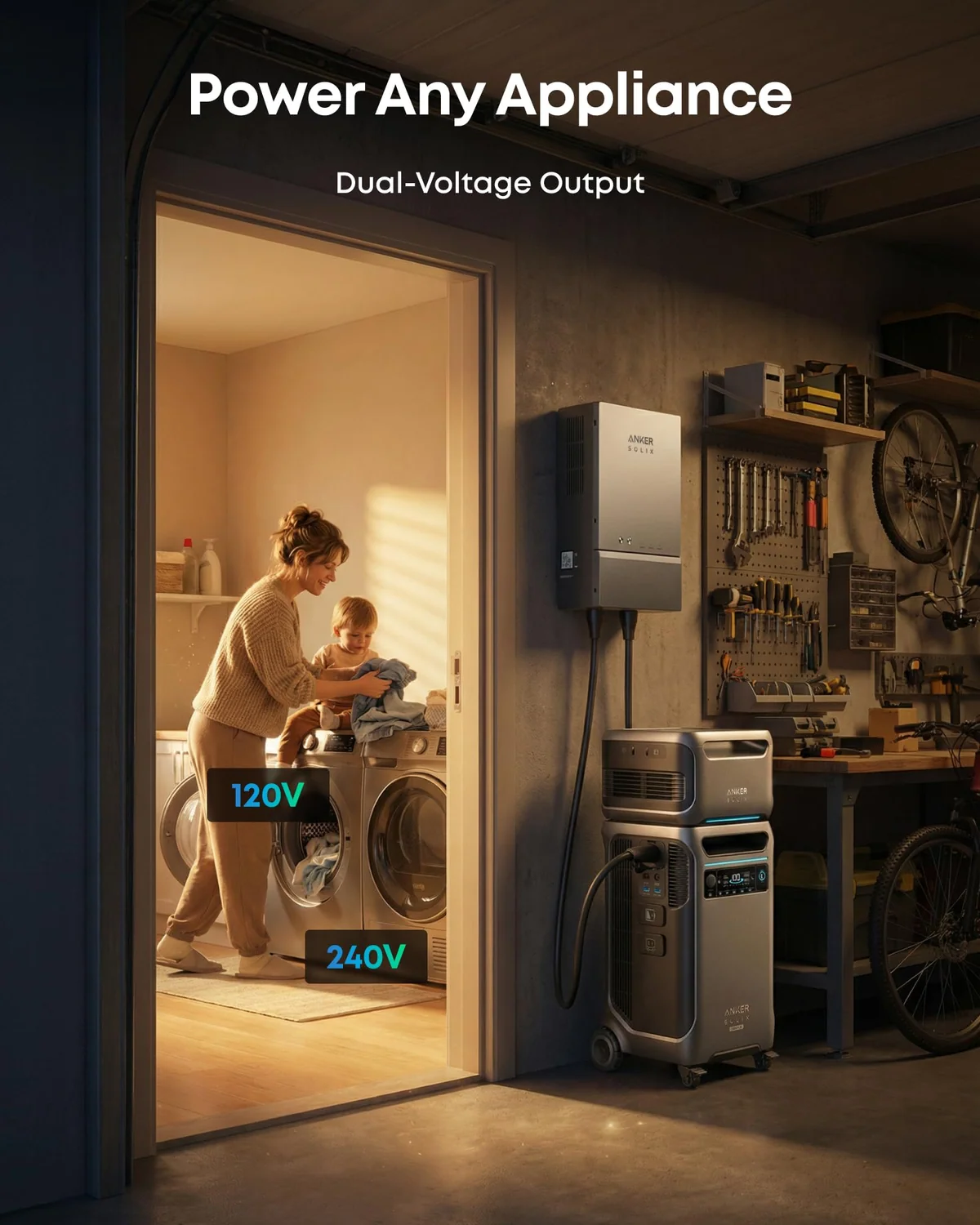
Anker is not blind to any of this. The Plus gained a dedicated smart generator port, Anker sells a tri-fuel generator its own app can start unattended, and one owner of this listing has already improvised the architecture himself, charging off-peak from the wall, running the house on the battery through peak hours and topping up from a 3,600W propane inverter generator when the grid is gone. The capability exists. It is just not in this box, and pairing a third-party generator to a battery at a sensible charge rate is a question people ask constantly and get muddled answers to. EcoFlow's premium buys you the version where you do not have to work it out.
Where the Anker is straightforwardly the better machine
| Anker SOLIX F3800 Plus | EcoFlow Delta Pro 3 bundle | |
|---|---|---|
| Rated capacity | 3,840Wh | 4,096Wh |
| Capacity actually measured | No published instrumented figure | 3,830Wh delivered at a steady 800W, about 93.5% |
| Inverter | 6,000W | 4,000W, holding 117 to 118V under about 4,000W of load |
| 240V | L14-30 split-phase at 6,000W from one chassis | 120V and 240V from a single unit |
| RV socket | TT-30, capped at 3,000W rather than a true 30A | Native TT-30R on the station |
| Solar input | 3,200W over two ports at 11 to 165V, ordinary MC4 arrays | Not measured in our research |
| Expansion ceiling | ~26.9kWh on one unit, on long loose cables | 48kWh with extra batteries or generators |
| What arrives in the second box | 400W folding panel | 3,200W dual fuel engine, 3,200W on petrol and 2,900W on propane |
| Mass to move | 136 lb, one object | ~113 lb station plus an ~83 lb engine |
| Listing ratings | 4.6 from 25 | 3.6 from 8 |
Half again as much inverter is not a rounding difference. Six thousand watts of split-phase out of one chassis, on an L14-30, is why the Anker keeps appearing in conversations about well pumps, dryers and panel feeds rather than campsite kettles. If you are wiring either of these to a house rather than trailing extension leads, read how a transfer switch or an interlock actually goes in before you spend anything, because that decision costs more than the difference between these two listings.
Both machines carry a caveat on their 30A sockets, and buyers keep tripping over both. The Anker's TT-30 is capped at 3,000W, which is 25A, and one owner reports his Grey Wolf camper's air conditioning tripping the unit after about five minutes even with a soft start fitted. A second owner notes that surge headroom shrinks further when the unit is charging and discharging at once. On the EcoFlow side, the engine's own 30A outlet does not hold 3,600W consistently enough to be trusted as a true 30A supply, and the engine drops its front outlets entirely while it is charging the station. Neither of these will start a residential central air condenser, whose inrush runs into five figures of watts; what a compressor asks for at startup is the number to check first if cooling the house is the reason you are here.
What the meters caught, and what nobody has measured
The Delta Pro 3 is unusually honest about the number on its own box, giving back 3,830Wh of a rated 4,096Wh through a steady 800W load, where most stations in this class land between seventy-five and eighty-five percent. EcoFlow's own published runtime chart is less flattering than its bench result: multiply each row back out and every one lands near 3.3kWh, an inverter and conversion loss of about a fifth that appears nowhere on the box. Plan around 3.3kWh a charge and you will not be caught out.
For the Anker there is no equivalent figure at all: no published measurement of delivered capacity, idle draw, noise in decibels or the real output of the bundled panel. The nearest thing to a runtime data point is an owner of the previous F3800 getting roughly 24 hours out of a fridge, which works out around 160W average and points at a large inverter idling rather than at the fridge. That Anker subsequently shipped a firmware update sold on standby efficiency suggests the complaint was live inside the company too. Our piece on what a power station really gives a fridge after inverter losses explains why nameplate and delivered watt-hours are different animals on both of these.
The engine is the crude half of the EcoFlow, and winter is when it shows
Three findings from a twenty-four hour freezer test should shape the purchase. On petrol the engine was a struggle to start and its automatic start frequently failed, because it has no choke. On propane in the same conditions it started after a few primes and ran steadily. And it is loud, vibrating hard enough to wander on its feet for the first ten minutes of a run.
Read those together and the instruction writes itself: buy it intending to run propane. You give up about 300W of output and you keep the automatic start, which is the entire thing you paid extra for, working in exactly the weather that causes outages. The general fuel trade is more balanced than that, but the cold-start behaviour settles it here on its own. It also means a machine that can wake itself at three in the morning within earshot of a neighbour, so set the battery floor low enough that it only runs when it genuinely must.
After the sale, and after five years
This is where the two brands separate most sharply, and it goes Anker's way. Across Amazon and the community threads there are several accounts of F3800-family units arriving dead or refusing to wake, and every one of them ends the same way: a free replacement, with unprompted praise for Anker's support from people who had nothing else nice to say. That is a non-trivial dead-on-arrival rate attached to a warranty process that works, which is a much better problem to have. The dissenting note is worth carrying: an EcoFlow owner in a head-to-head thread reckoned EcoFlow's warranty terms were the better ones, without elaborating.
The paperwork does not entirely support him. Anker's term on this unit is five years. The EcoFlow bundle listing states three, while EcoFlow's own storefront advertises five on the station, a gap that is probably the engine pulling the blended figure down but is sitting on the page you are buying from. Get in writing which term covers which box.
On ageing, only the EcoFlow line has a long-run record, and it is mostly reassuring with one splinter in it. A five-year-old previous-generation Delta Pro still held its capacity and charged near its rated speed, but asked to run at 3,500W, a hundred watts under its own rating, it overloaded and shut down where it had previously been fine. Capacity fade in these packs is well understood; sustained-output fade is not, and that is the open question I would want answered before treating any station of this family as a decade-long asset. The corresponding Anker unknown is simply that nobody has run one long enough to say.
Two smaller frictions, one each. Anker's expansion batteries hang off long floppy cables rather than stacking, and the installation gets unwieldy past two of them, which matters when the whole-home story depends on stacking six. EcoFlow's ecosystem is a walled garden whose official compatibility chart owners actively dispute, with entries that need an undocumented adapter and others that work despite being listed as incompatible. Treat either maker's compatibility claim as the start of a question.
One last piece of context for anyone using published scores as a shortcut. Consumer Reports has tested the previous-generation Delta Pro rather than this bundle, and their score sits behind a membership wall, so a Consumer Reports number quoted at you for this product is a number about something else.
Anker SOLIX F3800 Plus

EcoFlow Delta Pro 3 smart generator
Which one is actually yours
Go and measure the cable run first, from the position where an engine can legally and safely run to the position where you want the battery, around corners rather than across the lawn. If it comes back over sixteen feet, the EcoFlow bundle cannot do the thing it exists to do and you are paying roughly half a ticket for an engine you cannot deploy. If it comes back under, and you are willing to keep propane, that bundle is the only one of these two that turns a fixed number of kilowatt-hours into an outage you can sleep through.
The Anker earns its money in a different, narrower situation: 240V split-phase from one chassis, headroom to grow, and the willingness to buy your own array. That last part is not a slight against Anker's panel so much as against the pairing, and the point is general rather than personal to this listing. Four hundred watts is limiting even against a 1,000Wh-class pack; against 3,840Wh it is decorative. Sizing an array properly is the arithmetic to do before you decide the bundle is a saving. If the appeal was chiefly the money you would save shifting load off peak, note that the community redid one owner's payback sums and got ten years rather than six.
And if the real requirement is a week of normal life rather than a disciplined day, be honest that neither of these is the tool. A capable dual fuel inverter generator gives you nearly three times the output for a fraction of the money and asks you to press the button yourself, and if your outages are frequent and long enough, a permanently installed standby starts on its own and runs as long as the gas line does. What the extra money buys and the wider field for multi-day outages are both worth reading before a four-figure battery.
The one to buy if the engine has nowhere to go
It is the stronger electrical machine of the pair, with 6,000W of split-phase from a single chassis and a solar input finally wide enough to take ordinary MC4 arrays, which makes it the better foundation for a system you intend to grow in stages.
The 400W panel in the box supplies about an eighth of the solar input the machine was built to take, and the socket sold as a 30A RV outlet is capped at 3,000W.
The one to buy if you have somewhere safe to run an engine
The engine wakes itself when the pack drops and stops when it is full, and the station gave back 93.5% of its rated capacity on a bench, which is a better result than most of this class manages.
The cable joining the two halves is sixteen feet and cannot be extended, and the engine's automatic start frequently failed on petrol in freezing conditions because it has no choke.
Frequently Asked Questions
Which one of these actually backs up a whole house?
Neither on its own, since roughly 4kWh is about one disciplined day of fridge, lights and devices, and the multi-day claims on both listings assume stacked expansion batteries, an engine, or both.
Can I pair the Anker with a generator and get the same arrangement?
Yes, the Plus has a dedicated generator port and Anker sells a tri-fuel generator its app can start unattended, but that generator is a separate purchase rather than something in this box.
Which is quieter?
The Anker, comfortably, because no decibel figure for it exists in our research but the comparison is against a bundle containing a petrol engine that is loud enough to be a neighbour problem when it starts itself at night.
Should the 3.6-star rating on the EcoFlow put me off?
No, because it rests on eight ratings, which is noise rather than a verdict, and the Anker's 4.6 from 25 is barely better evidence.
Can I use third-party solar panels on the Anker?
Yes, and it is the single best thing about the Plus, since each of its two inputs accepts 11 to 165V at up to 17A, which covers most standard MC4 arrays.
Which is the better base for going off grid rather than just riding out outages?
The EcoFlow scales further on paper, to 48kWh against the Anker's roughly 26.9kWh on one unit, but the Anker's wider solar input and its cleaner 6,000W split-phase output make it the easier one to build a real array and a real panel feed around.
Will either run my camper's air conditioning?
Possibly, with a soft start fitted and a modest rooftop unit, but the Anker's TT-30 is capped at 3,000W and one owner reports it tripping after about five minutes on a Grey Wolf even with a soft start, so check the number your rig actually draws before you commit.
Can I leave whichever one I buy in the garage until the next storm?
Only if you exercise it, since Anker's own instructions ask for a weekly charge check, a top-up below 30% and a full charge every three months, and the saddest failure in either brand's record is a unit that sat fully charged for a year and was dead on the night it was needed.
Ready to Choose?
Sources (8)
- Amazon listings and customer reviews — Anker Solix F3800 Plus and Ecoflow Delta Pro 3
- Owner reports across r/preppers, r/Ecoflow_community, r/AnkerSOLIXCommunity and 2 more threads
- Owner and reviewer video, 3 channels
- Cnet — Article — www.cnet.com
- Thesolarlab — Article — www.thesolarlab.com
- EcoFlow — Article — us.ecoflow.com
- Ankersolix — Article — www.ankersolix.com
- Consumerreports — Article — www.consumerreports.org