Backup power for a CPAP is a battery problem, and backup power for an oxygen concentrator is a fuel problem
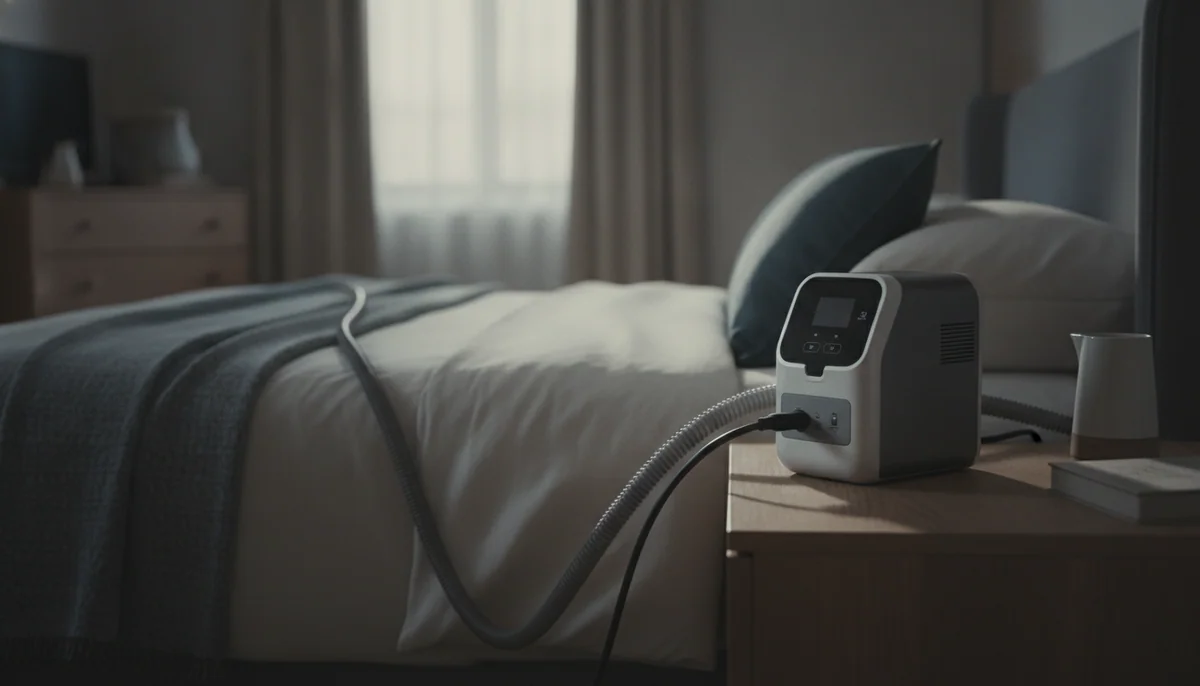
Two completely different appliances are hiding behind the phrase "medical equipment", and the listings that chase this traffic treat them as one. A CPAP is a small blower that runs while you sleep, and its humidifier and heated hose are the only parts of it that draw real power, because heaters are where watts live. A home oxygen concentrator is a compressor and a sieve bed that runs for as many hours as the prescription says, which for a lot of people is all of them. The first load is trivial for any modern power station. The second one defeats every battery on this page inside a day.
Buy a battery and stop there if the machine is a CPAP or BiPAP, your outages last hours rather than days, or you live somewhere an engine cannot legally or safely run. Buy a battery and an engine if a concentrator is in the house, or if your grid goes down for days at a time. Buy neither and get a quote instead if someone is on oxygen around the clock and multi-day outages are a fixture of where you live, because at that point the honest purchase is a permanently installed standby generator that starts itself off the gas line, and Specific Load would rather point you at what that actually costs than sell you a portable that needs a person standing next to it.
The shape of the good answer is the same at every budget, and it is the arrangement people who have actually sat through long outages keep arriving at independently: the device runs off a battery, and the engine's only job is to refill the battery. That decoupling is the whole point. Engines stop for reasons that have nothing to do with you: a tank runs dry, an oil sensor trips, a breaker pops, rain gets somewhere it should not. A battery between the engine and the patient turns every one of those events into a chore you deal with in the morning instead of an alarm at three. It also keeps the machine indoors and silent, and keeps the combustion twenty feet away from the house where it belongs.
Do the multiplication before you look at a single product
Everything on this page follows from one number, and it is a number you own rather than one we can give you. Put a plug-in power meter on your machine, run it for an hour at the setting you actually use, and write down the watts. Nameplates on medical equipment are worst-case figures, concentrator draw moves with the flow setting, and a CPAP with the humidifier on is a different appliance from the same CPAP with it off. Once you have your figure, the rest is multiplication.
| The load | Example draw | Eight hours | Twenty-four hours |
|---|---|---|---|
| CPAP, humidifier and heated hose off | 30 to 60W | 240 to 480Wh | Not applicable, you sleep |
| CPAP with the heater running | Measure it | Substantially more | Not applicable |
| Concentrator, lower setting | 300W | 2.4kWh | 7.2kWh |
| Concentrator, higher setting | 500W | 4kWh | 12kWh |
Now hold those numbers against the two largest batteries on this page. The EcoFlow Delta Pro 3 gave up 3,830Wh of its rated 4,096Wh on a bench drain at 800W, which is an unusually honest result for the class. The Anker SOLIX F3800 Plus is nominally 3,840Wh, and like every station it hands you less than the label once conversion losses are taken out, which is the same arithmetic that shortens every fridge estimate you have ever read. Call it four kilowatt-hours in the best case for either.
A CPAP takes a fifteenth of that in a night. A concentrator at 300 watts empties the whole thing in about half a day, and at 500 watts in under eight hours. There is no battery in this price class, and no bundle of folding panels, that carries a concentrator through a three-day outage on its own. Solar helps and solar is worth having, but a panel is a source of opportunity and a November storm system is exactly when the opportunity is absent, so size an array honestly or treat it as a bonus. Fuel is what turns a fixed reservoir into an indefinite one, and that is the entire argument of why people who take outages seriously end up owning one of each.
The failure that should actually frighten you
It is not the engine that will not pull. It is the battery that reads full and is dead. Across the products covered here, that exact failure appears in three separate records: VTOMAN owners on two different models describe a healthy charge percentage collapsing to LOW and dropping the load overnight, an EcoFlow TRAIL Plus arrived with a battery management error out of the box and another stopped charging at 96%, and among Anker's small review base there are units that would not power on despite showing charge, all of which ended in free replacements. None of those is a scandal on a camping trip. On a device somebody sleeps attached to, the same fault is a different category of event.
Which is why a medical plan has two rules that a camping plan does not. First, redundancy: one battery is a single point of failure, and the cheapest real insurance is a second small one that covers one night on its own. Second, exercise. Anker's own instructions for the F3800 Plus tell you to check the charge weekly, top it up if it falls below 30% and take it to full every three months, and a unit shoved in a garage in April and pulled out in September is being operated outside them. Engines want the same discipline for different reasons: fill it, run it under load now, and confirm it starts while the lights are still on, because the stale-fuel failure is invisible until the outage. If yours ever shows charge and refuses to wake, the diagnostic order is worth knowing before you need it, and if the engine is the thing that will not go, most of the usual causes are valves and switches rather than anything expensive.
Two details people find out too late
Check what stays live while the battery is charging. On the F3800 Plus, recharging through the 120V AC input leaves only its three UPS outlets working, so if the concentrator is plugged into any of the others it goes dark the moment you plug the station into the wall. That is not a defect, it is documented behaviour, and it is precisely the kind of documented behaviour nobody reads until the room goes quiet. Whatever you buy, plug the machine in, start a recharge, and watch what happens.
And tell your utility. Most keep a register of households running life-sustaining equipment, and it costs nothing to be on it. While you are at it, note that a standard 15-amp household circuit is good for about 1,500 watts continuous, which matters the moment you start running the concentrator and a kettle off the same extension lead.
Five machines, and only two of them answer the same question
The list opens with a petrol engine, which is not where a page about medical equipment normally starts. It starts there because the concentrator household has the harder problem and fuel is the only thing that solves it. If a CPAP is your whole job, skip to the third entry and spend a tenth of the money.
This is the cheapest machine here that can carry a concentrator for days, and you pay for that in pull cords.
Four thousand rated watts is enormous headroom for a few hundred watts of concentrator, it is frugal and quiet at exactly the light loads a medical household actually runs, and it is the only engine on this page with an oxygen user already on its public record.
It is recoil start only, with a cold-start quirk that wants the fuel valve opened a full minute before you pull, which is the wrong ritual to be performing outdoors in the dark.
The owner in question bought it specifically to run her oxygenator and reports that it does the job, noting only that fuel goes faster with it running. That is an impression rather than a measurement, and it is still the most directly relevant thing anyone has written about any of these products. The rest of the record is a mixed bag worth knowing: one fuel shutoff valve that leaked from day one and was only found seven months later at a full tank, one melted trailer plug, and a replacement generator shipped free with no return demanded. Nobody has meaningful hours on one, so treat it as a good bet at its price rather than a safe one, and read the full review before you decide. Note also what it is not: 120 volts only, no 240V outlet, no transfer switch connection, so despite the words on the box it cannot back up a house panel. For medical resilience that hardly matters, because you are running one machine on a cord, not a building.
An engine on its own is half an arrangement. The other half is the reservoir it refills, and the two batteries below are the ones with enough depth to be worth pairing with anything.
Buy this if you want the medical load sitting on a battery that behaves like a household uninterruptible supply.
It has the deepest reserve here short of the EcoFlow bundle, it takes ordinary MC4 solar rather than only the maker's own panels, and it has a dedicated generator port that turns the recharge loop into a designed feature instead of an improvisation.
While it charges from a wall socket only its three UPS outlets stay live, so the concentrator has to be on one of those three or it drops out at exactly the wrong moment.
One owner has already built the loop this page recommends without being told to: charging off-peak from the wall, running the house on the battery through peak hours, and topping up from a 3,600W propane inverter generator when the grid is gone. That is the architecture, improvised, and it works. Two honest cautions. The socket sold as a 30-amp RV outlet is capped at 3,000W, and the 6,000W charging figure needs expansion batteries to be true, so the bare unit takes considerably less from a generator than the headline implies. And the 400W panel bundled with this listing supplies roughly an eighth of the solar input the machine was built to swallow, which is why our review argues for buying the panels separately. It weighs 136 pounds and stands on casters, so decide where it lives before it arrives.
Everything above assumes a concentrator. If the machine beside your bed is a CPAP, the budget drops by an order of magnitude and the shopping gets much simpler.
This is a one-night CPAP battery and nothing larger, whatever the word generator on the box is doing there.
268.8Wh of lithium iron phosphate rated for 3,000 cycles, in a box under ten pounds with a proper 600W pure sine inverter, is exactly the right shape for a bedside machine and a night of blower without the humidifier.
Owners across two VTOMAN models report a healthy charge reading collapsing to LOW and cutting the load without warning, which is an inconvenience while camping and something else entirely on a device you sleep attached to.
Three of the four words on this listing oversell it. It does not jump-start anything out of the box, no panel is included, and the 1200W figure is a voltage-reduction trick with sensitive electronics explicitly excluded by the maker's own bullet. There is also a ceiling on the 12V output that sits below 150 watts and appears nowhere in the documentation, which an owner only established by ringing support. Run anything above about a hundred watts through the AC outlets and that problem disappears. The harder question is the company: VTOMAN sits at 2.7 on Trustpilot with half its reviews at one star, below every rival a buyer here would also be considering. For a medical purchase the practical rule that falls out of that is buy it where a retailer owns your return rather than the manufacturer, and buy two if this is the only thing standing between you and a bad night. The full review goes through the rest, and what a budget brand's warranty is really worth is the general case.
One more object belongs in a medical outage plan, and it is not a medical device.
Nothing medical plugs into this one, which is exactly why it earns a place in the plan.
It is the light, the phones and the 12V layer of an outage, and keeping that traffic off the battery that is running your equipment is the cheapest reliability improvement on this page.
It has no AC outlet at all and no way to charge from a wall socket without a USB-C brick, and three of the eight owners on record received a unit with an out-of-box fault.
The listing calls it an emergency battery generator in its first bullet and concedes the truth in an asterisk at the end of the sixth: DC output only, no standard wall outlet. The part it never concedes at all is that you cannot fill it from a house socket either, which took an owner to say out loud. Judged as what it is, a 288Wh DC bank with a hooded camping lamp on top, it is a well-judged object and the light is genuinely the reason to pick it over a plain brick. Judged as backup for anything with a mains plug, it is not a candidate, and our review says so at length.
Which leaves the arrangement this whole page has been describing, sold as a single purchase with the handshake already engineered.
This is the only thing here that can carry a concentrator through a multi-day outage without anybody going outside.
The battery runs the machine silently while the engine wakes itself at a charge floor you set in the app, refills the pack and shuts down again, and the station even feeds power backwards to the engine's starter battery so a flat starter cannot strand you.
The cable joining the two halves is sixteen feet and cannot be extended, and in freezer testing the automatic start frequently failed on petrol because the engine has no choke, so this only works if you can site a running engine close to the battery and commit to propane.
Take that limitation seriously before anything else, because it is the whole purchase. Measure the run from where an engine can safely and legally sit to where you want the battery, around corners rather than across the lawn, and if the answer is over sixteen feet this bundle does not do the thing it is sold for. The distance an engine needs from a building is not negotiable and a carbon monoxide alarm is not permission to move it closer. Assuming the geometry works, the numbers are good: 3,200W on petrol and 2,900W on propane, a single 20 lb bottle carrying roughly 24kWh of fuel energy, and a listing warranty of three years that is worth confirming against the five EcoFlow advertises elsewhere. On propane it starts dependably in the cold, and given that outages cluster in winter storms, the fuel choice here is not really a choice. It is loud, it vibrates hard for its first ten minutes, and it is the most expensive answer on this page, all of which the review covers properly.
If that bundle is out of reach and the concentrator is not, build the same thing yourself for far less: any of the batteries above, plus an engine whose only job is to refill it, and a person willing to press a button. The Oxseryn is the cheap version of that engine, the GENMAX GM9000iED is the version with 240 volts and a service history if you ever want to wire the house properly, and the wider battery field and the multi-day gas options are laid out separately. What you give up against the EcoFlow is the three-in-the-morning case, and only you can price that.
The verdict has not moved and it will not: the machine goes on the battery, the engine goes on the battery, and the two of them never meet through a patient. Buy the smallest thing that covers a night if the job is a CPAP, buy fuel as well as storage if the job is a concentrator, and test the whole chain in daylight while the grid is still up.
Frequently Asked Questions
How many watts does an oxygen concentrator actually use?
No listing can tell you, because it moves with the model and the flow setting, so put a plug-in power meter on your own machine for an hour at the setting you actually use and build every calculation on that number.
Can a portable power station run a CPAP all night?
Comfortably, if the humidifier and heated hose are off, since the blower on its own is a small continuous load and even a 268.8Wh battery covers a full night with room left over.
Can one run an oxygen concentrator all night?
Only the large ones here, and only for one night, because a few hundred watts drawn continuously empties even a four kilowatt-hour battery inside a day.
Is it safe to plug medical equipment straight into a generator?
The electrical answer for a modern inverter generator is usually yes, but the practical answer is still no, because an engine that runs dry or trips at three in the morning leaves you restarting it in the dark, whereas a battery sitting between the two turns that into a chore rather than an emergency.
Is an oxygen generator the same thing as an oxygen concentrator?
A home concentrator pulls oxygen out of room air for a patient to breathe and is the appliance this page is about, while an ozone generator is an air-treatment device with no medical role at all.
Should I tell the power company that someone here uses medical equipment?
Yes, most utilities keep a register of customers with life-sustaining equipment and it costs nothing to be on it.
Why does a 3,840Wh battery not deliver 3,840 watt-hours?
Because every watt-hour that passes through an inverter loses some of itself as heat, which is the same reason every fridge runtime estimate comes in under the label , and it is why running 12V equipment straight from a DC socket stretches so much further.
Is a home standby generator the honest answer for someone on oxygen?
If the concentrator runs around the clock and your outages last for days more than once a year, then probably yes, because a permanently installed machine starts itself off the gas line and never asks anyone to go outside.
Our Top Recommendation
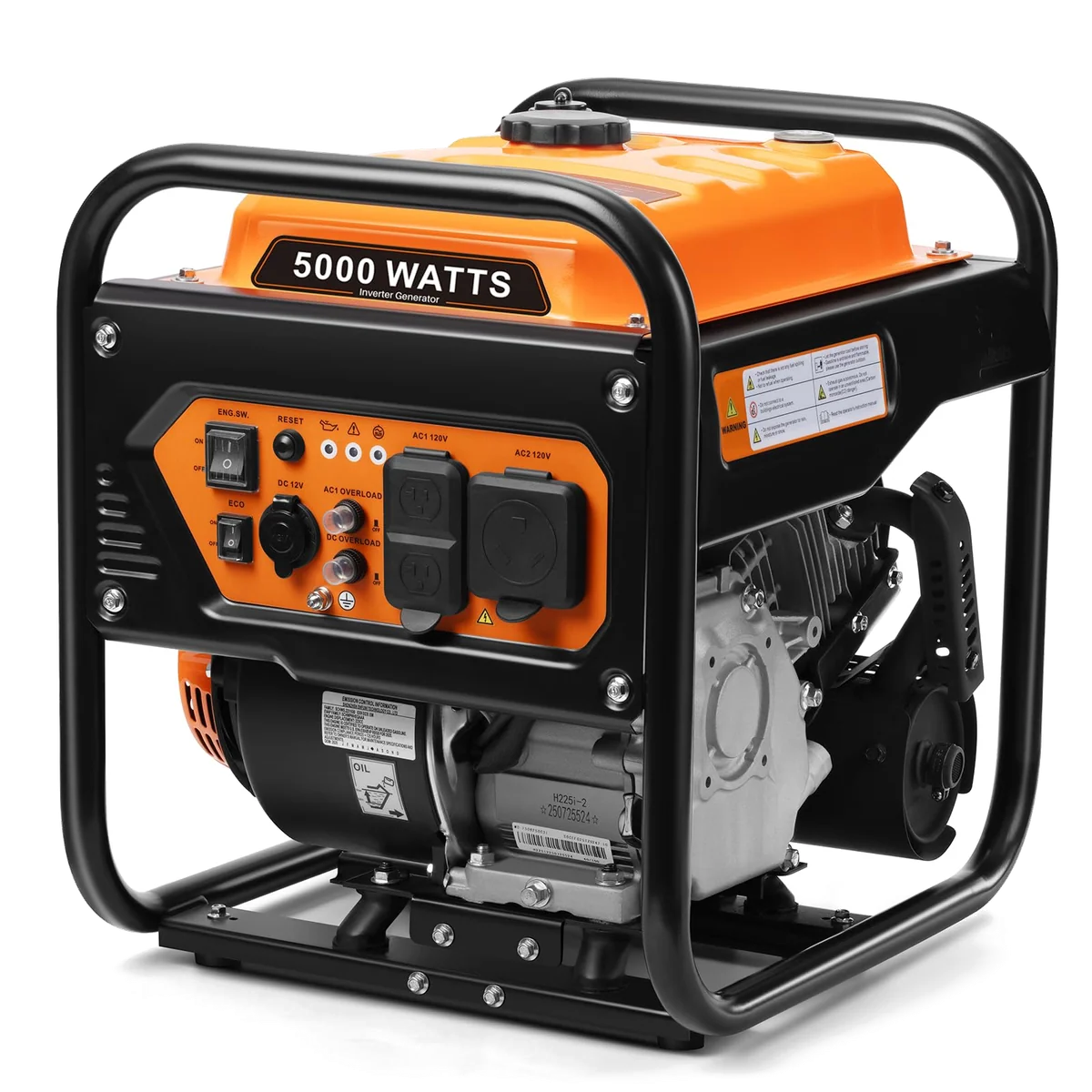
Based on our research, the Oxseryn 5000 watt generator is our top pick — cpap and oxygen concentrator.
Sources (5)
- Amazon listings and customer reviews
- Owner reports across r/preppers, r/Generator threads
- Owner and reviewer video, 1 channel
- Thesolarlab — Article — www.thesolarlab.com
- Trustpilot — Article — www.trustpilot.com