Every solar generator on this page is a battery, and the best one for you is the smallest that covers the loads you can name
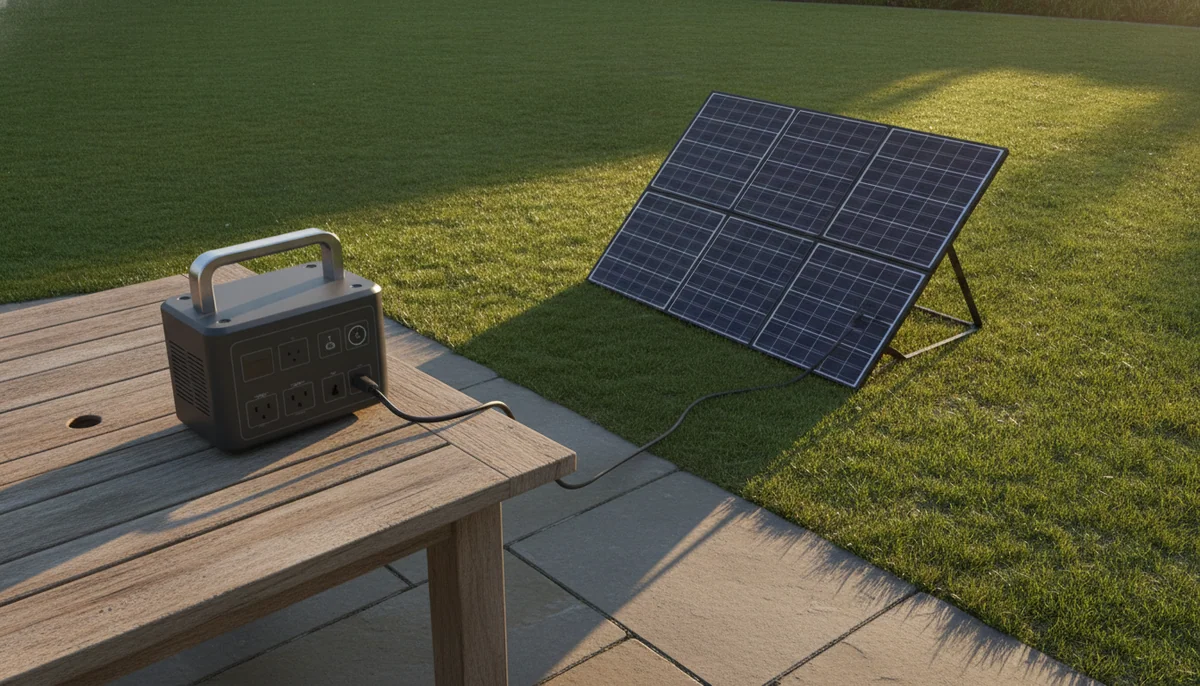
Amazon files all five of these under Outdoor Generators. Four of them contain no engine of any kind, one of them contains no AC outlet at all, and the fifth is a battery that happens to ship in a second box with a petrol engine beside it. This is not a small quibble about vocabulary. A generator turns fuel into an indefinite supply of electricity, and a power station holds a fixed number of kilowatt-hours and then stops. Every disappointed buyer in the record below is someone who read the first word and bought the second thing, which is a habit of this category we have taken apart at length elsewhere.
So here is the rule that does most of the work on this page. Write down the things you intend to plug in and roughly what they draw. Add them up. Then buy the smallest battery that covers that number for as long as you need it covered, and spend what you save on panels or on a second way of making electricity. The instinct in this category runs precisely backwards: people overbuy the box, underbuy the array, and end up with 3,840 watt-hours of storage and four hundred watts of folding plastic to refill it with. The box is the expensive part and the sunlight is the free part, and almost every listing here is arranged to sell you more of the former.
The second rule is that the number on the label is not the number at the socket. EcoFlow publishes its own runtime chart for the Delta Pro 3, and if you multiply each row back out, every one of them lands between roughly 3,240Wh and 3,410Wh out of a nominal 4,096Wh pack. That is the company's own arithmetic conceding about a fifth to inverter and conversion losses, and it is not printed on the box. Assume the same derate everywhere and you will never be caught short.
- Buy something on this page if
- You want silent power that works indoors, makes no carbon monoxide, needs no fuel stored in a garage, and switches over fast enough that the freezer never notices. Short outages, camping, van and RV work, job sites, medical devices with modest draw, and anyone who cannot legally or safely run an engine where they live.
- Walk away if
- Your requirement is a week of grid failure with a fridge, a freezer and a well pump on it. No battery at any price on this page does that alone, and the honest answer is either a battery paired with fuel or a machine that burns something. Walk away too if you were mainly attracted by a headline surge figure, because two of the five reach theirs by dropping voltage rather than by making more power.
Quick Picks at a Glance
| Feature | Editor's Pick Anker SOLIX F3800 Plus | EcoFlow Delta Pro 3 smart generator | VTOMAN Jump 600X | EcoFlow TRAIL Plus 300 |
|---|---|---|---|---|
| Price Range | $3,000+ | $3,000+ | Under $200 | Under $200 |
| Finish | Black | Grey | — | — |
| Power | 400 W | 3200 W | 110 W | 300 W |
| Check Price on Amazon | Check Price on Amazon | Check Price on Amazon | Check Price on Amazon |
The five, from a house down to a coat pocket
They are ordered by what they can carry, which is the only ordering that helps. Read the row that matches the loads you wrote down, then read the card under it, because in this category the drawback is usually the deciding fact rather than a footnote to it.
| Machine | Battery | AC output | The job it honestly does |
|---|---|---|---|
| Anker SOLIX F3800 Plus | 3,840Wh | 6,000W, split-phase 240V | A house, in a serious way, if you add batteries and a generator |
| EcoFlow Delta Pro 3 with dual fuel generator | 4,096Wh | 4,000W, 120V and 240V | A house indefinitely, if the engine can stand sixteen feet away |
| VTOMAN Jump 600X | 268.8Wh | 600W | A laptop, a router, a CPAP, a night of camp lights |
| EcoFlow TRAIL Plus 300 DC | 288Wh | None at all | A tent lamp, a 12V cooler and a pile of USB-C gear |
| DaranEner R100 | 89.6Wh | 100W | Phones, a laptop top-up, light on the night the power fails |
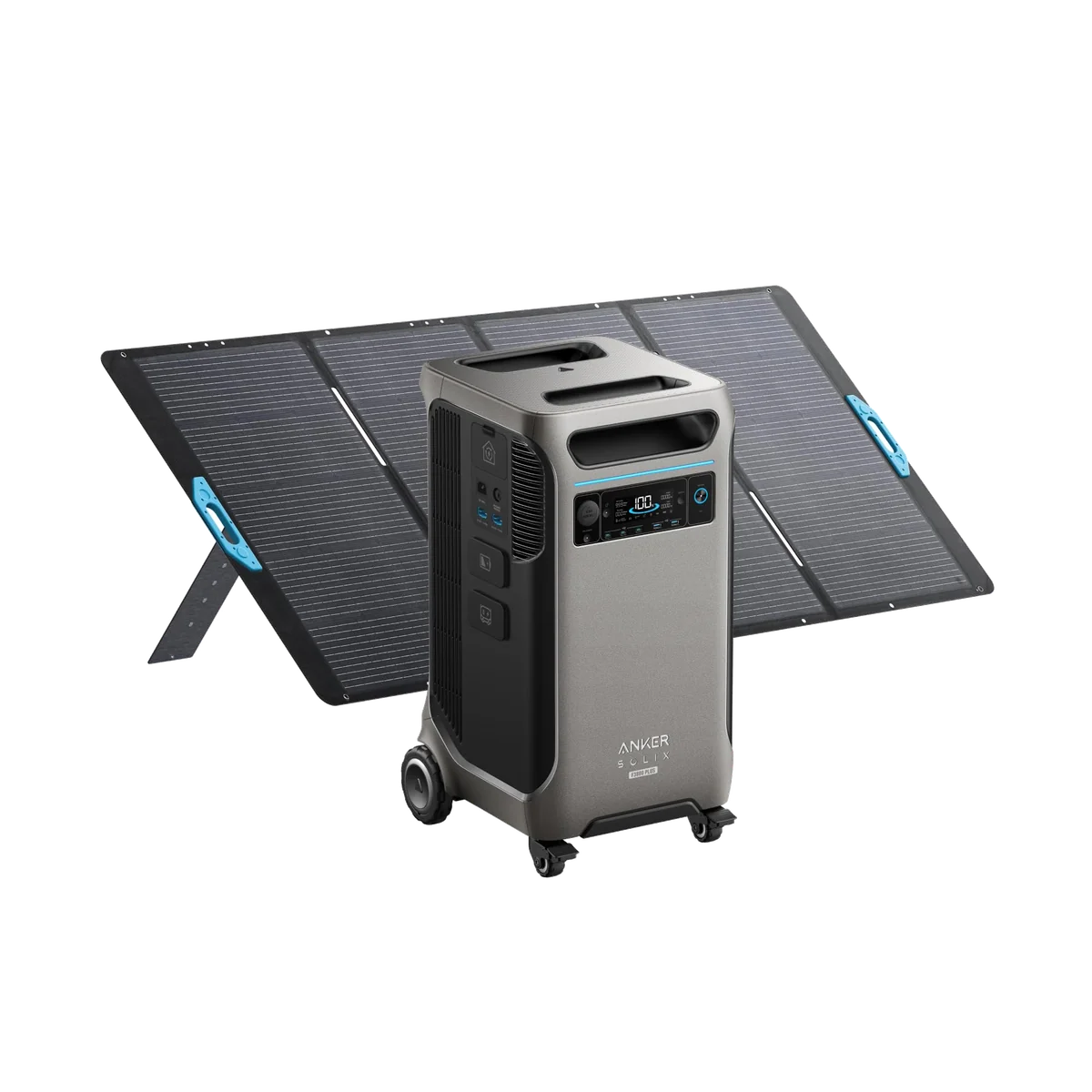
The one that will actually run a house, if you buy your own panels for it.
It is the only machine here that puts genuine split-phase 240V at 6,000W out of a single box without a combiner or a second unit, and the Plus generation finally widened the solar input to 3,200W across two ports that accept ordinary MC4 arrays instead of only Anker's own.
The 400W panel welded to this bundle supplies about an eighth of the solar input the machine was built to swallow, and the socket sold as a 30A RV outlet is capped at 3,000W, which is the obvious suspect when one owner's camper air conditioning trips the unit after roughly five minutes even with a soft start fitted.
Take the two halves of that separately, because they point in opposite directions. The machine is the strongest argument on this page: 240V from one unit is what puts a well pump, a dryer or a whole-house panel within reach, and it is the reason this platform keeps turning up in conversations about houses rather than campsites. Each of its two solar inputs takes 11 to 165V at up to 17A, which covers most standard arrays. The bundle is the weak argument, and the reviewer most enthusiastic about the hardware is scathing about the panel attached to it, setting a high-quality rigid bifacial against Anker's foldable at a fraction of the cost per watt and telling readers to use the MC4 ends and plug in their own. An owner who bought Anker's panels reports they never made their advertised output even in full sun aimed at it, which is normal for portable solar and is exactly why you buy cheap watts rather than expensive ones.
Two more things the listing will not tell you. While it charges from a 120V wall socket only the three UPS outlets will run anything, which quietly kills most of the outlet array during a recharge, and it wants checking every week in storage with a top-up below 30% and a full charge every three months. At 136 pounds it has casters and a telescoping handle, and everyone who has used one agrees on the outcome: you move it once and then it lives there. If you are choosing between this and the EcoFlow below, we have set the two of them head to head for whole-home backup.
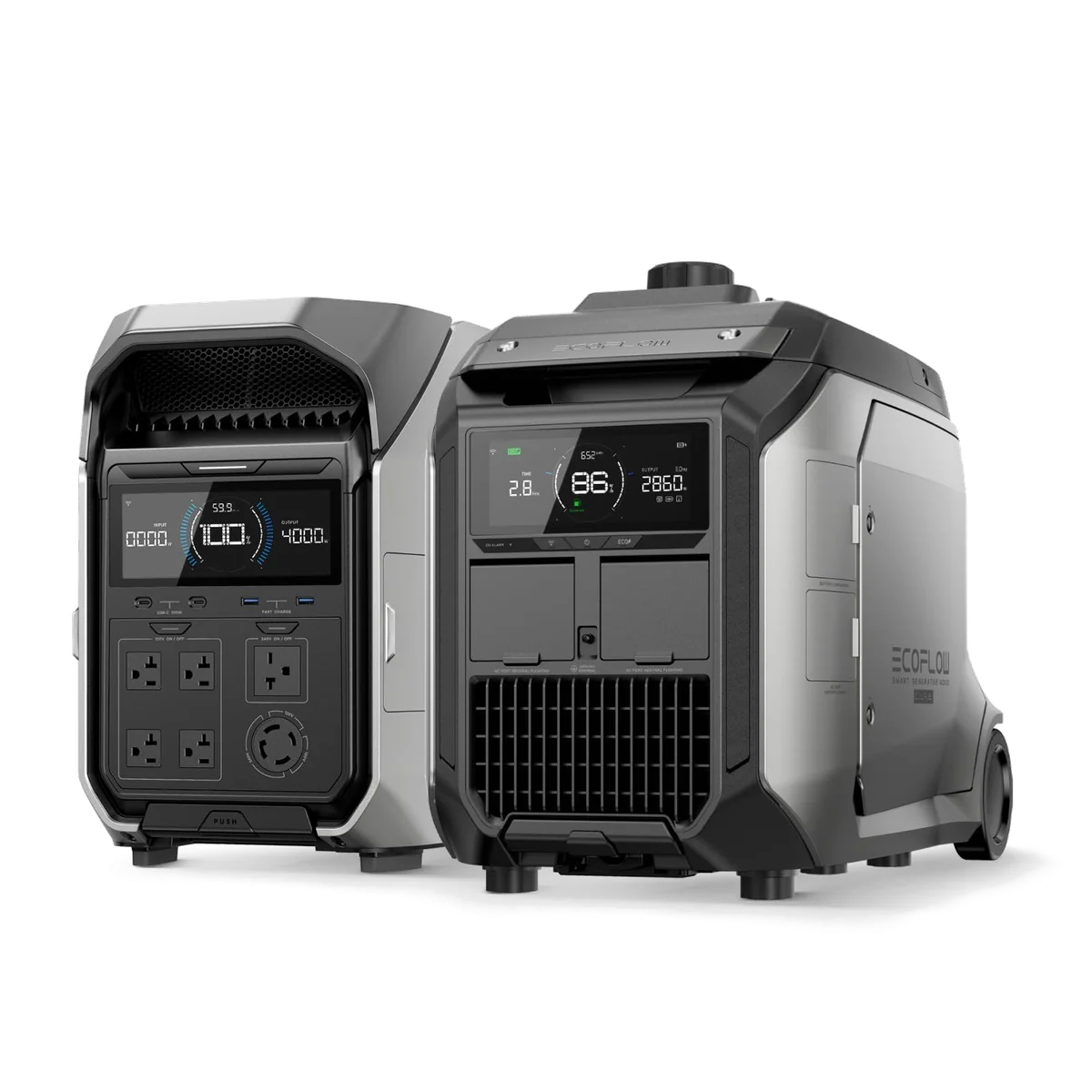
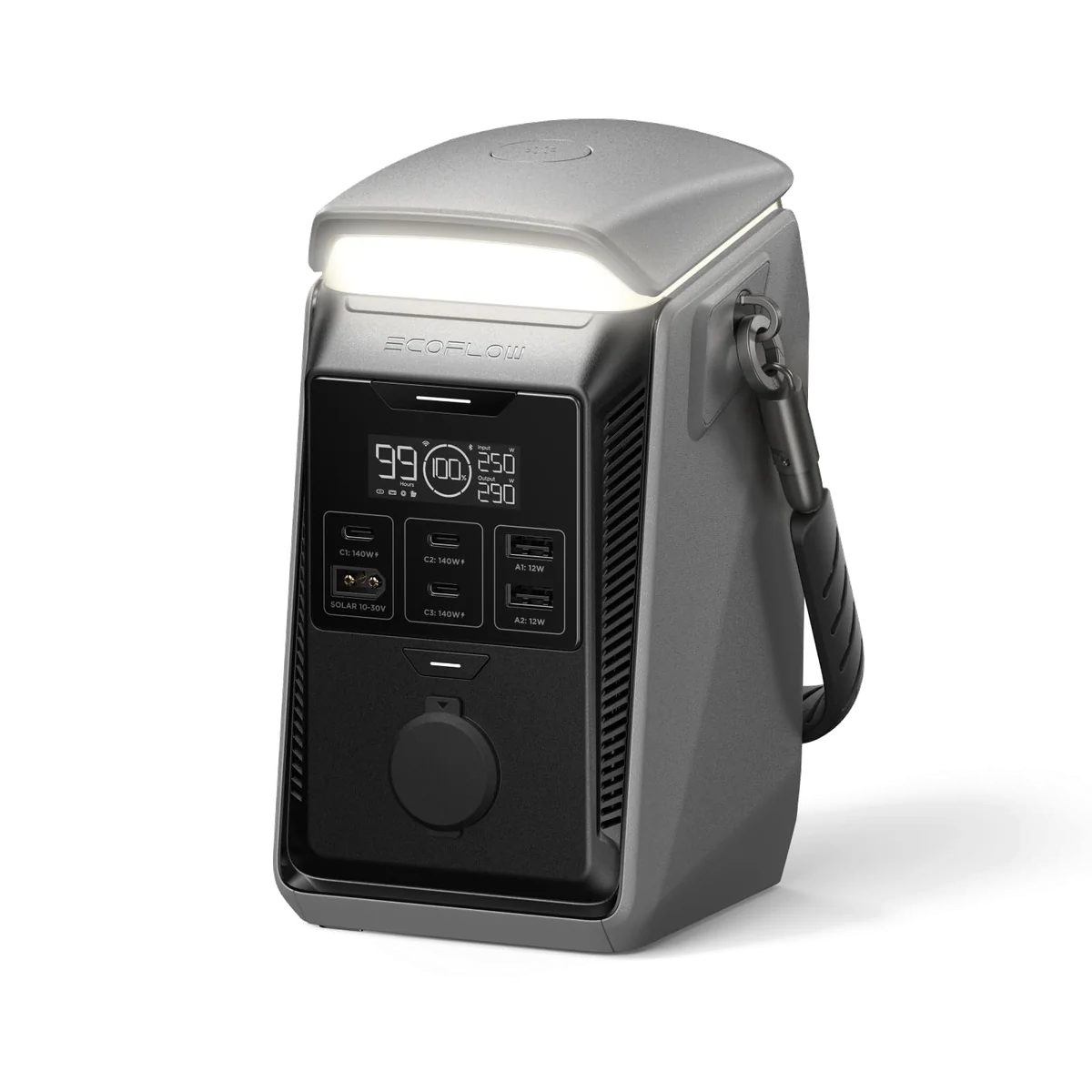
Buy this one for the handshake between the battery and the engine, not for the watts.
The battery is the most honest large pack here, surrendering 3,830Wh of its rated 4,096Wh on a bench test and holding 117 to 118 volts through roughly 4,000W of load, and the engine genuinely wakes itself when the charge falls, so nobody has to stand in the rain at three in the morning.
The cable joining the two halves is sixteen feet, cannot be extended, and has to bridge the gap between a running petrol engine and wherever the battery lives, and in freezer testing the automatic start frequently failed on petrol because the engine has no choke.
That capacity result deserves its moment, because most stations put through the same drain test give back somewhere between seventy-five and eighty-five percent of what is written on them. Everything else follows from the engine. It makes 3,200W on petrol and 2,900W on propane, it is loud, it wanders about on its feet for the first ten minutes of a run, and it drops its own front outlets while it is charging the station. The instruction that falls out of the testing is unambiguous: buy it intending to run propane, give up the 300W, and keep the automatic start that works in the weather that causes outages. One 20 lb bottle is worth roughly 24kWh through this engine against about 8kWh from a tank of petrol, which is the whole argument for the fuel and most of the argument for the bundle. The general trade is laid out in what each fuel costs you in watts and runtime, but here the cold-start behaviour settles it alone.
Measure the cable run before you spend anything. Not across the lawn as the crow flies: from where an engine can legally and safely stand, around the corner of the building, to where you want the battery. The distance an engine needs from a house does not negotiate with a sixteen-foot lead, and the app's carbon monoxide alarm is a safety feature rather than permission to bring the thing closer. One more thing to settle in writing before you buy: this listing states a three-year warranty while EcoFlow's own storefront advertises five years on the station.
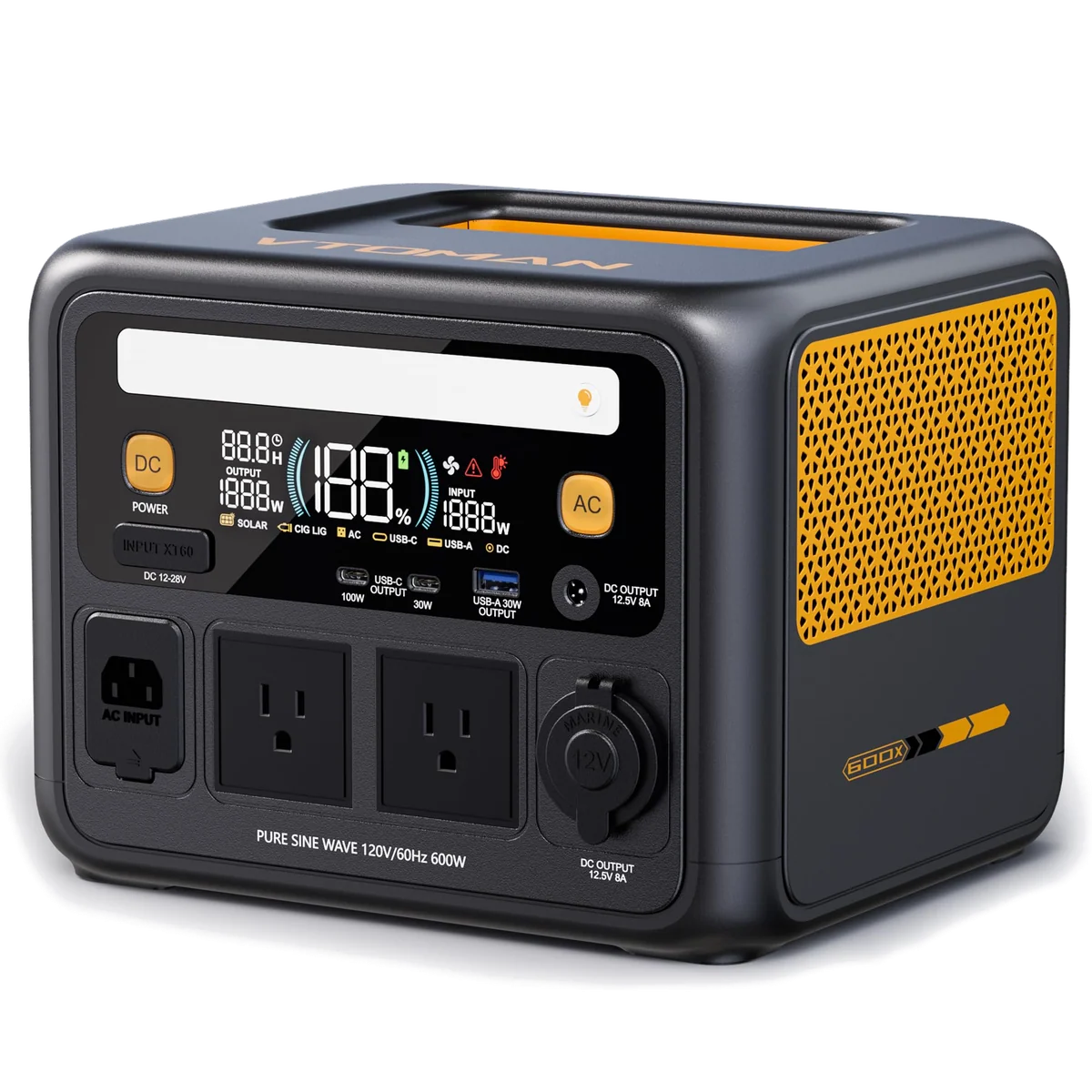
The nine-pound one for a laptop, a router and a night of camp lights.
At 9.92 lb it is the lightest genuine AC power station here, with LiFePO4 cells rated for 3,000 cycles and a 100W USB-C port that moves a working laptop forwards rather than merely slowing its decline.
The 1200W printed on the box is a voltage-reduction trick with sensitive electronics explicitly excluded, the 12V socket quits well below 150W with nothing in the listing to warn you, and VTOMAN sits at 2.7 on Trustpilot with half of its reviews at one star.
The name is the problem before the hardware is. Nothing in the carton jump-starts anything, the panel is sold separately despite the words solar generator in the title, and VTOMAN itself writes in its first bullet that the 1200W figure works by reducing output voltage and that sensitive electronics should stay inside the rated 600W. Read that as a slow kettle rather than as surge headroom, and if the vocabulary is new, the gap between the number on the box and the power you get is worth ten minutes.
The most useful thing in this product's public record is an owner who could not run a 150W car heater from the 12V port, chased VTOMAN's support, and was told the DC port will not carry it but the AC port will. That ceiling appears nowhere in the bullets, and a buyer who never phones support simply concludes the unit is broken. Another owner draws the boundary better than any spec sheet: Starlink Mini, a portable fridge, a small television or a PC and you will be happy, and if you want an air conditioner or a space heater, buy something else entirely. Sized that way it is a good object. The brand's service record is bimodal rather than merely mediocre, with people either getting a working unit and fast help or getting silence, which makes the practical instruction to buy it wherever the retailer rather than the manufacturer owns your return. That is the same logic as what a budget brand's warranty is actually worth, and it applies here with force. Against its obvious rival, we have the Jump 600X and the EcoFlow River 3 Plus side by side.
A very good tent lamp with 288 watt-hours bolted underneath it.
Three bidirectional 140W USB-C ports, a 12V socket and a hooded light that owners praise even when they are trying to return the unit make this the one to take camping if your kit is USB-C and 12V rather than mains plugs.
There is no AC outlet and, less forgivably, no way to charge it from a wall socket without a USB-C brick, and three of the eight owners on record received a unit with an out-of-box fault.
The listing calls this an emergency battery generator in its first bullet, a solar generator in its second, and concedes the truth in an asterisk at the end of its sixth: DC output only, no standard AC outlet. The half it never admits took an owner to write down, which is that there is no route from a house socket into this thing either. If a single mains plug appears on your list of loads, no amount of design cleverness closes that gap.
Which is a shame, because the design is thoughtful. The hood on the lamp means it is not firing into your eyes while you carry it, the charging cable doubles as the handle, and the unit sleeps by itself, which removes the classic way people ruin a power bank. The 110W solar figure survives contact with the world, confirmed by an owner with matched panels. The 140W input claim does not: one owner hit it exactly while charging from another EcoFlow station, and another never exceeded 96W using two separate 140W bricks and two rated cables. Treat the fast number as source-dependent. The defect reports are the reason for caution rather than the performance: error 263 out of the box, a pack that stops charging at 96%, and one that would not pair over Bluetooth or WiFi at all, that last from an owner who counts more than thirty EcoFlow products across a camper and a house and called this the first that did not work as advertised. Sixteen ratings is far too thin a base to derive a failure rate from, and it is also too thin to reassure you.
The two-and-a-half pound one you keep in a drawer for the night the lights go out.
For 89.6Wh it gives you two real AC outlets, a 45W USB-C port, LiFePO4 cells and a silent fanless box that reaches 80% in about ninety minutes, which is a great deal more useful on a bedside table than another phone brick.
The AC output shuts itself off with 10% still in the pack, anything over 100W is simply out of reach, and the solar input tops out at 40W, so the word generator on that listing is carrying an enormous amount of weight.
All of that comes off DaranEner's own listing, including the detail most makers would bury: AC discharge protection cuts the outlets at 10% remaining, after which you can drain the rest through USB and DC only, and the recommended panel is a 40W unit into a DC5521 input rated 10 to 30V at 3A. The cycle claim is worth reading carefully too, because it says 500+ rated cycles and then 3,500+ in practice, which is two very different kinds of number sharing one bullet. This is a pocket battery with a socket on it, and judged as that it is unusually complete for its size. Judged as backup power it is a torch with ambitions, and the review record behind it is a few dozen ratings with no independent measurement Specific Load is willing to stand behind.
What is behind this page, and what is not
Specific Load has not had any of these five on a bench. Nobody here has drained one, timed a recharge, aimed a panel or held a sound meter next to a fan, and this page does not pretend otherwise. What it is assembled from is the instrumented work of people who did, the makers' own published figures where those can be checked against each other or against arithmetic, and what owners have written where a warranty was not riding on the answer.
Two of the numbers above are ours rather than anyone's measurement, and both are labelled where they appear: the solar table is division, and the derate applied to capacity comes from multiplying EcoFlow's own published runtimes back out into energy. Where testers and listings disagree, the tester wins. Where two owners contradict each other, as they do on whether the TRAIL Plus charges at 140W or 96W, both accounts are on the page with their conditions attached rather than one being quietly chosen.
The gaps are worth naming as plainly as the findings. There is no published instrumented test of the F3800 Plus's usable capacity, idle draw or noise in decibels that we could stand behind, and its listing rests on twenty-five ratings. The Delta Pro 3 bundle carries eight. The TRAIL Plus carries sixteen, three of whose retained accounts describe an out-of-box fault, which is alarming as a proportion and close to meaningless as a rate. The VTOMAN's 4.5-star average across more than 1,600 ratings is a family score covering a bundle with an extra battery and a panel in it, not this box's score. A star average built from a handful of ratings is not a verdict, and this page has tried not to read one into it.
The panel arithmetic nobody does before buying
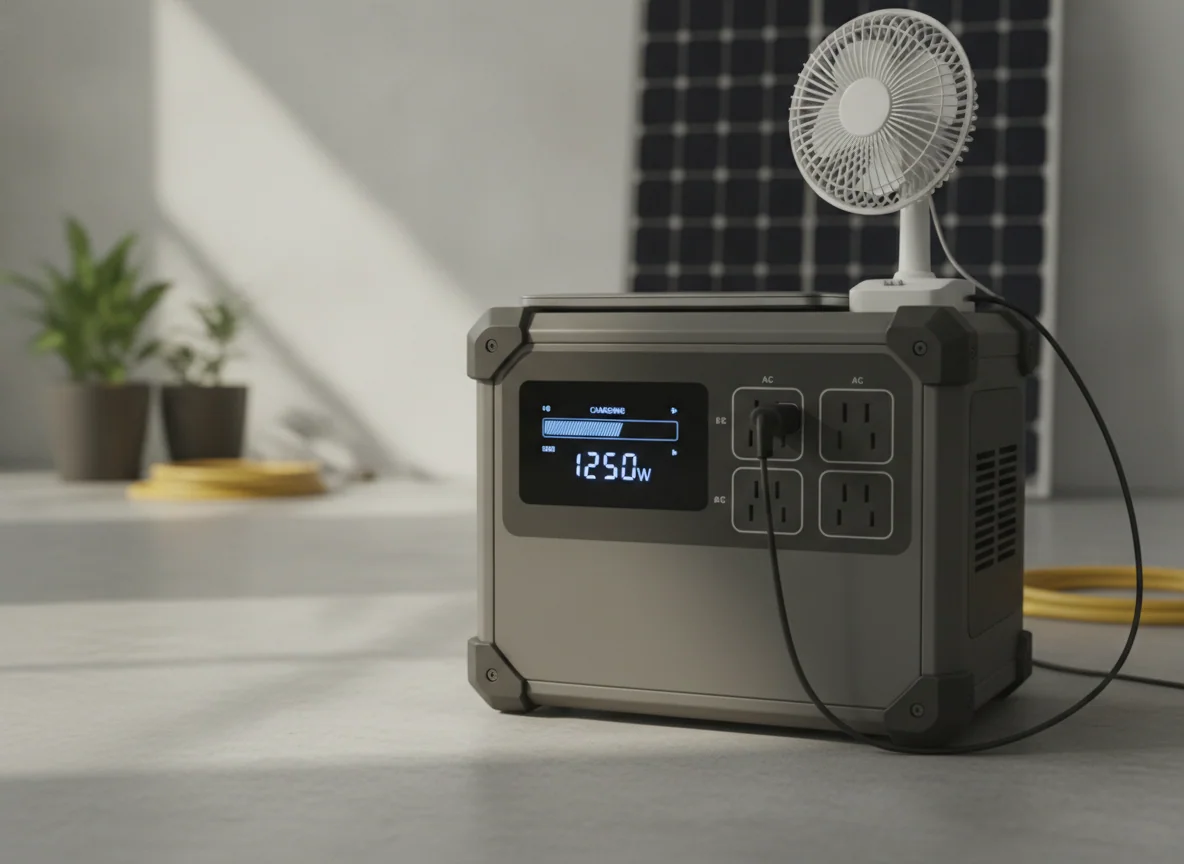
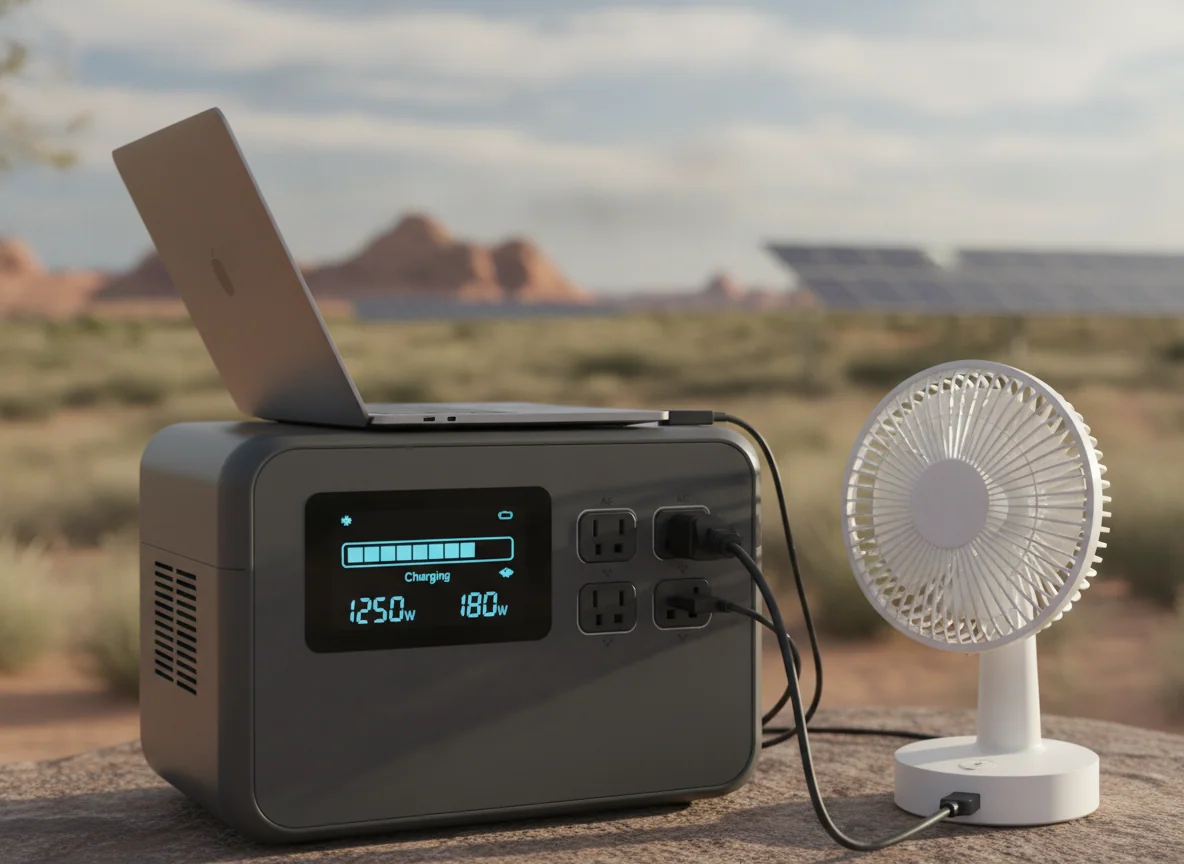
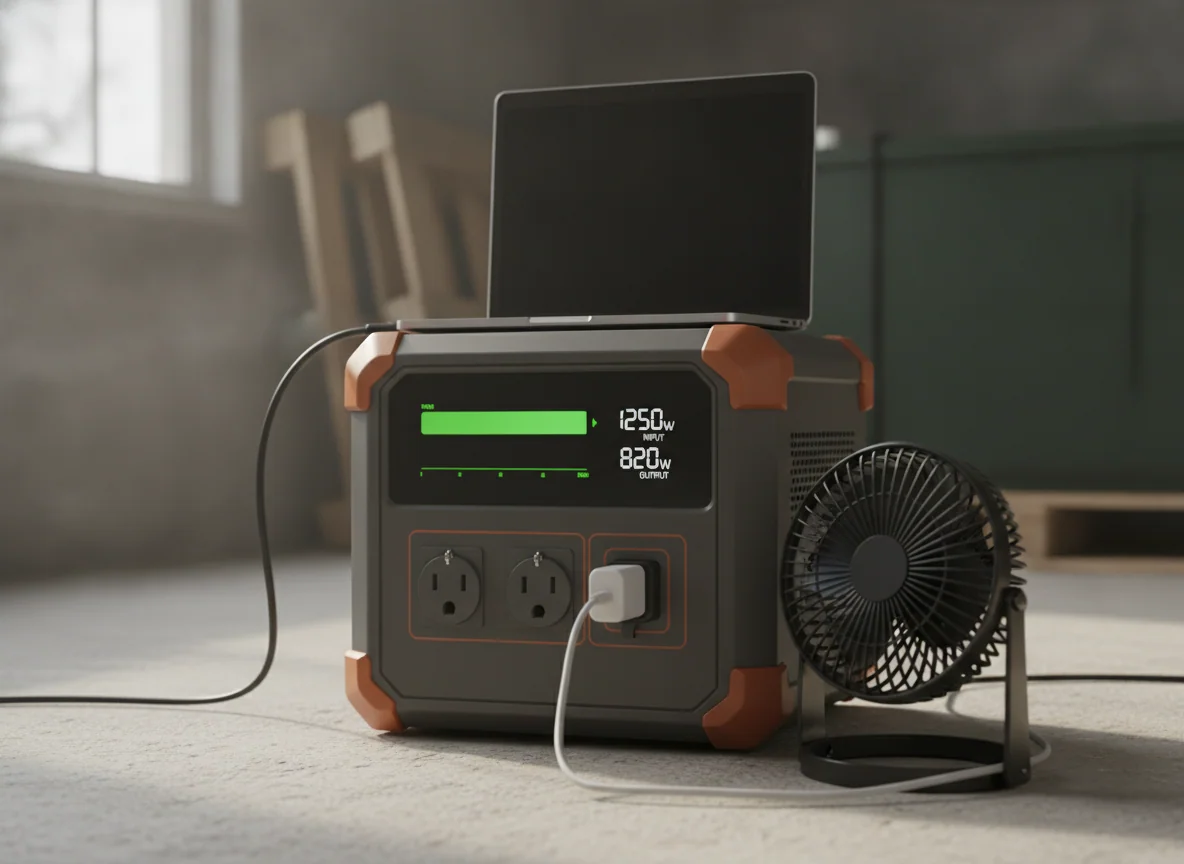
Here is the sum that decides whether the word solar on any of these listings means anything. Take the capacity, divide by the largest solar input the machine will accept, and you have the best case in perfect noon sun with the panel aimed square at it. Then remember that panels do not hold nameplate output, that the sun moves, and that the day when you most want to recharge is the day a weather system parked itself overhead.
| Machine | Capacity | Panel it ships with | Most solar it will take | Best case, at each |
|---|---|---|---|---|
| Anker F3800 Plus | 3,840Wh | 400W | 3,200W | 9.6 hours, or 1.2 |
| EcoFlow Delta Pro 3 | 4,096Wh | None; an engine instead | Not stated in our record | One propane bottle, roughly six refills |
| VTOMAN Jump 600X | 268.8Wh | None | 120W | About 2.2 hours |
| EcoFlow TRAIL Plus 300 | 288Wh | None | 110W | About 2.6 hours |
| DaranEner R100 | 89.6Wh | None | 40W | About 2.2 hours |
Read down the last column and the pattern is not subtle. The small machines are genuinely solar-rechargeable, because a panel you can carry is a meaningful fraction of what they hold. The big one is only solar-rechargeable if you buy an array that has nothing to do with what came in the box, which is precisely what the Plus generation's widened input was engineered to allow. Pairing 3,840Wh with 400W of foldable plastic is the classic mistake of this category performed by the manufacturer, in the carton, on your behalf. The full version of this sum, with the losses and the seasons in it, is on our page about sizing an array to a power station.
What a fridge really costs you
The single most common plan people bring to this category is keeping a refrigerator alive, and it is worth converting into watt-hours before you spend. Apply the fifth off the top that EcoFlow's own runtime chart concedes, and 4,096Wh becomes about 3.3kWh at the outlet. That is roughly one disciplined day of fridge, lights, router and phones. It is not a house, and it is not a week. It is also why both large machines here have a generator port on the flank: the designers know exactly what a battery is for, and it is the first night rather than the third day. Our page on what a power station actually gives a fridge after inverter losses does the sum properly, and the reason serious outage planners end up owning one of each is the argument in full.
The failure that matters is not the one you are imagining
Nobody's power station dies heroically under load. It dies in a cupboard. The pattern that recurs across every brand in this file is a unit that was charged, untouched for months, and unresponsive on the night it was needed, which is why Anker publishes a storage regime asking for a weekly check, a top-up below 30% and a full charge every three months. Follow it regardless of what you buy. Run the thing down and back up twice a year, keep the firmware current, and learn how to work through a station that shows charge and will not switch on before the wind picks up rather than during.
On ageing, the only long-run instrumented data in this record concerns the previous-generation Delta Pro rather than anything on sale here, and it is a mixed result worth knowing. At five years the pack still held its capacity and charged at close to its rated speed, but asked to run at 3,500W, a hundred watts under its own rating, it overloaded and shut down where it had previously been fine. Capacity fade in these cells is well understood. Sustained-output fade is not, and it is the open question behind treating any of these as a decade-long asset.
If you have read this far and the row in the table still matches your list of loads, the buying links beside each card are the place to act. If it does not match, the better purchase is a smaller box, an array bought loose, or something that burns fuel, and none of those is a defeat.
Frequently Asked Questions
Is a solar generator actually a generator?
No, every one of these is a battery in a box that gives back a fixed number of kilowatt-hours, and the only engine anywhere on this page is the one EcoFlow packs in a second carton beside the Delta Pro 3.
Which of these keeps a refrigerator alive through a real outage?
Only the two large ones, and even then about 3.3kWh at the outlet buys you roughly one disciplined day of fridge, lights and router rather than the week people picture.
Do any of them come with a solar panel in the box?
Only the Anker, which bundles a 400W panel that covers about an eighth of its own solar input; the other four name a solar input on the listing and expect you to buy the array yourself.
Does the Soundcore connection tell me anything about Anker's power stations?
Soundcore is Anker's audio brand and SOLIX is its power brand, and a good pair of earbuds tells you precisely nothing about how a 136-pound inverter behaves on your driveway.
Is DaranEner a brand worth risking money on?
At the size covered here the risk is capped by how little the thing costs and the specification is unusually complete for it, but the listing rests on a few dozen ratings and no measurement we would stand behind, so buy it as a pocket battery rather than as insurance.
Why does a power station show a healthy charge and then cut out under load?
That usually points at state-of-charge estimation or cell balancing rather than an empty pack, so test for it while your return window is open and work through the checks for a station that reads full and will not run .
Can I run a CPAP or an oxygen concentrator off one of these?
A CPAP with the humidifier switched off is within reach of even the 268.8Wh box for a single night, an oxygen concentrator is not, and medical loads want redundancy and a company you can reach on a bad day, which is a stricter shopping list than this page's .
Will any of them start a central air conditioner?
No, a residential condenser asks for something in the region of eleven kilowatts at the instant the compressor turns over, though an RV rooftop unit with a soft start fitted is a realistic target if you check what your specific unit demands at startup first.
Our Top Pick
The Anker SOLIX F3800 Plus is our #1 recommendation.
Check Price on Amazon: Anker SOLIX F3800 Plus