Your generator is either bonded or floating, and the only answer you can trust is the one your own meter gives you
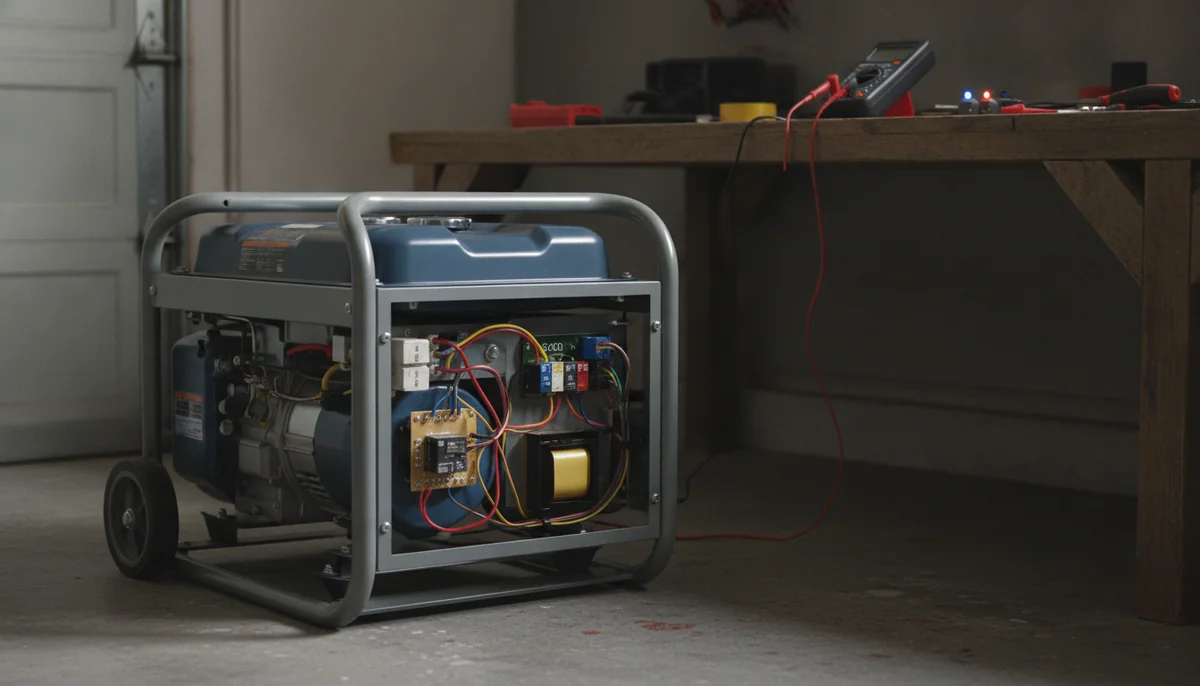
The whole argument is one connection. Somewhere inside a generator, the neutral output either touches the frame or it does not. Bonded means it touches. Floating means it does not. There is no third state, no partial credit, and no setting on the panel. For a machine that spends its life running an extension cord to a fridge, the question never comes up. The moment you connect it to a building, it becomes the difference between an installation an inspector signs off and one that puts current on metal that is supposed to carry none.
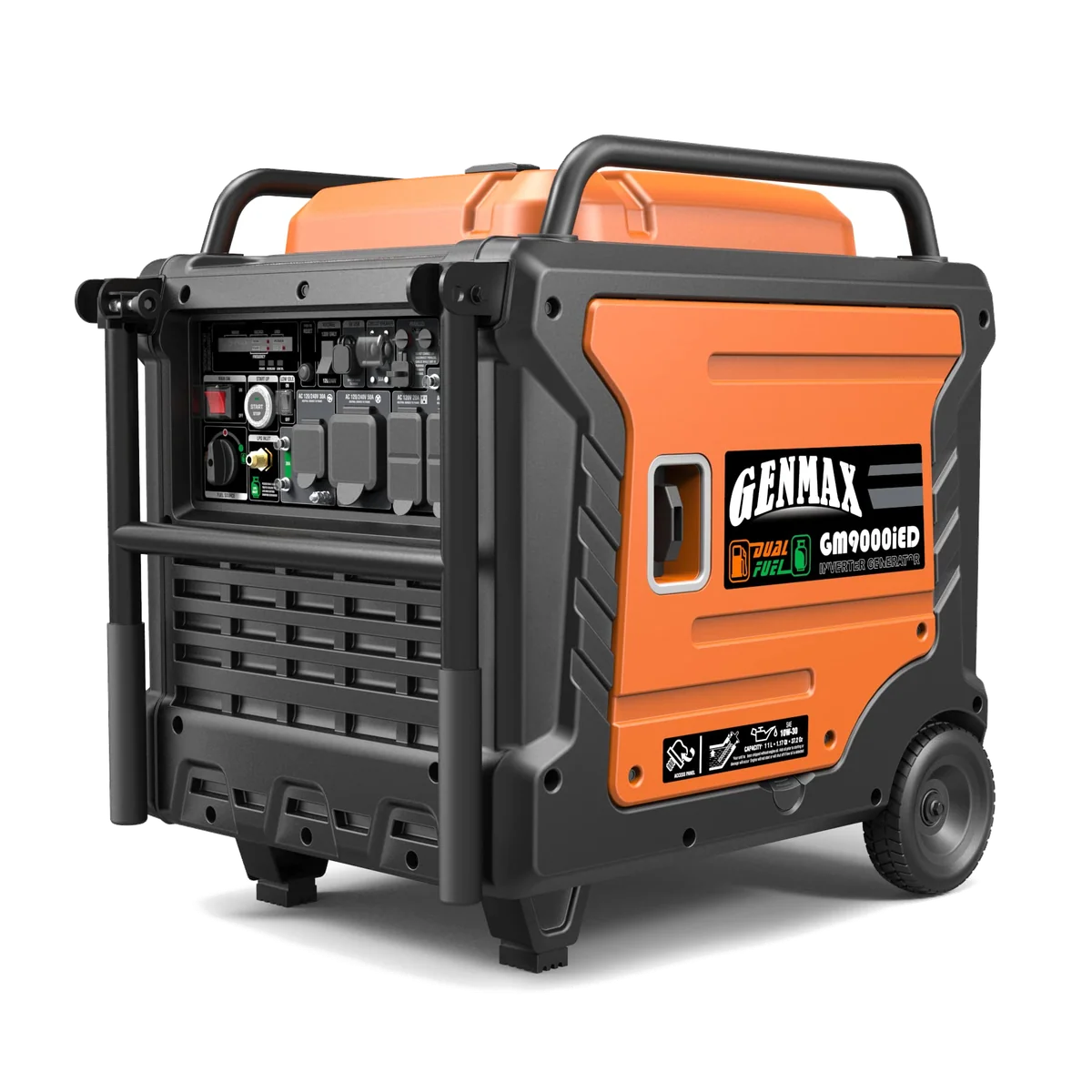
What makes this a page rather than a footnote is that the industry sells the feature that creates the problem and stays silent on the problem. The GM9000iED is the clean example: nine thousand peak watts, a 50 amp receptacle on the panel, remote start, sold explicitly as emergency home power. It ships with the neutral bonded to the frame, and the manufacturer supplies no procedure for converting it to floating, which is what feeding a panel through most transfer switches actually requires. Six marketing bullets cover the fuel, the digital display, the decibel figure, the carbon monoxide sensor, the parallel kit and the warranty. None of them says a word about the neutral.
Specific Load has not put a meter on one of these, and everything below that concerns a specific machine comes from the record owners left rather than from our bench. The physics, though, is not brand-specific, and the test at the end of this page works on anything with a receptacle.
One bond in the system, and exactly one
Neutral and ground start at the same place and then do opposite jobs. The neutral is a working conductor: on a 120 volt circuit it carries every amp the hot leg delivers, back to the source. The equipment grounding conductor carries nothing at all until something goes wrong, at which point it is the low-resistance path that lets fault current rise high enough and fast enough to throw a breaker. Those two are tied together at precisely one point in a premises system, at the service equipment, and that single tie is what makes a fault into a fault rather than into an energised washing machine.
Add a second tie and the neutral stops being the only way home. Return current from ordinary household loads starts dividing itself between the neutral conductor and every grounding conductor, water pipe and length of conduit running parallel to it. The code has a name for this and it is not flattering: objectionable current. The practical symptom is almost always the same, and it is a good one because it is loud. Ground fault devices exist to notice current that leaves on the hot and does not come back on the neutral, which is exactly what a second bond manufactures, so the GFCIs start tripping for no reason anyone in the house can see. If you are chasing that, our walkthrough of why a generator trips its breaker or shuts down under load covers the other causes worth eliminating first.
Remove the last bond and you get the opposite failure, which is far worse because it is silent. An ungrounded system has no reference to earth, so a hot conductor touching the generator frame is not an event the system can detect. Nothing trips. Nothing hums. The frame simply sits at line potential waiting for somebody standing on wet grass, and the first indication anyone gets is a person. Between a nuisance and a silence, take the nuisance.
The transfer switch decides this, not the generator
People ask which neutral configuration is better. Neither is. The question is what the rest of the system already provides, and the answer turns almost entirely on one detail: whether the neutral is switched along with the hot legs when you change over to generator power.
| How you are using it | Neutral should be | Because |
|---|---|---|
| Extension cords straight off the generator's own outlets | Bonded | The generator is the only source in the picture, and its onboard GFCI has nothing to measure against unless the neutral is referenced to the frame. |
| An RV or travel trailer on a 30 or 50 amp cord | Bonded | RV wiring keeps neutral and ground separate all the way back to the inlet and expects the source, normally the park pedestal, to supply the bond. |
| An interlock kit on your main panel, fed from an inlet box | Floating | An interlock switches breakers, never the neutral, so the house neutral stays permanently tied to the generator neutral and the bond at your service is already the one bond. |
| A manual transfer switch or subpanel that does not switch the neutral | Floating | Same reasoning: the generator neutral is electrically continuous with a system that is bonded elsewhere. |
| A service-rated or three-pole transfer switch that does switch the neutral | Bonded | Breaking the neutral makes the generator a separately derived system, and a separately derived system has to establish its own neutral-to-ground connection. |
That last row is the one that catches people, because it inverts the advice they read in a forum thread about somebody else's interlock. Read your transfer equipment's own manual before you read anything about your generator. The switch tells you what it does with the neutral, usually in a wiring diagram, and once you know that, the generator requirement follows automatically. Our full account of the connection methods and why backfeeding through a dryer cord is the one thing never to do lives in connecting a portable generator to your house.
One more conflation worth killing off. A ground rod is not a bond. Driving an electrode into the dirt gives lightning and static somewhere to go and does essentially nothing about clearing a line-to-frame fault, because dirt is a terrible conductor compared with a copper wire back to the source. When you feed a house through an inlet, the house's grounding electrode system is already doing that job. The bonding question stays open regardless of how many rods you own.
The ten-minute test that settles it
Do this before you buy the transfer switch, not after, and certainly before the wind picks up.
- Read the panel diagram in the manual, then distrust it. Some manufacturers state the configuration plainly in the specifications; some state it for the model line and ship revisions that differ; some say nothing. A buyer looking at a sibling GENMAX model found the manual describing a floating neutral while different units on the same retail listing carried different panel text, and could not get a straight answer out of the company at all.
- Put a meter on it, engine off. Nothing plugged in, nothing running, machine cold. Set the multimeter to continuity or its lowest resistance range, one probe into the neutral slot of a 120 volt receptacle, which is the taller of the two blade slots, and the other probe into the round ground hole. A beep, or a reading of a fraction of an ohm, means bonded. An open circuit, or a reading up in the megohms, means floating. That is the whole test.
- Check more than one outlet, and note the selector. Machines with a 120/240 voltage transfer switch can leave whole receptacles isolated depending on where that switch is sitting, so a single open reading proves less than you think. On the GM9000iED an owner powered up after having an electrician work on the house and found the 50 amp outlet dead, and needed a support technician on the phone to get it live. That is a selector problem rather than a bonding problem, and we separate the two in a generator that runs with nothing at the outlets.
- Do not diagnose this on a running machine with voltage readings. A high-impedance digital meter reads phantom voltages happily on an ungrounded system, and hot-to-frame numbers on a floating unit can be unstable, roughly half of what you expect, or convincing nonsense. The de-energised resistance check is the one that means something.
- Write the answer on the machine. A label inside the panel door with the date and the result costs nothing and settles the argument in three years when you have forgotten, or when somebody else is holding the cords.
What the record says about the GM9000iED specifically
This machine is worth its own section because it is the one this site sells for the job, and because the fix has already been mapped by somebody who did it the hard way. The bond sits on a metal rail mounted behind the electrical panel, lower left corner viewed from the front, in the general area of the LPG inlet, and the owner who found it described the location as genuinely difficult to reach and pointed out, correctly, that converting a generator to floating neutral for a transfer switch is a code requirement and ought to be a documented, accessible operation rather than an archaeology project. Members of Power Equipment Forum have posted the same walkthrough the manufacturer did not, and by 2026 owners wiring one into a 50 amp inlet behind an interlock talk about unbonding it the way you would talk about checking the oil. The maker's own product page for this model, meanwhile, routes a question like this into a live chat on Beijing hours behind an international number.
Two warnings attached to that. The first is not to generalise across the badge: the GM9000iE, iET, iEDC and the larger models are different machines with different revisions, and the sibling-model evidence above is exactly why the meter beats the family reputation. The second is that this page is not the whole case for the generator. Our full review of the GM9000iED reaches a qualified yes: the engineering is better than the price suggests, with pressure-fed oiling through a cleanable screen and a 50 amp receptacle that matches what the alternator can actually make, and a mobile grooming business putting ten hours a day on one reports nothing going wrong. The drawback is real and it is the mirror image of that: the two worst owner accounts describe units that failed while stored rather than while running, which is the exact duty cycle a home-backup buyer is planning for, and warranty service means moving 250 pounds to a service centre that may be an hour away. Buy it if you will exercise it monthly under load. Do not buy it to leave in a box.
If the paralleling question is what brought you here, the neutral answer travels with it. An owner joining a GM9000iED to a floating-neutral DuroMax XP9000iH with the GENMAX kit was told to take the load out of one machine's 50 amp outlet, connect L1, L2 and ground, and let the GENMAX supply the neutral return for unbalanced 120 volt loads, with the honest caveat that the combined output is capped by that 50 amp connector rather than by the arithmetic on the carton. Fifty amps at 240 volts is 12,000 watts, not the 15,200 the listing advertises.
The reverse problem, and the plug that solves it
Plenty of readers arrive here with the opposite machine. Inverter generators aimed at camping and RV use often float from the factory, which is correct for a trailer and wrong for a work site where the only protection is the generator's own GFCI receptacle. The fix in that direction is a bonding plug: a moulded 120 volt plug with a wire tying the neutral pin to the ground pin, which restores the reference the moment you push it into a spare outlet. They are cheap, they are widely sold for exactly this, and they are the standard answer for a floating unit feeding an RV or travel trailer or a set of cords.
The asymmetry is the point. A bonding plug can add a bond and can never remove one, so it is no help at all to somebody with a bonded generator and an interlock. That job means opening the machine. And a bonding plug left in the outlet while the generator is feeding a house through an unswitched neutral is the second bond you spent this whole page avoiding, so it comes out before the cord goes on.
There is a version of this problem you can buy your way out of. A home standby installation with a service-rated automatic transfer switch settles the bonding question at the point of sale, because the installer owns it and the inspector signs it, which is part of what the extra money buys and is worth reading about in standby against a big portable. Among portables, machines sold as ATS ready, including the tri-fuel Gidrox 11000W, at least invite the question in their own marketing rather than leaving it to an owner with a socket set, though the meter test applies to those too and a claim on a box is not a measurement. If you are still choosing the machine rather than wiring one, start at the best generators for home backup.
Whatever you land on, settle this before the outage rather than during it. Every part of this is a ten-minute job in daylight with the machine cold, and a nightmare at two in the morning with a flashlight in your teeth and the fridge warming up.
Frequently Asked Questions
How do I check whether the neutral is bonded without opening the machine?
With the engine off and nothing plugged in, set a multimeter to continuity, put one probe in the neutral slot of a 120 volt receptacle and the other in the round ground hole: a beep or a near-zero reading means bonded, and an open circuit means floating.
Which one does an interlock kit need?
Floating, because an interlock switches breakers and never the neutral, so your service panel is already supplying the system's one and only neutral-to-ground bond.
Is the GENMAX GM9000iED bonded or floating out of the crate?
Owners report it bonded from the factory with no conversion procedure supplied, the strap sitting on a metal rail behind the electrical panel near the LPG inlet in a genuinely awkward spot, so confirm continuity on your own unit and budget the time to reach it.
Can I use a bonding plug instead of taking the panel apart?
No, because a bonding plug can only add a bond and never remove one, which makes it the right tool for a floating generator running cords or an RV and no use whatsoever to a bonded generator headed for a transfer switch.
Does driving a ground rod answer the question?
It does not, since an electrode gives static and lightning a path to earth and has nothing to do with where the neutral is tied to the frame, which is the connection that decides whether a breaker can clear a fault.
Do both machines need the same configuration when I parallel two generators?
You still want exactly one bond across the finished system, which is why an owner pairing a GM9000iED with a floating-neutral DuroMax was told to take the load out of one machine's 50 amp outlet and let the GENMAX provide the neutral return for unbalanced 120 volt loads.
Will getting it wrong actually stop anything from working?
A second bond usually announces itself as GFCI devices tripping for no visible reason, while no bond at all announces itself as absolutely nothing, and the silent one is the dangerous one.
My generator runs but no outlet has power, is that the neutral?
Almost certainly not, because that pattern is normally the voltage selector rather than the bonding, and on this machine one owner needed a support technician on the phone before a dead 50 amp outlet came alive.
Can I just ask the manufacturer?
Ask by all means, but treat the reply as a hypothesis rather than a finding, since one buyer looking at a sibling GENMAX model found the manual, the retail listing text and the units themselves disagreeing and got no answer from the company at all.
Sources (4)
- Amazon listings and customer reviews
- Owner reports across r/Generator threads
- Powerequipmentforum — Article — www.powerequipmentforum.com
- GENMAX — Article — www.genmax.com