The Anker SOLIX F3800 Plus is the right machine sold with the wrong panel
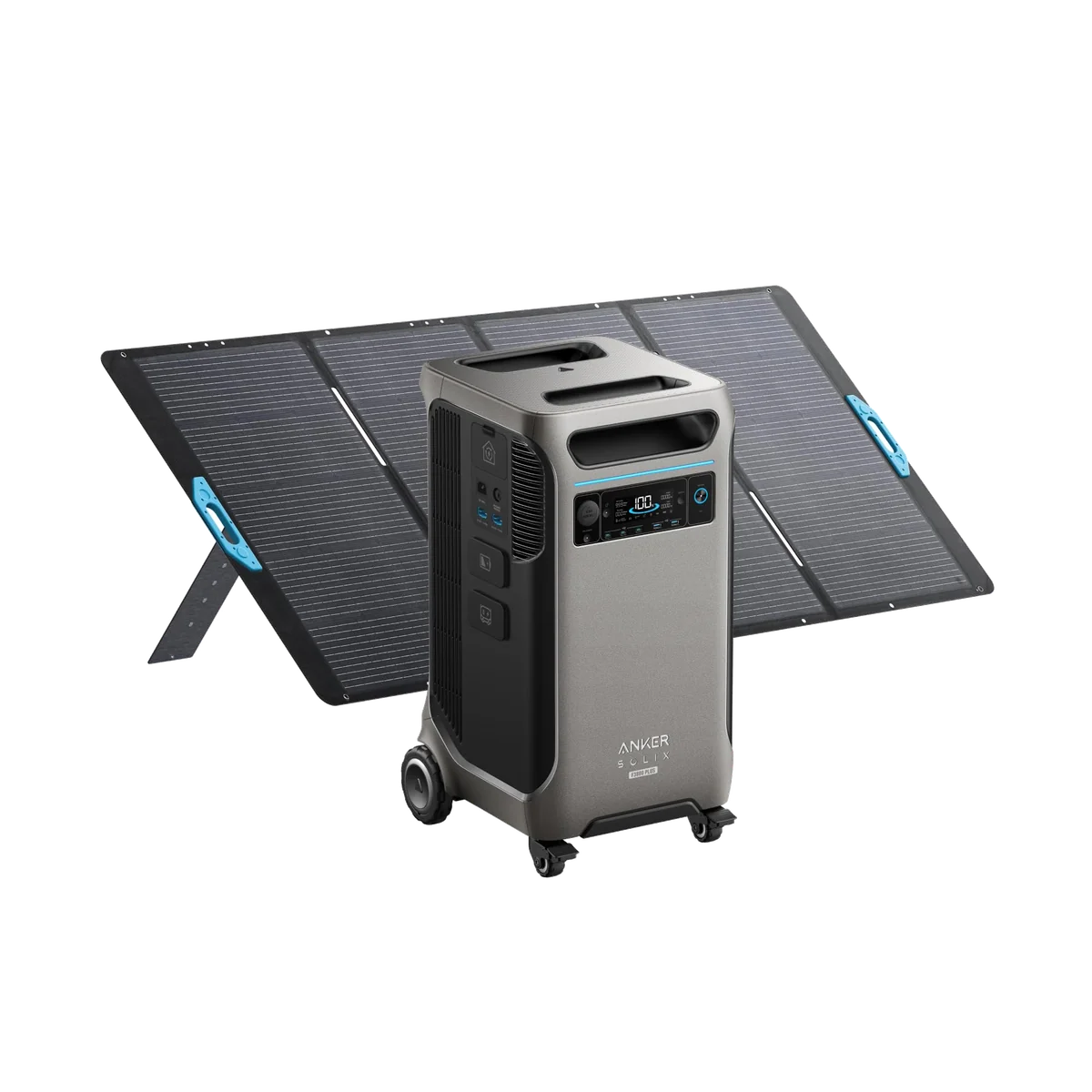
Buy the F3800 Plus if you need genuine split-phase 240V out of a single box and intend to grow the system later, but buy it bare and choose your own panels, because the 400W panel welded to this particular listing is the weakest part of the package and the machine's headline improvement is precisely that it no longer needs Anker's panels.
Based on 25 owner ratings, 4 owner discussions and 4 other sources. We have not tested this machine ourselves.
We earn a commission if you buy through our links, which does not affect what we say.
Read how this site works →
Who should actually buy this
The machine earns its money in one specific situation: you need 240V split-phase from a single unit, you want to add capacity over time rather than all at once, and you are prepared to pair it with a generator for anything longer than a couple of days. Under those conditions there is very little else that does the job as neatly, and the fix to the solar input makes it the right generation to buy rather than the older one.
The bundle is a different question from the machine. If the panel is why you are here, the sensible move is the bare unit and an array of your own choosing, which buys you several times the watts for the same outlay and takes proper advantage of the input Anker just widened. If you never need 240V, the smaller F3000 or a pair of them is the better-value answer, and if runtime through a week-long outage is the actual requirement, a battery of any size is the wrong tool: a dual-fuel generator or a battery bought with its own generator is what that job wants. For an RV specifically, check the socket rating against your rig before anything else, and read what we recommend for travel trailers.
Anker fixed the one thing that was actually broken about the F3800, and then sold the fixed version in a box with the accessory that fix made unnecessary. That is the whole story of this listing, and everything below is the evidence for it.
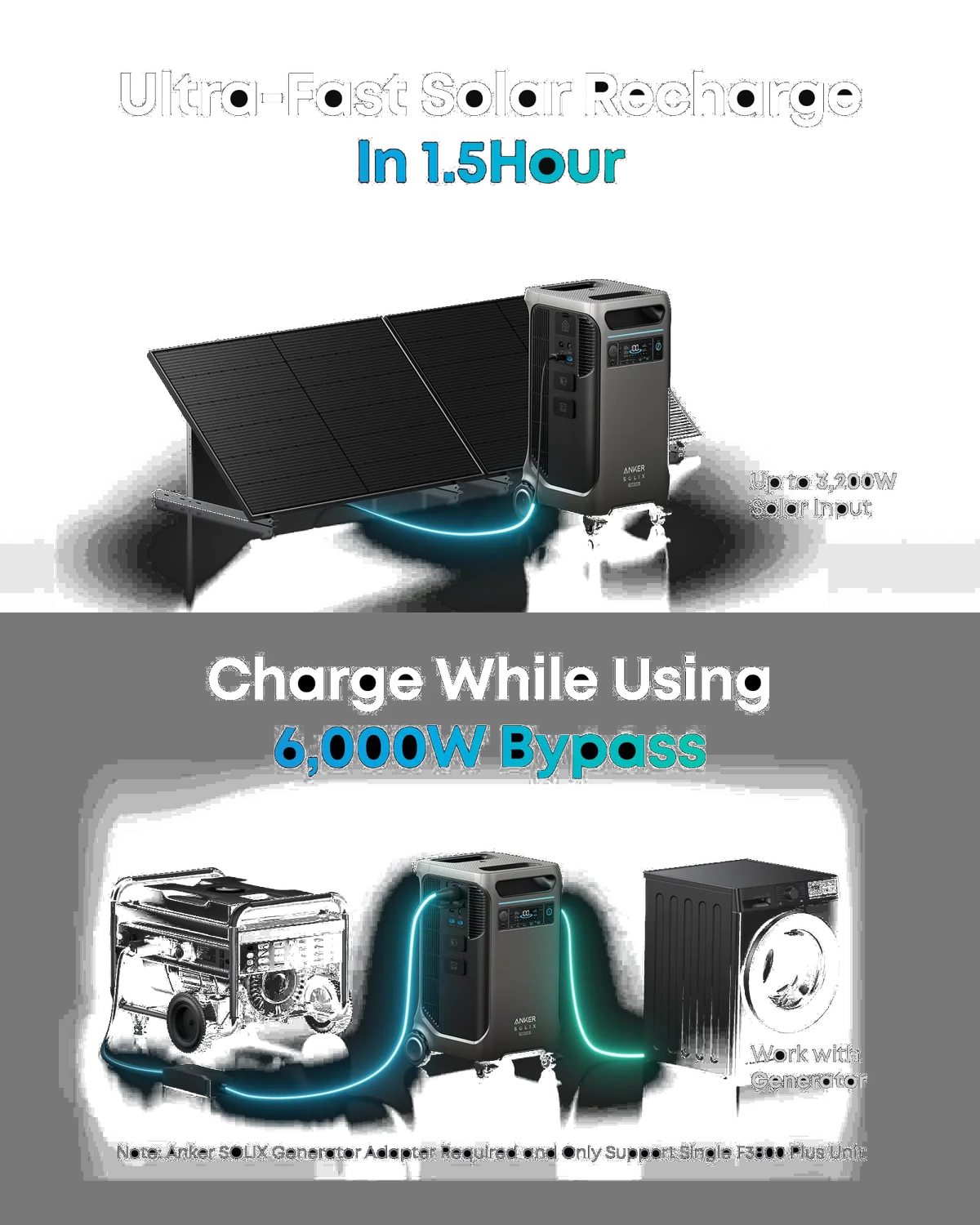
The original F3800 advertised 2,400W of solar input and, in the hands of the most technical reviewer of the line, could barely be pushed past 1,600W unless you fed it Anker's own low-voltage panels. The Plus raises the ceiling to 3,200W across two ports and, more importantly, widens the voltage and amperage window enough that normal MC4 panels work. That is a real engineering answer to a real complaint, and it is the reason to pay the premium over the older unit.
It is also the reason the bundle is a strange thing to buy. Four hundred watts of foldable panel is twelve and a half percent of the input this machine was designed to swallow. Anker's own marketing for the Plus talks about a full recharge in under two hours in optimal sunlight, which is only arithmetically possible with something like eight times the panel in this box. Even if the bundled panel held its full nameplate output continuously, which no panel does, 3,840Wh would take the better part of ten hours to refill.
So: buy this if you have an RV, a well pump, a dryer or a workshop that needs 240V and you want it from one unit rather than a pair of boxes and a combiner. Do not buy this if you only ever need 120V, in which case Anker's own F3000 does the job for far less, and do not buy this bundle specifically if solar recharging is the point, because the same money spent on the bare unit plus rigid third-party panels buys you several times the array. If you want the full head-to-head against the obvious rival, we have written up the F3800 Plus against the EcoFlow Delta Pro 3 separately.
Key Specifications
What the Plus actually changes
Three things separate this unit from the F3800 it replaces, and only one of them is a headline number.
| F3800 | F3800 Plus | |
|---|---|---|
| Solar input, claimed | 2,400W | 3,200W, dual ports at 11 to 165V and 17A each |
| Third-party MC4 panels | Effectively hobbled by a narrow voltage window | Works with most standard arrays |
| Generator input | No dedicated port | Dedicated smart generator port |
| Solar connector | XT-60 | Anker's own snap-lock connector |
| Capacity and inverter | Unchanged at 3,840Wh and 6,000W | |
The solar connector change is worth a grumble. Dropping XT-60 for a proprietary snap-lock means adapters, more cable in the pile and one more thing to break, and the justification, that it cannot be knocked loose, is thin comfort for anyone who already owns leads.
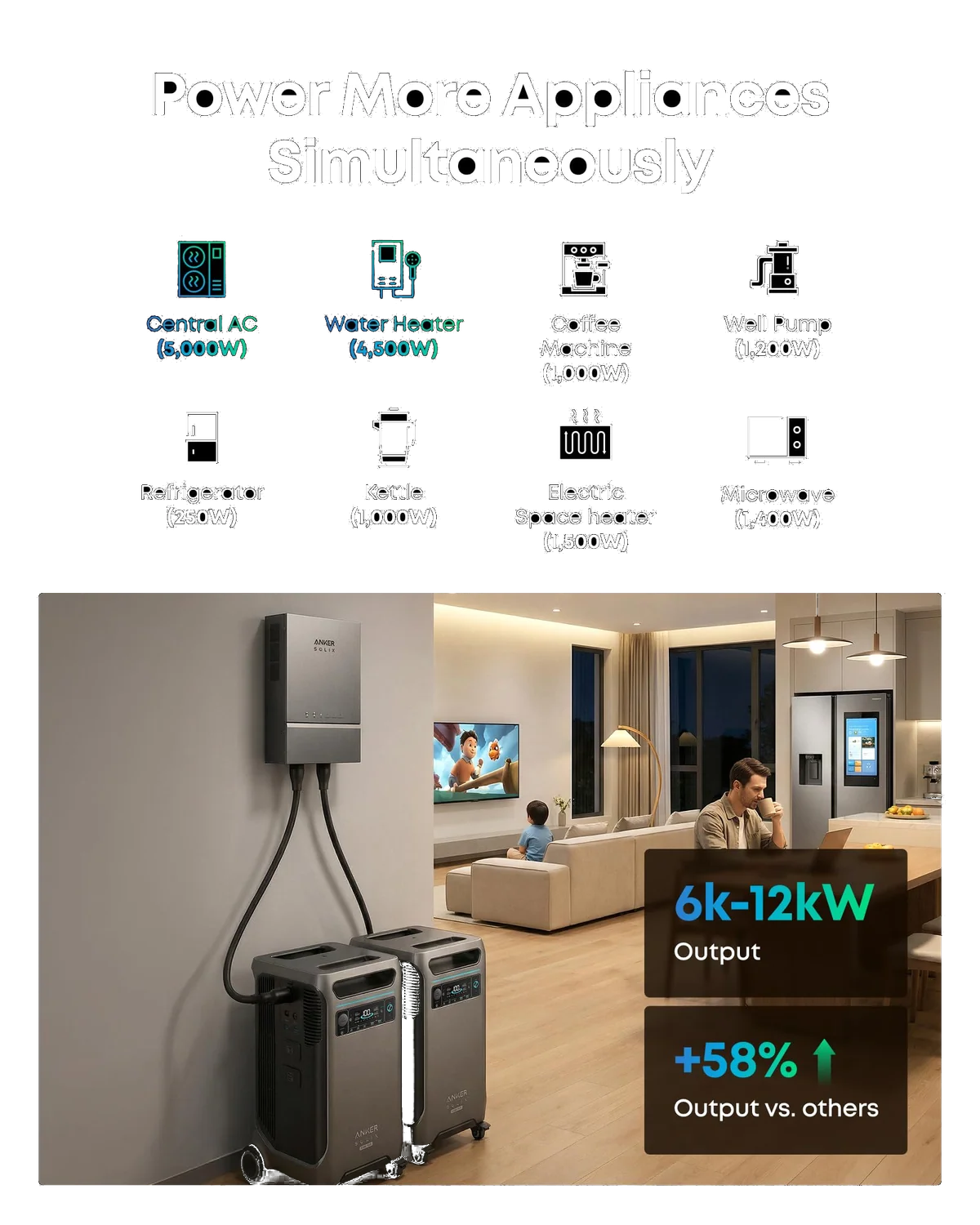
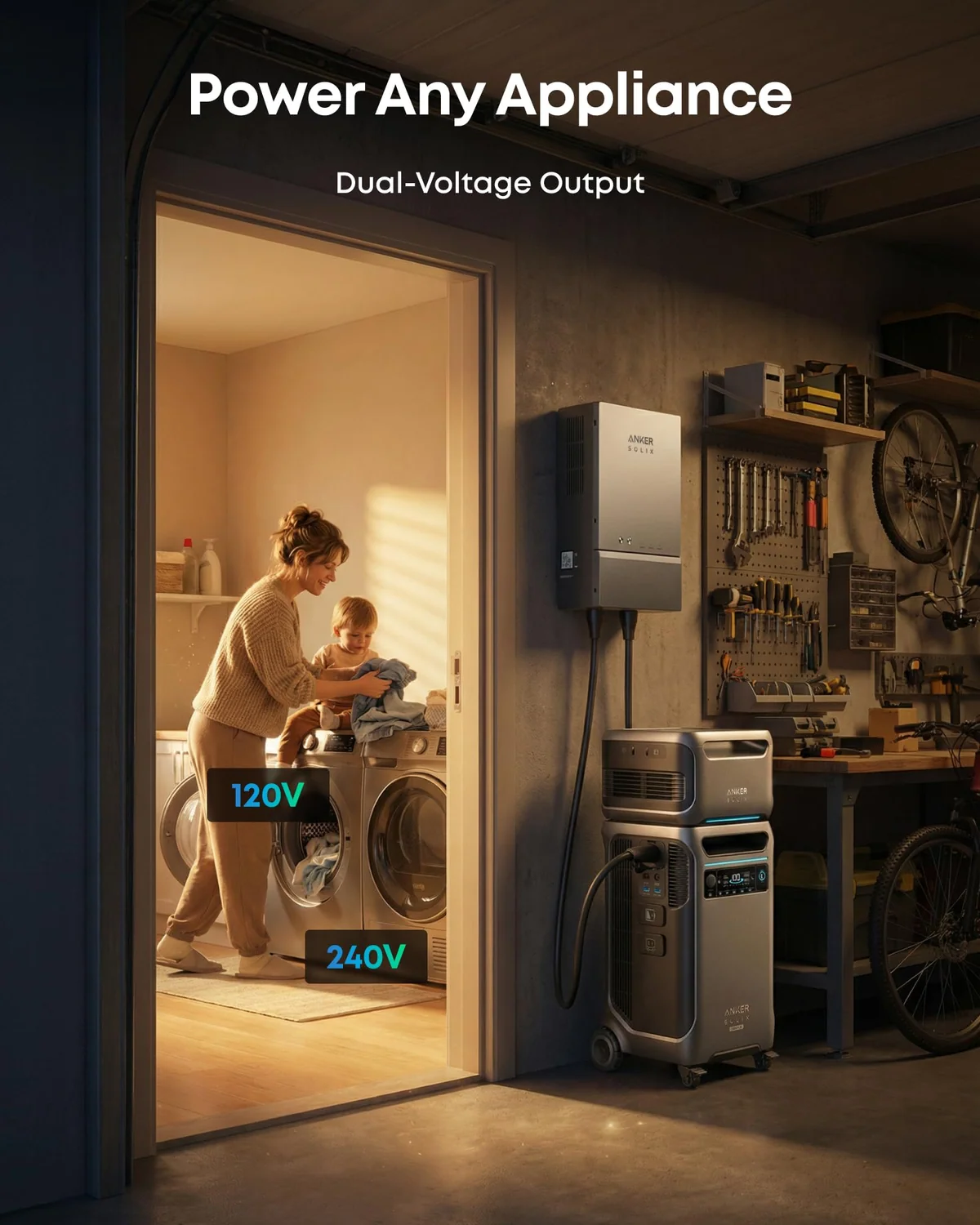
The part nobody should skim past is the 240V. Most power stations in this class give you 120V receptacles and nothing else, and the ones that claim 240V usually get there by pairing two units through a combiner box or a transfer switch. This one has an L14-30 on its flank rated at 6,000W and split-phase, which is why it keeps turning up in conversations about ovens, dryers, well pumps and whole-house panels rather than campsite kettles. CNET made that the centre of its case for the platform and it remains the strongest single argument for spending this much. If you are planning to wire it to a house rather than run extension cords, read how a transfer switch or interlock actually goes in before you buy anything.
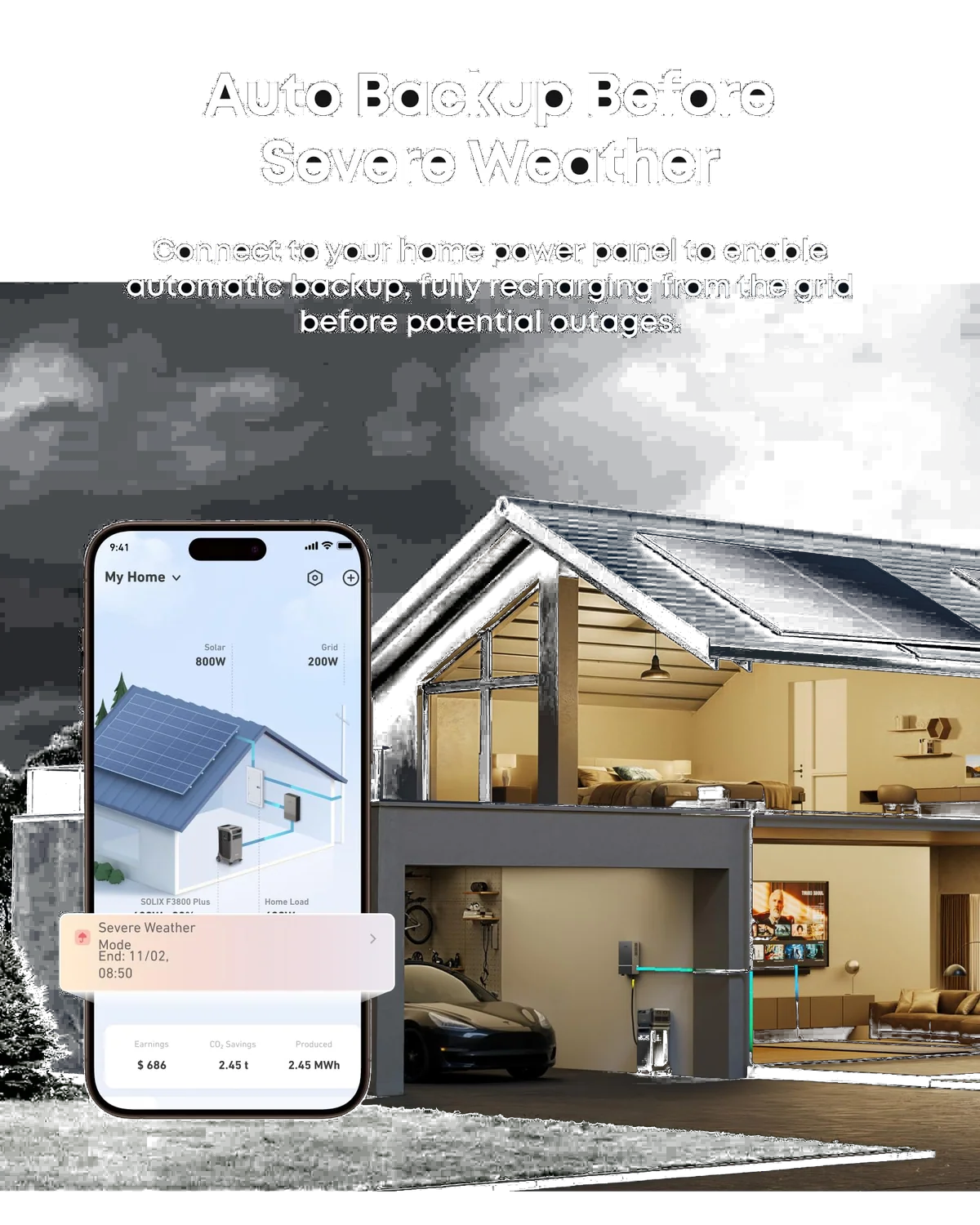
The dedicated generator port is the quiet admission that a battery alone does not survive a long outage. Anker's own answer is a tri-fuel smart generator that the app can start on its own when the pack runs low. One owner of this exact model has already improvised the same architecture, charging off-peak from the wall, running the house on the battery through peak hours, and topping up from a 3,600W propane inverter generator when the grid is gone. That hybrid is the honest shape of serious backup, and we walk through the trade in solar generator against gas generator.
Strengths & Limitations
Strengths
- Genuine split-phase 240V at 6,000W from a single box, without a combiner, a second unit or a transfer switch to fake it.
- The solar input has been raised to 3,200W across two ports and opened up to ordinary MC4 arrays, which is the entire reason the Plus exists.
- A dedicated smart generator port makes the battery-plus-generator hybrid a designed-in arrangement rather than a workaround.
- Every account of a faulty unit we found ended in a free replacement, with the owners volunteering praise for Anker's support.
- It scales to roughly 26.9kWh on one unit and double that on two, which almost nothing else in the class matches.
- Caster wheels with locks, a telescoping handle, bump stops and separated input and output banks make 136 pounds and a lot of cable manageable on flat ground.
Limitations
- The bundled 400W panel supplies about an eighth of the solar input this machine is built to take, and costs meaningfully more than the equivalent watts bought loose.
- The socket sold as a 30A RV outlet is capped at 3,000W, and one owner's camper air conditioning trips the unit after roughly five minutes even with a soft start fitted.
- The 6,000W charging figure needs two expansion batteries to be true, and the bare unit this listing sells tops out around 3,500W from a 240V generator.
- While it charges from a wall socket, only the three UPS outlets will power anything, which quietly kills most of the outlet array during a recharge.
- At 136 pounds and standing vertically, it goes where you first put it and stays there.
- Expansion batteries connect by long loose cables instead of stacking, and the arrangement gets unwieldy past two of them.
- Swapping XT-60 for a proprietary solar connector means adapters and extra cable for anyone who already owns leads.
- Twenty-five ratings and no published instrumented test of usable capacity, idle draw or panel output leave real questions about this specific model unanswered.
Where the spec sheet writes cheques the unit does not cash
Nothing here is a lie, but several of the big numbers arrive with conditions attached that are easy to miss on a listing page.
| Claim | Condition |
|---|---|
| 6,000W generator charging | Only with two expansion batteries attached; roughly 4,500W with one, and around 3,500W on the bare unit this listing sells |
| 30A RV socket | The TT-30 is capped at 3,000W, which is 25A, not 30A |
| 1,800W wall charging | While it charges from a 120V outlet, only the three UPS outlets will run anything |
| Charging from a 120V generator | Only the TT-30R is usable for output during the charge |
| Expandable to 26.88kWh | Six expansion batteries on long, loose cables, and the footprint gets awkward past two |
The socket rating is the one that bites hardest. Six thousand watts at 240V is two legs of 3,000W, and the TT-30 leg is one of them, so an RV expecting a full 30A service is not getting what its label implies. Anker's own comparison table confirms the 3,000W ceiling on that socket.
That is not an abstraction. The most useful review this listing has drawn is a three-star account from an owner whose Grey Wolf camper the unit will not run: on paper it should, with a soft start fitted it still should, and in practice the air conditioning runs about five minutes before the Anker trips off, leaving a machine that is fine for everything except the thing it was bought for. Specific Load cannot confirm the mechanism, but the 3,000W cap on that leg is the obvious suspect, and a second owner reports that surge headroom shrinks further when the unit is charging and discharging at the same time. If you are buying for a camper, work through what a rooftop air conditioner actually demands at startup first, and check the number your rig needs rather than the number on the plug.
Runtime is where the record thins out to almost nothing. No independent instrumented test of the Plus exists in what we could find: the most technical review of the model is explicit that deeper real-world testing was still to come, and there is no published measurement of its usable capacity or its idle draw. What we do have is scattered owner experience, which points in two directions at once. One owner ran a trailer for three days on a single charge. An owner of the previous F3800 got roughly 24 hours out of a fridge, which works out at around 160W average, high enough that a large idle-running inverter is the likely culprit rather than the fridge. That a firmware update was subsequently released and sold on standby efficiency suggests the complaint was live inside Anker too. Before you plan around any of it, our piece on what a power station really gives a fridge after inverter losses explains why nameplate watt-hours and delivered watt-hours are different animals.
On noise, the sources contradict each other and both are the same outlet. The Plus is described as surprisingly quiet for its size even when pushed hard, while the review of the smaller F3000 characterises the whole F3800 line as the loud one by comparison. Read that as quiet for a 6,000W inverter with fans, not quiet in the way a newer, smaller horizontal unit is quiet. No decibel figure for this model exists in our research and we are not going to invent one.
The panel is the part to argue about
Strip the bundle down and it is one power station plus one 400W foldable panel, with roughly a five hundred dollar spread between the bundled and bare versions at the point our figures were captured. Prices on this line move constantly, so treat that as a ratio rather than a quote: about a sixth of what you pay is going on the panel.
The reviewer who was most enthusiastic about the machine is scathing about that panel. Writing about this exact model, The Solar Lab set a high-quality bifacial 415W rigid panel against Anker's own 400W foldable and made the branded one out to be nearly four times the money for the same wattage, a gap the review called ridiculous before adding: "Unless you're 100% committed to brand loyalty, skip their panels. Use the MC4 ends and plug in your own for a fraction of the cost." Two things are worth saying in Anker's defence. The premium buried in this bundle is a good deal smaller than what Anker asks for that panel on its own, and a foldable panel you can carry to a campsite is not the same product as a rigid bifacial that wants a rack and a roof. The comparison is not like for like on form factor. It is exactly like for like on watts, and watts are what the battery counts.
The sizing problem is the more serious one. Pairing 3,840Wh with 400W of panel is the classic mismatch, and it is not just us saying so: in a thread about a much smaller battery, an owner made the point that 400W of solar is severely limiting even against a 1,000Wh-class pack, and that 1,000W is where solar starts doing real work. A second community voice, replying to a first-time buyer, said the same thing about branded portable panels in general: use ordinary panels and save a great deal of money. The one owner here who bought panels reported they never hit advertised output in full sun, and discounted it himself as normal for portable solar. He is largely right, which is the point: it is normal, and it is why you buy cheap watts rather than expensive ones. Our guide to sizing an array to a power station does the arithmetic properly.
There is a second value trap worth naming, which is Anker's own catalogue. A pair of F3000 units lands within touching distance of this bundle and gives you more total capacity and more inverter, at the cost of needing a hub to make 240V and coming with no panel at all. The smaller unit also reviews extremely well on its own terms, with a measured idle draw of 20.5W beating Anker's own claim and inverter efficiency around 84%. The dividing line is clean: if you need 240V from one box, the F3800 Plus is the answer, and if you do not, it is the expensive answer to a question you have not asked. Our roundup of solar generators and power stations places the whole class in order.
Then there is the payback story, which arrives with its own critics attached. An owner posting a full F3000 peak-shaving install projected a six-year return on the whole setup including panels; the thread's replies redid the arithmetic at ten years, and someone else pointed out that the annual saving quoted appeared to come from time-of-use arbitrage alone with no solar contribution counted. At this bundle's price, a saving of that order is the better part of a decade before you account for capacity fade, and that is with a tariff that makes shifting load worth doing. Buy this for resilience with a side of savings, not the other way round.
The loudest objection to the whole category is the cheapest one, and it deserves an honest hearing: buyers keep pointing out that a few hundred dollars of gas generator runs a hundred hours on a tank and keeps two fridges and a freezer going, which no battery at any price will do. That is true and it is unanswerable on runtime. What it ignores is that the battery starts instantly, runs indoors, makes no carbon monoxide, needs no oil changes and does not depend on finding fuel during the week everybody else is looking for fuel. If runtime is the only axis you care about, see the gas options for multi-day outages instead.
Living with 136 pounds of battery
This is not a portable product in any sense a camper would recognise. It weighs 136 pounds, stands vertically, and while it has caster wheels with locks, a telescoping handle, bump stops and hidden grab handles for a two-person lift, the reviewers who liked it most and the reviewers who liked it least agree on the practical outcome: you can move it, and then you park it. An owner put it more economically, noting that it has wheels and a handle, but once you park it, that is where it lives. The community's other recurring note is that people underestimate what mounting one on a shelf involves.
The reliability picture is the one place where a thin review base makes honest reporting difficult, so here is exactly what the record holds. This listing carries a 4.6 average from 25 ratings, which is nowhere near enough to derive a failure rate from. Across Amazon and Reddit there are at least three separate accounts of units that arrived dead or refused to power on despite showing a full charge, including one delivered a month before the owner posted. Every single one of them ended the same way: a free replacement, and unprompted praise for Anker's support, including from people who had nothing else nice to say. One of the accounts turned out to be someone not holding the power button long enough, and at least one may have been a unit stored flat. That is not a picture of an unreliable product. It is a picture of a non-trivial dead-on-arrival rate attached to a warranty process that works, which is a much better problem to have. Worth noting against it: an EcoFlow owner in a comparison thread reckoned EcoFlow's warranty terms are better, without elaborating.
Storage is the part most buyers will get wrong, and Anker's own instructions are specific. Turn the main power button off, keep it somewhere dry and cool, check the charge level every week, recharge if it drops below 30%, and take it back to 100% every three months. A hurricane-season purchase that gets shoved in a garage in April and pulled out in September is being operated outside those instructions, which is worth remembering when you read a story about a unit that would not wake up. Our page on a power station that shows a full charge and refuses to start covers the rest of the diagnostic order.
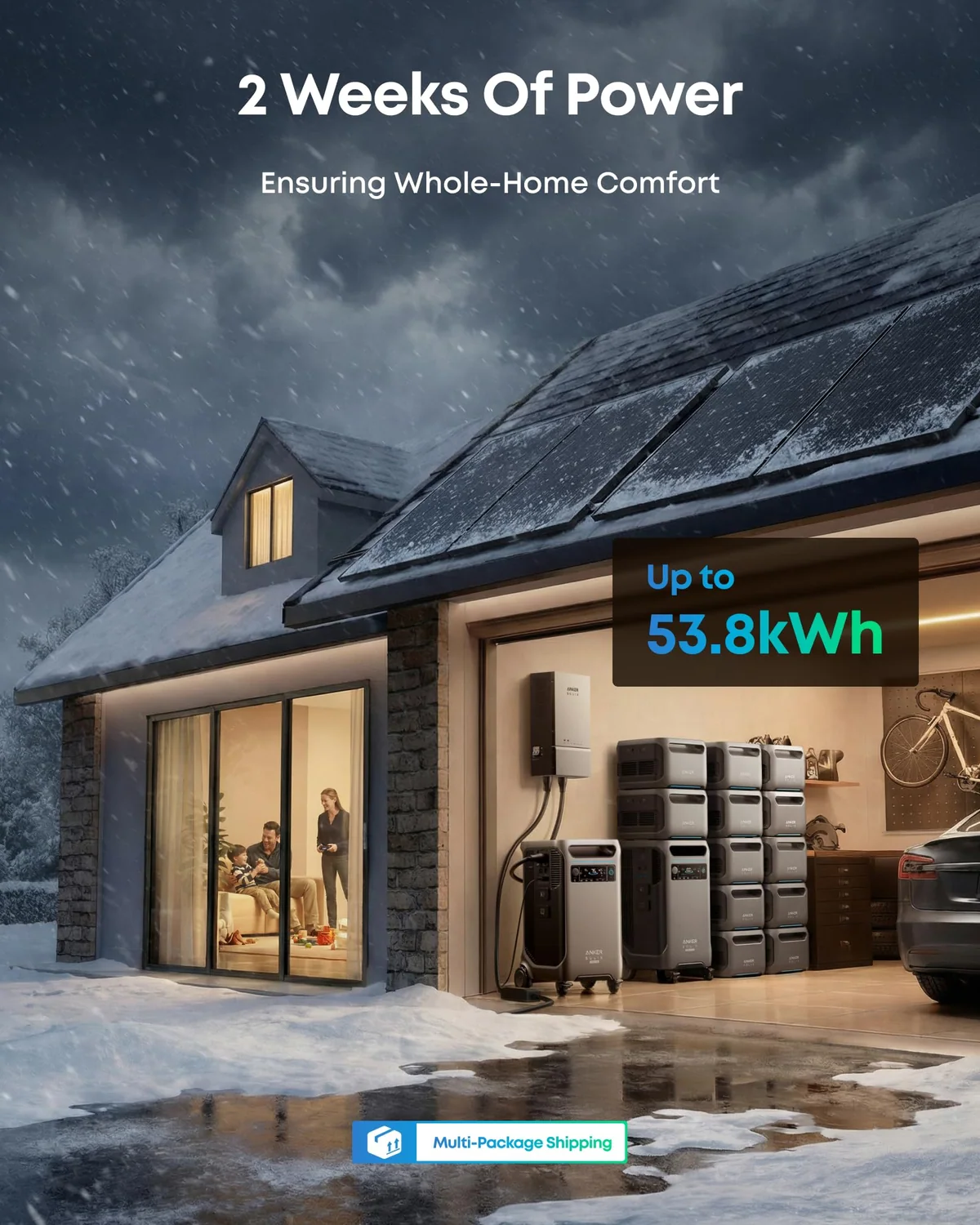
On expandability, the platform scales further than almost anything else in the class, to roughly 26.9kWh with six expansion batteries on one unit and double that across a pair. The catch is physical: Anker's expansion batteries hang off long, floppy cables rather than stacking, and past two of them the installation gets bulky in a way that matters if your utility room is tight. The pack is LFP, the warranty is five years, and Anker designs the cells for a service life beyond ten.
Frequently Asked Questions
How long will it keep a house running?
Not long enough to run a house normally on its own, since 3,840Wh is roughly one day of a fridge plus lights and devices, and the multi-day whole-home figures you see quoted assume six expansion batteries and around 26.9kWh.
Will it run my camper's air conditioning off the 30-amp socket?
Maybe not, because that socket is capped at 3,000W rather than a full 30A, and one owner reports it tripping after about five minutes on a Grey Wolf even with a soft start fitted.
Can I use solar panels that are not Anker's?
Yes, and that is the single best thing about this model, since each of its two inputs accepts 11 to 165V at up to 17A, which covers most standard MC4 arrays.
Is the Plus worth paying more for than the original F3800?
If you intend to charge from solar, yes, because the older unit's solar input was effectively unusable at its rated figure with anything but Anker's own panels.
How long does the bundled 400W panel take to refill it?
Nobody has published a measurement, but the arithmetic is unforgiving: even at an uninterrupted full 400W, 3,840Wh needs close to ten hours, and panels do not hold nameplate output.
Can I leave it in the garage until the next outage?
Only if you follow Anker's storage instructions, which ask you to check the charge weekly, top it up below 30% and take it to full every three months.
Does it still need a gas generator?
For any outage longer than a day or two, yes, which is why the Plus gained a dedicated generator port and why Anker now sells a tri-fuel generator the app can start on its own.
Can I run appliances while it is charging from the wall?
Only from the three 120V UPS outlets, because charging on the 120V AC input disables the rest of the output array.
Sources (6)
- Amazon listings and customer reviews — Anker Solix F3800 Plus
- Owner reports across r/AnkerSOLIXCommunity, r/Portable_PowerStation, r/prepping threads
- Owner and reviewer video, 2 channels
- Thesolarlab — Article — www.thesolarlab.com
- Ankersolix — Article — www.ankersolix.com
- Cnet — Article — www.cnet.com