On a cheap inverter generator the return window is the warranty, and everything after it is goodwill
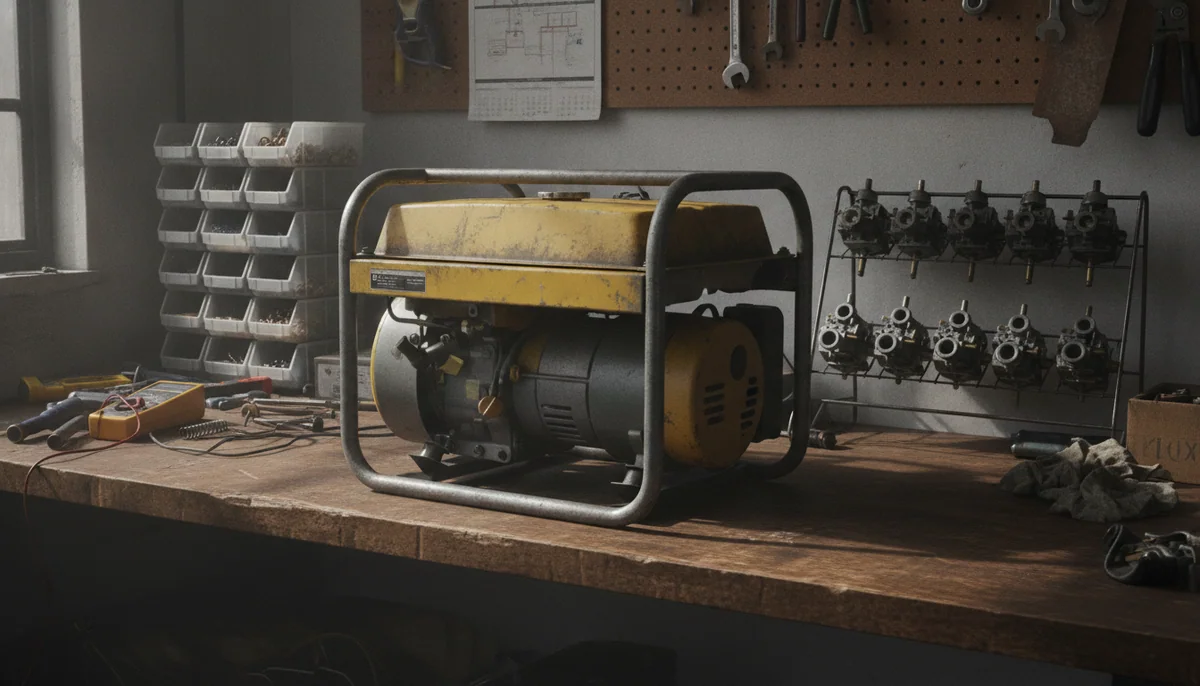
That is the stance, and it has a cost attached: it means the useful part of your purchase happens in the first week, not in year two. Fill the thing, oil it, and put a real load on it inside your return period. Run it on every fuel the box claims. Then leave it alone for three weeks and start it again, because the single most detailed failure in this whole body of evidence is a machine that ran perfectly for forty five minutes, sat, and then threw an overload fault with nothing plugged into it. A generator that only misbehaves after standing is a generator you will discover during the outage, and by then the window has closed and you are into the part of the story this page is actually about.
There is one group who should not be in this market at all, and it is not the group you would guess. It is not people who are bad with engines. It is people for whom the generator is load-bearing: a sump pump in a basement that floods, a well that is the only water, an oxygen concentrator, anyone whose plan has no fallback behind it. Everything below is a description of a support structure with holes in it, and holes are survivable when the consequence of a dead machine is a warm freezer. If the consequence is worse than that, read what the extra money buys in a standby unit or take the silent route in backup power for medical equipment and stop reading here.
For everyone else, the good news is that these machines are more fixable than their brands are contactable, and the rest of this page is the method: how to read a warranty term that means nothing, what actually happens when you file a claim, and how to buy a part for a generator whose maker has never published a part number.
The warranty length on the listing is not a fact about the machine
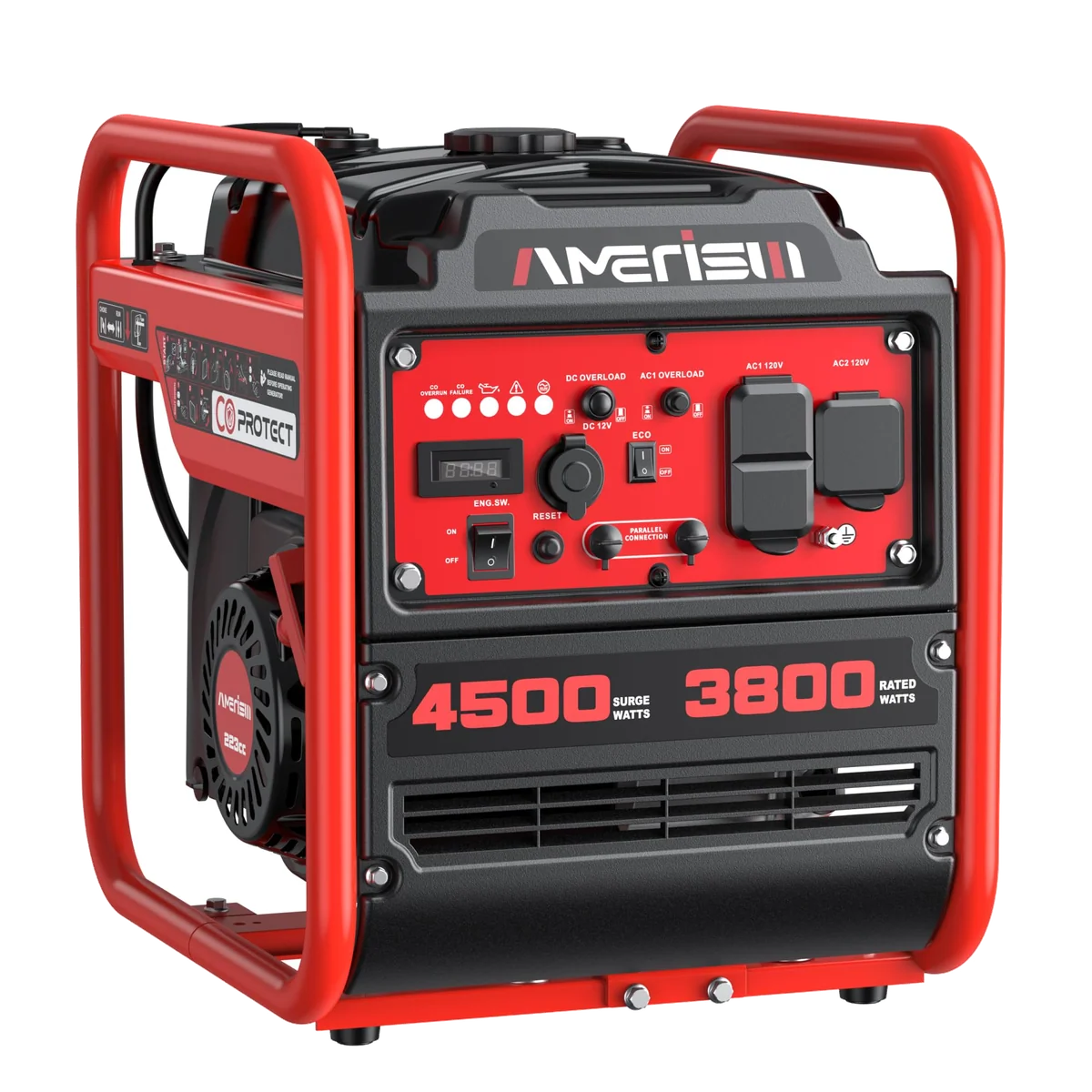
Start by noticing that nobody can even agree what the term is. Aceup's own bullet promises a two year limited warranty; Amazon's catalogue field for the same model records one, and no buyer can tell which is real until the day they need to know. AMERISUN's catalogue entry says two years, one owner was told one year by the company and another was told two. Lifan says one year limited. Efurden says one. RINADURS says one, with lifetime technical support bolted on. Gidrox says three, on a machine whose oldest owner in the public record is about four weeks into ownership, which makes the number a promise about a future nobody has visited yet.
Look at what recurs across those listings and the pattern is almost funny. Several of these brands offer lifetime technical guidance alongside twelve months of parts cover. They will talk to you forever and replace something for a year. Advice is free to give and a wiring harness is not, and the coverage has been arranged accordingly.
So the term was never the variable. Two years from a company with a parts counter and a dealer list is worth more than three from a badge that appeared on Amazon last winter, and one year from a seller who ships replacements on sight of a photograph is worth more than either. What you are trying to price is not duration. It is whether anybody will act.
Eight claims, six brands, and one company that simply shipped a new generator
Here is every documented interaction between an owner of one of these machines and the people meant to stand behind it. Specific Load has not filed any of these claims; each row is an owner's own account of what happened to them.
| Machine and fault | What the company did |
|---|---|
| AMERISUN 4500W, ran eight to ten seconds and shut down, three months after purchase | The maker's engineers diagnosed a faulty wiring harness from photographs and video, declined to ship a replacement, and referred the owner to a service centre over thirty miles away that had already stopped taking the brand's warranty work |
| AMERISUN 4500W, stopped and would not restart at about three months, on a unit exercised weekly | The seller asked for photographs, received them, and never replied across three further messages |
| Aceup Energy 4000W, internal fuel tank collapsed inward after one use | Support insisted nothing was broken and that a part had merely dislodged, then refused a refund or replacement inside the warranty period |
| PowerSmart 4400W, false overload at thirty seconds on both fuels after three weeks standing | Told to locate a repair shop himself, ship a sixty one pound machine there at his own expense, and hope for reimbursement afterwards if the fault were judged a manufacturing problem |
| Oxseryn 5000W, fuel shutoff valve leaking, found at seven months | Asked for photographs, then shipped an entire new generator and told him not to bother returning the old one |
| RINADURS 2800W, ran rough and lost regulation at about four hours | Refunded through the retailer; the owner rebought and the second unit has since passed three hundred hours |
| RINADURS 2800W, sputtering and output cycling at two hours, taking down a power station and a television | The owner reports the listing did not accept returns and he ate the cost of the generator |
| Gidrox 11000W tri-fuel, nothing yet | Three year warranty, no claims on the record, oldest owner about four weeks in |
Read down the right hand column and the shape is obvious. The outcomes that worked ran through the retailer, and the outcomes that failed ran through the manufacturer. That is the finding, and it is the reason the verdict at the top of this page is about a return window rather than a warranty card.
The exception deserves better than a footnote, because it cuts against the argument and it is the most encouraging thing here. The Oxseryn owner was seven months in, long past any return period, holding a machine he had barely run, and he only wanted the leaking valve so he could fit it himself. He was sent a complete generator and told to keep the broken one. That is what a functioning warranty looks like from the inside, and it happened once, from a brand with no service history, no independent testing and a listing whose own title misspells the word compliant. You cannot plan around it. You can note that it is possible.
The other exception cuts the other way and it should change what you check before you buy. One RINADURS owner says returns were not available to him at all, which means the coverage this page has just told you to rely on is not universal either. Read the returns terms attached to the specific listing before you commit, because on this shelf that paragraph is the real warranty document and the one on the box is marketing.
The first hour is the only inspection anyone will perform for you
Nothing in this class is inspected on your behalf. There is no dealer prep, no pre-delivery check, and at least two AMERISUN buyers opened boxes containing units that appeared to have been apart before. So the acceptance test is yours, and the record tells you exactly what to look for, because these machines fail in the first hour in a small number of documented and largely undocumented ways.
On the Lifan 4800, the starter battery ships deliberately disconnected behind a frame rail, and three of the five people who have reviewed the machine independently report that neither the manual nor the quickstart guide says where it is or how to reconnect it. The listing's own copy tells you to connect it as shown in the manual, which is the part of the manual that does not exist. On the Aceup 4000, closing the fuel cap vent with petrol in the tank and letting the evening cool the machine pulls a vacuum that folds the tank inward, and the brand's own shutdown routine tells you to close that vent. On the AMERISUN, red shipping blocks bolt the engine hard against its rubber mounts for transit, and leaving them in produces a shake and a noise you will spend an afternoon blaming on the motor.
The best single first-hour finding in this whole record belongs to a RINADURS owner whose generator started badly, ran rough and stalled repeatedly. He pulled the boot and found the porcelain shattered around half the spark plug, and then found that the plug fitted at the factory was a Torch F7 series where the manual called for a series 5. He put an NGK in it, it started on the first pull, and he ran the break in cycle. Two separate faults, one part, five dollars, and a machine that would otherwise have gone back as defective. If yours will not start or will not stay running, work through the fuel valve, the cap vent and the switches nobody can see first, and if it runs but nothing comes out of the sockets, that is a different fault with different causes.
Then do the thing almost nobody does: run it hard, and run it again after it has stood. The PowerSmart owner did everything correctly on day one and his machine passed. It failed three weeks later, on both fuels, which rules out stale petrol and points at the control side. A single successful start proves the engine. Only the second start, after a rest, proves the machine.
Stop searching the badge and start searching the engine
People are already hunting for spares under these names and mostly coming back empty handed, which is what the search traffic around AMERISUN, Lifan and PowerSmart replacement parts is. The reason they fail is that they are searching a marketing name that was applied late in the process. The engine underneath is a bought-in clone, it carries its own model number on the block and on the emissions label, and that number is the thing with a supply chain behind it. On the mower line, where somebody has actually done this work, an ignition coil the brand sold for roughly three times the aftermarket price turned out to be a standard part identifiable by its bolt spacing. Expect the same arithmetic on the generators, and note that half the inverter machines on Amazon come out of the same handful of factories anyway. As one forum regular put it about the whole category, there is nothing inherently wrong with a clone engine other than mystery quality control.
Where that method works, it works well. Where it fails is instructive, and Lifan is the clearest case because it has the longest history to check. A parts specialist stocking the brand lists carburettors, recoil starters, ignition coils, gasket kits and starter motors at prices that make repair obviously worthwhile, and not one item in that catalogue is for an inverter model. The brand's reputation for cheap available spares is real and it belongs to machines from ten years ago. The secondary market says the same thing in a different way: on eBay's own brand filter, Lifan generators show fifteen listings against 191 for WEN, 225 for Predator and more than eleven hundred for Generac. That number is not a measure of demand. It is a measure of how many donor machines will exist in three years when you need a panel or a fuel tank.
So sort the machine into two halves before you buy it. The consumables are generic and always obtainable: plug, air filter, oil, carburettor bowl gasket, recoil rope. The proprietary half is the inverter board, the control panel, the wiring harness and the moulded fuel tank, and none of it is catalogued by any of these brands. Now look back at the failure table. A wiring harness, a control fault throwing a false overload, a collapsed fuel tank. Every hard failure in this record landed on the half of the machine you cannot buy.
The documentation is missing in ways that cost money
Two Oxseryn owners could not establish what oil their engine takes or how much, and one of them poured and checked repeatedly until he settled on about twelve ounces. Aceup's manual never mentions the vent that destroys the fuel tank. Lifan's never mentions the battery. Efurden's listing does not state a displacement, an oil type or a capacity at all, and does spend two of its ten copy slots explaining why a new machine smells of petrol, which is a manufacturer pre-empting a question that was generating returns. When a listing is silent about a specification, do not borrow the figure from a sibling model, because these catalogues mix wattages and part numbers across products freely. Our guide to what these engines take and when the break-in change is actually due gives you the shape of the answer while you go looking for the specific one.
Who fixes it, honestly
Mostly you do. The only named service centre anywhere in this evidence had stopped handling the brand's warranty work by the time the owner reached it, and independent shops are wary of budget imports for a straightforward commercial reason: they cannot get parts or service information quickly enough to make the job pay. That is not snobbery, it is scheduling. A shop that orders a part it cannot identify from a company that does not answer has a machine on its floor for a month.
Lifan's own reply to a legacy owner is the most useful document in the whole corpus, because it explains rather than deflects: the company describes an emissions vent tube fitted through a drilled hole in the fuel tank and sealed with a nut and gasket, states that those seals are meant to be leak tested at the factory, and concedes that the unit in question was not tested properly. A maker admitting a quality control escape in writing tells you more about what you are buying than any star average does, and it tells you the failures here are process failures rather than design ones. Machines from a good design with an unreliable process are exactly the machines that need testing on arrival.
The reassuring half of this is that the thing most likely to kill your generator is not a part at all. Ask a room of owners why cheap carburettors die and you get near unanimity: fuel sat in it and turned to varnish. There is a real split about the cure, one camp swearing by ethanol free petrol and the other insisting the load-bearing habit is shutting the fuel valve and running the machine dry before it goes on the shelf, and the two longest serving owners in that thread, at eight and ten years on the same machines, both credit draining, one of them running nothing but California's mandatory ethanol pump fuel the entire time. That habit costs three minutes and it is covered properly in storing a generator so it starts when the power goes out. It is also the strongest practical argument for buying dual fuel at this end of the market, because propane never varnishes anything, and what each fuel costs you in watts is a small price for a machine that starts.
The best evidence on this page is the owner who did all of it. He replaced the factory plug before putting the machine into service, ran only non-ethanol fuel, changed the oil on schedule, and reports more than three hundred hours with the oil still slick and barely darkened at change time, twelve hours to a tank in eco mode, no oil burning. That is on the cheapest and least known machine in this entire group. Maintenance is doing more work here than brand equity is.
Which of these is worth the gamble, then
All of them are gambles and they are not the same gamble, so here is where Specific Load would and would not spend.
The Oxseryn 5000 is the one whose seller behaved best when it mattered, and it is genuinely frugal and quiet, with owners beating its own runtime claim at the light loads people actually connect. Its limits are real and none of them are about support: it is 120 volts only, so despite the badge it cannot back up a house, it has no dual fuel and no electric start, and one owner watched it cut out repeatedly under a travel trailer's air conditioner in Arizona heat. The RINADURS 2800 is the machine with the longest documented ownership here and the only three hundred hour record, and it is quiet and frugal with it, but two of eight owners received units that failed inside a few hours and one of them could not return his at all, so it is only a sensible buy where the returns terms are good.
The PowerSmart 4400 earns a place because every owner who has used it reports it starting first pull and because propane in storage removes the failure mode described above, but the support answer it produced is the worst on this page and two units owned by the same reviewer both smoke a little from the exhaust. The Aceup Energy 4000 carries instrumentation that machines twice its price delete, and it also produced a documented, photographed failure that the company refused to remedy inside its own warranty period, which is the single clearest illustration of everything above. The Lifan 4800 gives you a real trailer socket and a working key fob at a price where those are rare, against a parts channel that does not cover its own product line.
Two I would treat more carefully. The AMERISUN 4500 is more machine than its bracket usually delivers when it works, and on the largest pool of owner feedback for a machine of this class roughly one owner in six gave a single star, with the failures clustering in the first days or the first three months, which is why the return window instruction matters more here than anywhere. Its listing also claims the product is made in the USA, and nothing in the record supports that; the parent company sits in Chicago and a repair channel that has taken in a run of its machines calls the result a China machine with a Chicago headquarters. If the corporate question is what brought you here, the relationship between those two badges has its own page. The Gidrox 11000 tri-fuel is the most thoughtfully built object in this group, with drain tubing for the oil and the carburettor bowl that suggests somebody read the complaints, but its three year warranty has no service history behind it at all and one owner reports it giving up somewhere around 5,500 watts against a 9,000 watt running claim.
The one I would skip is the Efurden 2800. It is a 2,000 watt running generator named after its surge figure, its quiet rating has been checked by nobody outside the company, its parallel port only accepts other Efurden machines so a second unit locks you in again, it is petrol only with one year of cover, and the brand's own larger open frame machine has been selling for less in the same fortnight. There is no version of the argument above that this machine wins.
If any of that has put you off the whole shelf, the honest alternatives are on this site rather than beyond it. The GENMAX GM9000iED is the dual fuel machine in this neighbourhood with an actual owner base and 240 volts, and the rest of the field is laid out in the inverter roundup and the dual fuel picks. Forum buyers looking at exactly these budget badges regularly say out loud that they would pay the difference for a WEN and its three year warranty, and on the evidence here that is not a foolish thing to say. If what you actually want is something that starts silently and has no carburettor to varnish, a battery is a different instrument with a different failure mode: the comparison and the power station picks are the place to go, and plenty of households end up owning one of each, using the cheap generator as a daylight charger and the battery as the quiet overnight load carrier.
Whichever way you go, the instruction from the top of the page does not change. Test it while you can still send it back, learn the engine's own model number before you need a part, run it dry before it goes on the shelf, and treat the warranty card as a document about the company's intentions rather than a description of what will happen to you.
Frequently Asked Questions
Where do I find spares for a generator whose brand does not publish any?
Find the engine's own model number stamped on the block or printed on the emissions label and search for that instead of the name on the frame, because the engine is a bought-in clone with a real aftermarket behind it while the badge is not.
Are AMERISUN and PowerSmart the same company?
AMERISUN is PowerSmart's parent, and machines sold under the two names are frequently the same hardware with different stickers, which is also why a fault reported under one badge is worth reading if you own the other.
Is Lifan a brand worth taking a chance on?
Lifan is a long established Chinese motorcycle and small engine maker whose engines have a decent reputation and whose fuel system plastics and documentation have a poor one, so the risk is about paperwork and support rather than the motor.
Can I still buy parts for a Lifan generator?
You can buy carburettors, recoil starters and gasket kits cheaply for the older open frame models, and there is nothing catalogued anywhere for the current inverter line.
What do I do when the manual does not answer my question?
Assume the gap is real rather than your copy being incomplete, because the manuals in this class have been caught omitting the fuel cap vent that collapses a tank, the location of the starter battery, and the oil grade and capacity outright.
Does a two year warranty on the listing mean two years of cover?
Not reliably, since one of these listings advertises two years while the retailer's own catalogue field for the same model records one, and owners of the same brand have been quoted both by the company.
Will a local small engine shop work on one of these?
Many will not, because they cannot source parts or service documentation quickly enough for the job to be worth their bench space, which is a scheduling problem rather than a judgement about you.
Does an Amazon return count as using the warranty?
No, and that distinction is the whole point: the return is a retailer process that works on demand, while the warranty is a manufacturer process that in this record failed nearly everyone who tried it.
What is the single most useful thing I can do on day one?
Change the factory spark plug for a known brand in the heat range the manual specifies, then load the machine hard on every fuel it claims while you can still send it back.
Why do these generators die after sitting in a shed?
Petrol left standing in the carburettor turns to varnish and blocks the passages, which is why shutting the fuel valve and running the engine dry before storage is the habit that separates the machines still working at ten years from the ones that are paperweights by the second winter.
Sources (9)
- Amazon listings and customer reviews
- Owner reports across r/Generator threads
- Owner and reviewer video, 2 channels
- Walmart listing
- Woot — Article — tools.woot.com
- Everestpartssupplies — Article — www.everestpartssupplies.com
- Ebay — Article — www.ebay.com
- Goodsam — Article — community.goodsam.com
- Electricdirtriders — Article — electricdirtriders.com