The GM9000iED rewards the owner who runs it and punishes the owner who stores it
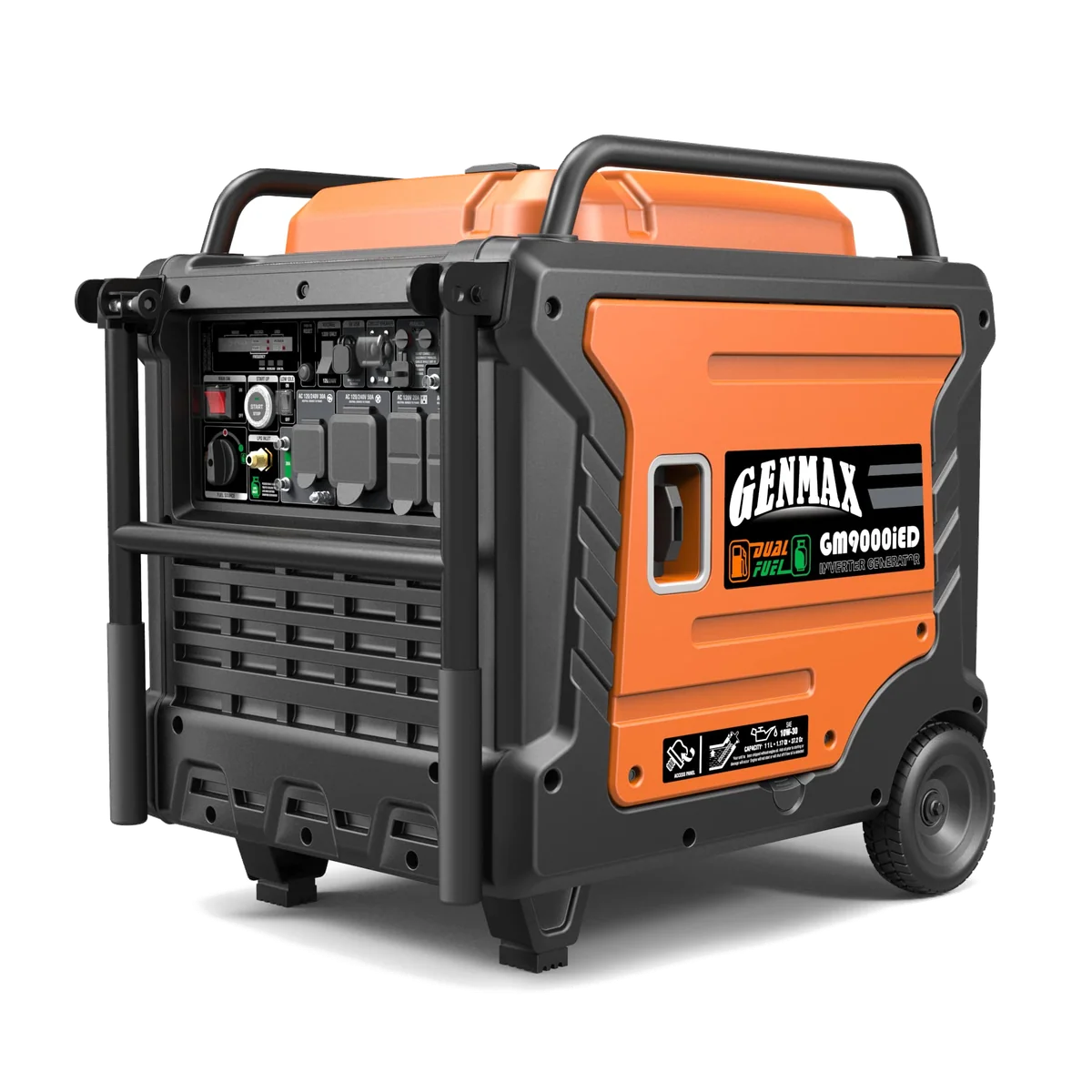
Buy this generator if you will actually run it, because nothing else at its price gives you a built-in 50-amp outlet, pressure-fed oiling and remote start in one quiet enclosure, but walk away if the plan is to unbox it, park it behind the lawnmower and expect it to fire on the night of the storm.
Based on 133 owner ratings, 5 owner discussions and 2 other sources. We have not tested this machine ourselves.
We earn a commission if you buy through our links, which does not affect what we say.
Read how this site works →
The short version
The GM9000iED is better engineered than its price suggests and worse supported than its weight demands. Pressure-fed oiling, a screen that actually catches shavings, a 50-amp outlet nobody else fitted, rear exhaust, foam in the panels, a temperature sensor on the cylinder: somebody at the design stage cared. Then the neutral shipped bonded with no instructions, the parallel figure went on the box without surviving the hardware, the hour meter forgets itself, and the warranty landed on a quarter-ton object with a service centre an hour away. Buy it as equipment, run it monthly, wire it properly, and it is a great deal of generator. Buy it as insurance and leave it in the box, and you are the owner who writes the one-star review in the spring.
That is a real split, not a hedge. The owner record on this machine divides almost perfectly along one line, and the line is not build quality or fuel type or price. It is duty cycle. A mobile grooming business running ten hours a day, five days a week, reports no trouble at all. An owner who bought two of them in November 2023, assembled and started them in January 2024, and went out in the spring to exercise them found that neither one worked: one would not show any electrical activity at the control panel, the other would only start on the pull cord. Another owner bought his in June 2022, left it boxed until February 2023, and could not keep it running for more than a few minutes on either fuel. The generator that lives on a job site is fine. The generator that lives under a tarp waiting for a hurricane is the one filing one-star reviews, and the listing title sells this machine for exactly that job.
So the honest drawback goes here, at the top, before anything good is said about it: this is a well-engineered generator wrapped in a poor ownership story. The neutral is bonded from the factory with no instructions for changing it, which you will need to do if you are feeding a panel through a transfer switch. The CO shutoff is the single most common reason an apparently dead unit is not actually dead. The advertised parallel figures do not survive contact with the hardware. And the warranty, however sincerely honoured, is attached to a 250-pound object and a service network most buyers cannot physically reach.
Buy it if
- You will start it and load it once a month, change the oil on schedule, and treat it as equipment rather than insurance.
- You want a 50-amp inlet on the house or a big RV, and you are tired of adapters.
- You are comfortable unbonding a neutral yourself, or paying an electrician an hour to do it while they wire the inlet.
- Your central air already has a soft start, or you accept that you will be buying one.
Walk away if
- You want something you can install and forget, in which case a permanently installed standby unit is the honest answer and the Generac Guardian 24kW is the version of it we have looked at closely.
- You have no way to get a quarter-ton machine into a vehicle, because that is what a warranty claim looks like here.
- You need 240 volts from a pair of these at the advertised combined number, which is not what paralleling them delivers.
Everything below is drawn from the eight retained Amazon reviews, the listing's own claims, the brand's product page, and the forum and subreddit threads where owners argue about this machine in front of each other. Specific Load has not run a GM9000iED, has not measured its noise or its fuel burn, and says so plainly rather than dressing up other people's numbers as our own.
Key Specifications
What the money actually buys
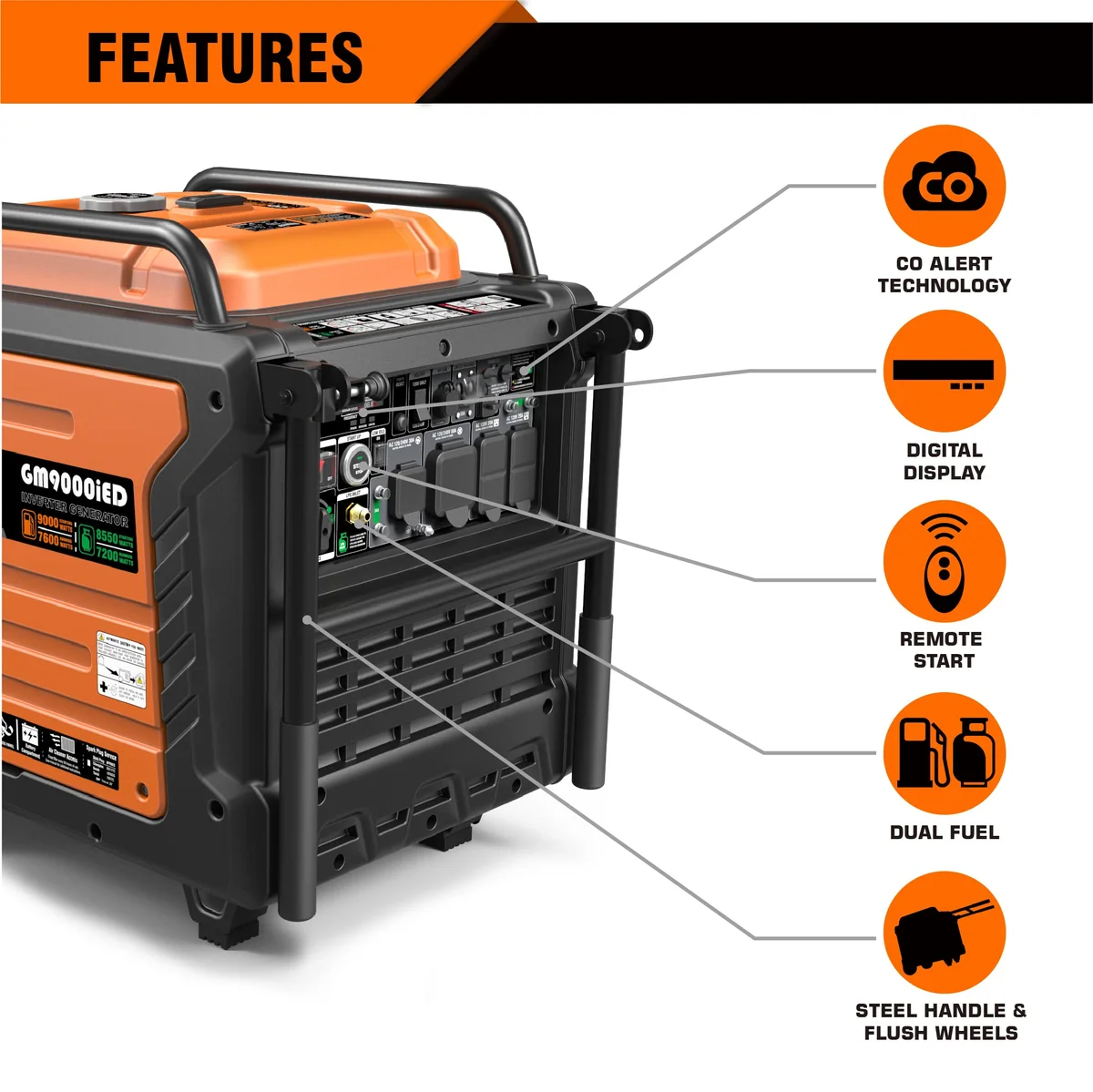
Start with the part nobody else in the class has. The GM9000iED carries a 50-amp receptacle on the panel, no adapter required, which is why owners cross-shopping it against the Predator 9500 kept coming back to it. One owner laid the two side by side at full list in September 2022 and found them at the same asking price, with the GENMAX carrying a full digital multimeter instead of a bare hour meter, remote start instead of none, dual fuel instead of gasoline only, an oil filtration screen instead of none, and that 50-amp outlet. His conclusion was that it was the most feature-dense inverter generator you could buy at the time, and on the evidence of the comparison he actually made, that is a fair reading of the 2022 market.
The 50-amp outlet is not just convenience. The machine's own ceiling at 240 volts is around 32 amps continuous, so a 50-amp cord is oversized on purpose: it lets you run a long extension to a house inlet without the voltage drop that a 30-amp cord would give you over the same distance. An owner feeding a whole-house backup through it made exactly that argument, and it is the correct one. If you are wiring toward an inlet box and an interlock, the headroom is the point.
The oil system, which is the genuine engineering story
Small portable engines are almost universally splash-lubricated: a dipper flings oil around the crankcase and nothing filters it. The GM9000iED's 458cc engine has an oil pump and a filtration element, and the argument about what that element actually is ran for several posts on the Power Equipment Forum before it was settled with the parts list. It is not a spin-on cartridge. The manual's exploded view lists an oil pump assembly and an oil filter plug, and the Chinese-language parts list confirms both. One member's verdict, after conceding that a pleated paper filter would have been better engineering, was that forcing oil through journals and bearings with reasonable filtration is still a significant improvement over splash oiling, and that vehicle automatic transmissions get by on screen filters perfectly well. That is the fair reading.
Two owners confirmed the thing physically exists and does something. One found it as a small mesh tube next to the oil drain plug and reported that it caught a few metal shavings during break-in. Another described it as easy to remove and clean, and took its presence as evidence of the care that went into the rest of the machine. Confusingly, the brand's own specification page described the engine as splash-oiled while the parts list said otherwise, which is a documentation failure rather than a product one, but it does mean you should trust the manual's diagram over the marketing copy.
Call it what it is: pressure-fed lubrication with a cleanable screen. Calling it an oil filter oversells it slightly. Calling it nothing at all undersells the only real mechanical advantage this machine holds over the splash-lubricated competition, and it is the reason the owners who run it hard are the ones who like it most. Whatever you do with it, the break-in oil change on a new engine matters more here than the screen does.
The details that suggest somebody was paying attention
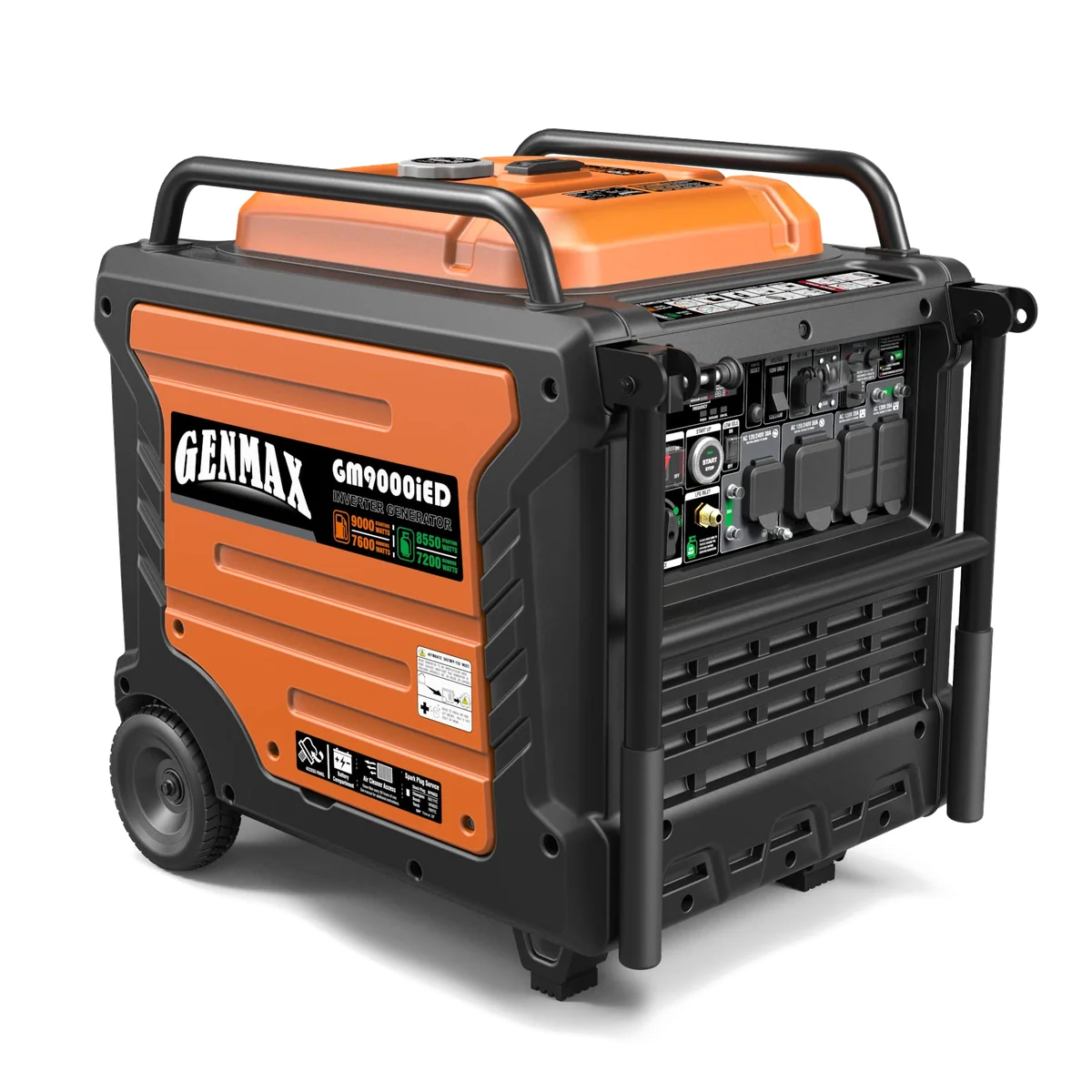
The exhaust exits the back rather than the side, which matters when the machine is sitting on a patio. There is foam sound deadening inside multiple panels, including the inside faces. The display auto-extinguishes about five minutes after shutdown, so forgetting the main switch does not flatten the starting battery, which is a small thing until you have flattened a starting battery. There is a drain caddy that channels used oil away from the frame, and one owner reported changing the oil indoors without spilling any. A temperature sensor sits on the outside of the cylinder housing wired back to a controller. The box includes a funnel and a small tool kit. These are not headline features and none of them appear in the bullet points, which is a shame, because collectively they are more convincing than the bullet points are.
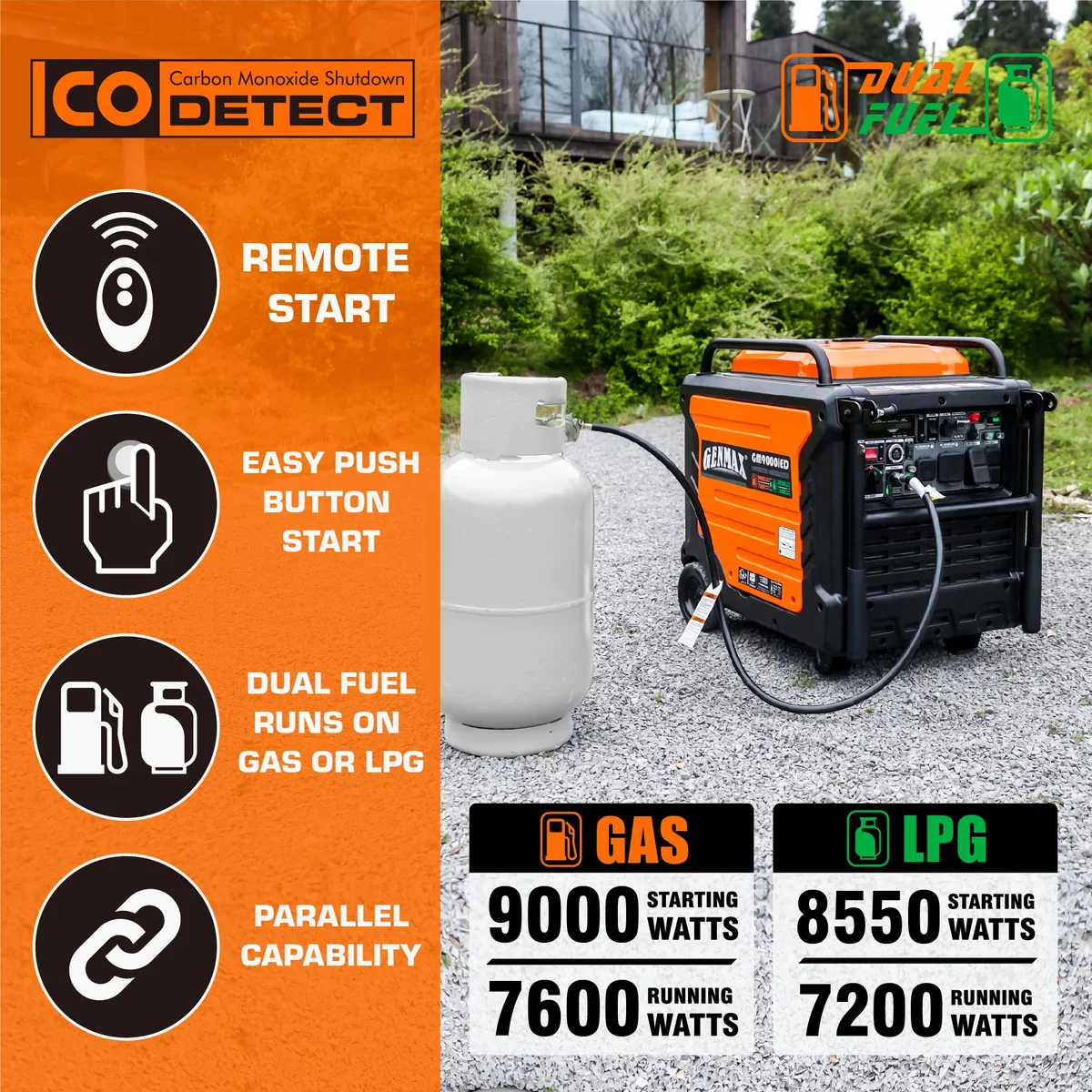
Fuel flexibility is real and it extends further than the listing says. Propane works with no drama; the unit ships with everything needed except the tank. Beyond that, at least two owners have gone to natural gas with an aftermarket conversion kit made specifically for the GM9000iE and iED, one of whom documented the whole conversion and the house connection on the forum. That is owner-modified territory and outside any warranty conversation, but it is the difference between a generator that runs until the jerry cans are empty and one that runs for weeks. If you are weighing which fuel to plumb for, what each fuel costs you in watts and runtime is the calculation to do before you buy the kit.
Strengths & Limitations
Strengths
- A built-in 50-amp receptacle, which nothing else in this output class carried when owners went looking, and which gives you cord headroom for a long run to a house inlet.
- Pressure-fed lubrication with a cleanable screen element, confirmed in the parts list and physically found by owners next to the drain plug, on a machine class where splash oiling is the norm.
- Clean inverter power that owners report holding 60 Hz and roughly 120 volts with the house air conditioning running.
- Genuinely quiet for its size, with foam damping in multiple panels and rear-facing exhaust, on the consistent testimony of every owner who mentions noise.
- Real fuel flexibility, with propane working out of the box and a model-specific natural gas conversion available aftermarket.
- A full digital panel that stays readable in bright light, remote start by key fob, and a display that shuts itself off so it cannot flatten the starting battery.
Limitations
- The neutral is bonded from the factory, the manual gives you no procedure for changing it, and the bond is behind the electrical panel in an awkward place near the LPG inlet.
- Two of the eight retained owner accounts describe units that worked when new and then failed after being stored, which is precisely the job the listing sells this generator for.
- The advertised 15,200 running watts from a parallel pair is not what the hardware delivers, because the pairing is limited by the 50-amp outlet it runs through.
- The CO shutoff is the leading suspect when one of these will not stay running, and at least one owner deleted his rather than wait for it to fail.
- Warranty service means moving a 250-pound machine to a distant service centre, and one owner was told to prepay diagnostics before anything was reimbursed.
- The hour meter resets on restart, which quietly kills one of the five readouts in the advertised data centre.
- The fuel selector knob is stiff enough that owners fear breaking it, and stiff enough that somebody sells a 3D-printed replacement for it.
- No verified runtime or noise measurement of this exact model exists in anything we were able to read.
What it will run, and where the claims stop being true
Nobody in this record has published a verified load test of a GM9000iED. What exists is the nameplate, the arithmetic, and a set of owner accounts that mostly agree with each other. Here is the honest version of the machine's ceiling.
| Figure | On gasoline | What it means at the panel |
|---|---|---|
| Peak / surge | 9,000 W | 37.5 A at 240 V, available for motor starts, not for running |
| Rated / running | 7,600 W | About 32 A continuous at 240 V, which is the number to size loads against |
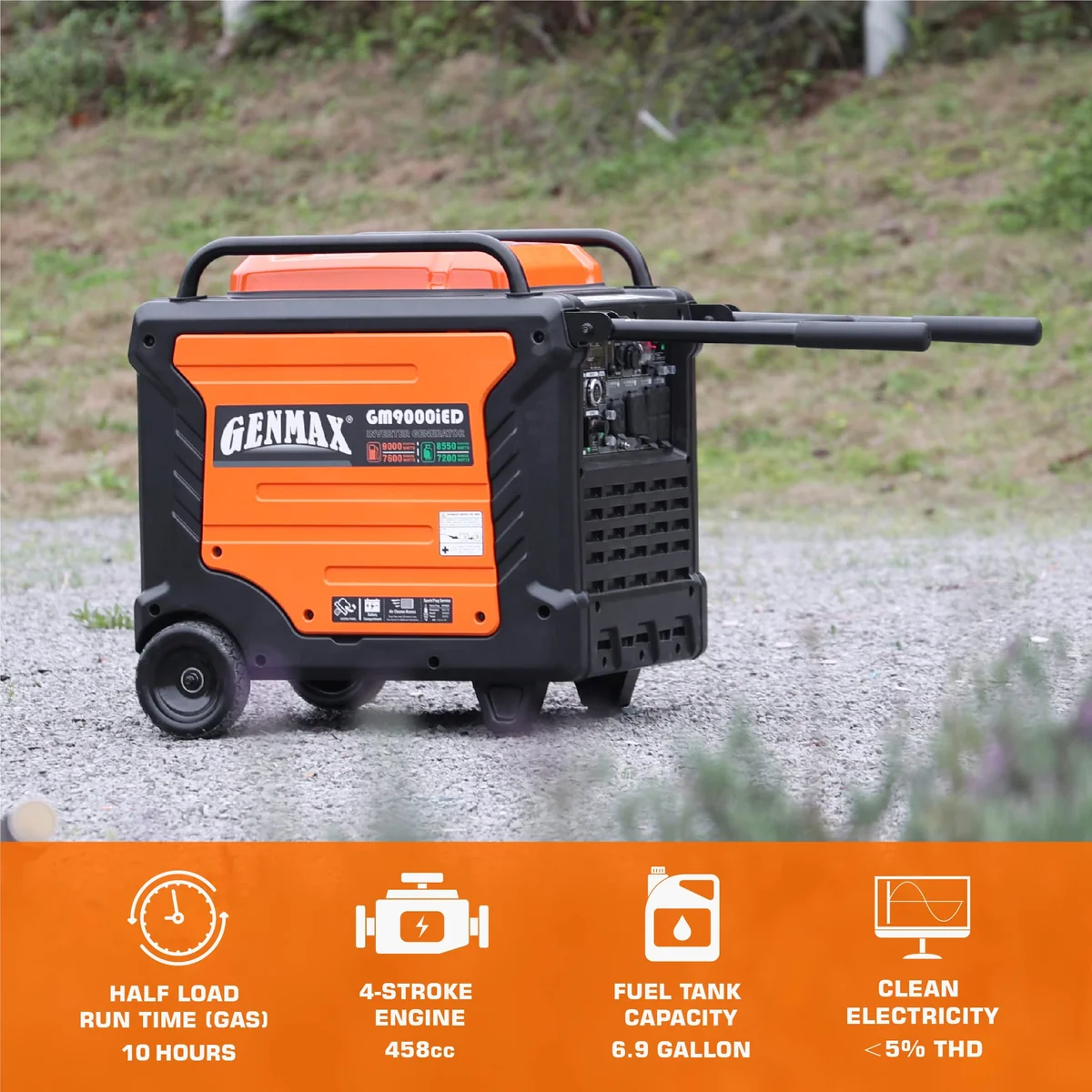
| Tank | 6.9 gal | No runtime in this record is verified, on either fuel |
| Outlet | 50 A | Cord headroom, not extra capacity; the engine is still the limit |
The reason the 37.5-amp figure keeps coming up is air conditioning, and it is where most buyers of a 9,000-watt machine get into trouble. The disciplined owner account in this record is unambiguous: to start a three or four ton condenser on this or any generator under 15kW you will most likely need a soft start on the compressor. That owner fitted a Micro-Air Easy Start 368 and brought his starting draw down from 94 amps to 34, which is inside what the machine can hand him. Another owner, still in break-in and capped around 3.5kW, ran a two-ton inverter air conditioner on 240 volts without difficulty and correctly noted that an inverter-driven unit has no meaningful inrush at all, so it tells you nothing about a conventional condenser.
Before you believe any watt number, including ours, go and read the data plate on your own outdoor unit. RLA is the rated load amps; LRA is the locked rotor amps, and the LRA is what has to be survived for the fraction of a second the compressor breaks free. The subreddit does this arithmetic constantly, and the shape of it is brutal: a 95 LRA condenser is nominally 22,800 watts at 240 volts, and even after allowing for voltage droop during the start it is still around 11kW of demand. That is not a 9,000-watt machine's problem to solve without help. We have written the long version of this in will a portable generator run my air conditioner, and the general case in starting watts versus running watts.
Within those limits, the machine does what people bought it for. One owner with an all-LED house, an inspected inlet box and an interlock turned on every light in the house plus the television, refrigerator, modem, router, desktop and driveway floodlight, and the generator still brought his central air on with no soft start fitted. That is a small house and a well-behaved condenser, and it is one data point rather than a promise, but it is a real one.
The overload question, which we cannot close
One GM9000iED owner on the Power Equipment Forum reported that the unit powered his whole house without a problem, then decided to load-test it before trying propane, and was surprised when the overload light came on. That post is truncated in what we could read and we do not have the resolution. Set against it: two of the highest-volume things people type after this brand's name are complaints about the machine shutting off and about overload. We are not going to manufacture a diagnosis. What we will say is that the 7,600-watt rating is not demonstrated anywhere in this research, at least one owner of this exact model hit an overload trying to demonstrate it, and if you intend to live near the top of the range you should test that on your own house before the outage rather than during it. The generic causes are worth knowing either way: why a generator trips its breaker or shuts down under load covers the ones that are not the generator's fault.
The parallel claim does not reach its number
The listing's fifth bullet says the voltage transfer switch lets you parallel at either 120 or 240 volts, and promises 18,000 peak and 15,200 running watts from a pair. A careful owner writing in 2022 flatly contradicted the first half: as sold then, the unit could only be paralleled on the 120-volt setting despite what the sales literature implied.
By 2026 there is a workaround, and it is instructive rather than reassuring. An owner running a GM9000iED alongside a DuroMax XP9000iH, both with neutrals unbonded, feeding a 50-amp inlet through an interlock, was told the pairing works if the power cord goes into the 50-amp outlet on one of the machines and L1, L2 and ground are connected between them, with the GENMAX supplying the neutral return for unbalanced 120-volt loads. The caveat came in the same breath: the combined capacity is then limited by that 50-amp outlet. Fifty amps at 240 volts is 12,000 watts, not 15,200. So paralleling is achievable and useful, and the headline number on the box is not the number you get.
The bonded neutral nobody tells you about
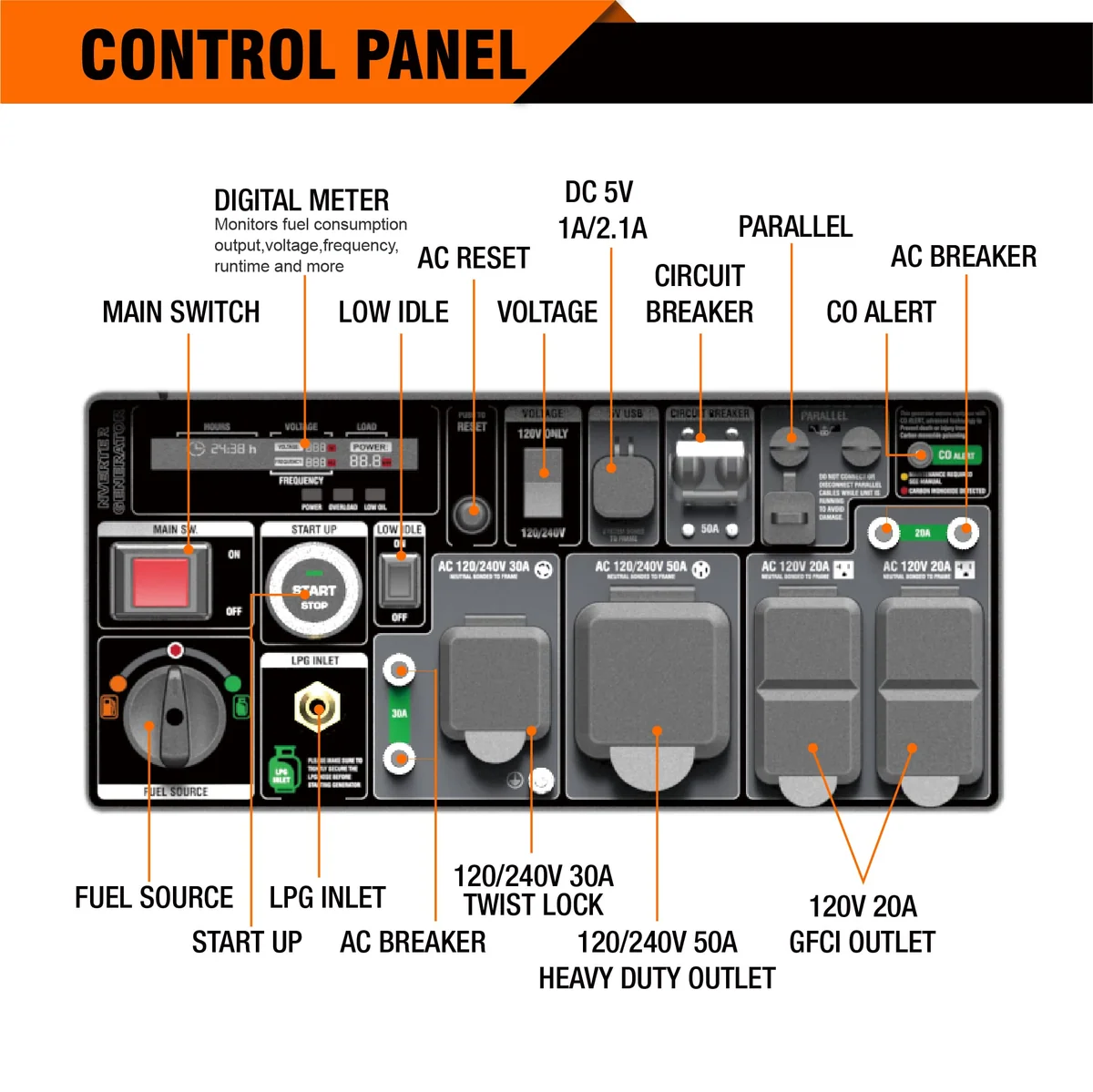
This is the most consequential fact about the GM9000iED that appears nowhere on the listing, nowhere in the marketing, and nowhere in the manual as a procedure. The neutral is bonded to the frame from the factory. If you are connecting it to a house panel through a transfer switch or an interlock, that bond usually has to come out, because the service panel already provides it and you do not want two.
The owner who worked it out described the experience precisely: the manufacturer provides no instructions for converting to a floating neutral, it is a code requirement and should be a routine, accessible operation, and instead he had to find the bond himself in a very difficult place to reach. His directions are the single most practically useful sentence in everything we read on this machine, so here they are verbatim: "it's bonded on a metal rail mounted behind the electrical panel (lower left corner when looking from the front), general area of the LPG inlet." A forum member has since posted a how-to video for the same conversion, and by 2026 owners describe unbonding as routine.
Do not generalise this across the model line. GENMAX ships different configurations and revisions under adjacent names; on a sibling open-frame unit, buyers found the manual for one variant said floating, the retailer's own listing photographs appeared to show different revisions of the same product, and the company did not respond to a direct question about it. Check your own machine before you assume: read the receptacle captions on the control panel diagram in your manual, or put a multimeter across neutral and ground and look for continuity, which means bonded. Our full walkthrough is bonded versus floating neutral, and it is worth ten minutes before an electrician is standing in your driveway.
Noise, honestly
The listing claims as low as 62 dBA at 25% load at 23 feet. Nothing in this record independently verifies that, and one owner's report of "around 55 decibels" comes with no distance and no instrument, so treat it as a phone app and not a measurement. What is consistent is the relative judgement, and it comes from every direction: quieter than an old 212cc open-frame unit, quiet enough to hold a normal conversation standing beside it, much less than an idling lawnmower, positioned far enough away that one owner cannot hear it inside his house. The most useful line is also the most honest one: you cannot expect Honda level quietness, but GENMAX has clearly made an effort, and there is foam padding inside in multiple places. If you want to know why the number on the box and the noise in your yard are different things, that is what a 58 dBA at 23 feet rating is actually measured at.
What it costs beyond the generator, and what else you might buy
Budget for more than the machine. A soft start for the condenser if you are running central air. An electrician for the inlet box and interlock, plus the neutral bond if you are not doing it yourself. A parallel kit if you plan on a second unit, sold separately. A natural gas conversion kit if you want the option of running for weeks. Owners also add small things that make the machine better: a 12mm oil drain hose left permanently attached, a magnetic dipstick. None of these are unusual for a generator of this size, but they are the difference between a purchase and a project, and the project is where the GM9000iED earns its keep.
On the competitive question, the two comparisons owners actually draw are the Predator 9500 and the DuroMax XP9000iH. Against the Predator, at the 2022 prices one owner compared, the GENMAX simply has more equipment. Against the DuroMax the argument is more interesting, because a DuroMax owner in the forum said he could not see what the GENMAX offered that his did not, apart from a 50-amp receptacle he did not value. The answer he was given is the headroom argument above, and it holds. There is also a wrinkle worth knowing: the same thread's opening post asserts that GENMAX is the company behind DuroMax, which reframes that comparison as two badges over closely related hardware rather than two rival engineering teams. On origin more generally, what the record supports is Chinese manufacture on a Dinking engine platform, with Chinese-language part numbers in the manual and a support line on the brand's own site still quoting Beijing hours. The story some owners repeat about a shared factory with Honda is a belief, not an established fact, and we are not going to launder it into one.
If the GM9000iED's ownership profile does not fit you, the honest alternatives are not smaller versions of it. They are different answers to the same question. If you want a third fuel and an ATS-ready panel in the same size class, the Gidrox 11000W tri-fuel inverter is the machine we have looked at hardest, with the same caveat about a thin owner record. If your real requirement is that it starts without you, stop shopping portables and read what a standby installation actually costs. If 7,600 watts is more than your house needs, our home backup shortlist and the dual fuel roundup both start smaller. And if the 50-amp outlet is the whole reason you are here, that is an RV question, which we work through in the best generator for an RV or travel trailer.
The failure pattern, and what to do about it
Three separate owners in eight reviews touch the carbon monoxide sensor, from three different directions, and together they make a point worth acting on. One had a unit that would not run more than a few minutes on either fuel; GENMAX honoured the warranty and the fault turned out to be a faulty CO sensor, after which it ran fine. Another removed his preemptively on the reasoning that these sensors have a finite service life and become a problem eventually, noting that even Honda's are showing the same pattern. And on the forum, someone with a GM9000iED sitting in a vented enclosure a hundred feet from the house went looking for a way to bypass the sensor entirely.
We are not going to tell you to delete a safety shutoff, and the enclosure case in particular is exactly the situation where a CO sensor is doing its job rather than getting in the way. What we will tell you is the diagnostic point: on a machine whose failure mode is "it starts and then stops," the CO sensor is the first thing to suspect and it is a warranty part. Do not conclude the generator is dead. If yours is refusing to run at all, the ordinary suspects are worth clearing first, and the fuel valve, the hidden battery plug and the closed cap vent account for more dead generators than any sensor does.
The second pattern is the one in the verdict. This machine appears to fail from sitting rather than from running. Both of the worst accounts in the record involve a unit that was fine, was stored, and was not fine afterwards. Nothing in what we read establishes a mechanism, and Specific Load will not invent one, but the practical response is the same regardless of the mechanism: start it monthly, put a real load on it, and either run the carburettor dry or manage the fuel. Storing a backup generator so it starts when the power goes out is the whole procedure, and on this particular machine it stops being general advice and becomes the condition of the purchase.
The small stuff you will live with
The fuel selector knob is stiff. One owner described it as extremely difficult to turn in any direction and said he was afraid it would break. Corroborating that from an unexpected angle, somebody is running a small business on eBay selling a 3D-printed replacement for that specific knob on this specific model, printed in PETG rather than PLA for heat resistance. When there is an aftermarket for one knob, the knob is a real problem.
The hour meter appears to reset when the generator is restarted, so total hours have to be tracked by hand, and the owner reporting it noted that somebody else had already said the same thing. That undercuts one of the five items in the panel's advertised "5 in 1 Digital Data Center," which is a small dishonesty in the listing rather than a fault. One owner reported a left wheel with odd resistance at a certain position. The air filter is awkward to reach, which matters more at the fifth service than the first. And the rubber weather covers over the switches are protecting the right things, but one owner flagged that he did not know how long they would last, which is the correct instinct about a machine that lives outdoors. If you are planning to leave it outside in weather, read how to run one outdoors safely first, because a CO sensor is not permission to move it closer to the house.
Support: a moving target, and the dates matter
Get the chronology right, because the brand's reputation genuinely changed inside this record. The worst account is from 2024: an owner with two dead units was directed to a service centre over an hour away and told to deliver the generators himself, prepay the diagnostics, and pay for the repairs to be reimbursed afterwards. His summary was that if you have extra money to throw at these they might be worth a try, otherwise not recommended. That is a warranty that exists on paper and is very expensive to use.
Another owner, writing calmly about the same structural problem, said there was no local customer service but both of his online enquiries got complete, helpful answers within 24 hours, and that the absence of local support was why he bought an extended replacement warranty through Amazon. Then the sentence that ends the argument: even if there was local support, he honestly did not know how in the heck he would get it there. He also said that with hindsight he was no longer sure he would buy that extended warranty again.
The direction of travel is upward. The owner whose CO sensor failed came back to update his review twice, ending with the note that GENMAX had contracted with a different distributor and the result was excellent US-based service. By August 2026, owners on the subreddit are passing round a US phone number and email for support based in Ontario, California, and reporting that a reasonable stock of parts is held. That is a real improvement over the 2022 forum complaints about a warranty with nowhere to take it and part numbers that returned nothing on a search.
What does not improve is the physics. A 250-pound machine and a service centre an hour away is a machine you fix in your own driveway or do not fix. Buy it somewhere with a returns and replacement path you would actually be willing to use, exercise it inside that window rather than eight months later, and understand what you are accepting: this is the trade at this price, and it is the same trade we describe in what you are really buying with a value-brand generator, just at four times the money and four times the weight.
Frequently Asked Questions
Does the GM9000iED have a bonded or floating neutral?
It ships bonded to the frame, the manufacturer supplies no conversion procedure, and owners report the bond sits on a metal rail behind the electrical panel toward the lower left as you face the machine, near the LPG inlet.
Why does it start and then shut down after a few minutes?
On this model the carbon monoxide sensor is the first thing to suspect, because at least one owner's unit behaved exactly that way on both fuels and the faulty sensor was replaced under warranty.
What is the break-in procedure?
Owners describe a two-stage restriction that trips people up: roughly five hours at about half load followed by an oil change, then a recommendation not to exceed 75% load for the first 30 hours.
Can it run a whole house?
It can run a modest house through an inlet box and interlock, with one owner lighting every room plus the usual electronics and still starting his central air, but you are working inside about 32 amps continuous at 240 volts and a large or inefficient home will not fit.
Will it start a central air conditioner?
A three or four ton condenser will most likely need a soft start fitted, which in one owner's case brought his starting draw from 94 amps down to 34 and inside what this machine can supply.
Do two of them really make 15,200 running watts?
No, because a parallel pair feeding through the 50-amp outlet is capped by that outlet, which is 12,000 watts at 240 volts rather than the advertised figure.
How hard is it to get parts?
Harder than it should be historically, with forum members reporting part numbers from the official list that returned nothing on a search, though by 2026 owners report a US-based support operation in California holding a reasonable stock.
Does it actually have an oil filter?
It has a pressurised oil system with a cleanable mesh screen rather than a spin-on cartridge, which is a real advantage over splash-lubricated rivals but should not be described as a proper filter.
Can it run on natural gas?
Not as sold, but at least one manufacturer makes a conversion kit specifically for the GM9000iE and iED and an owner has documented the full conversion and house connection on the forum.
Why does the hour meter keep going back to zero?
More than one owner reports the counter resetting each time the generator is restarted, so if you care about service intervals you will be logging hours by hand.
Sources (4)
- Amazon listings and customer reviews — Genmax Gm9000ied
- Owner reports across r/Generator threads
- Powerequipmentforum — Article — www.powerequipmentforum.com
- GENMAX — Article — www.genmax.com