The EcoFlow TRAIL Plus 300 DC is an excellent tent battery wearing the word generator
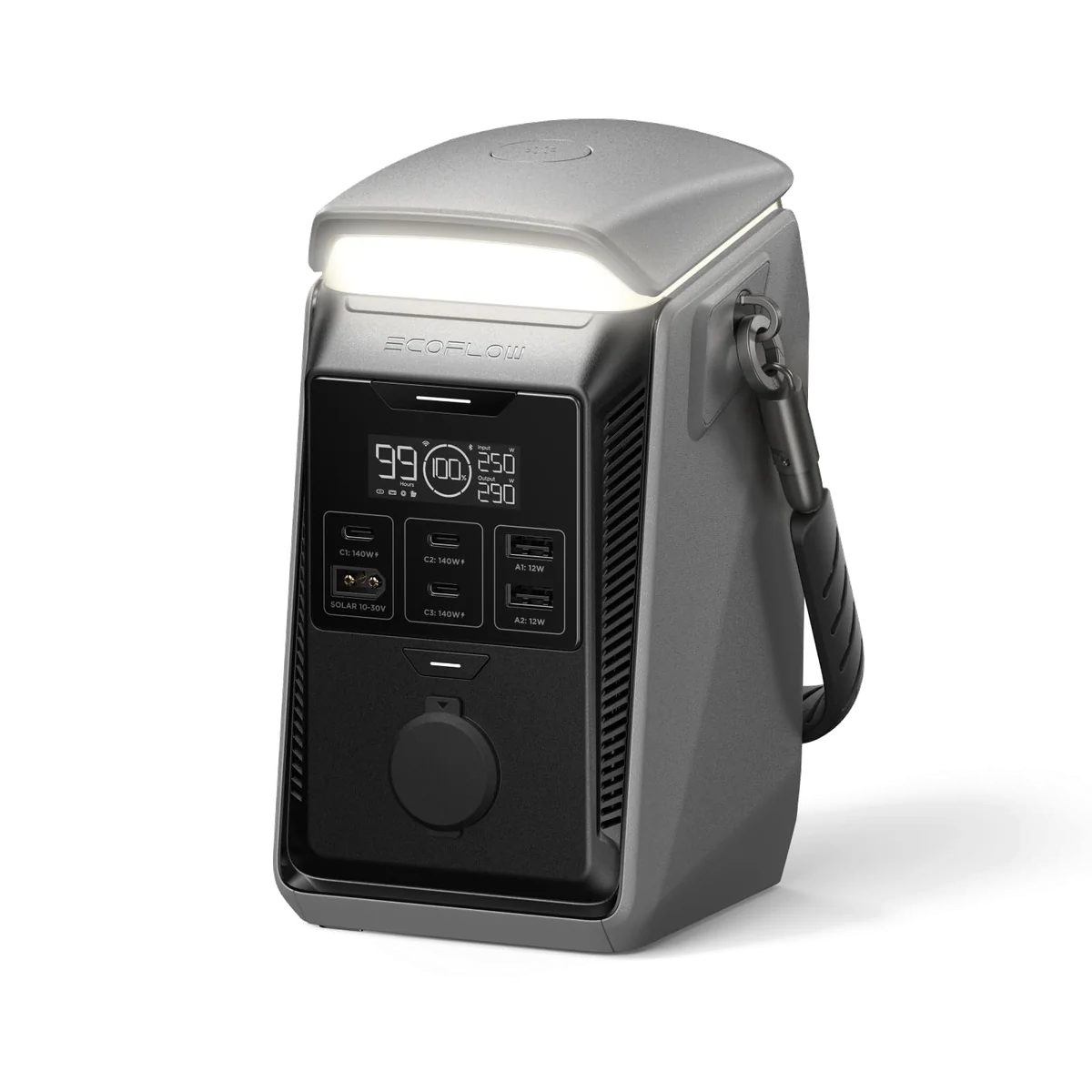
Buy it if every single thing you want to power runs off USB-C or a 12V socket and you like the idea of a lantern bolted to the battery; if you arrived wanting something with a household outlet on the side, this is not that product, and no amount of the word "generator" in the listing will turn it into one.
Based on 16 owner ratings, 2 owner discussions and 1 other source. We have not tested this machine ourselves.
We earn a commission if you buy through our links, which does not affect what we say.
Read how this site works →
Where this lands
The TRAIL Plus 300 DC is a good small battery with a bad name and an open question over its build quality. Everybody on the record who received a working one likes it, and they like it for coherent, specific reasons that survive being written down: the light, the ports, the cable handle, the weight, the sleep behaviour. The people who did not like it were not disappointed by the design, they were sold a unit that failed before they could form an opinion of it.
So the recommendation stands where it started, sharpened by everything since. If your gear runs on USB-C and 12V, buy it, buy it well ahead of when you need it, and put it through every input and output you own while you can still send it back. If anything on your list ends in a plug, this is the wrong object and the word generator on the box is the reason you thought otherwise.
That is the whole decision, and it is worth making before you read another line, because almost everyone who lands on a page about EcoFlow's smaller units arrived by typing the word generator. This is a 288Wh battery with five useful ports, a camping light on the roof, and a strict, deliberate refusal to carry an inverter. It will not run a fridge with a plug on it. It will not run a CPAP with a mains brick. It will not charge from the wall in your kitchen. The listing says so exactly once, in an asterisk at the tail end of the sixth bullet, after having called the thing an "emergency battery generator," a "solar generator" and a "battery generator" in three other bullets.
Buy it if
- Your load list is phones, laptops, a drone, a Starlink Mini, a 12V compressor cooler or a battery tender.
- You want one object that is both the light in the tent and the thing that charges the phones, rather than two objects.
- You already own EcoFlow solar panels or a 140W USB-C brick and are not expecting to plug this into a wall.
- You can tolerate a small-sample QA record, discussed below, in exchange for a well-designed small battery.
Walk away if
- Anything on your list ends in a two-pin plug, because there is no AC outlet at all.
- You want a device you can top up from a kitchen socket the night before you leave.
- You are buying backup power for an outage that is already in the forecast, for reasons of shipping covered later.
- You are shopping on cycle life and chemistry, because nobody involved will tell you what cells are inside.
The other thing to settle early: 3.6 stars from 16 ratings is not a verdict, it is a rumour with a decimal point. Sixteen ratings is far too thin a base to calculate anything from, and the eight reviews with actual text in them do not form a mediocre middle. They form a barbell. Five people gave it five stars, and every one of them who wrote more than a sentence liked the same things for the same reasons. The other three are not "it disappointed me" reviews. They are "mine did not work" reviews.
That distinction is the spine of this page. A design flaw would show up as lukewarm threes and fours from people using the product as intended. What is actually on the record is a well-liked product with a quality-control question mark hanging over it, and the honest way to write that is to say both halves plainly instead of averaging them into a shrug.
Key Specifications
What the "Plus" actually buys you over the plain TRAIL 300 DC
Two owners on the record came to this unit from elsewhere in the same family, and they describe the same upgrade path: the light on top, more USB-C ports at a higher rating, the detachable cable that doubles as the handle, and a slightly smaller and lighter shell. One of them owned the original TRAIL 300 DC and bought the Plus specifically for the light and the extra ports. If the light does not appeal to you, that is a clean signal to buy the cheaper model in the same family and keep the difference.
The light deserves the attention it gets, because it is the reason this thing exists in its Plus form. It has three brightness and colour settings plus a blinking SOS, it comes on with a tap on the button rather than a menu, and there is a hood over it so that carrying the unit by the handle does not put the beam in your face. Owners are unusually consistent about what it is good for and what it is not. It is a tent light and a hallway light. One owner keeps the unit on top of an entertainment cabinet purely so that the light is within reach during a blackout, which is a more honest description of this product's real job than anything in the marketing copy. Another puts the ceiling on it neatly: "It won't be the main activity light." Even the reviewer who thinks the whole unit should be considered unfinished software gives the light a pass.
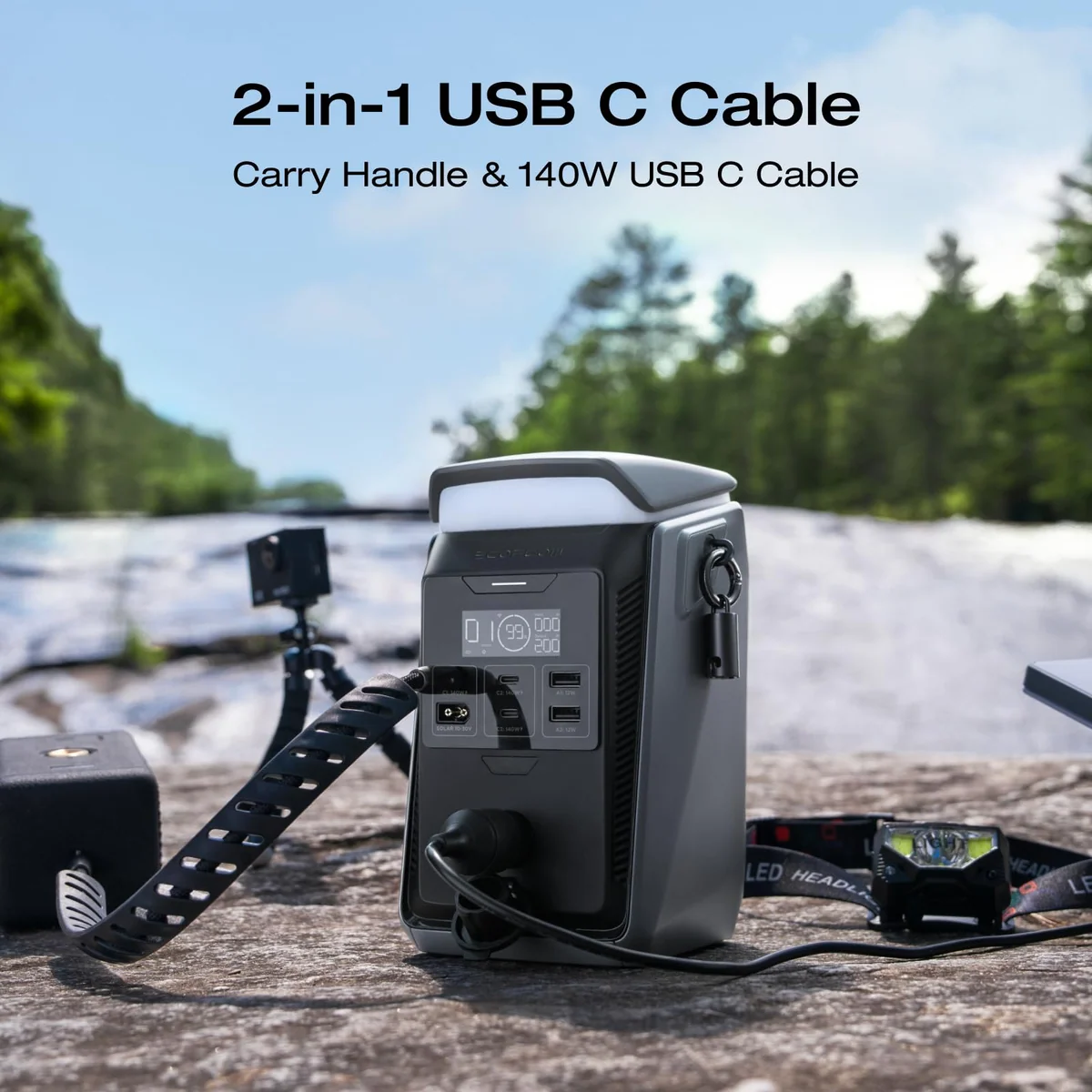
The handle is the second good idea. It is a 140W USB-C cable with a metal attachment system, so the cable you need is physically incapable of being the cable you left at home, and it comes off when you want to use it as a cable. This is the sort of detail that sounds like a gimmick in a bullet point and turns out to be the feature you tell people about.
The app is genuinely good and one owner never reached it
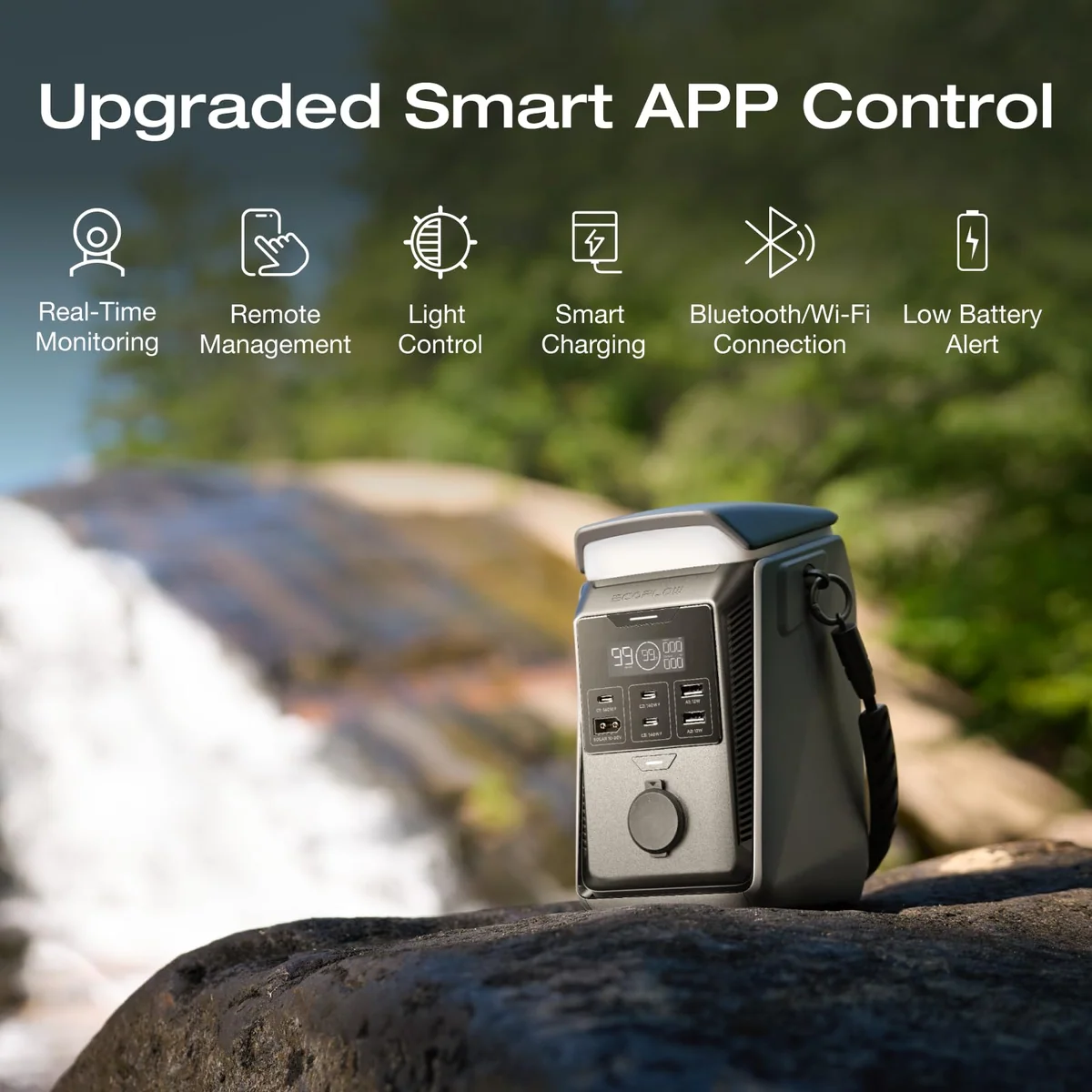
When the pairing works, the app is not decoration. You get charge and discharge limits, screen timeout and brightness, a battery health readout, firmware updates, a rename function, and a live main screen showing charge percentage, estimated time remaining at the current draw, which ports are active, and the wattage in and out of each. That is a real feature set for a battery in this size class, described in detail by an owner who clearly used all of it.
Against that, one owner reported that Bluetooth and Wi-Fi pairing never worked at all and that resetting the IoT module did not fix it. One failure out of eight is not a pattern, but it is worth knowing that the documented reset is not a guaranteed escape hatch, and that a unit that will not pair is a unit with no charge limits, no health readout and no firmware updates for the rest of its life. If you hit this, our page on a power station that shows charge but will not respond covers the general triage; it will not fix a dead radio.
Small things in the copy that tell you how carefully it was written
The second bullet promises "5 DC output ports" and then lists two USB-A, three USB-C and a 12V car socket, which is six. The third bullet says the app will help you "cut electricity costs" and "manage charging and discharging schedules," which is boilerplate lifted from EcoFlow's home battery line and is flatly impossible on a device that cannot be plugged into your house. The sixth bullet manages to describe itself as "The perfect solar generator with panels included (panels sold separately)" inside a single clause. None of this makes the hardware worse. It does tell you how much weight to put on the unsourced claims sitting next to it, of which there are several.
Strengths & Limitations
Strengths
- The camping light is genuinely well judged, with a hood so the carry handle does not put it in your eyes and enough output for a tent without blinding everyone in it.
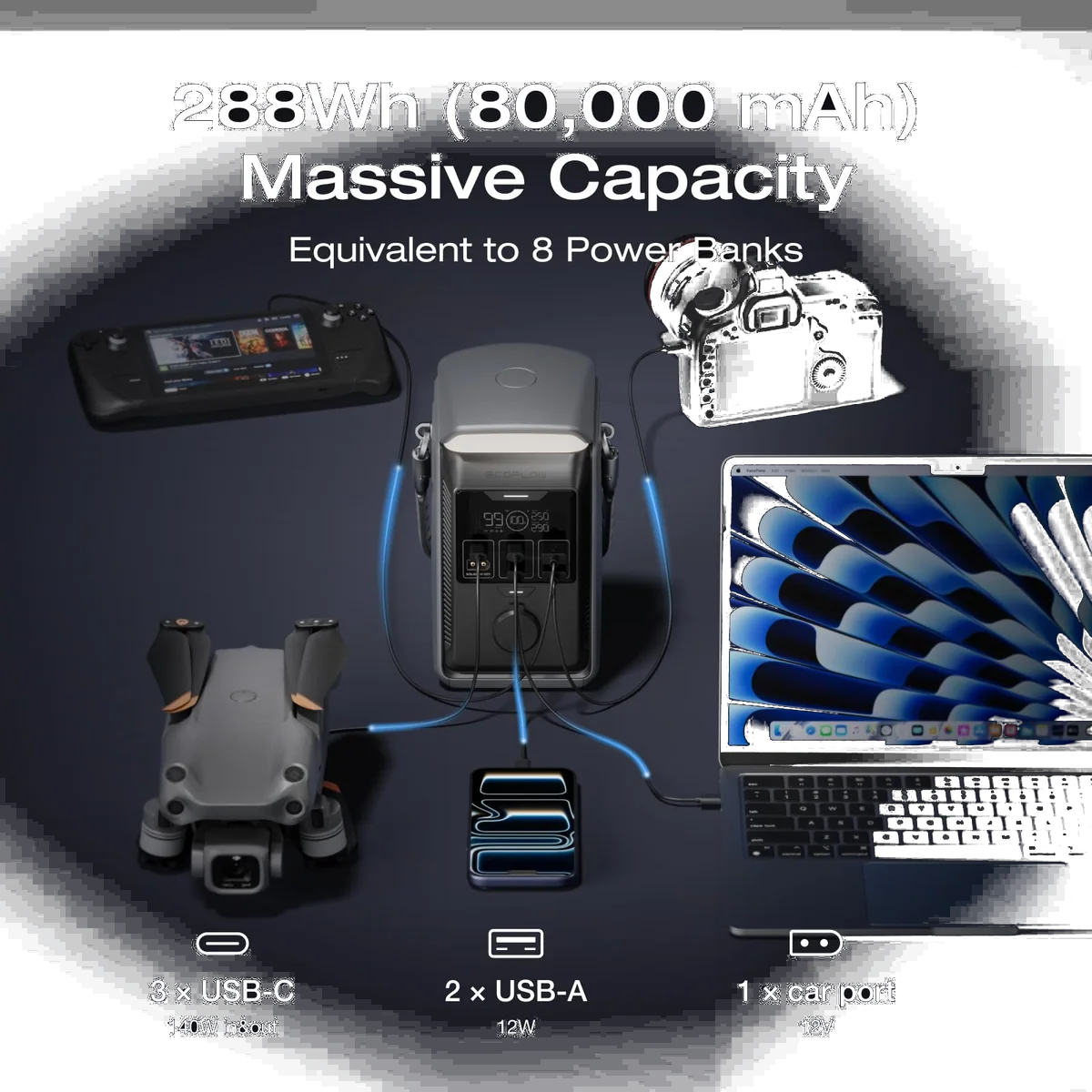
- Three USB-C ports rated at 140W plus two USB-A and a 12V socket cover a group's worth of devices at once, and it charges out while charging in.
- The detachable 140W cable is the handle, on a metal mount, which means the cable you need cannot be the cable you left at home.
- The claimed 110W solar input is one of the few marketing numbers here that an owner has confirmed in the field.
- Skipping the inverter is a real efficiency advantage for 12V loads such as compressor coolers and battery tenders, not just a way to save money on parts.
- The app, when it pairs, offers charge and discharge limits, battery health, firmware updates and live per-port wattage, which is more than this size class usually gets.
- It goes to sleep on its own, so forgetting to switch it off no longer costs you the charge.
- 80,000mAh and 288Wh are the same honest figure stated two ways, unlike much of what sits next to it on the shelf.
Limitations
- There is no AC outlet and no way to charge it from a household socket, and the listing admits only the first of those, in an asterisk.
- Three of the eight written owner accounts describe a unit that failed out of the box, including one that arrived showing error 263.
- The 140W input rate is contested, with one owner capped at 96W across two different EcoFlow bricks and two rated cables.
- Support answered the phone quickly and then left one owner two weeks deep with an escalation email and no replacement.
- The cell chemistry and cycle life are stated nowhere by anyone, on a product sold with a five-year warranty.
- Ground shipping from California takes roughly one to two weeks, so it is useless as a last-minute purchase before a storm.
- The listing calls it a generator four separate times and promises app control that will cut your electricity bill, which it categorically cannot do.
- A 3.6 average from only 16 ratings gives you almost nothing to reason from, and some of the five-star entries contain no information at all.
The 140-watt argument, and the arithmetic sitting underneath it
Start with the number that is honest. 80,000mAh at a nominal 3.6V is 288Wh, so the two headline figures on the box are the same figure expressed twice rather than one of them being inflated. That is worth saying out loud, because buyers arriving from the phone-charger aisle read 80,000mAh as eight times a very large power bank and are, for once, not being misled. Specific Load did that conversion on paper; it is arithmetic, not a measurement, and the same caveat applies to every number in the table below.
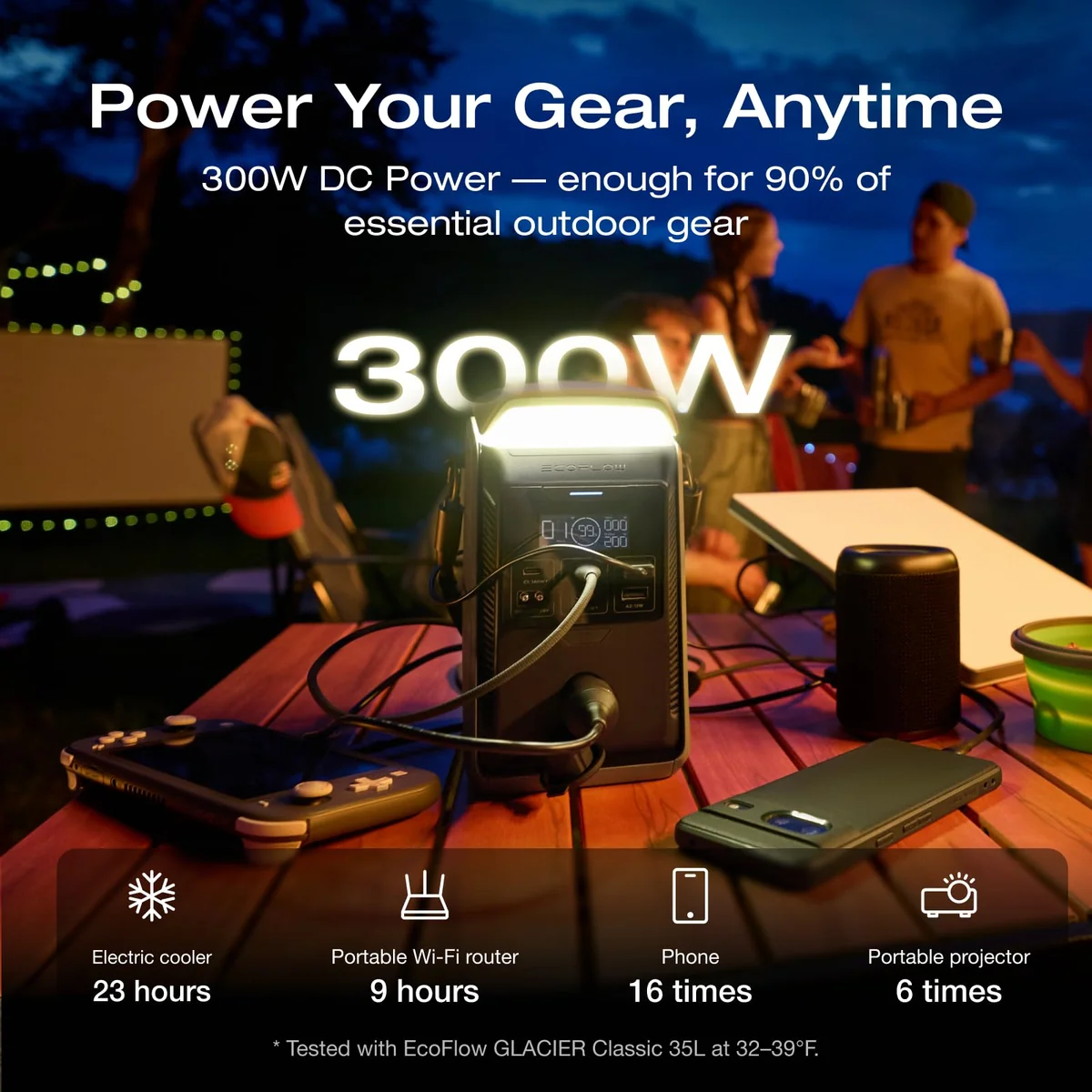
The 300W figure is less useful than it looks. It is the sum of what the ports can deliver at once, not a rate anything will sustain for long. At a genuine 300W draw, 288Wh is gone in under an hour. The workloads this unit is actually built for sit an order of magnitude lower: a 45W 12V cooler gets you somewhere in the region of five to six hours of real output once conversion losses are taken off, and phone-and-laptop duty runs for a weekend. Our explainer on what a watt-hour figure survives as after inverter losses works through the same maths at larger sizes.
Does it take 140W in, or 96W?
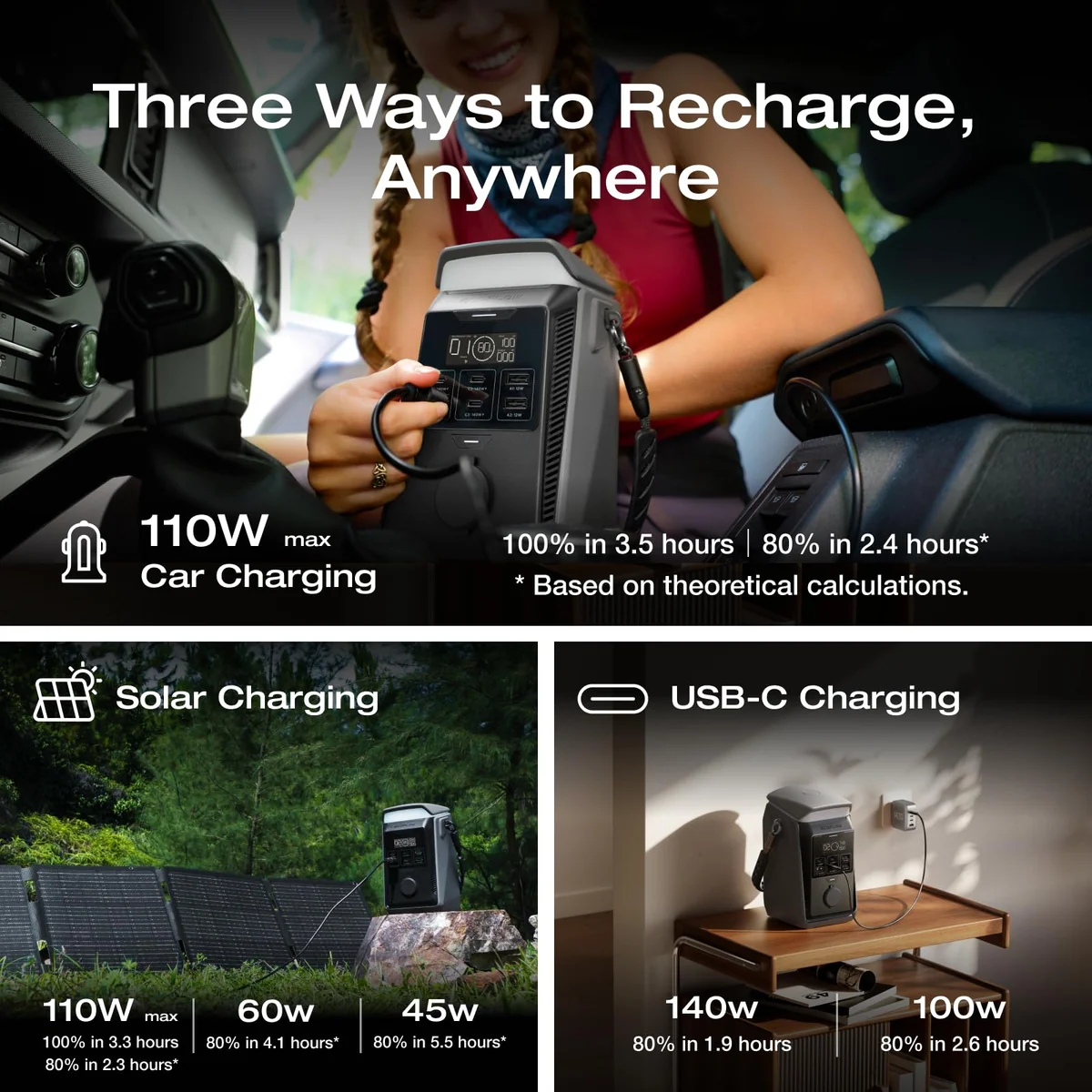
This is the sharpest unresolved conflict in the whole record, and it matters because the recharge rate is the difference between a lunch stop and an afternoon. One owner charged from another EcoFlow station over a 240W-rated cable and watched it pull the full 140W. Another owner, starting from 40%, never saw it exceed 96W, and did the elimination properly: two separate 140W EcoFlow bricks, two 140W cables, same ceiling every time. That rules out the cable-and-brick excuse that usually settles these arguments.
What is left is a genuine fork, and Specific Load is not going to pick a winner off two data points. The one visible difference between the two accounts is the source: station-to-station in the fast case, wall brick in the slow case. That is a plausible negotiation difference and it is also possibly nothing. Buy on the assumption that you might get 96W, and treat 140W as a bonus rather than a spec you are owed. Separately and probably coincidentally, a third owner reports a unit that stops accepting charge at 96%, and blames shelf age.
| Input | Listing's ceiling | Ideal time to full | What the owner record shows |
|---|---|---|---|
| USB-C | 140W in and out | about 2h05 | 140W confirmed once, from another EcoFlow station; 96W ceiling reported once, from two different wall bricks, which would take about 3h20 |
| Solar | 110W | about 2h40 | One owner reports regularly seeing the full 110W with matched panels |
| 12V car socket | 110W | about 2h40 | Port confirmed present and used; no owner reports an achieved rate |
| Household wall socket | none | never | There is no AC input, and only one owner says so in plain language |
The solar row is the quiet good news. A manufacturer claim that survives contact with an owner's actual panels is rarer than it should be, and this one did. If you are working out what array you would need to keep it fed, our piece on sizing panels to a power station covers why the number on the panel is not the number you get.
Why skipping the inverter is a defensible design, not a cost cut
It is tempting to read "DC only" as a corner cut, and the marketing does the product no favours by hiding the fact rather than selling it. The engineering argument is real: every watt-hour that goes through an inverter to become 120V AC pays a conversion tax, and a device that hands 12V and USB-C straight out of the pack does not pay it. Coverage of cheap DC-heavy power stations makes the same general point, comparing a compressor fridge run from a DC socket against the same fridge run from an outlet, and the DC side wins by a margin that changes how you plan a weekend. We only have the setup of that comparison and not its final figure, so take the principle and not a ratio.
The 12V socket in particular has more jobs than people expect. EcoFlow owners describe running battery tenders off the DC output to top up ATV and motorcycle batteries, and at least one specifically buys EcoFlow's DC chargers because so few companies build a charger that takes 12V in rather than 120V AC. Those accounts come from larger units, so read them as evidence that the port has real work to do rather than as evidence about this model. If you are still weighing the whole category question, battery versus engine for an outage is the argument worth having before you spend anything.
If you wanted a generator, buy a generator
People arrive at EcoFlow's smaller products through search terms built around the word generator, and this listing is written to catch them. That word is doing something dishonest here. A device with no AC outlet and no wall input does not do the job that anyone typing that word has in mind, and the listing's one clear correction is an asterisk at the end of a bullet most readers will never reach. It is the same trick, in a smaller register, as the listings we take apart in our piece on what a power take off generator actually is: a category word attached to a product that does not belong in the category.
So here is the honest redirection, and none of it is a criticism of the hardware.
- You need household outlets in a small package. The VTOMAN Jump 600X is roughly the same class of portability with an inverter, AC sockets and published cell chemistry, and our review covers where it falls short. EcoFlow's own listing puts the RIVER 2 further down the same family ladder, which tells you where the company itself sends people who want a socket.
- You need to run a house through an outage. Start at our home backup shortlist, or read the Anker SOLIX F3800 Plus and EcoFlow Delta Pro 3 with the dual fuel smart generator reviews, which are the two serious answers at that size.
- You need medical equipment kept alive. Do not guess with this. Our page on backup power for a CPAP or oxygen concentrator deals with the DC-versus-AC question specifically, because whether a DC-only battery is any use to you depends entirely on which cable your machine came with.
- You want the light but not the price of the Plus. Buy the plain TRAIL 300 DC. The premium here is the lamp, the extra and faster USB-C ports and the cable handle, and two owners independently describe exactly that delta.
- You want to see the whole battery category first. Our solar generator and power station roundup is the place to start rather than a single listing.
Judged as what it is rather than what the copy calls it, the value case holds up well. You are buying a well-shaped 288Wh DC pack with three 140W USB-C ports, a properly thought-out lamp, a cable you cannot forget, and an app that does more than blink at you. Nothing else in this shape does all of that at once, which is precisely why the QA question is the thing that decides it.
| The listing says | Where it stands |
|---|---|
| 110W solar input | Holds. One owner reports regularly hitting it with matched panels. |
| Three 140W USB-C, two 12W USB-A, one 12V socket | Holds. Confirmed independently by an owner, who also confirms charging through while charging out. |
| Detachable 140W cable handle, built-in multi-mode light | Holds. Described in detail by two owners, praised by a third and by a critic. |
| 140W USB-C input | Contested. Achieved once from another EcoFlow station, capped at 96W by another owner across two bricks and two cables. |
| "5 DC output ports", followed by a list of six | Simply wrong, in the same sentence as the correct port list. |
| "52% smaller and 36% lighter than other portable power stations" | Unfalsifiable. No comparator is named. Every owner does agree it is light. |
| "90% Gear Compatibility" | No method, no source, no definition of the gear population. |
| App will "cut electricity costs" | Impossible on a device with no household connection. Copy from another product line. |
| "industry-leading durability", "withstand drops, bumps" | No IP rating, no drop specification, no cycle count, no cell chemistry anywhere on the page. |
A five-year warranty, an unnamed battery, and a two-week wait
The catalogue entry lists a five-year warranty, which on a battery of this size is generous on paper. What a warranty is worth is decided by the support process behind it, and the one documented experience on this product is not encouraging. An owner with a unit that would not pair and would not charge at rate got a customer service phone call answered quickly and the conversation went well. Two weeks later there was an email confirming the case had been escalated, no action plan and no replacement in transit. Fast to answer, slow to resolve, is a specific shape and it is the shape you should plan around.
The harshest line in the record comes from someone with no reason to be hostile. That same owner writes that they have "30+ EcoFlow products between my camper and my home - this is the first one that doesn't work as advertised," and concludes that the unit "is not up to EcoFlow standards and should be considered beta." A separate owner received one with error 263 out of the box, listed a personal run of EcoFlow failures going back years, and asked directly: "Ecoflow what happened to your QA testing?" Their advice was to buy no EcoFlow product without third-party coverage that outlives the manufacturer's own.
Two frustrated owners are not a defect rate, and Specific Load is not going to convert three bad experiences out of sixteen ratings into a percentage that sounds like it came from a lab. What can be said is that the negatives on this listing cluster at the moment of unboxing rather than across months of use, and that nothing in the record suggests the design is at fault. If you buy it, exercise it hard in the return window: charge it to full from every input you own, pair the app, cycle the light, and load the 12V port. Every fault reported here would have shown itself on day one.
Nobody will tell you what cells are inside
The listing says "a premium battery" and "five layers of protection" and stops there. There is no chemistry, no cycle rating and no capacity retention figure anywhere on the page. One owner asks explicitly for LiFePO4 cells instead, preferring the weight penalty for the longer life, which reads as a statement that this is not one. Another five-star review contains the quiet complaint that they wish it held its charge better. For a battery sold with a five-year warranty, the absence is conspicuous, and buyers in this category increasingly shop on chemistry first: it is common to see people choose a brand purely because every model in its range is lithium iron phosphate.
The same conversations show the brand reputation is genuinely contested rather than settled. Some long-term owners have watched their EcoFlow units die while older rivals kept running; others have four years of trouble-free service and accurate app readings from a River 2 and think the brand's reputation online is unearned. Both are real, both are anecdote, and neither should be laundered into a number.
It will not arrive tomorrow
Two owners describe the same logistics: ground shipping direct from California because of battery transport rules, roughly a week to the East Coast in one case and eleven days in the other, arriving with 20% to 30% charge, which is normal and also a transport requirement. One box arrived in poor condition with the unit inside undamaged. This is not a criticism of anything, but it is a hard planning fact. This is not a product you order when the forecast turns. It is one you order in the spring and put on a shelf.
Frequently Asked Questions
Can I plug it into a wall socket to charge it?
Not directly, because there is no AC input at all: it charges over USB-C, from a car socket, or from solar, and an owner puts it better than the listing does when he writes that "this unit does not have a way to charge directly from a house outlet unless you use a USB converter."
Will it run something with a normal plug on the end?
No, there is no household outlet on the unit and no inverter inside it, so anything that ends in a two-pin plug is outside what this product can do.
Does it really charge at 140 watts?
That is the one genuinely unresolved claim here, because one owner pulled the full 140W when charging from another EcoFlow station while another never exceeded 96W using two separate 140W EcoFlow bricks and two rated cables.
Are the cells LiFePO4?
Nobody says, and that silence is itself informative: the listing offers only "a premium battery" with no chemistry, no cycle count and no retention figure, while one owner asks for LiFePO4 in terms that imply this is not it.
Should I buy this or the standard TRAIL 300 DC?
The Plus premium buys the camping light, more and faster USB-C ports and the detachable cable handle, so if the light does not interest you the plain model is the better spend.
Is the built-in light bright enough to work by?
It is a tent and hallway light rather than a work light, which owners are consistent about, one of them noting flatly that it "won't be the main activity light."
How long does it take to arrive, and how charged is it?
Expect roughly one to two weeks by ground from California because of battery transport rules, arriving somewhere between 20% and 30% charged, which is normal rather than a fault.
Is this the solar generator people mean when they search for one?
No: it takes solar in at up to 110W and puts DC out, but a device with no AC outlet is not what anyone typing that phrase is picturing, and the honest answer for that shopper is a unit with an inverter in it.
Sources (3)
- Amazon listings and customer reviews — Ecoflow Trail Plus 300
- Owner reports across r/Ecoflow_community, r/prepping threads
- Owner and reviewer video, 1 channel