The AMERISUN 4500W is a real generator bolted to a warranty nobody can find
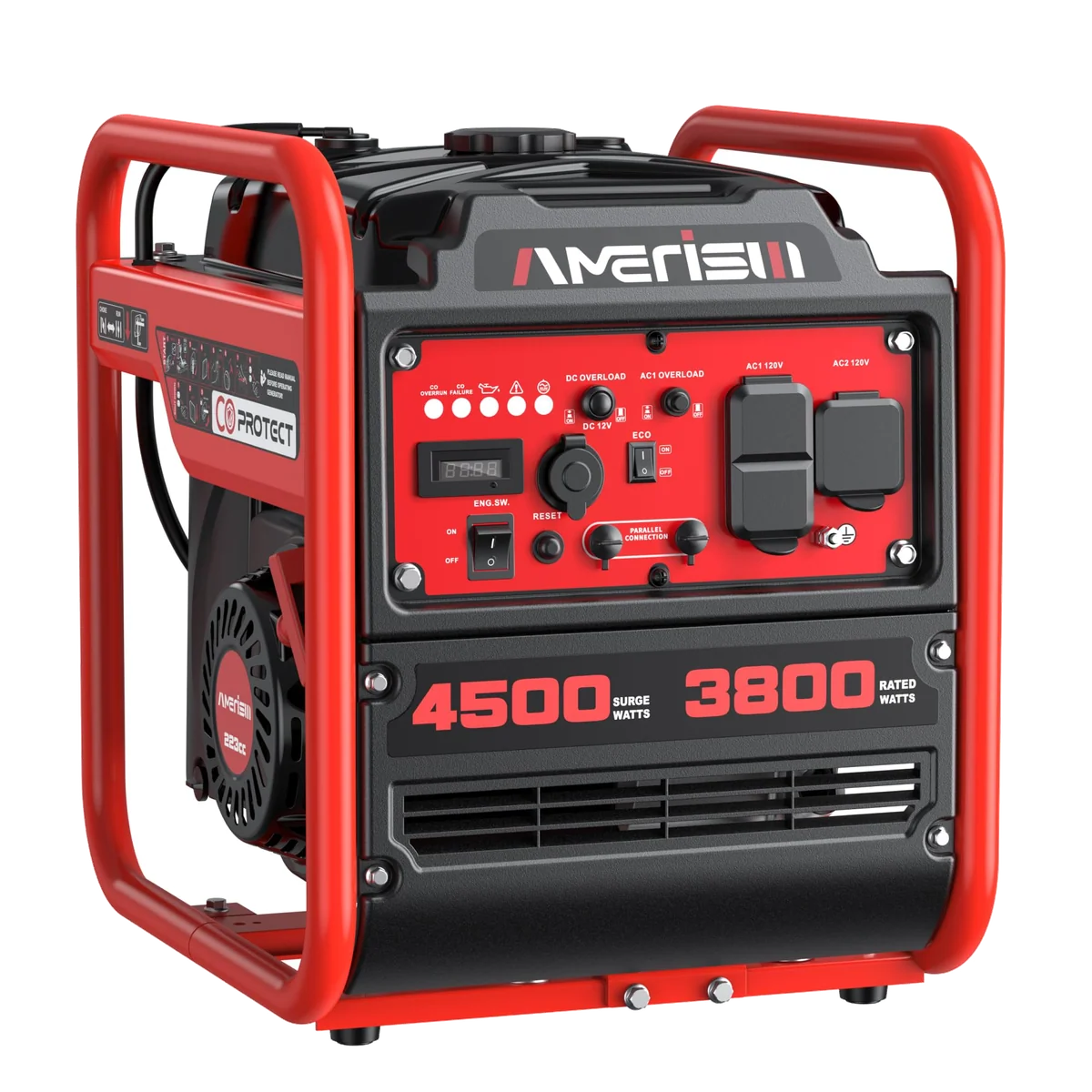
Buy this one only if you will unbox it and run it hard the week it lands, because on this record the bad units announce themselves in the first hour and the support behind them is a service centre owners cannot find.
Based on 114 owner ratings, 4 owner discussions and 2 other sources. We have not tested this machine ourselves.
We earn a commission if you buy through our links, which does not affect what we say.
Read how this site works →
The call
Judged as an engine and an inverter, this is more machine than its price band usually delivers, and the person who worked it hardest could not fault it. Judged as a purchase, it is an unhedged bet on your individual unit, placed with a company that has repeatedly failed to make things right when the bet lost. Those two facts are not in tension. They are the product.
So: buy it as disposable insurance rather than as equipment, and behave accordingly. Fill it, run it, load it and prove it inside your return window, because that window is the only warranty that has worked for anybody. Add a third-party protection plan if one is offered, because that is what the manufacturer's own coverage was supposed to be. Size your loads at around three thousand watts rather than the number on the frame. Put it outside, well away from the house, with the CO sensor treated as a smoke alarm rather than a permission slip. Do all of that and it is a defensible way to have power in an outage. Skip any of it, particularly the first, and you are storing a sealed box that has a fifteen percent chance of being a paperweight on the night you need it.
There are two AMERISUN 4500s in the evidence. One of them ran two portable air conditioners at the same time, then a circular saw, then a 15-amp table saw, then both saws together, then a wood chipper, and the person operating it could not find a way to upset it. The other ran for eight to ten seconds, shut itself off, and was diagnosed by the manufacturer's own engineers as a faulty wiring harness before the owner was sent back to Amazon, who told him his window had closed. Both of those are AMERISUN 4500s. Nothing on the listing tells you which one is in your box.
That is the whole review, and everything below is the detail. This is not a mediocre generator. It is a bimodal one: a machine that is either fine or dead, sold by a company whose after-sales apparatus is not equipped to deal with the second case. Specific Load's position is that the machine is worth the money and the risk, but only for a buyer who behaves in a specific way, and most people who buy a backup generator do the opposite of that. They buy it in May, leave it sealed until August, and discover the fault three months after the return window shut.
So the stance is conditional and the condition is not optional. Fuel it, oil it and run it under a genuine load within your return period, ideally within the first few days. If it stumbles, send it back while you still can. If it runs, you have a competent 120V inverter generator with a TT-30 socket for a price that is not really competing with anything else in the class.
| Buy it if | Walk away if |
|---|---|
| You will test it under load immediately and treat the return window as the real warranty. | You want to buy a generator, put it in the garage and trust it in three years. |
| Your load is a fridge, a freezer, a well pump, lights, a couple of tools or an RV on a 30-amp cord. | You need 240V for a transfer switch, a well on two legs, or central air. |
| You are comfortable finding a local small-engine shop yourself if it ever needs one. | The existence of a dealer network is part of what you are paying for. |
| You are replacing a failed budget inverter and want a spare, not a primary. | This is the only power you will have in a storm and there is no backup to the backup. |
If you are shopping this class rather than this model, our roundup of portable inverter generators covers the machines that come with a support structure attached, and if the brand question is what brought you here, who makes PowerSmart and AMERISUN answers it in more depth than a product page can.
Key Specifications
American-born, Chicago-headquartered, and built somewhere else
The listing opens with a sentence worth reading twice: "Proudly American-born and made in the USA." Nothing in the record supports the second half of that. AMERISUN is the parent company of PowerSmart, a fact you will find confirmed by buyers cross-shopping the two badges on the same shelf, and a small-engine repair channel that has taken in a run of these machines puts it more bluntly than we would: the parent is out of Chicago, but what arrives is "a China machine with a Chicago headquarters." That mechanic was working on a mower, not this generator, so treat the specific fault he describes as mower evidence. What transfers is the shape: a single cheap component that keeps failing, a support line he says is answered on Saturday mornings, and his read that the AMERISUN name exists because the previous one had collected too many one-star reviews.
None of that is disqualifying by itself. Half the inverter generators on Amazon are built by the same handful of Chinese factories and rebadged, and the engines in some of them come off the same lines as the Predator units that r/Generator holds up as durability benchmarks. The phrase one commenter used for the whole category is the honest one: nothing inherently wrong with a clone engine other than mystery quality control. That is what you are buying here. Not a bad design. An unknown one, sample by sample. We go further into what that costs you in what a cheap no-name inverter generator actually buys you.
What is in the box, and what is not
It arrives assembled and, in the accounts we have, well packed. There is no oil in it, which is normal for the category and still catches people out; this one takes a little over twenty ounces, and the drain plug comes out of the factory torqued hard enough that owners have reached for a socket rather than a wrench. The foam air filter arrives dry and the manual wants it oiled. There are red shipping blocks bolted to the frame front and rear on ten-millimetre heads, holding the engine against its rubber mounts for transit, and if you leave them in the machine will shake and sound wrong in a way you will blame on the engine. There is a tag warning you about them. Read it.
The choke decal reads backwards compared to most small engines, which has confused owners, and someone who checked it against the actual butterfly valve confirmed the sticker is correct. The decorative plastic on the front is purely cosmetic and carries no structural load, but it does sit in front of the dipstick, so checking oil means undoing bolts. Against those irritations: there is a carburetor drain bolt for storage, an hour meter that works, and on the sibling models a maintenance hatch tethered so you cannot lose it. Our oil and break-in guide covers the one-hour first change these engines want, and the storage routine is the one this machine is actually equipped for: shut the fuel valve, let it run itself dry, walk away.
The 30-amp socket is not the 30 amps you are thinking of
Every outlet on this machine is 120V. The 30-amp is a TT-30 travel-trailer socket, and the household sockets are ordinary 20-amp. There is no 240V, which means no interlock, no generator inlet feeding both legs of your panel, and no well pump or dryer or central air. Buyers arriving from forum threads where "30A inlet" almost always means 240V will misread this, and the listing does nothing to correct them. If your plan involves a breaker panel rather than extension cords, read how to connect a generator to your house first, then come back and check whether this machine can do the job you had in mind. For a trailer on shore power it is exactly right, and it sits in the same bracket as the machines in our RV generator guide.
Strengths & Limitations
Strengths
- The only hands-on load test on record took two portable air conditioners, a circular saw, a 15-amp table saw, both saws together and a wood chipper without stumbling.
- It arrives assembled, with basic maintenance tools included on this family and a carburetor drain bolt that makes proper long-term storage genuinely easy.
- The low-oil shutdown has been verified by two independent testers who deliberately starved the engine and could not make it start.
- The panel reports voltage, frequency and running hours, so break-in and service intervals are trackable rather than guessed.
- A TT-30 socket and a working 12V outlet make it a straightforward travel-trailer generator at a weight one person can move.
- Eco mode at idle drew unprompted praise for quietness from the one person who ran the machine in anger.
Limitations
- Roughly one owner in six on the largest pool for this machine class gave it a single star, and the failures cluster in the first days or the first three months.
- The continuous output appears as 3500, 3600 and 3800 watts across the brand's own materials and nobody has ever instrumented it.
- The warranty is quoted as one year by one owner and two by another, and the service network behind it failed every owner who tried to use it.
- Sellers stopped replying to at least two owners the moment their machines died.
- The CO sensor has never been verified working by anyone, and one new unit arrived stuck in a flashing self-test with nobody at the company able to explain it.
- Every outlet is 120V, so despite the 30-amp socket there is no 240V and no path to a whole-house interlock.
- The listing claims the machine is made in the USA and nothing in the record supports that.
- At least two owners opened boxes containing units that appeared to have been previously returned, opened or damaged.
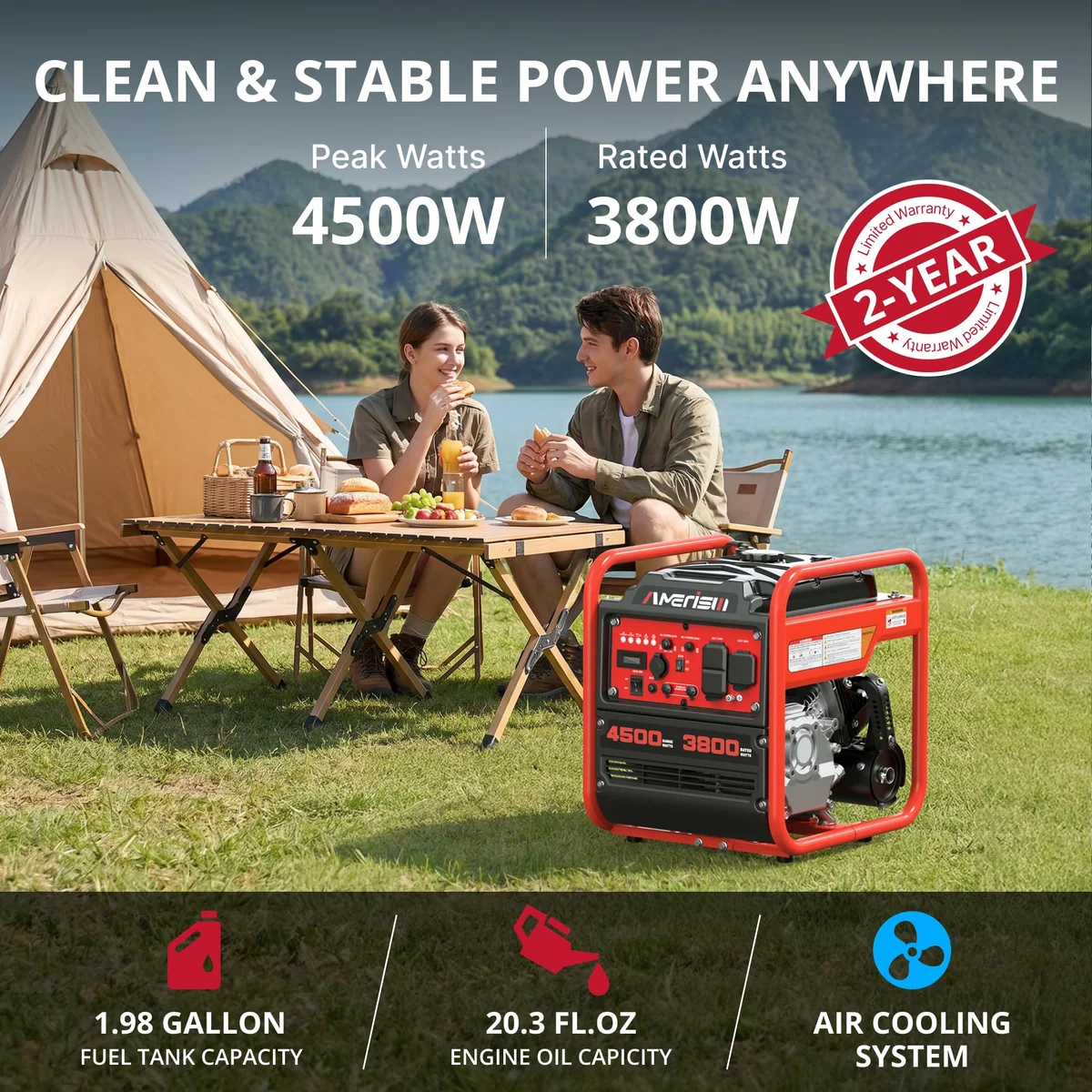
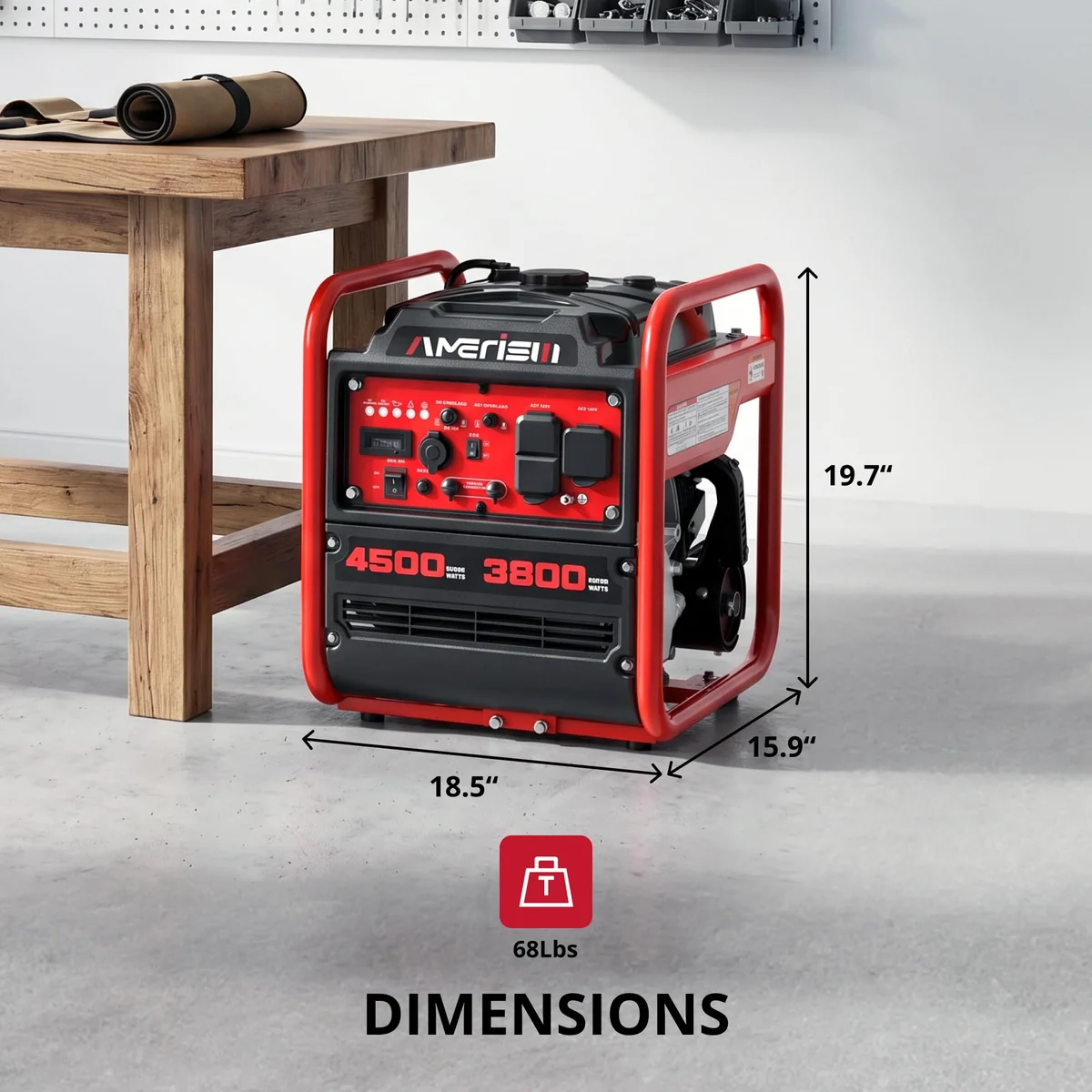
One person put a real load on it, and it took everything they had
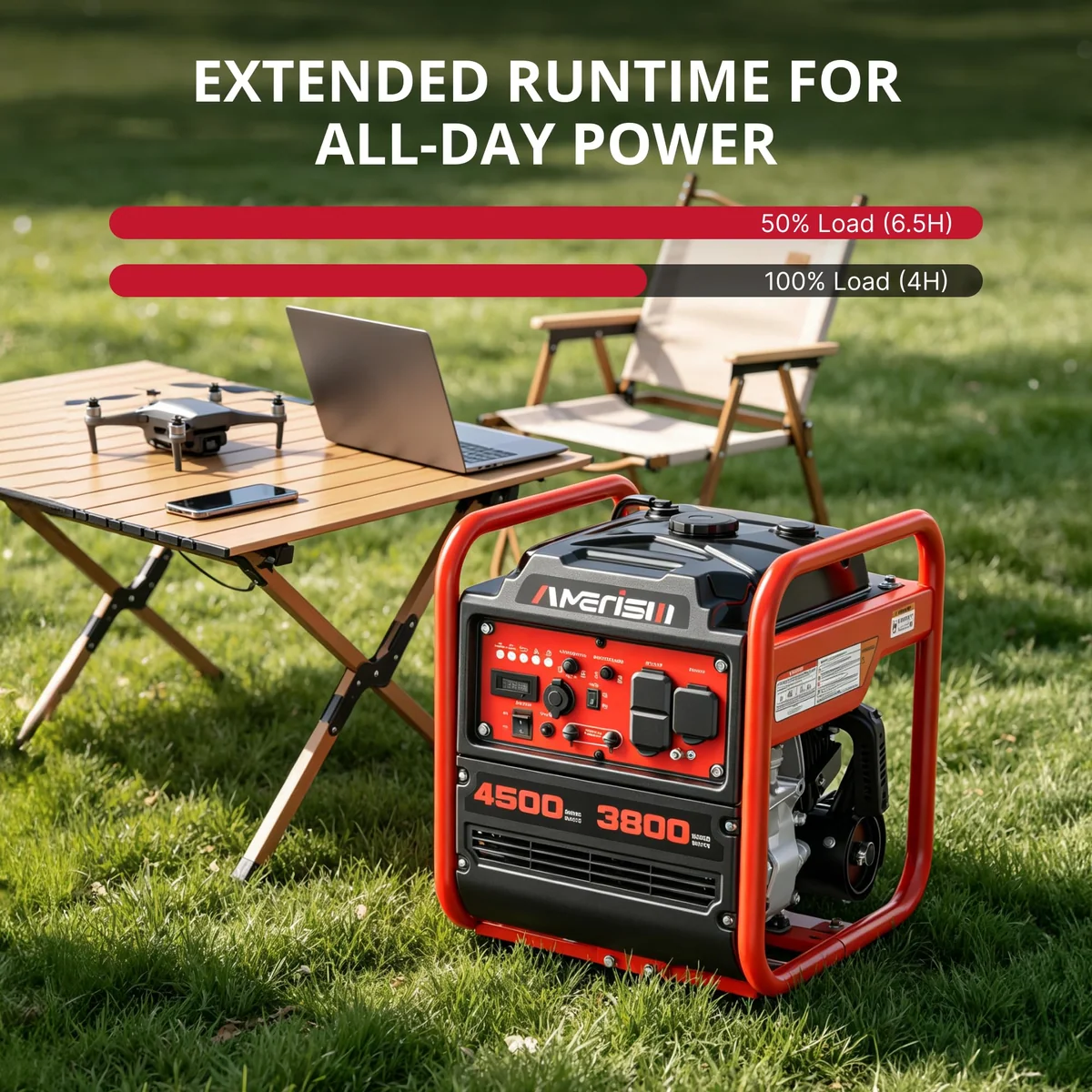
The single hands-on load test in the record is worth taking seriously because it is not a spec recital. The unit was checked over, started on half choke after almost catching on the first pull at full, and then fed everything the tester owned. Two portable air conditioners running together, roughly two kilowatts between them, went on without drama. A circular saw made repeated cuts. A 15-amp table saw made repeated cuts. Then both saws at once. Then a 15-amp wood chipper. Then the 12V outlet ran a bike pump. Nothing bogged, nothing tripped, and on eco mode at idle the tester described it as genuinely quiet.
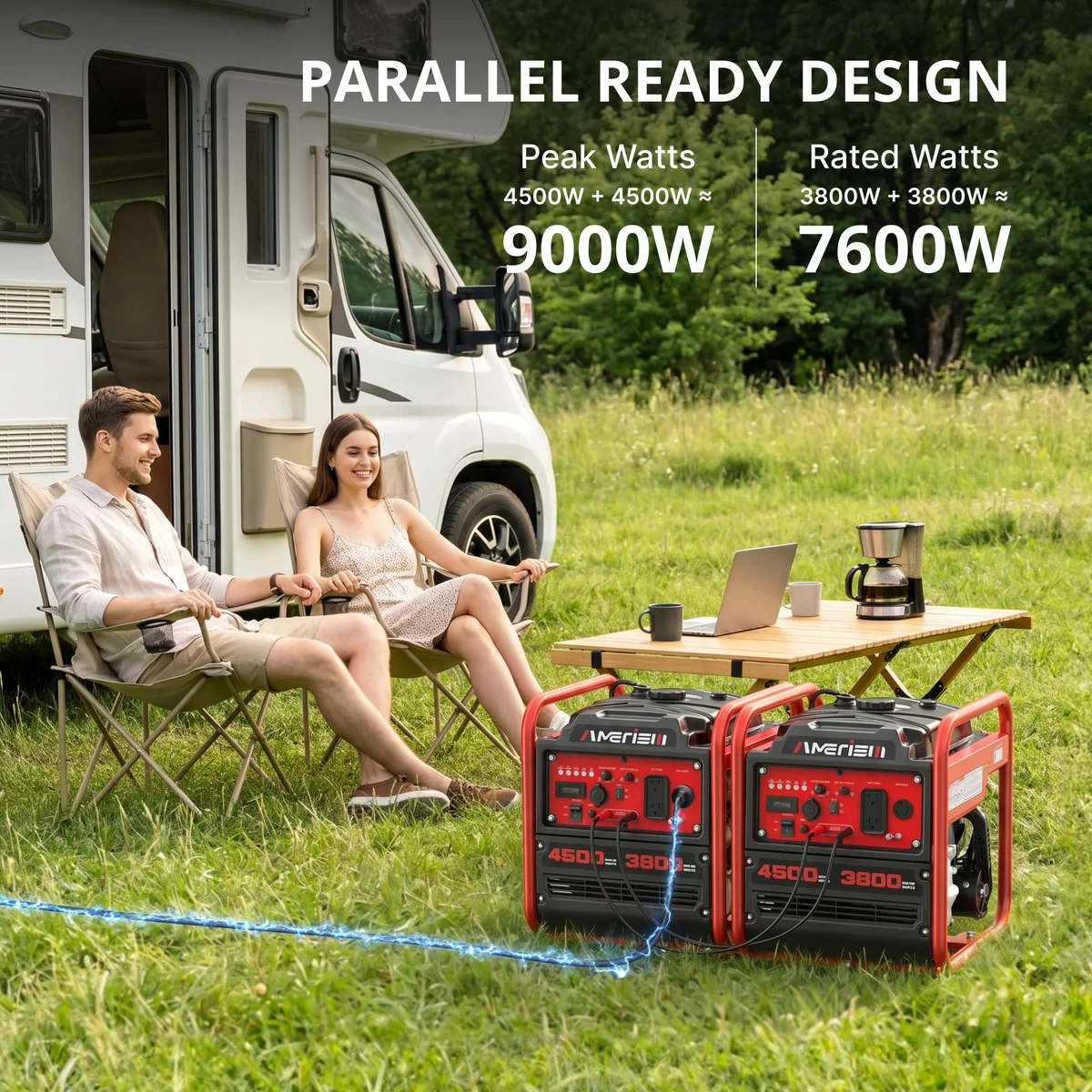
Note the ceiling in that, though, because it matters more than the pass. The largest simultaneous draw anywhere in that test is around two thousand watts. Nobody in this entire evidence base has run this machine anywhere near its claimed continuous output. That claim, incidentally, is not stable: this listing says 3800 running watts, a video review of a differently numbered AMERISUN 4500 says 3600, and the person who actually load-tested one called it 3500. Three figures for one nominal machine. Treat 3800 as a marketing number that has never been checked, and size your loads against something closer to three thousand if you want margin. Starting watts versus running watts explains why the number on the box was never the number you get.
There is one instrumented owner measurement, and it is a disaster: a buyer with a meter reported surging at five hundred watts and engine shutdown at eleven hundred. That number is so far below spec that it reads as a broken unit rather than a systematically overrated one, and it should be read that way. But it is the only meter an owner put on this machine, and the result was a failure. That is the honest state of the evidence.
Noise: quiet unloaded, and not quiet under load
Nobody has measured this open-frame model with a sound meter. What exists is two metered tests of the smaller enclosed sibling that appear to contradict each other flatly. One tester got under 50 dB at thirty-five feet and around 70 dB standing at the exhaust, and called it the quietest machine of its size he had put a meter on all summer. Another got 87 dB directly behind the unit and 75 dB at ten feet. The reconciliation is straightforward and it is the useful finding: the first was measured with no load, the second under about seventy-five percent load during break-in. This family is genuinely impressive at idle and eco, and it is a gas engine working hard when you actually use it.
Do not carry any of those numbers to this product. It is an open frame. There is no acoustic shell, no sound-deadening foam in a side panel, and it should be expected to be louder under the same load than the enclosed model that produced those readings. One thing worth knowing from the 5000W sibling: an owner traced a rattle he assumed was the engine to the carry handle jostling against the frame, and lifting it away made the machine noticeably quieter. If yours sounds cheap, check the handle before you blame the motor. What a dBA rating is actually measured at covers why manufacturer figures and your driveway rarely agree, and if silence is the priority, the enclosed machines in our quiet camping generator guide are a different conversation.
What it will and will not carry
A fridge, a chest freezer, a furnace blower, lights, a modem, a couple of fans and a laptop is a comfortable evening's work for this machine, and it will do it on eco with the engine loafing. A well pump, depending on the motor, is plausible. An RV rooftop air conditioner is plausible with a soft start and marginal without one. Central air is not happening: a residential condenser's locked-rotor draw is measured in tens of kilowatts before droop, which is why the air conditioner question gets its own page. One owner bought this to run a three-compartment burner and a fryer together in a food operation, could only ever run one at a time, and said her research had assured her the wattage was enough. It was not, and the failure there is the headline number, not the machine.
The CO sensor is a backstop, not a permit
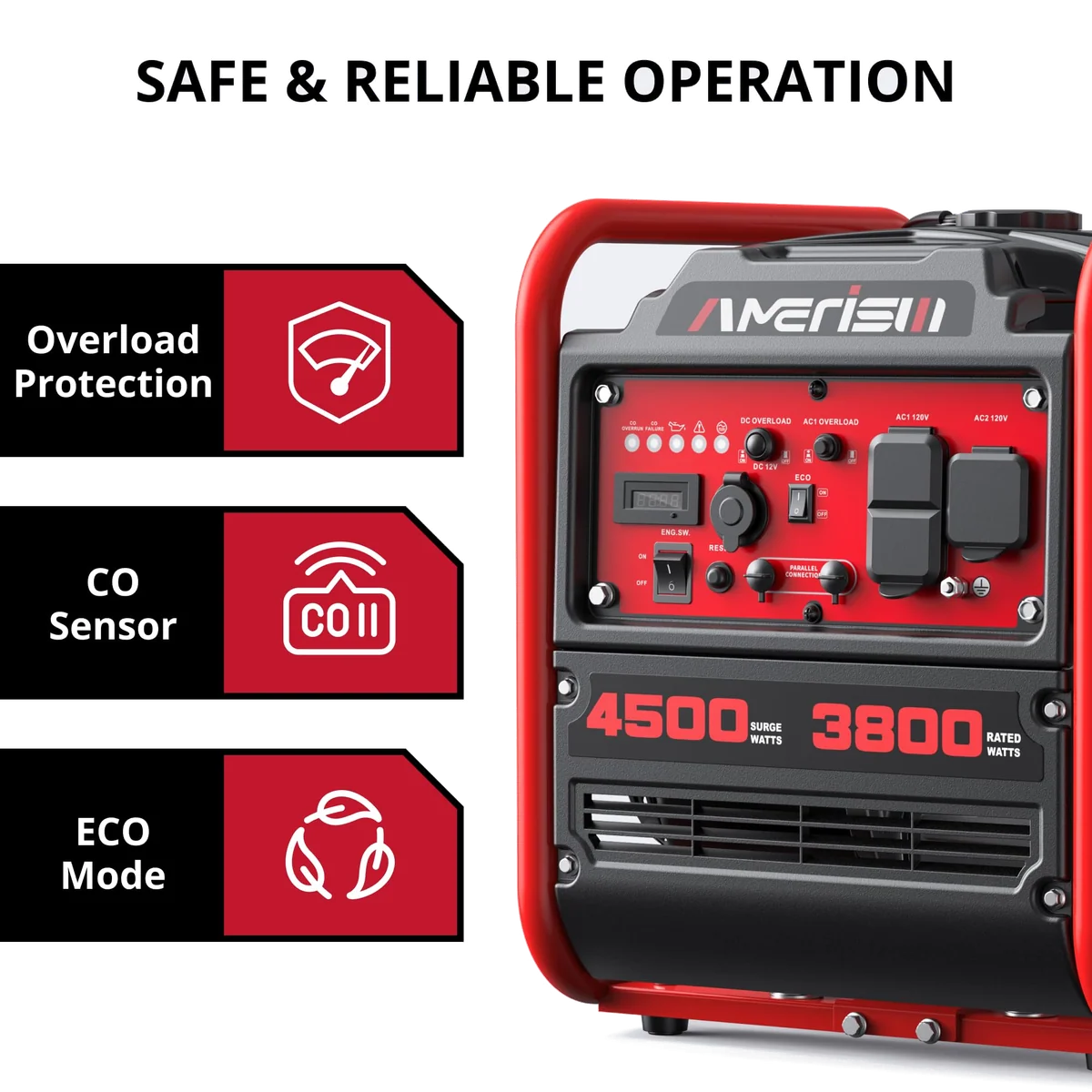
The listing's third bullet promises 24/7 carbon monoxide monitoring with automatic shutdown. Not one person in this research has verified that it works. One owner received a brand-new unit with a flashing CO self-test light he could not clear, called the company, and reached someone who did not know anything about the generator. So the safety feature is also an unverified failure point with no support behind it.
By contrast, the low-oil shutdown on this family has been deliberately tested by two independent people who starved the engine and found they simply could not make it start, with the warning light flashing at them. That is the one advertised protection anyone has confirmed by experiment. Either way, none of this changes where the machine goes: outdoors, well away from doors, windows and vents, never in a garage with the door cracked. Even the automated review script floating around this model gets this right, and it is the only useful sentence in it. Our page on running a generator outdoors is blunt about why a sensor is not permission to move it closer.
What the money buys, when you can work out what the money is
Pricing on this brand is not a number, it is a range. Buyers looking at the same sibling listing on the same day reported totals differing by roughly forty percent depending on whether a coupon rendered for them, with several Amazon-fulfilled sellers on one product and only some showing the discount. One video reviewer refused to quote a figure at all on the grounds that it changes constantly. The practical instruction that falls out of this is simple: before you commit, look for a stacked coupon and check whether the same machine is listed elsewhere under the sibling badge, because it frequently is.
Whatever you pay, the value case is not "cheap generator, cheap risk." It is closer to buying an insurance policy that has a meaningful chance of being void. The one purchase decision in this whole research that we would copy came from an owner of the smaller model who had already been burned by a seven-hundred-dollar name-brand inverter that failed catastrophically inside a year: he bought the budget machine and added a third-party three-year protection plan on top. Given everything above about the manufacturer's warranty path, that plan is doing the job the warranty is supposed to do, and it costs a fraction of the machine.
Against alternatives, the honest comparison is uncomfortable. A WEN in this class costs meaningfully more and carries a three-year warranty and a track record, and forum buyers looking at exactly this AMERISUN said out loud they would pay the difference for that. Within this site, the LIFAN 4800W dual fuel and the Oxseryn 5000W occupy the same shelf, and the GENMAX GM4500iSAD adds propane and a CO detector in the same output class; all three are covered in the inverter roundup. The PowerSmart 4400 dual fuel is worth a look for a reason that should be said plainly: it is the same parent company, so you are taking the same manufacturing gamble, but you get a second fuel out of it, and propane does not turn to varnish in a carburetor. If you have never worked through why fuel choice costs you watts and buys you runtime, that trade is worth understanding before you decide gasoline-only is fine.
One more framing that suits this machine better than the listing does. A 3800-watt gasoline unit makes an excellent charger for a battery, and a battery makes an excellent quiet overnight load-carrier. Run the generator for a few hours in daylight to refill a power station, shut it off, and let the battery carry the fridge and the CPAP through the night in silence. That pairing is why a lot of people end up owning both, and we work through the arithmetic in solar generator versus gas generator and how long a power station really runs a fridge.
The failure pattern, month by month, in the owners' words
The largest pool of owner feedback on a 4500W AMERISUN sits on Woot, on a different ASIN from this listing but the same brand and the same class of machine, and its top positive review is titled with this model's running-watt figure. The distribution there is the thing to look at, not the average: sixty-seven percent five stars, and fifteen percent one star. That is not the curve of a mediocre product. It is the curve of a lottery.
The negatives are long, specific and consistent. A buyer purchased in May, unboxed in August, added oil and fresh fuel, got it running on the third pull, moved off choke and watched it shut down after eight to ten seconds every time. He sent photos of the internal wiring harness and video to the manufacturer, whose engineers determined it was a faulty wiring setup, and who then declined to ship a replacement and directed him to a service centre over thirty miles away. Amazon's window had closed. The service centre, he later found, had stopped handling their warranty work and sent him back to the manufacturer.
Another owner did everything the internet tells you to do. He started it, exercised it once a week to keep it ready, kept it fuelled and oiled, and in the first week of September, about three months in, it stopped and would not restart on any subsequent day. He messaged the seller, was asked for photographs, sent them, and never heard back across three further messages. That case matters because it defeats the reflex defence. This is not varnish in a carburetor from a machine left sitting, the failure mode the forums blame for everything. This is a machine that was maintained correctly and died anyway.
A third owner, six months in, could only ask the internet where a warranty repair shop might be, because his generates sometimes and sometimes does not. One buyer opened the box to loose parts rattling in the bottom and visible damage on a unit that looked like it had been apart before, with spark and fuel present and no start. One found it would not start during a blizzard and outage, which is the precise event the product exists for. One says the 12V conversion simply does not work, the same outlet the load tester singled out for praise. If you are chasing a no-start yourself, the fuel valve, the cap vent and the switches are worth ruling out before you conclude the unit is dead.
Notice also the asymmetry in the record. Out of dozens of positive reviews, the most helpful one anybody wrote reads, in full: "Great quality!! Thank you". The satisfied owners have nothing to say and the unlucky ones have paragraphs. That is normal for consumer reviews, but it means the pleasant side of this product's reputation is essentially contentless while the unpleasant side is documented in detail.
The warranty is the actual product defect
Amazon's catalogue records a two-year warranty. One owner was told one year by the company. Another was told two. Neither could reach anyone able to authorise a replacement, and both were routed to a service network that either did not exist near them or had stopped taking the work. Nothing here is unusual for a rebadged budget generator, and that is the point: the warranty term is not the variable that matters, the presence of somebody to honour it is. Specific Load's read is that on this brand you should price the machine as if it has no warranty at all, because functionally, for the owners who tried to use it, it did not.
Parts, when it comes to that
Owners looking for AMERISUN parts are a visible and frustrated group, and the record does not give us a parts catalogue for this generator. What it gives us is the method. The engine in these machines is a bought-in unit from a Chinese manufacturer that also supplies engines built for other budget brands, and it carries its own model number on the block and on the emissions label. Find that number, search it rather than the badge on the frame, and you will usually find generic parts for a fraction of what the brand charges, if the brand answers at all. On the mower line, where somebody has actually done this, a coil the brand sold for about three times the price of the aftermarket equivalent turned out to be a standard part identifiable by bolt spacing. Expect the same logic here.
Frequently Asked Questions
Who makes AMERISUN generators?
AMERISUN Inc is a Chicago-headquartered company whose generators are manufactured in China using bought-in clone engines, despite the listing's claim that they are made in the USA.
Are AMERISUN and PowerSmart the same company?
Yes: AMERISUN is PowerSmart's parent, and machines sold under the two badges are frequently the same hardware with different stickers.
Is AMERISUN a good generator brand?
The hardware is better than the price suggests when it works, but the brand's after-sales support has failed enough owners that you should buy only where you can return it easily.
Will this run a home air conditioner?
It will not start a central air condenser, and an RV rooftop unit is realistic only with a soft start fitted.
Does the CO sensor mean I can run it in a garage?
No, and treating it that way is how people die, because a sensor is a backstop for a mistake rather than a licence to move the machine closer to the house.
Can I connect it to my house with a transfer switch?
Not usefully, because every outlet on this machine is 120V and a transfer switch or interlock expects both legs of 240V.
How much oil does it take and when is the first change?
It ships dry and takes a little over twenty ounces, and the sensible first change is at about one running hour rather than the ten the manual suggests.
Where do I find parts for one?
Find the engine's own model number stamped on the block or the emissions label and search for that instead of the AMERISUN badge, because the generic part is usually a fraction of the brand price and far easier to actually obtain.
What should I do the day it arrives?
Pull the two red shipping blocks off the motor mounts, oil the foam air filter, fill it with oil and fresh fuel, and run it under a real load while you can still return it.
Sources (4)
- Amazon listings and customer reviews — Amerisun Inverter Generator
- Owner reports across r/Generator threads
- Owner and reviewer video, 10 channels
- Woot — Article — tools.woot.com