The oil your generator takes is a short list; the change nobody schedules is the one that decides how long it lives
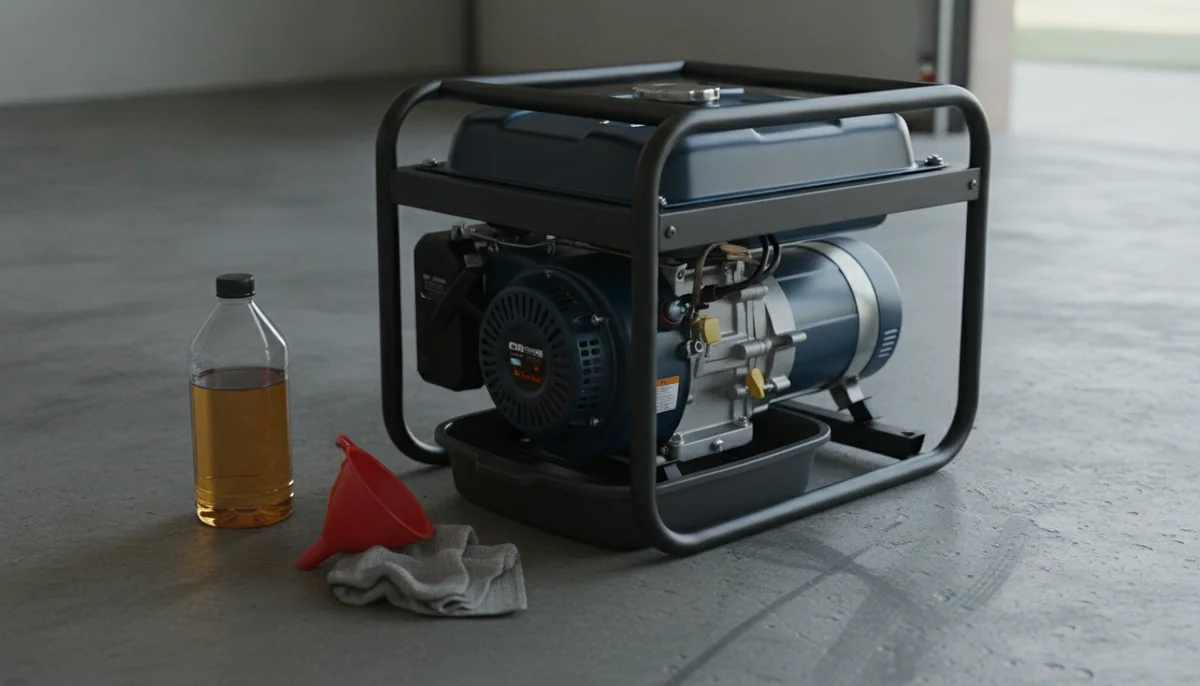
That is the whole answer, and the reason it needs a page is that almost nobody selling these machines will give it to you. Two separate owners of the Oxseryn 5000 went looking for the oil specification and found nothing. One of them, an elderly first-time buyer, settled on 10W-40 as break-in oil with a plan to move to 10W-30 afterwards. The other poured, checked, poured again, checked again, and eventually concluded that the thing had taken about twelve ounces. Neither of those is a manufacturer figure. Both of them are a person standing in a driveway with a dipstick and no information.
Specific Load went through the published record for every generator on this page, and the documentation gap is not one bad listing. It is the norm. The Efurden 2800 publishes no engine displacement, no oil grade and no oil capacity, while spending an entire marketing bullet and an entire FAQ answer explaining why the machine smells of petrol when it arrives. The PowerSmart 4400 lists five bullets of safety features and runtime claims and never mentions oil in any of them. The AMERISUN 4500 does the same. The Oxseryn tells you the box contains a generator, a funnel, a screwdriver, a socket wrench and a manual, which is a list conspicuous for what it leaves out.
One machine in this group behaves properly. Aceup puts the oil in the box, names it on the listing as SJ 10W-40, and includes the funnel and the plug wrench to go with it. The result is that the most common first line in an Aceup owner review is some version of adding oil and having it start straight away, which is what the first ten minutes of generator ownership is supposed to look like.
So before the argument, here is the order of operations for the first hour of owning any of these.
- Put it on level ground before you go anywhere near the dipstick, because a sloped driveway will lie to you in both directions.
- Fill it in stages with the funnel, checking as you go, and stop at the top of the hatched section rather than at the top of the stick.
- Find out whether your dipstick is read resting in the hole or screwed all the way down, because reading it the wrong way is how people end up an ounce or two over.
- Run it for five hours at roughly half load, varying the load rather than holding it steady.
- Drain that oil while it is still warm, refill, and write the date and the hours on a strip of tape stuck to the frame.
Everything below is why step four and step five are not optional, and why they are the two steps the box will not tell you about.
The grade is the easy part
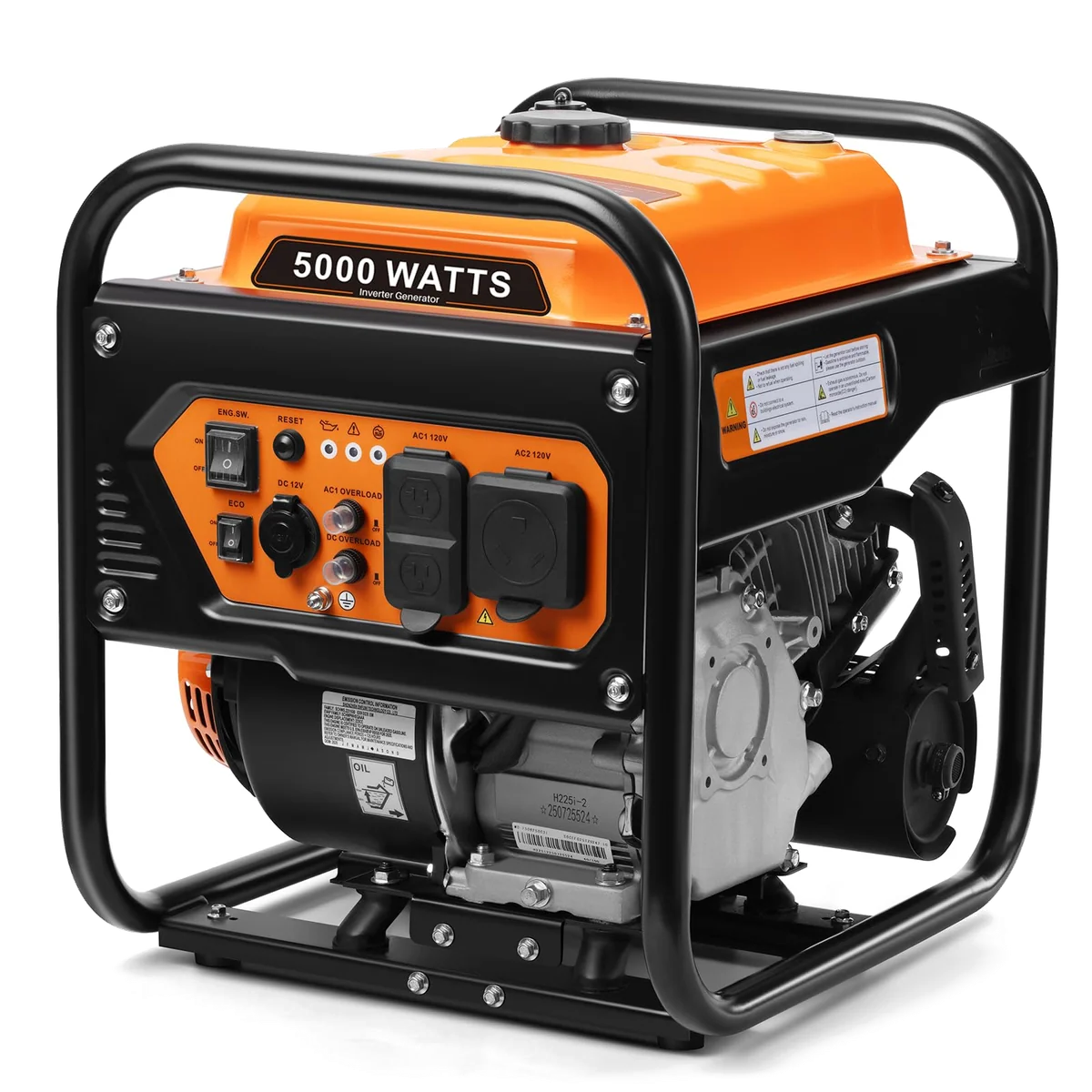
Small air-cooled four-stroke engines are not fussy, and the list of oils that go in them is short. A multigrade 10W-30 covers the temperature range most owners will ever run in and is the safe default when the paperwork has failed you. If the machine is going to be pulled out at four in the morning in January, a 5W-30 flows at cranking temperature where a 10W-30 is still behaving like treacle, and cold starting is exactly when a recoil-only generator punishes you. If it lives somewhere hot and works hard, 10W-40 is defensible; it is what Aceup ships in its own box for a 149cc engine.
The API service letter on the bottle matters less than the internet suggests. Aceup specifies SJ, which is an old automotive category, and you will not easily buy a bottle labelled that way now. A current automotive oil in the right viscosity is what owners actually use and what these engines get. What you should not do is treat two-stroke mix as interchangeable with this, which sounds obvious until you notice that most of the short video content circulating under the PowerSmart badge is about the brand's 1200-watt two-stroke, a machine that runs on premix and never gets an oil change at all. If a clip taught you your maintenance routine, check which machine it was filmed with.
Synthetic during break-in, since this page owes you a position
Experienced owners genuinely disagree about whether synthetic belongs in a brand new small engine or only after the rings have worn in. Specific Load's position: run conventional oil for the break-in fill and the one after it, then switch to synthetic if you want to. The reasoning is not mystical. Rings seat by wearing against the bore under load, a good synthetic is very good at preventing exactly that wear, and the oil you are going to drain in five hours is not the place to spend money. The counter-case is real and worth knowing: one owner of two PowerSmart 4400s reports that both of them burn a little oil and smoke from the exhaust, and is charitable enough to expect the rings may seal over time. Two units doing the same thing is a build characteristic rather than a bad sample, and a break-in done properly is the only lever an owner has over it.
How much, when nobody will tell you
Capacity is where this gets genuinely awkward, because the numbers in circulation are owner-derived rather than published, and they are not close to each other. A 149cc engine and a 223cc engine do not hold the same amount of oil, and the difference between twelve ounces and twenty-one is the difference between a dry sump and a flooded one.
| Machine | Oil in the box | Grade published | Capacity published | What owners were left doing |
|---|---|---|---|---|
| Aceup Energy 4000 | Yes, with funnel and plug wrench | Yes, SJ 10W-40 | No | Pouring what came with it |
| Oxseryn 5000 | No, funnel only | No | No | Pouring and re-checking to about twelve ounces |
| AMERISUN 4500 | No, ships dry | No | No | A little over twenty ounces, dipstick behind cosmetic plastic |
| PowerSmart 4400 | Not stated | No | No | Reading whatever paperwork arrived |
| Efurden 2800 | Not stated | No | No | Guessing, with no displacement figure to guess from |
| GENMAX GM9000iED | No, tools and funnel included | In the manual | In the manual | Adding an oil hose and a magnetic dipstick by choice |
The method that survives all of that is the boring one. Pour in roughly two thirds of what you think it wants, wait a minute for it to find the sump, and read the stick. Add in small increments after that. Aim for the upper mark and not past it, because an overfilled crankcase pushes oil past the rings and out of the breather, and the symptom it produces is smoke from the exhaust, which is the same symptom as worn rings and will send you chasing the wrong fault. Check it cold and level every time, and understand that the low-oil shutdown these machines advertise is a switch rather than a gauge: it protects the engine from being run dry, and a generator sitting on a slope can trip one with oil still in it.
For the AMERISUN in particular, the practical documentation is not the brand's. It is another owner filming the job and putting it online, which is how a maintenance procedure reaches buyers when the manufacturer will not write one down. Take that as the general condition of this market rather than a fault in one company, and read what you are actually buying at this end of the shelf before you decide how much of this you want to take on.
The change nobody schedules
Here is the receipt, and it comes from the one generator in this group with any oil filtration at all.
The GENMAX GM9000iED runs a pressurised oil system with a small cleanable mesh screen next to the drain plug, which caused an argument on Power Equipment Forum about whether that counts as an oil filter. The argument matters less than what two owners found when they pulled the screen out: it had caught metal shavings during break-in. That is a brand new engine, assembled and tested at the factory, shedding metal into its oil in the first hours of its life. It is normal. It is what machining and ring seating do.
Now apply it to every other machine on this page. None of them has a screen, a filter or anything else between the sump and the bearings. Whatever the engine sheds in its first hours stays in suspension and keeps circulating until somebody drains it. On a machine with filtration you would still change that oil early. On a machine without it, the oil is the filter, and the only way to empty the filter is to dump it.
So the interval is five hours, or the end of your first proper run, whichever comes first, and it does not matter what number the manual gives you. If the manual says twenty hours, do it at five anyway and then do the twenty-hour one as well. Oil is a few dollars. On a Generac standby, where the machine costs orders of magnitude more and the manual is a serious document, the same argument about the first change plays out differently, and it is worth reading if that is your machine, because the answer there is not the answer here.
Two small purchases make this easier and both come from owners rather than makers. A magnetic dipstick pulls swarf out of the oil between changes; Aceup ships one on new units and a GENMAX owner bought an aftermarket one for the job. A short drain hose left screwed into the drain port turns a messy job into a clean one.
Breaking one in without a manual worth following
GENMAX publishes the only break-in procedure in this group that reads like it was written by an engineer, and owners confirm both halves of it: about five hours at half load first, then no more than seventy-five percent of rating for the first thirty hours. One owner notes the two-stage structure is itself a source of confusion, because people read the first number and assume the machine is free after it. On a 7,600-watt rated machine, half load is roughly 3.5 kilowatts, which is a couple of electric heaters and some patience.
Copy that shape onto whatever you own, scaled to its own rating. That means about half of the rated figure, not half of the peak figure on the front of the carton, and if you have not internalised the gap between those two numbers yet, the number on the box was never the power you get. Vary the load rather than parking it at one steady draw, because that is what loads the rings against the bore in the pattern they need. Do not idle a new generator for hours with nothing plugged in, and do not run it at ninety percent of its rating either.
If your machine is dual fuel, break it in on gasoline and switch to propane afterwards. That is the conservative order and it is what a GENMAX owner did with no trouble. The one thing break-in absolutely is not is optional on the grounds that the generator is for emergencies. A machine you have never loaded is a machine whose faults you have not found, and this site's own reviews are full of that story: the PowerSmart that sat three weeks and then threw a false overload, the GENMAX pair that were fine in January and dead in the spring, the AMERISUN bought in May and unboxed in August with the return window already closed. Break-in is the excuse to run it hard while you can still send it back.
What the schedule looks like after that
Once the first change is done, the routine is short enough to write on that piece of tape. Oil every hundred hours or once a season, whichever arrives first. A fresh spark plug every off-season, and on a lot of these machines the plug that came fitted is the first thing worth binning. A run under real load every quarter.
Track the hours yourself, because the panel may not. The GM9000iED's hour meter appears to reset on every restart, so its owners keep the count by hand. The Aceup's gauge does track run time, which is a genuine advantage of that panel over its price class. A cheap engine also wants its valves checked earlier than a Honda owner would expect, so if it starts getting harder to pull over or noisier at idle in the first hundred hours, that is where to look rather than at the oil.
One more thing, because oil gets blamed for it constantly and is almost never responsible. What kills stored generators is fuel, not lubrication. The near-unanimous answer among owners who have kept the same machine running for eight and ten years is to shut the fuel valve and let the carburettor run itself dry before it goes on the shelf. Efurden's own listing quietly admits that every unit is factory-tested with petrol and may still smell of it on arrival, which means the carburettor on your new generator has had fuel sitting in it since before it was boxed. The full routine is in storing a generator so it starts when the power goes out, and if yours already will not fire, the fuel valve, the cap vent and the switch you cannot see come before you start suspecting the oil.
Where these six machines actually leave you
Oil discipline does not rescue a bad purchase, and this page is written against six specific generators whose reviews already sit on this site. Here they are with the verdict and the fault attached to each, so nobody buys one off the back of an oil article.
| Machine | Where it stands | The drawback attached |
|---|---|---|
| Aceup Energy 4000 | The best first oil change in this group, with the oil, the funnel, the wrench and a four-screw service cover that exposes everything you need. | The internal fuel tank can collapse under vacuum if the cap vent is closed with fuel in it, the manual never warns you, and the one owner who documented that failure was refused a replacement inside warranty. |
| Oxseryn 5000 | A frugal, quiet camper and light-outage machine that beats its own runtime claim, wearing a home-backup badge it cannot fill. | No published oil grade or capacity at all, no 240 volts, and two of the eight substantive owner reviews involve a replacement unit. |
| AMERISUN 4500 | More generator than the price implies when the unit is good, and it ships dry, so the first fill is entirely on you. | The failures cluster in the first days or the first three months, and the owners who tried to use the warranty were routed to service centres that had stopped taking the work. |
| GENMAX GM9000iED | The only machine here with pressure-fed oiling, a cleanable screen and a break-in procedure worth following, and the engineering is better than the badge deserves. | Its worst owner accounts are of units that failed while stored rather than while running, the neutral is bonded with no conversion instructions, and warranty service means moving 250 pounds. |
| PowerSmart 4400 | Starts on the first pull for every owner who actually uses it, on either fuel, for very little money. | Two units owned by the same reviewer both burn oil and smoke, the listing publishes no oil specification, and the support answer to a failed unit was to find a repair shop and pay the freight yourself. |
| Efurden 2800 | Walk away from this one; two thousand running watts is a legitimate product and this is not the place to buy it. | It is named for its surge figure rather than its output, publishes nothing about the engine or its oil, and its quiet rating has been confirmed by nobody outside the brand. |
If the oil documentation on a given machine is the thing putting you off, that instinct is sound and it generalises: a company that will not tell you what to pour into its engine is telling you something about the rest of the ownership experience. The wider field sits in the inverter roundup, and if propane is the reason you are shopping, the dual fuel picks weigh a second fuel against the maintenance it saves you. Wherever the machine ends up living, it lives outside and well away from the house while it runs, which is not a preference.
None of this is difficult, and that is rather the point. The oil is a short list, the amount is a dipstick and a few minutes, and the single highest-value maintenance act available to anyone who owns one of these is to dump the first fill after five hours instead of at twenty. Do that, run it under load before you need it, and the rest of the schedule is a piece of tape on the frame.
Frequently Asked Questions
What oil does a portable generator take?
A multigrade 10W-30 is the safe default for these small four-stroke engines, with 5W-30 if it will be started below freezing and 10W-40 if it works hard in heat.
How much oil does one hold?
Far less than a quart: owner-derived figures on these machines run from about twelve ounces on a small inverter to a little over twenty on a 223cc engine, which is why you pour in stages and read the stick rather than emptying the bottle.
What oil goes in an Efurden generator?
Efurden's listing publishes no oil grade, no capacity and not even an engine displacement, so the only authority is whatever manual arrives in your box.
What about the Oxseryn 4400 or 5000?
Nothing in Oxseryn's documentation states either figure, and the owner-derived numbers are roughly twelve ounces of 10W-30 after break-in, which you should verify against your own paperwork.
Should the first oil change be at five hours or at twenty?
Do it at five, because break-in metal is in that oil and on a generator with no filter the oil is the only thing holding it.
Can I put synthetic oil in a brand new generator?
You can, but Specific Load would run conventional oil through the break-in and the fill after it, then switch, because rings seat by wearing in and synthetic is very good at preventing wear.
Is ordinary car oil acceptable?
Yes, a current automotive oil in the right viscosity is what most owners of these machines actually use, and the old API service letters printed on some listings are no longer worth chasing.
What is the break-in procedure on a GENMAX?
Roughly five hours at half load followed by an oil change, then nothing above about seventy-five percent of rating for the first thirty hours, which is the two-stage shape worth copying onto any machine in this class.
Does break-in matter if the generator only runs during outages?
It matters more, because the run you do to break it in is also the only chance you get to find a faulty unit while the return window is still open.
Why is my new generator smoking from the exhaust?
Overfilled oil and unseated rings produce the same blue smoke, so check the level cold on flat ground first, and if it is correct, give it some hours under load before you conclude the engine is at fault.
Where do I find the manual for one of these?
The manual that ships in the box is the authority for your unit, and the fact that several of these brands make their manuals hard to find online is itself worth weighing before you buy.
If the generator has an oil filter, can I change the oil less often?
No, and on the one machine here that has any filtration it is a cleanable mesh screen rather than a paper cartridge, which catches shavings but does nothing about the contamination that dictates the interval.
Sources (4)
- Amazon listings and customer reviews
- Owner reports across r/Generator threads
- Owner and reviewer video, 1 channel
- Powerequipmentforum — Article — www.powerequipmentforum.com