The 24kW Guardian first oil change: the book says 1.9 quarts, the dipstick says otherwise, and the dipstick is right
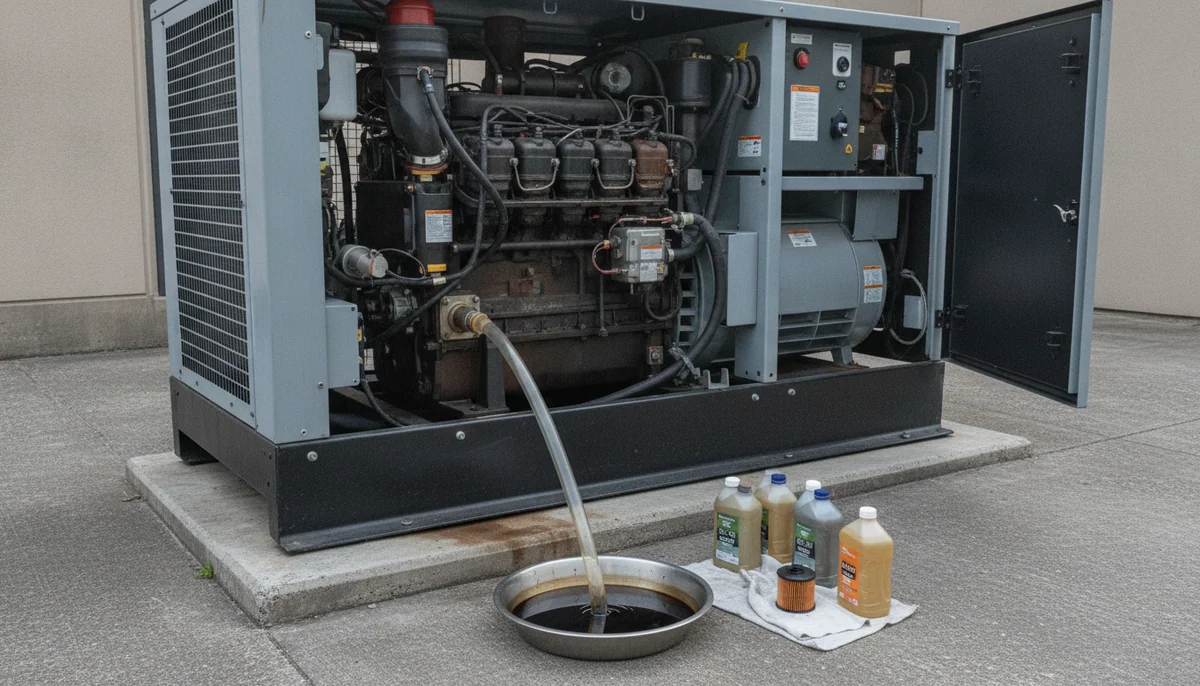
The first oil change on a Guardian 24kW is the easiest thing you will ever do to this machine, which is exactly why the one way to get it wrong deserves twenty minutes of reading first. The manual specifies 1.9 quarts. An owner of this size unit, doing his first change, stopped pouring at roughly 1.6 and was already reading overfull; he drained some back out and only got a sensible reading after running the engine. Others doing the same job land somewhere between 1.4 and 1.7, and where they land depends mostly on how much oil they put into the new filter before fitting it.
So there is no single correct number to pour, and anyone who gives you one is quoting a spec sheet rather than describing a service. The standing advice from owners who have done this on a 24kW is short enough to memorise: fill short, run it warm, recheck. There is a second half to it that people skip, and it is the half that produces most of the arguments online. Establish whether your dipstick is meant to be read screwed in or resting in the tube before you trust anything it tells you.
- Run the generator manually until it is properly warm, then shut it down and let it stand a few minutes.
- Drain it, and decide before the new filter goes on whether you are pre-filling it, because that decision is most of the difference between your number and someone else's.
- Pour about 1.4 quarts, not 1.9, and put the bottle down.
- Start it, let it run, shut it down, wait, and read the stick the same way you intend to read it forever.
- Top up in small pours until it reaches the mark, then stop, because getting oil back out of this engine is a great deal more annoying than getting it in.
Nothing in that list needs a dealer, a lift or a special tool. What it needs is the discipline to under-pour a machine whose own paperwork is telling you to pour more.

Where the missing half quart went
A printed capacity is a description of a dry engine and a dry filter, filled once on an assembly line. Your engine is not dry. A drain leaves oil in the galleries, in the cooler passages and in the low corners of the sump, and none of that comes out with the plug open no matter how long you stand there watching it drip. That alone accounts for a meaningful slice of a figure as small as 1.9 quarts, and on an engine that holds this little, a few ounces is the distance between the two marks on the stick rather than a rounding error.
The filter is the second variable and the one you control. Oil you pour into the new filter before you spin it on is oil that is already in the system and will never go down the fill neck, so a careful pre-filler and a dry fitter will report different numbers for the same correctly serviced engine. Both of them are right. Temperature is the third: cold oil that has never circulated has not yet gone anywhere, so a reading taken thirty seconds after the last pour is a reading of the funnel, not the crankcase.
| The number | What it is, and what to do with it |
|---|---|
| 1.9 quarts | The manual's capacity, which behaves as a ceiling you will not reach on a refill rather than a target. |
| About 1.6 quarts | What one 24kW owner had poured on his first change when the stick already read overfull, some of which came back out. |
| 1.4 to 1.7 quarts | The spread across owners of this size, which is a range because pre-filling the filter is a choice, not an instruction. |
| Whatever the warm stick reads | The only figure the engine responds to, and the one that ends the argument. |
The dipstick argument is the one worth having
Screwed fully in, or resting on the tube. On a car with five quarts in it, the difference between the two methods is a curiosity. On a twin holding a quart and a half, it can move you from the add mark to the full mark without a drop of oil changing hands, which is how two owners doing the identical job come away convinced the other one has ruined his engine.
Settle it once. Pull the stick, read it resting, then thread it home, pull it again and read it seated, and note the gap between the two. Then find which of those your manual's marks are drawn for, use that method every single time, and write it on the inside of the lid if your memory is anything like most people's. Consistency is worth more here than precision, because what you are really doing at every future service is comparing against the level you set today. And check the pad is sitting level while you are down there, because a machine tilted on settled ground gives you a confident, repeatable, wrong answer.
Warming it up on a machine with no ignition key
Warm oil leaves carrying more of what you are trying to remove, and it drains in a couple of minutes rather than a slow cold ooze. Getting there on a standby unit means running it deliberately: unlock and lift the lid, take the controller off Auto and start it manually at the panel, and let it come up to temperature before you shut it down and return it to Auto when you are finished. Give it a few minutes after shutdown so the oil in the top end has actually found its way back down before you pull the plug, and remember that the machine you have just been running is hot in the places you are about to reach past.
While the covers are already off
The oil is the headline and it is not the whole job. An owner working through a six month service on a 24kW Guardian pairs it with the air filter and with the battery alert the panel was showing him, which is the sensible grouping: you are already outside, the lid is already open, and the battery is the single most common reason one of these does nothing when the lights go out. If yours is the one throwing that warning, the battery, T1 fuse and cold weather kit chain is the thing to read, not another oil article.
There is a harder argument for doing more than oil at the first service, and it comes from a technician's full teardown of a hard-starting air-cooled Guardian. That was a smaller and older unit than this one, on the same broad architecture, and it arrived from the factory with all four valves at essentially zero lash against a two to four thousandth spec, and a spark plug gapped at forty thousandths against a twenty thousandth spec; correcting the lash alone lifted compression on both cylinders substantially. Specific Load will not pretend that teardown is this model, because it is not. It is still the best documented account anyone has of what these engines can arrive carrying, and it argues that lash and plug gap belong on a commissioning checklist rather than on a repair invoice discovered during an outage. If you are having someone out anyway, that is the conversation to have with them, and the full record behind this machine covers what else owners found waiting for them.
How often, and why this page will not invent a number for you
A standby generator accumulates hours you never watch it accumulate. The weekly exercise you set at the panel is doing most of that work between outages, which is why a machine that has never carried the house through a storm still arrives at its first service on schedule; set the exercise day and time deliberately, and leave quiet test mode off so you can hear that it ran. The governing interval is hours run or elapsed time, whichever comes first, and the figure for your model number is printed in the manual that came in the crate and on the maintenance decal on the machine. Specific Load measured this listing and read the owner record behind it; we did not measure your manual's service table, and a confident round number from a stranger on the internet is worth less to you than the one already sitting under your lid.
Do not wait for a light, either. The controller does carry maintenance prompts and they are cleared at the keypad once you have done the work, but the one most owners meet first is a battery inspection rather than anything to do with oil, so treating the panel as your service reminder means missing the service. If a red light and a four-digit code turn up instead, that is a different problem entirely and the fault code walkthrough is where it belongs.
Grade is the other thing this page will not guess at. The oil specified for these engines is keyed to the temperature range the machine will actually run in, and that chart is in your manual. It is worth reading it in the same sitting as the cold weather question, because the conditions that make owners order the cold kit, which brings a battery warmer and an oil filter warmer, are the same conditions the grade chart exists for. For the general logic of why a first change comes early on any engine, and why the break-in change is the one people skip, the oil and break-in explainer covers it on portables and the reasoning transfers intact.
If you are reading this before you own one
Then take the maintenance side as the reassuring part. Servicing this generator is a funnel, a filter and a Saturday morning, and the engine is comfortably the least troublesome component in the whole purchase. What Specific Load would not do is buy it expecting an appliance. The starting battery is not in the crate, so the machine cannot run on the day it lands; three of the eight retained written reviews describe freight damage, from a bent access panel through to a unit the carrier judged too damaged to unload; and one buyer waited eight weeks for a permit only to find the engine seized when he finally tried it, by which time returns had closed. Uncrate it and crank it while you can still send it back, whatever your county is doing with the paperwork. The listing itself, for the record, sells connectivity first and mentions the licensed electrician last. A 24kW also tends to want more gas than a standard residential meter passes, which is a utility conversation and a line item, not a surprise to discover after the pad is poured; what one of these actually costs installed puts numbers to the whole project.
If that reads like more house than you intended to remodel, the honest alternatives are here rather than elsewhere. A large portable against a standby is the decision to make before the five-figure one, the 11,000W tri-fuel machine gets close to whole-home coverage without a permit or a pad, and the full home backup comparison lines them all up. One last piece of housekeeping for anyone who arrived here confused by the shelf this generator sits on: it is filed among power take-off units, which are tractor-driven alternators with no engine of their own, and that category is a filing error rather than a description of what you are buying.
Frequently Asked Questions
How much oil does the first change on a 24kW Guardian actually take?
Owners of this size land between 1.4 and 1.7 quarts against a printed capacity of 1.9, so start near a quart and a half and finish against the dipstick rather than the number.
Why does the manual say more than the engine takes?
A stated capacity describes a dry engine and a dry filter, while a drained engine keeps oil in its passages and a pre-filled filter absorbs part of the pour before it ever reaches the fill neck.
Should I fill the new filter before I spin it on?
You can, and it is good practice, but understand that doing so changes how much goes down the neck afterwards, which is precisely why owner figures scatter across a range.
Do I read the dipstick screwed in or resting in the tube?
Work out which one your manual's marks are drawn for, then read it that way every time, because on an engine holding this little the two methods differ by enough to matter.
Does it need to be warm when I drain it?
Yes, run it manually until it is up to temperature and let it settle for a few minutes, because warm oil comes out faster and brings more of the debris with it.
What happens if I overfill it?
The surplus has to go somewhere and the breather is where it goes, which is why the owner who poured too much drained the excess back rather than shrugging it off.
How do I know when the next one is due?
Use the hours and the calendar limit printed for your model number, and do not wait for a warning light, since the maintenance prompt most owners meet first is a battery inspection rather than an oil reminder.
What grade of oil does it take?
The grade is keyed to the temperature range the machine will run in and charted in the manual that shipped with it, and Specific Load did not measure which grade this listing specifies.
Is this a job that needs a dealer?
No, it is a drain plug, a filter and a funnel, and the only part that trips people up is trusting a printed number over the stick.
Sources (3)
- Amazon listings and customer reviews
- Owner reports across r/Generator threads
- Owner and reviewer video, 5 channels