A Generac 24kW is priced like an appliance and billed like a building project
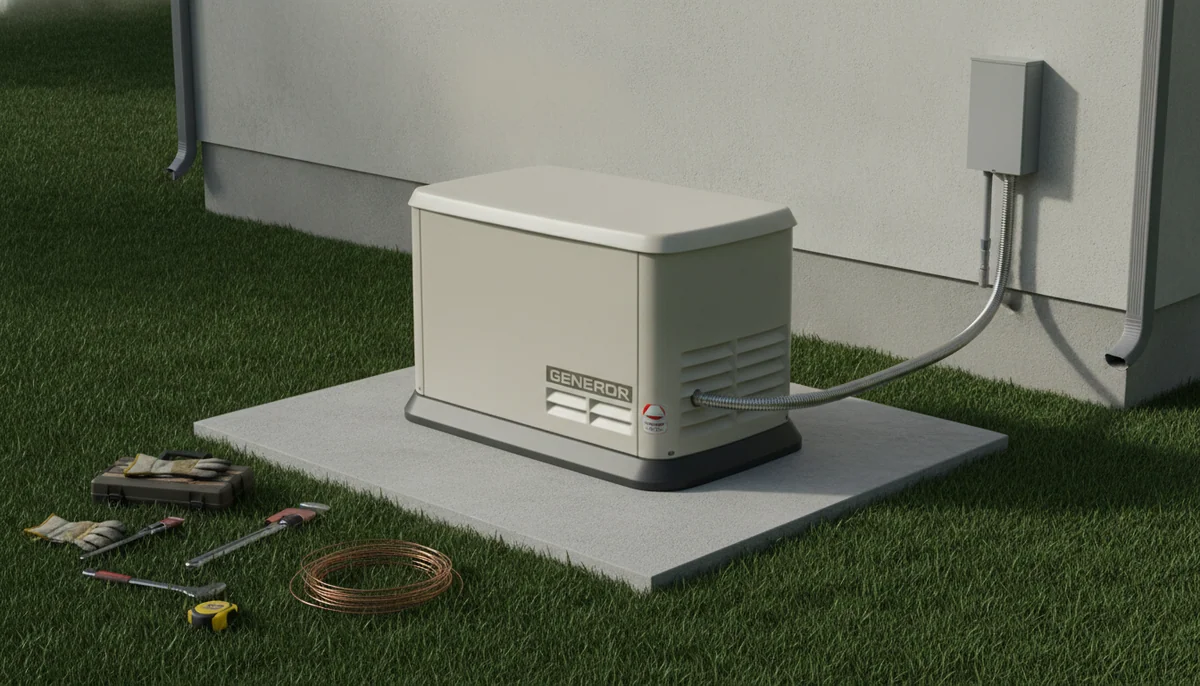
The honest answer to what one of these costs installed is that nobody can give you a national number without guessing, and most of the people who publish one are selling the install. Specific Load has not put a 24kW Guardian on a pad, has not pulled a permit for one and will not invent a finished figure for your driveway. What the record does support is more useful than a fake average anyway: a complete list of everyone who will invoice you, which of those invoices are certain and which are a coin toss, and the three costs that only show up after the return window has quietly closed behind you.
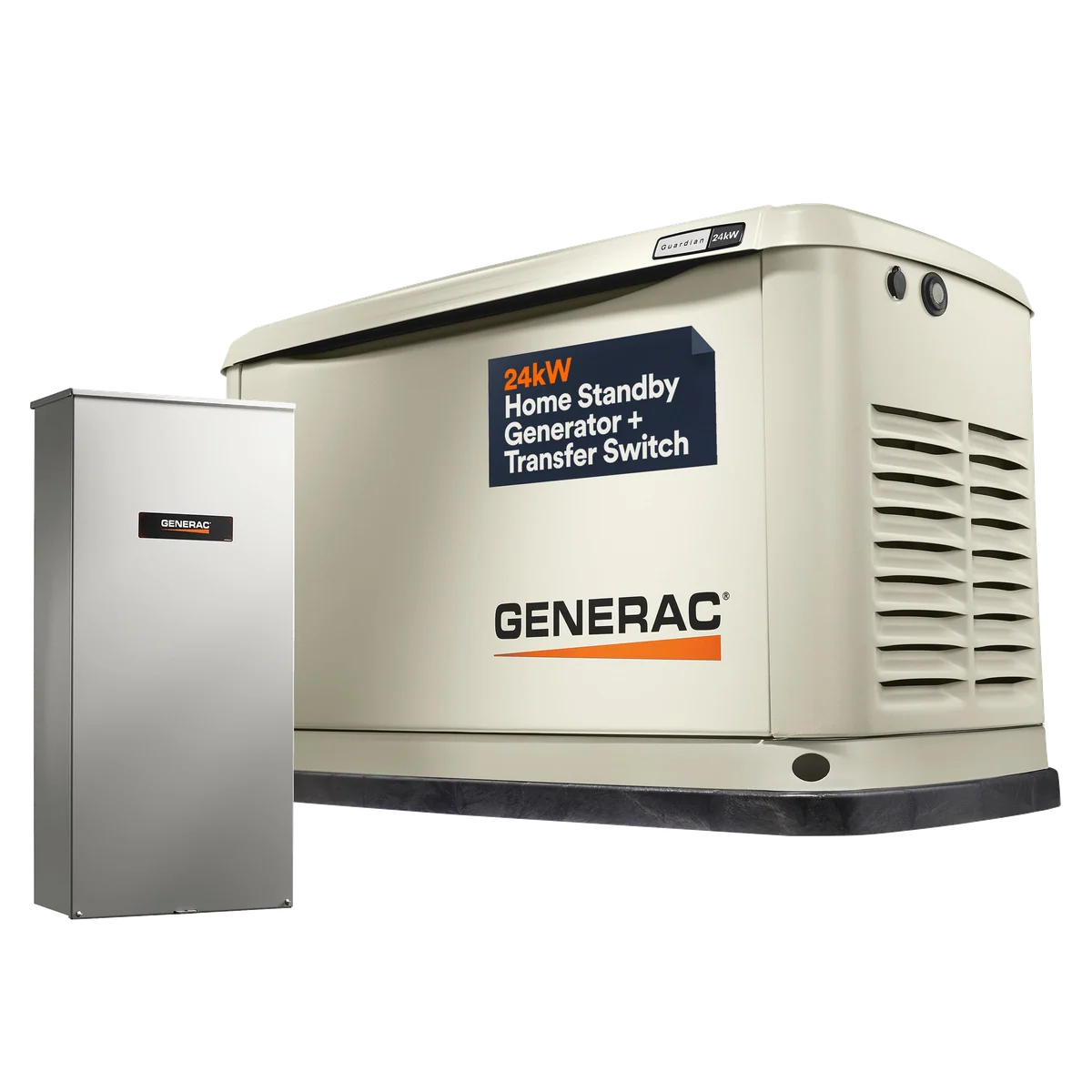
Start with what the money in the crate buys. This is an air-cooled home standby generator that runs off your existing natural gas or propane supply, bundled with a 200 amp service-rated automatic transfer switch in an outdoor aluminium enclosure, free Mobile Link monitoring and a five-year limited warranty. The transfer switch being in the box is the single best piece of value in the package, because it is the expensive half of the electrical hardware and it is also the half with the longest service life: an owner of a smaller Generac switch reports more than a decade of faultless work from his.
Now the parts of the bill the listing does not mention. The starting battery is not included, so the machine cannot run on the day it lands. A 24kW at load wants gas faster than a standard residential meter will pass it, which makes a utility meter upgrade close to a certainty rather than a maybe. Freight handling is a lottery, with three of the eight retained owner reviews describing shipping damage, and one buyer discovering an engine that would not turn over only after eight weeks of waiting on a permit had run his returns clock out. Those are not footnotes. They are line items, and two of them can cost you the price of the machine.
- Buy this way if you will personally run the project: chase the electrician, ring the gas utility, inspect the pallet and open the crate while returns are still live.
- Buy this way if your house is all electric enough that a smaller unit would have you rationing appliances on night three of an outage, because at that point the extra kilowatts are the cheapest part of the decision.
- Pay a dealer instead if you want one invoice and one phone number when something fails, which costs more and is worth every penny to the right person.
- Walk away entirely if what you actually need is a fridge, a furnace fan and a few outlets, because the comparison against a large portable will save you a five-figure decision in about ten minutes.
Five separate people are going to invoice you
The mental model that makes this budget behave is to stop thinking of it as a purchase with some fitting costs attached, and start thinking of it as a small construction job in which the generator happens to be the largest single delivery. Different trades, different invoices, different timelines, and none of them coordinated unless you coordinate them.
| The line | Who sends the invoice | How certain |
|---|---|---|
| Generator and 200A transfer switch | The retailer | Certain, and the only number you can compare before you commit. |
| Freight placement | The carrier | A coin toss: one owner had the pallet set inside his garage at no extra charge, and noted other carriers wanted a lot more than nothing to put it anywhere but the kerb. |
| Starting battery | You, separately | Certain, because it does not ship with one. |
| Cold weather kit | You, separately | Certain in any climate with a real winter; it adds a battery warmer and an oil filter warmer. |
| Pad and site prep | Your contractor | Certain, though the base pad is designed for minimal ground preparation. |
| Install-only electrical labour | A licensed electrician | Certain, and priced by how far the pad sits from your service panel. |
| Gas line and meter | A gas fitter, then the utility | Near certain on natural gas, since a 24kW outruns a standard meter. |
| Propane tanks and first fill | Your LP supplier | Certain if that is your fuel, and it recurs. |
| Permit and inspection | Your county | Certain, and the item most likely to outlast your ability to send the machine back. |
Read that table as a scheduling document as much as a budget. The freight, the battery and the permit all have to be handled by you, in that order, and the permit is the one you cannot hurry.
The gas side is where the surprise money lives
Everyone budgets for the electrician. Almost nobody budgets for the meter. A 24kW air-cooled unit at full load asks for more gas per hour than a typical residential meter is rated to pass, so the utility has to come out and change it. One 24kW owner had his contractor notify the gas company and was moved from a 250 CFH meter up to 425 CFH for roughly three hundred dollars; another had the same swap done free after a phone call and can now run the generator, the furnace and the hot water at once. Both outcomes are real, which means this is a line item you cannot price from the internet and can price with one call to your utility, today, before you spend anything.
The newer electronic meters carry a nastier version of the same problem. They ship with a high-flow cutoff defaulted to 500 CFH, only the utility can reset it, and the utility can lower it whenever it likes. A generator that gets shut down by its own gas meter halfway through a February outage has cost you the entire installation and delivered nothing, so ask what your meter is set to as well as what it passes.
Propane sidesteps the meter and hands you a different bill: tanks, a first fill, and a refill schedule that a multi-day outage will accelerate. It also runs quieter, by the account of an owner whose wife heard nothing from the bedroom on the other side of the wall. If you are still choosing, what each fuel costs you in watts and runtime is the ten minutes that settles it. What neither fuel gives you is a tidy pence-per-hour figure, because consumption tracks how hard the house is loading the engine and your tariff does the rest; the only hard constraint the record establishes is the one at the meter.
Where the thousands are actually saved, and what you buy back with them
The financial case for the retail route comes from an owner who ran it and put it plainly: buy the unit on its own, then find a contractor who will quote install-only labour, and you save thousands against a turnkey package from one of the big generator outfits. That is the whole argument, and it holds. What it does not say out loud is what the dealer's margin was actually paying for, which is somebody else absorbing every one of the following.
The freight claim is yours to run. The owner whose damage claim went smoothly is the one who photographed the pallet, had the trucking company photograph it, and wrote the damage onto the delivery document before signing it. The owner who took delivery of a bent access panel got the run-around chasing a replacement, ended up straightening it by hand, and kept it because his electrician was already booked and a second unit might arrive worse. Neither of those is a repair bill exactly, but both are hours, and hours are what you sold the dealer's margin to buy.
The parts inventory is yours too. One brand-new transfer switch arrived with lug screws of the wrong size and thread, in a size the owner could not match inside a sixty mile radius, discovered after he had already disconnected the house from the utility. He got out of it by cannibalising a lug from an old breaker panel and spent about three hours in the dark being extremely unhappy. Opening the switch and counting the hardware before you kill the main costs nothing and is the highest-return five minutes in this entire project.
And the return window is yours to lose. Permits, gas fitters, pads and electricians all run on calendars longer than a retailer's returns policy, so a permanently installed appliance can pass out of its returns period before any human has attempted to start it. That is exactly what happened to the buyer whose engine turned out to be seized after an eight week wait. Uncrate it and crank it the week it arrives, permit or no permit. Everything else on this page is money; that one is the whole machine.
The listing itself claims the design saves you money on installation, citing removable door panels, a base pad needing minimal ground prep and more efficient wiring. Take that at face value: it is true, and it is about your installer's hours on site. It has nothing to say about the meter, the permit or the pallet, which is where your budget will actually move.
Why 24kW sometimes costs less to install than 20kW
This is the one place the bigger machine is the cheaper decision. Undersize the generator for an all-electric house and the load calculation starts needing load-shed modules to make the numbers work, which installers grumble about precisely because each one is hardware, labour and another thing to fail. The owner who moved up from a fourteen-year-old 17kW unit describes the other side of it: on the old machine he had to limit which appliances ran together, and on the new one there are no limits. You are not buying watts at that point, you are buying the end of load juggling in the dark, and possibly a simpler electrical install into the bargain.
Work out which side of that line your house sits on before you shop, because it is the decision that sets every other number. What you actually need to run and what your air conditioning demands at startup are the two calculations that matter, and the transfer switch vocabulary is what your electrician will be quoting against.
The column nobody adds up: the next ten years
Recurring costs on one of these are modest in isolation and stop being modest the moment somebody else's van has to arrive. Oil and filter are the routine job, and the manual's 1.9 quart figure is optimistic in practice: a 24kW owner doing his first change found it reading overfull at roughly 1.6, and owners generally land between 1.4 and 1.7 depending on how much they pre-fill the filter. Fill short, run it warm, recheck, and see the first service in detail if you are doing it yourself.
Air filter and battery checks come round early, with a six month service being a real thing on these machines rather than a dealer invention. Somewhere near the three year mark the panel goes green plus yellow and asks you to inspect the battery, which means voltage, electrolyte, then clearing the prompt at the keypad. Batteries are the recurring consumable here and they are not always polite about dying: one owner heard a bang loud enough that his wife heard it inside the house, which technicians recognised immediately as a cell letting go, blamed on the older on-board charger's habit of cooking batteries. Budget a battery every few years and read the battery, fuse and cold-kit chain before you pay anyone to diagnose one.
Two failures worth knowing about because they are cheap parts that get quoted as expensive visits. A battery that keeps going flat usually traces to the T1 fuse inside the transfer switch, which is what feeds charging in the first place. Surging, hunting or an overspeed complaint is very often a failed stepper motor, which is a component rather than a catastrophe. Knowing both of those names before you ring anyone is worth more than the warranty on a Saturday, and the fault-code walkthrough covers the rest.
Then there is the cost of chasing the wrong thing. A technician's teardown of a hard-starting air-cooled Guardian, older and smaller than this one but built on the same architecture, found all four valves at essentially zero lash from the factory and the plug gapped at double spec, with compression jumping to about 200 PSI on both cylinders purely from adjusting valves nobody had ever touched. The owner had already spent over fifteen hundred dollars chasing the fault. That is not this model and Specific Load will not pretend it is, but it is the best documented account of what these engines arrive with, and the lesson costs nothing: have your installer check valve lash and plug gap at commissioning, while you are already paying them to be there.
Two cheap habits protect the whole investment. Keep the exercise cycle where you can hear it run, because a generator that has not been heard in a month is a generator you are guessing about. And do not let landscaping close in on it: these units breathe through their enclosure, and installers spend real time telling homeowners not to box them in. A shrub is the least expensive way to cook a five-figure machine.
The risk that does not fit in a spreadsheet
Two things in the record affect what this actually costs you and neither has a dollar figure attached. The first is the generational split among owners. People running Guardians installed in 2018 and late 2024 call them bulletproof; owners of the recent ECM-driven machines tell a different story, including one who counted 138 separate calls, texts and emails and had a working generator for five weeks out of six months, and another watching his dealer and Generac argue about whether a six-month-old engine needs rods or replacing while his house sits without backup. One buyer offered the choice between the older design and the new one on a 24kW deliberately took the older. A next-generation 24kW throwing fault 2780 from day one was traced by installers and the community to firmware rather than wiring. Nothing establishes which design any given crate contains, so treat it as a question for the seller rather than something this page can settle.
The second is what a warranty is worth at the speed the dealer network currently moves. A Florida owner of a much larger liquid-cooled machine has had a dead controller since May: three weeks for his dealer to look at it, six more to quote, then two no-shows, while three other dealers sent techs who confirmed the fault and left. The replies blame technician shortages and consolidation rather than the hardware. That is a different class of unit and it tells you about the network, not the engine. It is still the network you will be phoning. Note where the support stories on this listing that ended well actually came from: the freight damage and the bent panel were both resolved by the retailer's own desk, not by a dealer.
When the cheapest correct answer is a different machine
If the last two sections read like more house than you wanted to remodel, that is a legitimate conclusion and there is no shame in reaching it. A large tri-fuel portable wired to an inlet covers most outages with no permit, no pad and no meter conversation, and the 11,000W tri-fuel unit we looked at is the closest thing on this site to whole-home coverage without an installation. The GENMAX GM9000iED is the quieter, simpler dual-fuel version of the same idea. If your outages are short and what you actually want is a fridge, a furnace fan and silence at two in the morning, the Anker SOLIX F3800 Plus makes a serious case, and the full home backup comparison puts all of them side by side.
One filing oddity worth clearing up while you are here, since it sends people to this page by accident: the retailer lists this generator among power take-off units, which are tractor-driven alternators with no engine of their own. This has an engine, a pad and a gas line, and it never leaves the side of the house. Why those listings are mislabelled is a short and mildly infuriating read.
So what should you do with your money
Ring your gas utility first and ask two questions: what your meter passes, and what it would cost to upsize. Get an install-only quote from an electrician who has seen your panel and your intended pad location. Ask your county how long a permit takes, and compare that number to the returns window on the machine. If all three answers come back liveable, the retail route is a genuinely good deal and our full review of the 24kW Guardian covers what to do on delivery day. If any of them come back ugly, that is not a reason to buy a smaller generator; it is a reason to pay a dealer to own the ugliness, or to buy a portable and keep the five figures.
Frequently Asked Questions
Why won't you just tell me the installed price?
Because the two variables that move it most, the run from your meter and panel to the pad and what your utility charges to pass more gas, are decided within fifty feet of your house, and a national average would be a guess dressed up as a finding.
Does a starting battery come in the box?
No, and in a cold climate the cold weather kit with its battery and oil filter warmers should go on the same order so the machine is not sitting on a pad waiting for a part.
Will the gas company really charge me to change the meter?
Possibly not, since one 24kW owner had the upgrade done free after a phone call while another paid the utility around three hundred dollars to move from 250 to 425 CFH, which is exactly why this is a call to make before you spend anything.
Does buying the generator at retail instead of from a dealer actually save money?
Yes, by thousands according to an owner who bought the unit and hired install-only labour, provided you accept that you are now the person handling the freight claim, the parts inventory and the permit clock.
Does the five-year warranty cover the things most likely to go wrong on this project?
It covers the generator, which means freight damage, a permit that outlasts your return window, missing lug hardware and a gas meter that cannot feed the engine all sit outside it.
Can I install it myself and keep the labour?
No, Generac's own guidance is that a certified and licensed electrician does the work, and the gas side needs its own trade on top of that.
What should I actually spend money on before the truck arrives?
The battery, the cold weather kit if your winters are real, and an hour of an electrician's time to look at where the pad is going, because every one of those is cheaper now than it is as a delay later.
Sources (3)
- Amazon listings and customer reviews
- Owner reports across r/Generator, r/Generac_Generators threads
- Owner and reviewer video, 8 channels