A Generac that will not start is almost always a battery story, and the battery is the one part Generac did not sell you
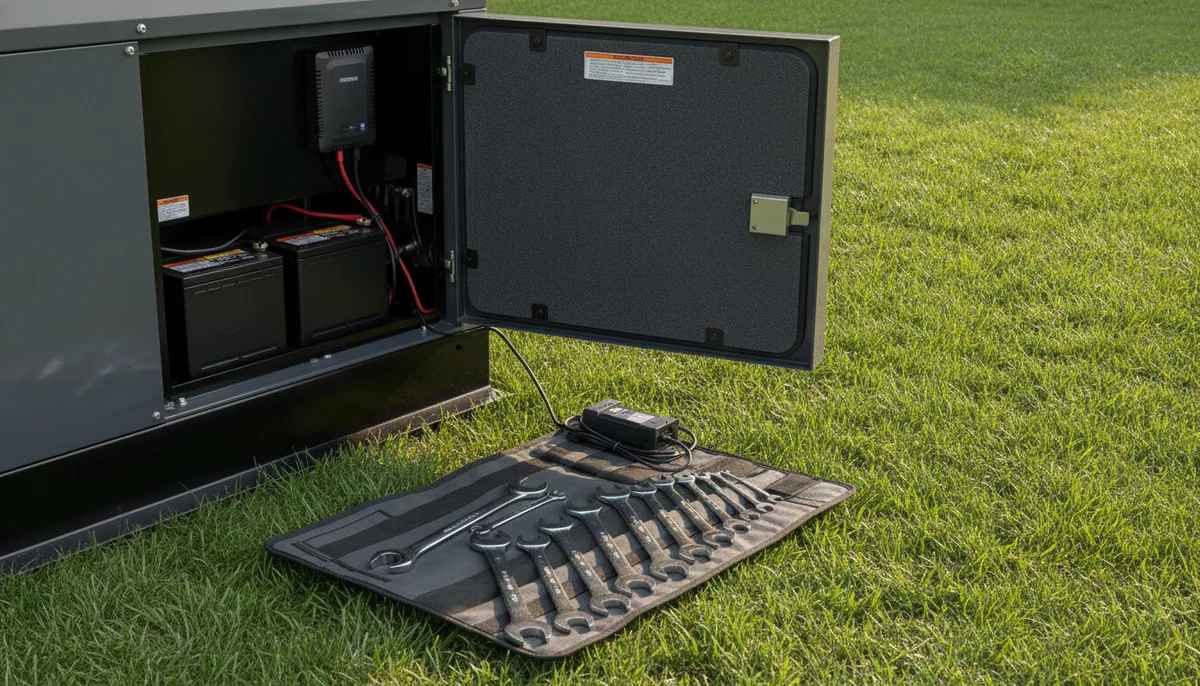
There are two ways a home standby generator refuses you, and they have almost nothing in common. Either the engine will not turn over, or it turns over happily and never fires. Owners describe both as "it won't start", which is why so much troubleshooting advice is useless: half of it is answering the other question. This page is about the first kind, the silent kind, and the silent kind is a battery and charging problem from one end to the other.
You can work through it in this order before anyone gets paid.
- Is there a battery in it, and is it charged? Generac does not ship one with the generator. If the machine is new and has never run, that is not a fault, that is a missing part somebody forgot to order.
- Has this battery gone flat before? A second flat battery in a few months is a charging fault, not a battery fault, and the T1 fuse in the transfer switch is where the charging circuit dies.
- Is it cold? Cranking amps fall and oil thickens together, and owners report these engines failing to turn over well above their stated cold limit.
- Does it crank strongly and refuse to fire? Stop reading this page and go to fuel, because the fault codes and the off, enter, auto reset are the right next step.
One point of housekeeping first, because of how these units get filed. Amazon lists the Guardian under power take-off generators, which are tractor-driven alternators with no engine of their own, and this machine has an engine, a pad and a gas line. If you arrived expecting something that bolts to a three-point hitch, the explanation of that mislabelling is the page you want.
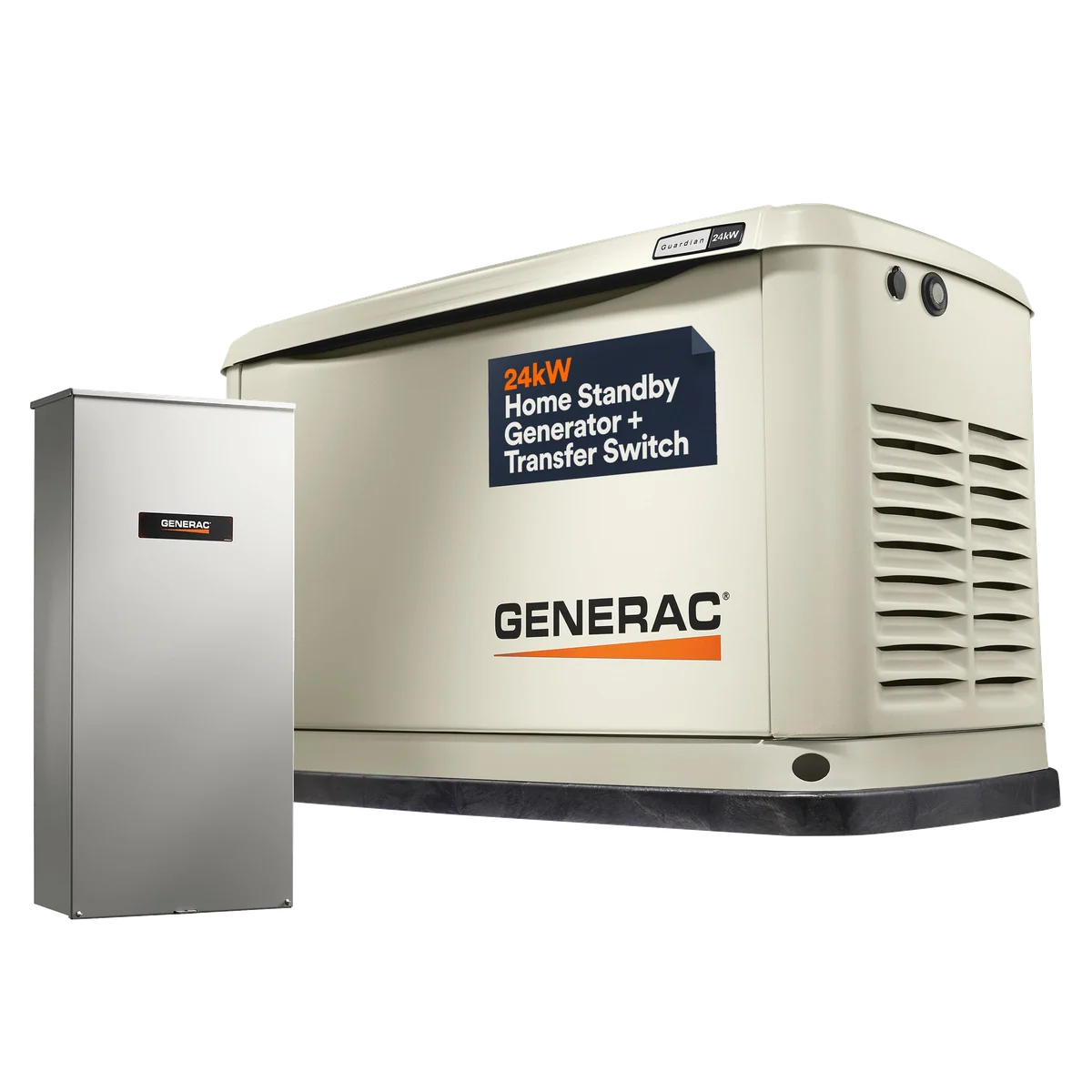
The empty tray: Generac sells you a generator, not a starting battery
It is the single most consequential omission in the box, and the listing does not mention it anywhere. The marketing leads with Wi-Fi monitoring, the 200 amp service-rated transfer switch, True Power Technology and a purpose-built engine assembled in the USA. None of those bullets tells you the machine cannot crank on the day it arrives. The clearest statement of the problem in the entire public record comes from an owner writing his own review: the generator requires a battery, it is not included, and anyone in cold weather country should order the cold weather kit at the same time.
Order the battery before the crate lands, not after. The practical reason is not convenience, it is the return window. One buyer on this listing waited eight weeks for his permit, uncrated the machine when the paperwork finally cleared, and found an engine that would not turn over and appeared seized, by which time returns had long closed. A battery sitting on the shelf when the truck arrives is what lets you crank the thing while you still have somewhere to send it back to.
Why the new battery is flat again six weeks later
This is the failure that sends people to dealers, and it is the one with the most repeatable answer in the record. When a healthy battery keeps dying, the charging circuit has stopped feeding it, and on Guardians that circuit runs through a fuse labelled T1 inside the transfer switch enclosure rather than inside the generator. It is not where anyone looks. It is not where the panel points you. Owners chasing a dead trickle charger have been landing on it for years.
On the current ECM-driven machines there are two separate charging paths, and understanding the pair explains why the fault hides so well. A charger built into the controller keeps the battery topped up from utility power, fed by that same T1 circuit, while an alternator in the flywheel charges only when the engine is actually running. Lose T1 and the weekly exercise cycle keeps putting a little charge back, which is enough to make the generator look fine for weeks while the battery slowly loses the war. The failure surfaces during an outage, when the machine is asked to crank cold on a battery that has been running on partial charge since spring.
| What the machine does | Where the record points |
|---|---|
| Nothing at all, brand new install | No battery fitted, or fitted and never charged. Generac does not supply one. |
| Single click, then silence | Battery voltage under load. Charge it off the machine and test it rather than guessing at the terminals. |
| Cranks slowly, gives up | A tired or partly charged battery, and in winter a machine that needed the cold weather kit. |
| Second flat battery within months | The T1 fuse in the transfer switch, which is what feeds the charger. |
| Panel showing green and yellow together | The scheduled battery inspection prompt, not a failure. Check it, then clear the prompt at the keypad. |
| Cranks strongly, never fires | Not a battery problem. Fuel selector position, gas supply and pressure come first. |
The cold weather kit is a battery accessory wearing a coat
People buy the kit imagining it warms the engine. What it actually does, in the teardown footage of a Guardian with one fitted, is heat two specific things: a pad on the oil filter and a heater tucked underneath the battery. That is the whole product, and both halves exist to make a cold start possible. A cold battery delivers a fraction of its cranking current at the same time that cold oil is asking the starter for considerably more of it, and the two curves meet somewhere below freezing.
Then discount the rating on the box. One owner whose unit is specified to start down to five below zero found it would not turn over until the air had climbed above eight degrees above. Treat the published cold limit as a laboratory figure achieved with a fresh battery and correct oil, and treat your own winter as the number that matters. If you are north of where frost is occasional, order the kit with the battery and be done with it.
These batteries can let go, and the charger has a history
This is the part of the subject that deserves gloves and eye protection rather than a shrug. An owner of a long-serving Guardian went to run his machine manually and heard a bang loud enough that his wife heard it from inside the house, which technicians in the thread recognised immediately as a battery cell failing, together with the advice to neutralise the spilt acid with baking soda before it eats through the sheet metal of the enclosure. The cause named there is not mystery: the older on-board charger design had a reputation for cooking batteries, and the same commenter notes that newer variants do not do this.
Owners who did not trust that charger solved it the blunt way, tapping utility power at the machine and fitting a proper battery maintainer instead. That is a reasonable move on an older unit and an unnecessary one on a recent one, and knowing which you have is worth more than either opinion. If your battery is boiling dry between inspections, or the case is warm and swollen, you are looking at a charging fault and not a battery that simply got old.
The maintenance that actually keeps it charged
Set the exercise cycle to weekly and leave quiet test mode switched off. The point is not the engine, it is that you hear the machine run once a week and therefore know it can, which is a free weekly test of exactly the circuit this page is about. A generator exercising silently at 3am is a generator whose failure you will discover during a storm.
Around the three-year mark the panel adds a yellow light to the green and asks for a battery inspection, which means checking voltage and electrolyte level and then answering the service prompt at the keypad to clear it. Answering the prompt without doing the inspection is a habit worth not forming. On the connectivity side, be clear about what you are getting: Mobile Link watches and reports, and the single most common real job it does in owners' hands is pushing a notification that the battery is failing. That is genuinely the most useful alert the system could send, and it is also not remote control, since owners are still asking for the ability to start the machine from a phone and for a wired indoor panel.
If a four-digit code is showing, write it down before you touch anything, then open the lid, select Off, press Enter to clear the fault and select Auto. An electrician who demonstrates that reset adds the detail that saves a Saturday, which is that the lid keys are common across these machines, and his comment section supplies the necessary objection: clearing a code is not the same as fixing whatever set it.
What is not a battery problem, no matter how it feels
A machine that cranks strongly and will not catch has fuel or spark trouble, and throwing a new battery at it is money set on fire. Check the fuel selector position first, because it is a lever and levers get left wrong: a technician tearing down a hard-starting Guardian found it set to natural gas on a house plumbed for propane, a configuration that overfuels and runs the engine hot. If you are still deciding which fuel to plumb, what each one costs you in watts and runtime is the place to settle it.
Beyond fuel, the common no-start with an overcrank code is a repair genre of its own rather than a battery symptom, and the systematic walk through a cranks-but-will-not-start Guardian covers the same ground in order. Surging, hunting or an overspeed complaint usually traces to a failed stepper motor, which is a part rather than a service contract. And on the newest ECM machines, some faults are neither mechanical nor electrical: a next-generation 24kW threw fault 2780 from the day it was commissioned, with the installers, a general manager and the wider owner community all landing on firmware rather than wiring.
Buying the machine that arrives without its battery
None of the above is an argument against the generator. The 24kW Guardian is a competent whole-house machine, and the strongest case for it comes from an owner replacing a fourteen-year-old 17kW unit that had served him well: his house is all electric apart from the furnace, the old machine forced him to ration which appliances ran together, and on the new one there will be no limits. That is what stepping up buys, and it is a real thing to want.
The honest drawback is that everything painful about this purchase happens before anyone switches it on. The battery is missing, three of the eight retained customer reviews describe freight damage ranging from a bent access panel to a unit too wrecked to unload, one transfer switch arrived with lug screws of the wrong size and thread and stranded its owner with his main already disconnected, and the permit clock routinely outlasts the return window. A 24kW also draws more gas than a standard residential meter passes, so a utility meter upgrade is close to a certainty in your budget. Specific Load's position is that this is a fine machine to buy at retail if you are running the project yourself, and a bad one to buy if you want a single company to blame. The full review takes that argument apart in detail, the installed cost breakdown puts numbers on the trades, and the first oil change is the other job where the manual and the owners disagree.
If reading all of that has made the whole project sound like more house than you wanted to remodel, the alternatives are honest ones. A large tri-fuel portable wired to an inlet covers most outages without a permit, a pad or a gas meter conversation, and the 11,000W tri-fuel unit we looked at is the closest thing on this site to whole-home coverage without an installation; if your outages are short and your priority is a fridge and silence at 2am, the Anker SOLIX F3800 Plus makes a serious case. The standby versus big portable comparison is the five-figure decision worth making slowly, and our full home backup lineup puts every option side by side.
Frequently Asked Questions
Does a Generac Guardian come with a starting battery?
No, the battery is a separate purchase and the generator cannot crank on the day it arrives without one.
Why does my battery keep going flat after I replaced it?
A repeat flat battery points at the charging circuit rather than the battery, and the T1 fuse inside the transfer switch is the component that feeds it.
Where is the T1 fuse?
It sits inside the transfer switch enclosure rather than in the generator itself, which is exactly why so few owners find it.
What is actually in the cold weather kit?
A heating pad for the oil filter and a heater underneath the battery, which together are what make a cold start possible on a machine that would otherwise crank too slowly.
Can I trust the stated cold-start temperature?
Treat it as a best case, since at least one owner with a unit rated to start at five below zero could not get it to turn over until the air was above eight degrees.
Why is the panel showing a green light and a yellow light at the same time?
That is the scheduled battery inspection prompt rather than a fault, so check voltage and electrolyte and then clear the prompt at the keypad.
My battery made a loud bang and there is liquid in the enclosure, what now?
That is a failed cell venting acid, so wear gloves and eye protection, neutralise the spill with baking soda before it eats the sheet metal, and treat the charger as a suspect rather than just fitting another battery.
Should I fit my own battery maintainer instead of trusting the built-in charger?
Owners of older units who did not trust the on-board charger did exactly that by tapping utility power at the machine, though newer variants are reported not to have the cooking problem that made it necessary.
Can the app start the generator for me when I am away?
No, Mobile Link monitors and sends alerts but cannot start the machine, and its most useful alert in practice is the one telling you the battery is dying.
The engine cranks hard and will not fire, is that still the battery?
No, strong cranking rules the battery out, so check the fuel selector lever, the gas supply and the pressure before anything else.
Sources (3)
- Amazon listings and customer reviews
- Owner reports across r/Generac_Generators, r/Generator threads
- Owner and reviewer video, 11 channels