A power station that reads full and will not switch on is usually locked out, not dead
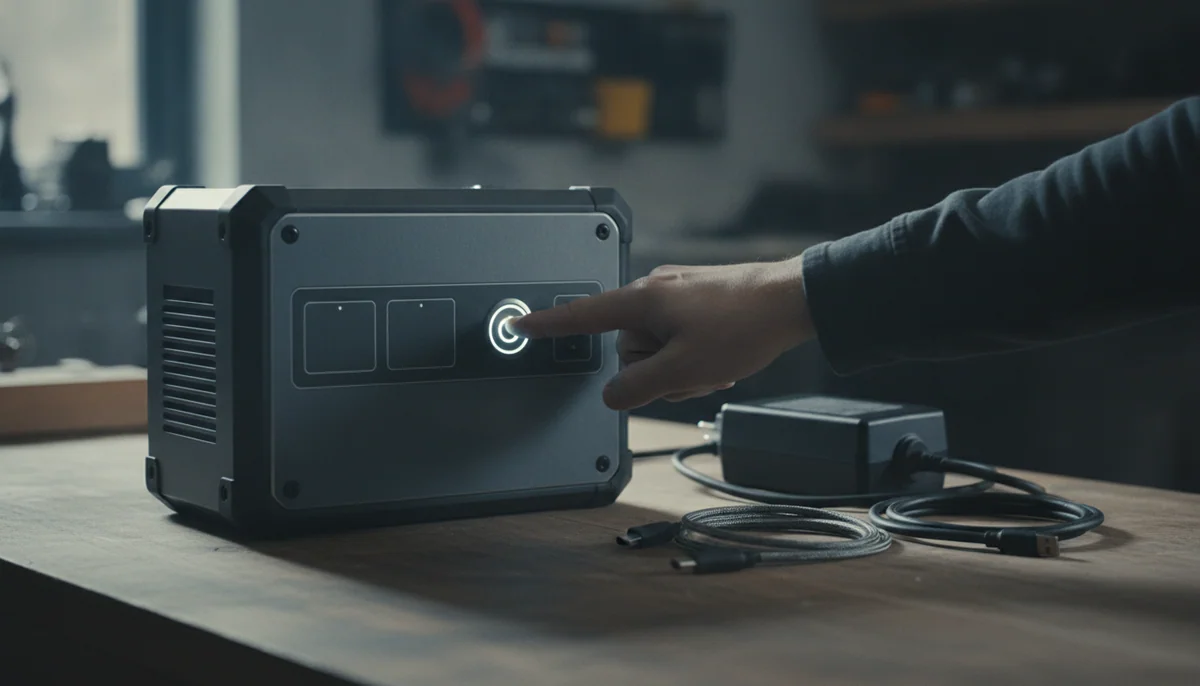
There is a particular kind of dread that arrives when a three-thousand-dollar battery sits there with a bright, confident number on its screen and will not push a single watt through a socket. It feels like a catastrophic failure. It usually is not one. Power stations are not appliances with an on switch, they are computers with a battery attached, and a computer that thinks something is unsafe, unsupported or unattended will quietly decline to do the thing you asked without ever telling you why.
That is the good news and also the frustrating part, because almost none of the refusals are documented where a panicking owner would find them. The most common causes are a power button held for two seconds instead of ten, an output bank that is switched off separately from the unit itself, an input mode that deliberately disables most of the outlets while it is running, a solar array outside the voltage window the port will start on, and a pack that is too cold to accept a charge. Specific Load found every one of those in the public record for the three stations this page sells, and in two cases the manufacturer states the behaviour plainly in its own listing while the marketing never mentions it once.
The bad news is the smaller category underneath: units that arrive with a battery management fault, or that report a full charge and then collapse to nothing under a modest load. Those are not fixable by procedure, and the worst mistake you can make with one is to spend six weeks being patient with it.
Read the symptom precisely, because they have different answers
People arrive at this problem describing it four different ways, and the four have almost nothing to do with each other. Before you touch anything, work out which one you actually have.
| What you are seeing | The likely cause | What to do about it |
|---|---|---|
| Screen lit, charge looks fine, nothing comes out of any socket | The output bank is off, or the input mode you are in has disabled it | Press the AC or DC button, not the main power button, and read the input rules below |
| Screen black, no lights, no response | Deep sleep or a protective lockout, occasionally a genuine fault | Long press well past the point it feels pointless, then leave it on a charger for half an hour and try again |
| Runs for a few minutes, then everything shuts off | A socket or leg ceiling below what you plugged in, not a flat battery | Move the load to a different output and check the rating of the one you were using |
| Reads a healthy percentage, then drops to empty in seconds | State of charge estimation or cell balancing, which is a hardware problem | Stop testing and open a return while you still can |
Only the last of those is a reason to be frightened. The first three are procedure.
Hold the button longer than feels sensible, then hold it again
Most stations in this class want a long press to wake from a deep sleep state, and most owners release at about two seconds because that is how long a phone takes. Among the accounts of Anker units that would not come to life despite showing a charge, at least one resolved into exactly that: nobody had held the power button down long enough. It is the single cheapest thing to rule out and the one people are most embarrassed to have missed, which is presumably why it stays unruled-out for days.
Two neighbouring traps live in the same place. A screen that has timed out looks identical to a unit that is off, so tap a button before you conclude anything from a dark display. And on nearly every station the main power button and the output buttons are separate controls: the unit can be fully awake, fully charged, showing you a lovely percentage, and still have its AC bank switched off, at which point a plug in the socket does nothing at all. If your problem is that the machine is clearly alive and the sockets are dead, that is where to look before anything else.
The input you are charging from can switch your outlets off
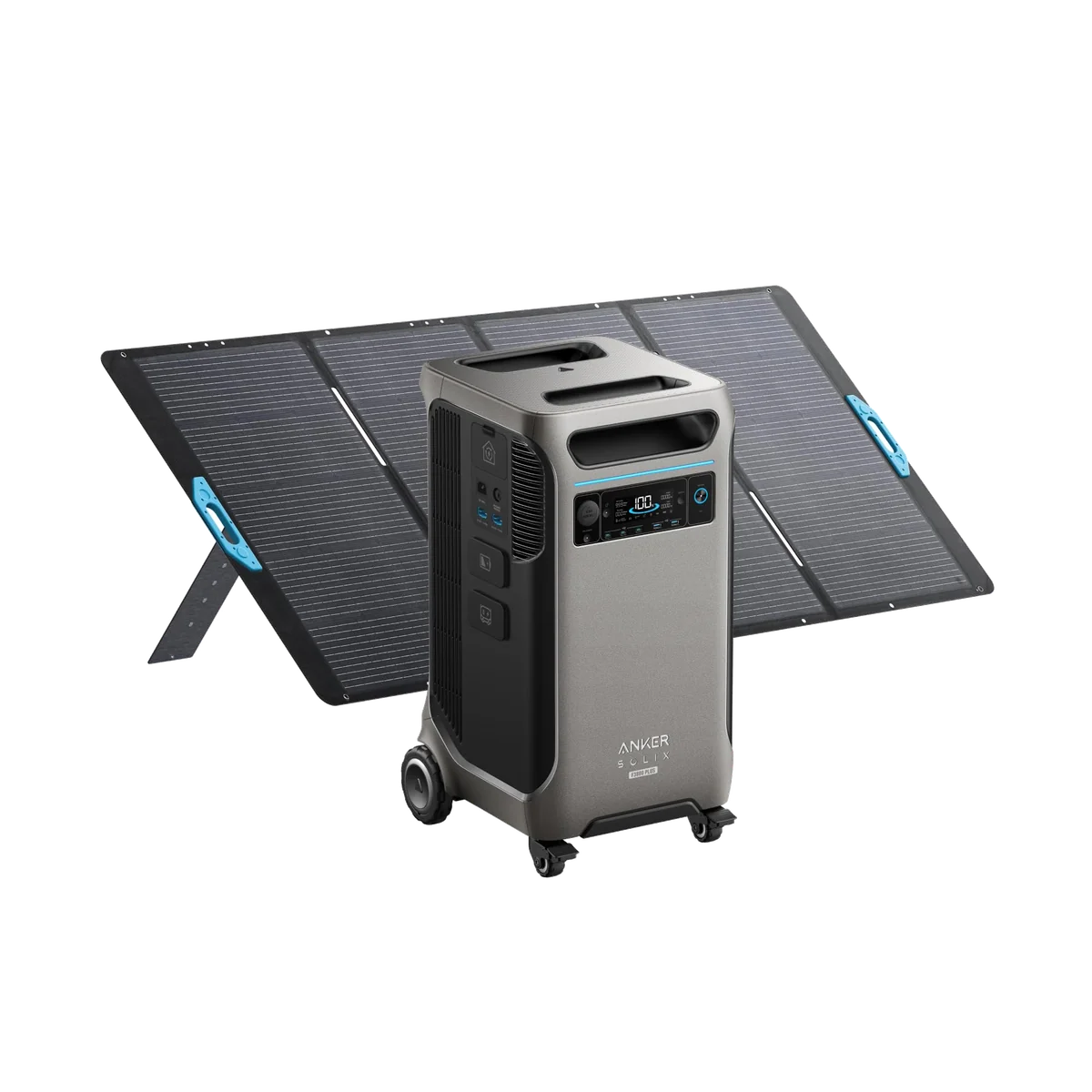
This is the most useful thing on the page and it is buried in a manufacturer's own FAQ text rather than in any warning label. On the Anker SOLIX F3800 Plus, while the unit is recharging through its 120V AC input, only its three 120V UPS outlets will run anything. Everything else on that large and reassuring bank of sockets is dead by design for the duration of the recharge. Feed it from a 120V generator through the high power port instead and the picture narrows further: only the TT-30R will power a load. Give it 240V through the same port and you get the L14-30R and the TT-30R back.
Read that sequence again with a hurricane in mind. An owner plugs the station in to top it up before the weather arrives, plugs the fridge into the nearest available outlet, comes back an hour later and finds a warm fridge, a healthy charge reading and a machine that appears to have failed. Nothing has failed. The machine did exactly what its documentation says it does, and the documentation is not on the box, the app splash screen or any of the marketing bullets. There is a related and equally undocumented effect further up the load curve: an owner reports that the surge headroom shrinks when the unit is charging and discharging simultaneously, so a load that starts happily on a full battery can trip the unit while it is being fed.
If your symptom is that sockets went dead while a charger was connected, unplug the input, wait for the unit to settle, and try the same load again. If it works, you never had a fault.
Three inputs, three completely different ways to refuse a charge
"It will not charge" is not one problem, it is three, and which one you have depends entirely on where the electricity was supposed to come from.
| From a wall socket | From solar | From a car | |
|---|---|---|---|
| Anker SOLIX F3800 Plus | 120V AC input, and most outlets go dead while it runs | Two ports, each 11 to 165V at up to 17A | Not the point of this machine |
| VTOMAN Jump 600X | 170W AC input, roughly two hours on its own | Up to 120W MPPT, panel sold separately | 12V car charging supported |
| EcoFlow TRAIL Plus 300 DC | No AC input at all, only USB-C at up to 140W | 110W maximum | 110W maximum |
Take the last row first, because it accounts for a surprising share of the panic. The TRAIL Plus 300 cannot be charged from a house socket directly, and it cannot power anything with a moulded plug on the end of it. EcoFlow's listing concedes the second half of that in an asterisk at the end of its sixth bullet and never mentions the first half at all; it took an owner to write the sentence out loud, that there is no way to charge this thing from a house outlet unless you feed it through a USB-C converter. If that is your situation, nothing is broken, you have bought a large DC power bank with a very good lamp on it, and our full review of the TRAIL Plus 300 spells out what it is and is not.
Solar is where the failures look most mysterious and are most often arithmetic. Each of the F3800 Plus solar ports starts at 11V and stops at 165V, at up to 17A. A single small panel whose open circuit voltage sags under cloud never gets over the floor, so the port sits there reading zero on a bright-looking day. Too many panels wired in series clears the ceiling and the port protects itself by shutting down entirely. That window is the entire reason the Plus exists, incidentally: the earlier F3800 had a window narrow enough that ordinary third-party arrays were effectively hobbled and only Anker's own low-voltage panels delivered anything like the rated input. If you are wiring an array to any of these, work out the string voltage before you blame the machine, and our guide to sizing panels to a power station does that arithmetic properly.
Then there is the dullest cause of all, which is the cable and the socket it goes into. One VTOMAN owner describes an input port tight enough that the plug had to be fought out of it, and on the last attempt the plastic collar stayed behind in the port, leaving a cord too questionable to use and a station that consequently took no charge from anywhere. Before you conclude the charging circuit has died, look into the port with a torch and try a different lead.
Cold is a lockout, not a fault
Lithium iron phosphate cells will not accept a charge below freezing, and the battery management system enforces that rather than letting you damage the pack. The presentation is exactly the one that brings people here: a station that reports a normal charge level, shows an input connected, and takes nothing. VTOMAN's manual, quoted by a full-time owner who spent a year living with the unit in variable temperatures, gives an operating range of 32 to 113 degrees Fahrenheit. A garage in January and a car boot in August are both outside that on a regular basis. Bring it indoors, give it a couple of hours to reach room temperature, and try again before you do anything else.
When the number on the screen is the thing that is wrong
Every station guesses. What the display shows is not a measurement of stored energy, it is an estimate produced by watching voltage and current, and estimates drift. Usually the drift is harmless. Occasionally it is the fault itself, and that pattern is worth naming because it is the one that will strand you.
The signature is a healthy reading that collapses without warning. A VTOMAN owner went to bed with the pack between 45 and 75 per cent, running nothing heavier than a small fridge on 12V, and woke to a dead unit and a warm fridge with the screen reading LOW. On Trustpilot the same shape recurs, including a one-year owner watching a full reading fall to LOW mid-trip and a buyer who had two units fail inside a month with the charge dropping from 80 per cent to zero in under a minute. Different models, different platforms, the same behaviour, which makes it a pattern rather than bad luck and points at state of charge estimation or cell balancing rather than a flat battery.
A gentler version turns up on the EcoFlow: a TRAIL Plus that would only ever charge to 96 per cent out of the box, which its owner put down to shelf age and lost capacity. That one is annoying rather than dangerous. The collapse-to-nothing version is dangerous, and if a CPAP or an oxygen concentrator is the reason you own a battery at all, treat any instance of it as disqualifying and read what medical backup actually demands instead of nursing the unit along.
There is also an honest, non-faulty reason a battery seems to empty faster than the label promised, which is that nameplate watt-hours and delivered watt-hours are different animals once the inverter takes its cut. If your complaint is really about runtime rather than refusal, the usable capacity arithmetic is the page you want.
Storage is the fault most people cause themselves
Anker publishes storage instructions for the F3800 Plus that read like a chore list and are in fact the difference between a station that wakes in September and one that does not: turn the main power button off, keep it dry and cool, check the level every week, recharge whenever it drops below 30 per cent, and take it to 100 per cent every three months. A unit bought in April, pushed into a garage and pulled out during an outage in October has been operated outside those instructions for six months. A pack that has been left to drift down to nothing and sat there can end up in a protective state it will not simply walk out of.
If you are in that position, put it on a charger and leave it there for a good half hour before you conclude anything. One VTOMAN owner found the unit completely dead, no display and no lights, gave it a couple of days and found it working again. Which brings us to the least comfortable advice on this page.
An intermittent recovery is not a repair
A station that comes back after two days has not been fixed. It has demonstrated that it will do this again, and it has spent two days of your return window proving it. Some of what you meet in this category is genuinely not user-serviceable: the TRAIL Plus that arrived showing error 263, apparently a battery management fault, was never going to be talked round, and its owner's support experience ran to a quick phone pickup, an escalation email and then two weeks with no replacement shipped.
So the rule Specific Load would apply is blunt. Run the procedural checks on this page in an evening, not over a fortnight. If they do not resolve it, use the retailer's returns process rather than the manufacturer's warranty queue, because a return is a transaction and a warranty claim is a request. The Anker record is instructive on both halves: there are several accounts of units that arrived dead or refused to wake, and every one we found ended in a free replacement with unprompted praise for the support handling, including from owners who had nothing else nice to say. That is a good outcome attached to a process that still cost people weeks. The general argument about what a budget brand's paperwork is actually worth is set out in our piece on warranties and parts.
None of this applies if what is sitting in your garage burns fuel. A gas machine that runs but delivers nothing at the sockets is a different fault tree entirely, covered in why a running generator produces no power, and one that will not start at all belongs on the starting checklist.
The three on this page, and how each of them goes quiet
These are the stations this article is attached to, and each fails in a way the others do not. All three verdicts come from our own reviews, and all three drawbacks are the reason those verdicts carry conditions.
Anker SOLIX F3800 Plus. Buy it if you need genuine split-phase 240V out of a single box and intend to grow the system later, and buy it bare rather than in the panel bundle, because the widened solar input is the whole point of the Plus and the 400W panel welded to this listing supplies about an eighth of what the machine will swallow. The drawbacks are real and they matter here: the socket sold as a 30A RV outlet is capped at 3,000W, which is why one owner's camper air conditioning trips the unit after roughly five minutes even with a soft start fitted, and the charging behaviour that kills most of the outlet array is the single most common reason an F3800 looks broken when it is not. At 136 pounds it also goes where you first put it and stays there. The full review lays out the case and the caveats.
VTOMAN Jump 600X. Buy it as a light 268.8Wh LiFePO4 battery for a laptop, a router, a CPAP without the humidifier or a night of camp lights, and buy it somewhere the retailer rather than the manufacturer owns your return. Two drawbacks bear directly on this page: the 12V output cuts out well below 150W with nothing in the listing to tell you where its ceiling is, which reads as a broken unit until VTOMAN's own support explains that the AC side will run the load the DC side refused, and the brand sits at 2.7 on Trustpilot across more than 400 reviews with half of them at one star, below every competitor you would cross-shop. The 1200W figure on the front is a voltage reduction trick with sensitive electronics explicitly excluded, not usable surge. Our review goes through all four claims on the lid.
EcoFlow TRAIL Plus 300 DC. Buy it only if you want an excellent hooded camping lantern welded to a large USB-C battery and your kit is entirely DC. The drawbacks are severe for anyone who came here with a charging problem: there is no AC outlet and no way to charge it from a wall socket, and three of the eight owners on record received a unit with an out-of-box fault, including the error 263 case. If you wanted something you can plug an appliance into, this is not it, and the wider field of stations with real outlets is where to look.
One last framing worth keeping. A battery that occasionally refuses is still a machine that starts instantly, runs indoors and makes no carbon monoxide, and none of the lockouts above exist on a petrol engine. What exists there instead is a carburettor, a fuel valve and a pull cord, which is a different set of ways to be let down. Most people who plan seriously for an outage end up owning one of each, and the reason is precisely that their failure modes do not overlap.
Frequently Asked Questions
The display says the battery is full, so why is nothing coming out of the sockets?
Either the output bank is switched off by its own button rather than the main power button, or you are charging the unit through an input that disables most of the outlets while it runs, which is exactly what the Anker does on its 120V AC input.
How long should I hold the power button before deciding it is dead?
Far longer than a phone takes, because at least one Anker owner's unresponsive unit turned out to be nothing more than a button released too early.
Can a power station be too cold to charge?
Yes, lithium iron phosphate packs will not accept a charge below freezing and the battery management system blocks it, which looks identical to a broken charging circuit until you bring the unit indoors and let it warm up.
It came back to life after sitting for two days, so is it fixed?
No, an intermittent recovery is a warning that it will happen again, and the two days it took to recover came straight out of your return window.
Why will my station not take anything from a solar panel on a bright day?
Almost always because the array is outside the port's voltage window, which on the Anker means below 11V or above 165V, and a port that sees either simply sits at zero rather than warning you.
Why does the charge reading collapse from most-of-a-tank to nothing in seconds?
That is a state of charge estimation or cell balancing fault rather than a flat battery, it recurs across models and platforms, and it is the one symptom on this page that should send you straight to a return.
My EcoFlow TRAIL Plus will not charge from the wall, is it faulty?
No, it has no AC input of any kind and fills only over USB-C, from a 12V car socket or from solar, which the listing never states outright.
The 12V socket keeps cutting out under a load the station should handle, what is wrong?
The DC output has a ceiling well below the unit's headline wattage, and on the VTOMAN the fix confirmed by the company's own support was simply to run the same load from the AC side instead.
Should I claim on the warranty or send it back to the shop?
Send it back to the shop wherever that option still exists, because a return is a transaction you control and a warranty claim is a request that waits in somebody else's queue.
Will storing it in the garage all summer stop it working?
It can, which is why Anker asks owners to check the level weekly, recharge below 30 per cent and take it to full every three months rather than leaving it to drift down to nothing.
Sources (4)
- Amazon listings and customer reviews
- Owner reports across r/Portable_PowerStation, r/AnkerSOLIXCommunity threads
- Thesolarlab — Article — www.thesolarlab.com
- Trustpilot — Article — www.trustpilot.com