Your backup generator will almost certainly die on the shelf, and the fuel valve is what decides whether it does
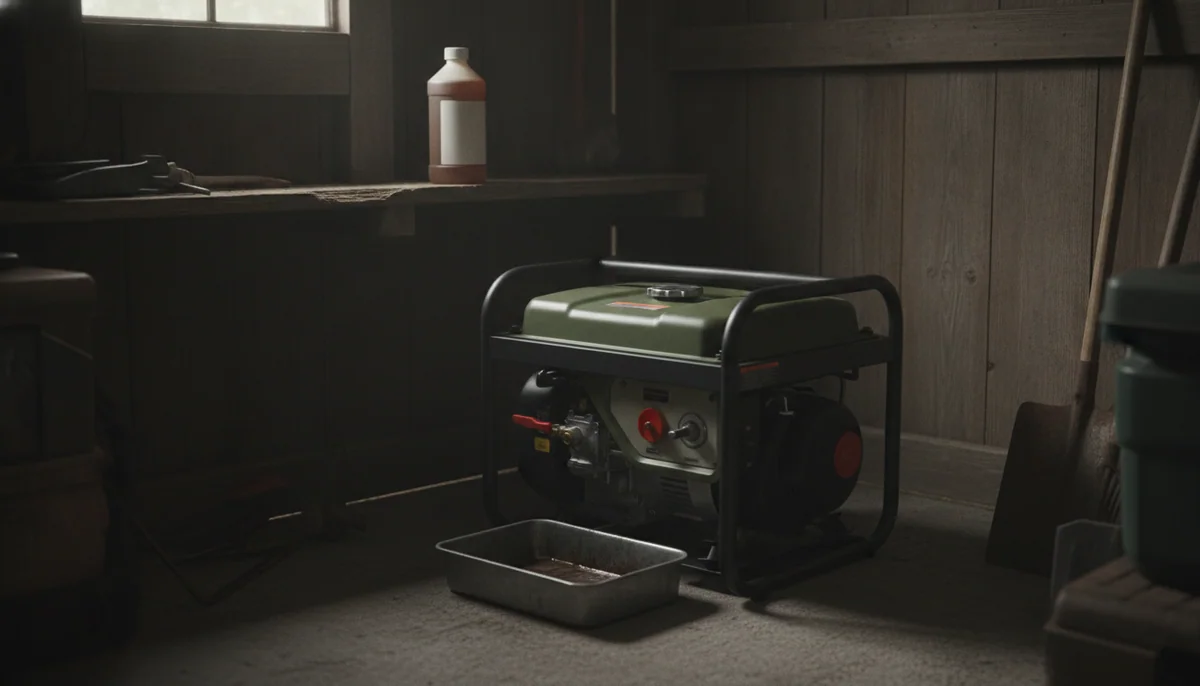
Here is the pattern that ought to change how you think about the machine in your garage. Two GENMAX GM9000iED units were assembled and started in January by one owner, who was impressed with both, and by spring one would not respond at the control panel at all and the other would only start on the recoil cord. Another buyer took delivery of the same model in June, left the carton sealed until February, got a few minutes of running out of it on both fuels and then nothing. A PowerSmart 4400 ran an RV air conditioner for about forty five minutes exactly as the manual described, sat for three weeks, and then ran thirty seconds and cut out with the overload light on and nothing plugged into it. An AMERISUN 4500 was bought in May and unboxed in August, at which point it ran for eight to ten seconds and shut off, by which time the return window had closed.
None of those machines broke while working. They broke while sitting, which is the exact thing a backup generator is bought to do. And sitting is not a passive state for a small four stroke engine: petrol in a carburettor bowl evaporates unevenly, leaves its heavier fractions behind as a gum, and that gum plugs passages narrower than a pin. This is not a controversial diagnosis. On r/Generator, a complaint about carburettors dying in four months got answered with a chorus of storage advice rather than sympathy, because the room had already agreed on what the cause was.
What the room does not agree on is the cure, and that disagreement is where most of the internet's storage advice goes wrong. One camp says buy ethanol-free fuel. The other says ethanol-free is overrated and what actually matters is closing the fuel valve and letting the engine run itself out before it goes on the shelf. The two longest serving owners in that thread, at eight and ten years on the same machines, both credit draining, and one of them has only ever run California's mandatory-ethanol pump fuel. Specific Load reads that as decisive. Ethanol-free petrol is better fuel and worth buying if it is convenient. Draining is the habit that the decade-long owners actually have in common.
If you already run your generator monthly for real work, none of this is news and you can skip most of what follows. If your machine is dual fuel and you only ever feed it propane, you have bought your way out of the problem and the rest of this page is a description of somebody else's trouble. Everyone else, meaning the large majority of people who own a generator specifically so they will not have to think about it, is the reader this was written for.
Ninety seconds of doing it properly
The whole procedure is short enough that the reason people skip it is not effort, it is that nobody told them the order. Shutting the engine off with the switch and then closing the fuel valve leaves the bowl full, which is the thing you were trying to avoid. The valve goes first, while the machine is still running, and you wait for it to die on its own.
| Step | What it actually does | How long |
|---|---|---|
| Close the fuel valve with the engine still running | Stops the tank feeding the bowl, so the engine consumes what is already in the carburettor instead of leaving it there | Seconds |
| Let it stall by itself | Confirms the bowl is genuinely empty rather than assumed empty, which is the difference between doing this and thinking you did | Thirty to ninety seconds of idling |
| Open the float bowl drain screw, if the machine has one | Clears the small amount the engine could not pull through, and lets you see what colour the fuel is | A minute with a screwdriver and a rag |
| Switch off, and close the fuel cap vent if there is one | Keeps petrol vapour inside the tank instead of inside your garage | Seconds |
| Deal with what is still in the tank | A tank varnishes far more slowly than a bowl, but stabilise it or siphon it rather than pretending it is inert | One trip to the shed |
Two of those steps assume hardware your generator may not have, and that is worth checking before you need it rather than during. Owners do go hunting: one r/Generator thread exists purely because somebody could not find the fuel drain valve on their inverter and wanted to know whether it had one at all. If yours has no shutoff valve, the fallback is to disconnect the fuel line at the carburettor and let the engine finish what is in the bowl, which is messier and does the same job.
The cap vent is the other one people get bitten by, in both directions. On the LIFAN 4800, an owner found the closed vent contains fumes better than his own jerry cans, which is genuinely useful if the machine travels inside a camper. The same owner also found that leaving it closed when you go to run on petrol starves the engine and shuts it down, which reads exactly like a defect and is not one. Closed for storage, open for running, and if a machine of yours is refusing to start after a spell in the garage, our page on the fuel valve, the hidden battery plug and the closed cap vent walks the rest of the ladder before you conclude anything expensive.
The ethanol argument is real, and it is the second question
It is worth being precise about what ethanol does, because the folklore around it has outgrown the chemistry. Ethanol is hygroscopic, it attracts water, and water in a fuel system is corrosive and separates out over time. That is a genuine reason to prefer ethanol-free petrol in something that sits. What ethanol is not is the sole author of the gum that blocks a jet, which forms from petrol going stale whether or not there is alcohol in it.
Which is why the evidence lands where it does. If ethanol were the mechanism, a ten year owner running nothing but California pump fuel would not exist, and he does. The honest hierarchy is that draining beats stabiliser, stabiliser beats nothing, and ethanol-free is a genuine improvement stacked on top of whichever of those you are actually doing. Buying premium fuel and then leaving it in the bowl for eight months is the expensive way to get the same result as buying cheap fuel and leaving it in the bowl for eight months.
Stabiliser deserves its defenders, though, and the dissenting camp is not made of fools: several owners report a decade of trouble-free running on ordinary pump fuel with a stabiliser in it. The practical read is that stabiliser is what you use on the fuel that stays in the tank, which you cannot run out through the engine, and draining is what you do to the fuel that lives in the carburettor, which you can. They are answers to two different questions and most arguments about them are two people answering different ones.
The awkward part: a drained generator can still be dead
This page would be more persuasive if the storage routine were a guarantee, and it is not, so here is the counter-evidence stated as plainly as the rest.
The PowerSmart 4400 that quit after three weeks failed on propane as well as on petrol, which rules varnish out entirely, because propane cannot gum a bowl it never enters. Something in the control or sensing side declared an overload that was not there, three times over. That failure has a different shape and a different diagnostic path, which our page on why a generator trips its breaker or shuts down works through, although a machine throwing overload at zero load has skipped most of the rungs on that ladder. On the GENMAX, the equivalent trap is the carbon monoxide sensor: one owner's unit would not run more than a few minutes on either fuel and the fault turned out to be a defective CO sensor, replaced under warranty, after which it ran fine. On a machine whose symptom is "starts, then quits," that sensor is a leading suspect and it is a warranty part.
And the most uncomfortable data point of all belongs to an AMERISUN owner who did everything this page recommends. He started it, exercised it once a week to keep it ready, kept it fuelled and oiled, and about three months in it stopped and never restarted. Storage discipline is necessary. It is not sufficient, and anybody selling it to you as a guarantee is selling you something.
What the discipline does buy is timing. Every one of those failures would have surfaced on a driveway on a Sunday afternoon, inside a return window or a warranty period, rather than at ten o'clock on the night the grid went down. That is not a small thing to buy for ninety seconds a quarter. On budget machines in particular the return window is functionally the warranty, a point we make at length in what you are actually buying with a cheap inverter generator.
Propane is not a storage tip, it is an escape hatch
LIFAN puts it in its own marketing copy: propane stores for extended periods with no ethanol carburettor issues. That is the single line in that listing best supported by people who have never heard of the brand, because owners of entirely unrelated machines converge on the same conclusion when they argue about why budget carburettors die. A generator that has only ever tasted propane has no bowl full of anything to varnish.
The clever version of this is a fuel strategy rather than a fuel choice. The LIFAN owner who has actually worked his machine fills it with petrol at home, runs the tank out at the campsite, and then feeds the rest of the weekend from the trailer's onboard propane. The machine ends every trip with an empty tank and a dry bowl without anybody performing a ritual, because the ritual is baked into how it gets used. For a home backup unit the same logic says run the petrol down deliberately at the end of an outage instead of topping it up for next time.
The cost is watts. Propane derates output by roughly ten percent on most dual fuel machines, and the LIFAN's own listing cannot decide whether that is 3,400 or 3,500 running watts against 3,800 on petrol. Our breakdown of what each fuel costs you in watts and runtime has the arithmetic, and why the number on the box is not the power you get matters more than the derate does for most people's sizing. If storage is genuinely your main worry, the machines in our dual fuel roundup are the ones that let you sidestep it, and a GENMAX owner has gone one further and fitted a natural gas conversion kit made specifically for the GM9000iE and iED, wanting a backup that could run for weeks.
What your particular machine gives you to work with
Storage hardware is one of the few specifications that budget listings rarely lie about, mostly because they rarely mention it at all. Here is what Specific Load found on the six machines this site covers in this class, which is a fair cross-section of what is on the shelf.
| Machine | What it gives you for storage | The catch |
|---|---|---|
| Oxseryn 5000 | Removable in-tank fuel filter, a fuel shutoff valve and a drain screw on the float bowl, singled out by an owner precisely because they make dry storage easy | One owner's shutoff valve leaked from the day it arrived and he only found out seven months later when he first filled the tank |
| AMERISUN 4500 | A carburettor drain bolt, so the bowl can be emptied without pulling anything apart | Petrol only, so there is no propane route around the problem, and the support behind a stored failure has repeatedly not been there |
| LIFAN 4800 | Dual fuel, plus a closable cap vent that contains fumes better than most jerry cans | The fuel selector has a dead spot behind the knob, and one owner's simply would not select petrol at all |
| PowerSmart 4400 | Dual fuel, and light enough at about 61 pounds that quarterly exercising is not a chore | The best documented unit in its record failed after three weeks of sitting, on both fuels |
| GENMAX GM9000iED | Dual fuel, a documented aftermarket natural gas path, and a serviceable oil screen that rewards an owner who does maintenance | The worst dormancy record of any machine here, and at 250 pounds a warranty claim is a freight problem |
| Efurden 2800 | Nothing stated: the listing never mentions a fuel shutoff valve at all | Petrol only, and the maker's own FAQ explains that units ship with residual gasoline in them from factory testing |
That last row is worth sitting with. Efurden spends one of six marketing bullets and one of four FAQ answers pre-empting the question of why a new generator smells of petrol, which read plainly is a disclosure that the carburettor has had fuel in it since before it left the factory, for however long the warehouse and the shelf took. Your varnish clock did not start when you bought the machine. On a unit with no advertised fuel valve and a thin evidence base behind it, Specific Load's verdict is to buy the capability from somebody with a track record instead, and that verdict is why there is no link on this page to send you to it.
The other five are all defensible buys inside their limits, and the limits are the point. The Oxseryn 5000 is unusually well equipped for dry storage and genuinely frugal, and it is also petrol only with no CO sensor and an RV rooftop air conditioner sits right at the edge of it. The AMERISUN 4500 is more machine than its price suggests when it works, and roughly one owner in six on its largest review pool gave it a single star, which is why you prove it under load inside the return window. The LIFAN 4800 gives you a real TT-30 socket and remote start, and it also ships with the starter battery disconnected behind a frame rail that the manual never mentions. The PowerSmart 4400 starts on the first pull for everybody who uses it regularly, and its warranty process asks you to find a repair shop and pay the freight yourself. The GENMAX GM9000iED is the only one here that will genuinely carry a house on 240 volts, and it is also the one whose neutral is bonded from the factory with no conversion instructions and whose owners have had the most trouble after a winter of standing still. For the whole-house question in particular, our home backup picks put those trade-offs side by side.
The calendar is the other half of the job
A dry carburettor keeps the fuel system honest. It does nothing for a flat starter battery, a perished spark plug, oil that has been sitting on one side of a sump for a year, or a CO sensor quietly dying of old age. The cadence experienced owners describe for machines in this class is unglamorous and consistent: oil roughly every hundred hours, a fresh plug each off season, and a calendar reminder to run the thing, because a few weeks between uses becomes a few months faster than anyone plans for. Our guide to what oil a portable generator takes and the break-in change nobody mentions covers the half of this that happens in the first hour of ownership rather than the tenth month.
One refinement, because it is the difference between a test and a ritual: crank it, let it warm, and then hang something real on it. A thirty second no-load start proves the engine turns over and proves nothing about the inverter, the outlets or the sensors. Plug in a heater or a couple of power tools and let it work for fifteen or twenty minutes. The PowerSmart that threw a false overload passed the first test and failed the second, and the owner found out on the night before a trip.
Then put it back the way this page describes and note what you did. Where you put it while it runs is a separate and non-negotiable question, and how far from the house, in the rain, and why a CO sensor is not a permission slip answers it properly. What people actually do during a long outage tends to be improvised from whatever is to hand, and the r/Hawaii thread that ran through more than forty eight hours without electricity is a good picture of that improvisation.
The version of this problem you can buy your way out of
There is one more honest answer, which is that a battery has no carburettor. A lithium power station will sit for a year at partial charge, wake up, and run a fridge silently indoors with nothing to drain and nothing to stabilise, and owners weighing exactly this trade-off for fridge backup keep arriving at the same shortlist. What a battery will not do is refuel from a can at two in the morning on the third day, which is what a generator is for.
The setup a lot of households end up with, sometimes by accident, is both: the generator runs for a few hours in daylight to refill the battery, then shuts off, and the battery carries the overnight load in silence. That also means the generator gets exercised under a genuine load on a schedule, which is the maintenance habit this whole page is arguing for, dressed up as convenience. We work through the arithmetic in solar generator versus gas generator, and the power station picks are where to start if the silence is what you are after.
Whichever way you go, the finding stands: the machine that fails you in an outage was almost always killed months earlier by a bowl of petrol nobody drained. Ninety seconds, at the end of every run, is the whole intervention.
Frequently Asked Questions
Should I drain the tank or run the carburettor dry?
Run the carburettor dry first, because that is where varnish forms fastest and the engine will empty it for you, and treat or siphon the tank afterwards as the slower, less urgent half of the job.
Does ethanol-free petrol actually make a difference?
It is genuinely better fuel for something that sits, but it is a hedge stacked on top of draining rather than a replacement for it, as the ten year owner running nothing but California's mandatory-ethanol pump fuel demonstrates.
Is fuel stabiliser enough on its own?
Stabiliser is the right answer for the fuel left in the tank, which you cannot run through the engine, and it is the wrong answer for the fuel in the carburettor bowl, which you can.
How often should I actually start a backup generator?
Quarterly is the cadence experienced owners describe, and it only counts if you hang a real load on it for fifteen or twenty minutes rather than cranking it for thirty seconds and walking away.
My generator has no fuel shutoff valve, so what do I do?
Disconnect the fuel line at the carburettor and let the engine consume what is left in the bowl, which is messier than turning a tap and achieves exactly the same thing.
Will running the engine out of fuel damage it?
Nothing in the owner record on these machines describes damage from starving the carburettor at shutdown, and the longest serving owners in that record are the ones who do it every time.
How long can petrol sit in a generator before it causes trouble?
Owners are reporting blocked carburettors after as little as four months, which is why the working assumption should be that any machine untouched since last season needs checking before you rely on it.
Does propane really avoid all of this?
Yes, because propane never enters a float bowl and cannot leave a gum behind, which is the strongest single argument for paying the roughly ten percent output derate that dual fuel costs you.
If I store it perfectly, will it definitely start?
No, and the record is clear about it: control boards, carbon monoxide sensors and starter batteries all fail while sitting too, which is why the point of a quarterly run is to find those faults while a return or a warranty claim is still possible.
Sources (3)
- Amazon listings and customer reviews
- Owner reports across r/Generator, r/Hawaii, r/prepping threads
- Woot — Article — tools.woot.com