The Oxseryn 5000 is a very good camping generator wearing a home-backup badge it cannot fill
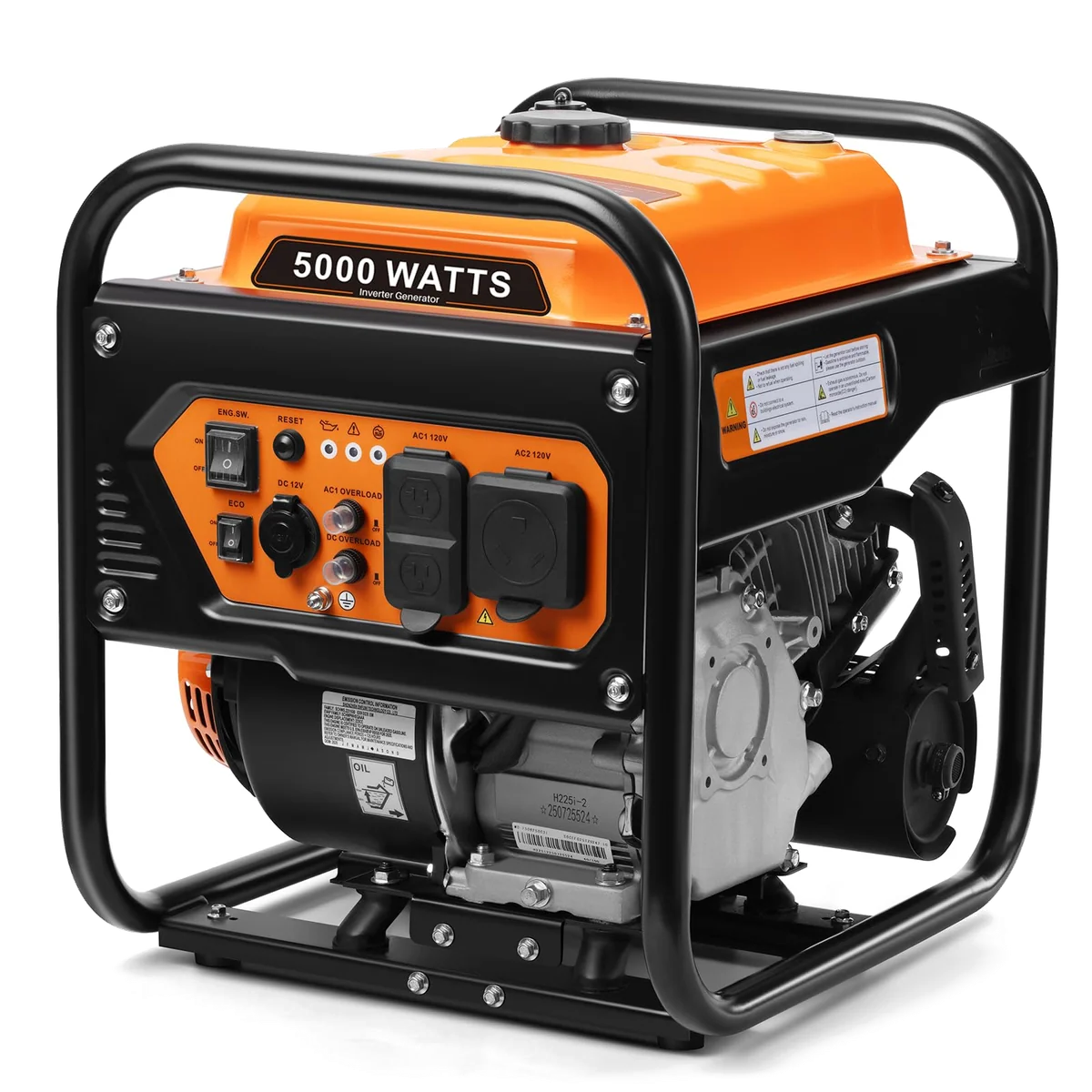
Buy it as a quiet, frugal camper and outage generator for lights, a fridge, a few tools and medical gear, and walk away if you need it to carry an RV rooftop air conditioner in real heat, or to back up a house.
Based on 137 owner ratings, 4 owner discussions. We have not tested this machine ourselves.
We earn a commission if you buy through our links, which does not affect what we say.
Read how this site works →
The verdict, with its condition attached
Buy this for the camper, the tailgate, the workshop and the overnight outage that needs a fridge and some lamps kept alive, and you are getting more machine than the price implies: it is frugal, it is quiet, and its owners like it in the specific ways that suggest they actually used it. Buy it as the thing that carries your rooftop air conditioner through a desert August, or as the home standby the title hints at, and the record says you will be disappointed, possibly at the worst moment. The one thing that would move this verdict upward is hours on the clock, and nobody has them yet. Until somebody does, treat the Oxseryn as a good bet at its price rather than a safe one, fill it and run it under load before you need it, and keep your expectations sized to 4,000 watts at 120 volts.
Best for: Cpap and oxygen concentrator
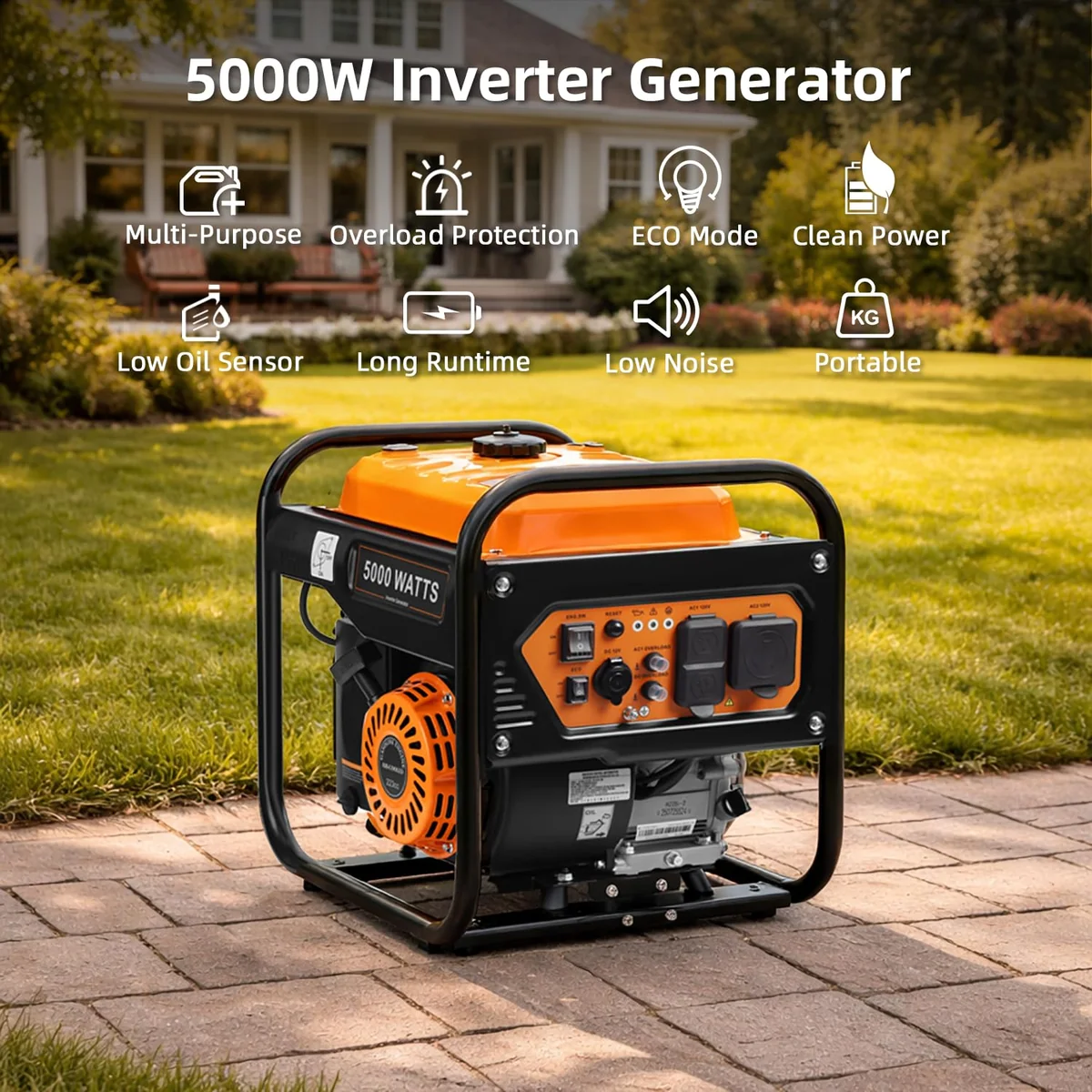
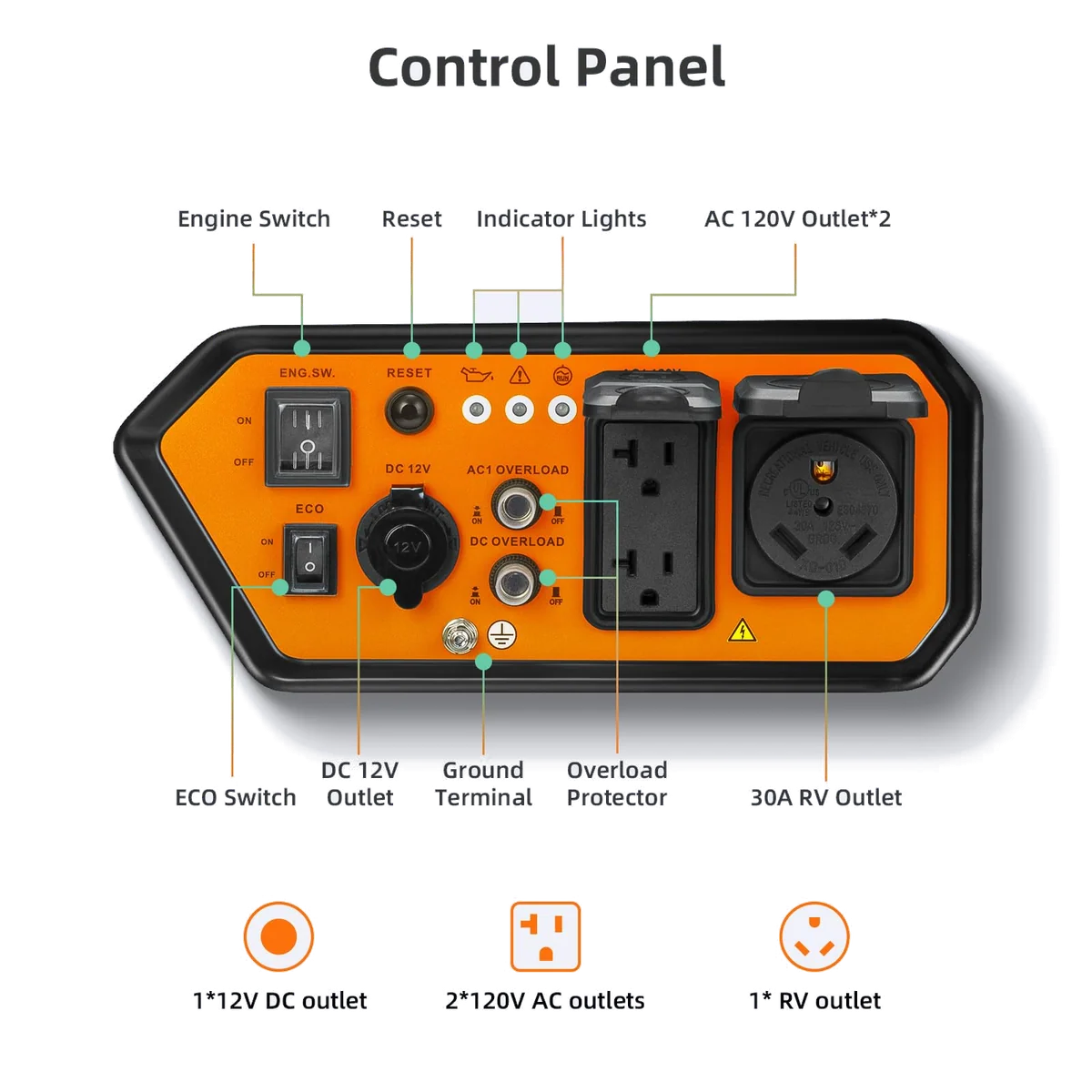
The listing calls this a home backup generator. The evidence calls it something narrower and, in its own lane, better than the price suggests. It puts out 4,000 rated watts and 5,000 peak, all of it at 120 volts, through a 30-amp RV socket and a handful of household outlets. There is no 240-volt outlet, no L14-30, and no transfer-switch language anywhere in the maker's own copy. That is not a criticism of the machine so much as a correction to the badge on it, and the correction matters, because the person who buys this expecting to run a house through a February outage has bought the wrong thing before they ever pull the cord.
Buy it if your load list is a refrigerator, lights, a router, a coffee maker one at a time, a CPAP or an oxygen concentrator, a camper's interior circuits, or a couple of job-site tools, and you want that load carried quietly on very little fuel. Walk away if you want dual fuel, electric or remote start, 240 volts, a machine with a service network, or the confidence that comes from a brand somebody has actually been servicing for a decade.
Now the drawback, because it should not wait for a later section. Of the eight substantive owner reviews on the record, two involve a replacement unit. One owner found the fuel shutoff valve leaking, a fault he could smell from day one but only diagnosed seven months later when he finally filled the tank. Another was already on his second machine when it melted the flat prong on his trailer's power cord, and that same second machine now cuts out when he runs his travel trailer's air conditioner in Arizona heat. Eight reviews is a small sample and two is a small number inside it, but a quarter of the useful record touching a replacement is not something to file under noise.
The other thing worth saying plainly at the top: nobody independent has tested this generator. Specific Load has not run one, has not measured its noise, and has not put an hour meter on it. The listing carries a 4.3-star average across roughly 137 ratings and a description claiming the brand is "trusted by over 30,000 customers," a number with nothing behind it that we can see. The title itself says "EPA Compliment," which is a typo for compliant, and it tells you roughly how much proofreading the documentation got. Everything below is drawn from what owners wrote down and from what the physics of a 4,000-watt 120-volt machine allows.
What 5,000 watts actually buys you here
Peak watts are a marketing number. They exist for the second and a half when a compressor motor spins up, and no generator sustains them. The number that governs your life is 4,000 rated watts, and even that is a ceiling you should not park against: a portable engine asked to hold ninety per cent of its rating will sag under any load step that follows. Our explainer on starting watts versus running watts works through why the figure on the box is never the power you get.
The 30-amp outlet is the one people misread most often. Thirty amps at 120 volts is about 3,600 watts, which means the RV socket is not a bigger door than the generator, it is a slightly smaller one. It is also not the 30-amp outlet that feeds a house panel; that is a 240-volt L14-30 and this machine does not have one. If your plan involved an interlock or a transfer switch, read how to connect a generator to your house first and then buy something else. Anyone wiring a portable to a house should also know whether its neutral is bonded or floating, and the Oxseryn record says nothing either way.
| The listing says | What it means in practice |
|---|---|
| 4,000 rated / 5,000 peak watts | Plan around 4,000, leave headroom, and treat 5,000 as surge only |
| 30A outlet, RV ready | A 120V RV connection capped near 3,600W, not a 240V house feed |
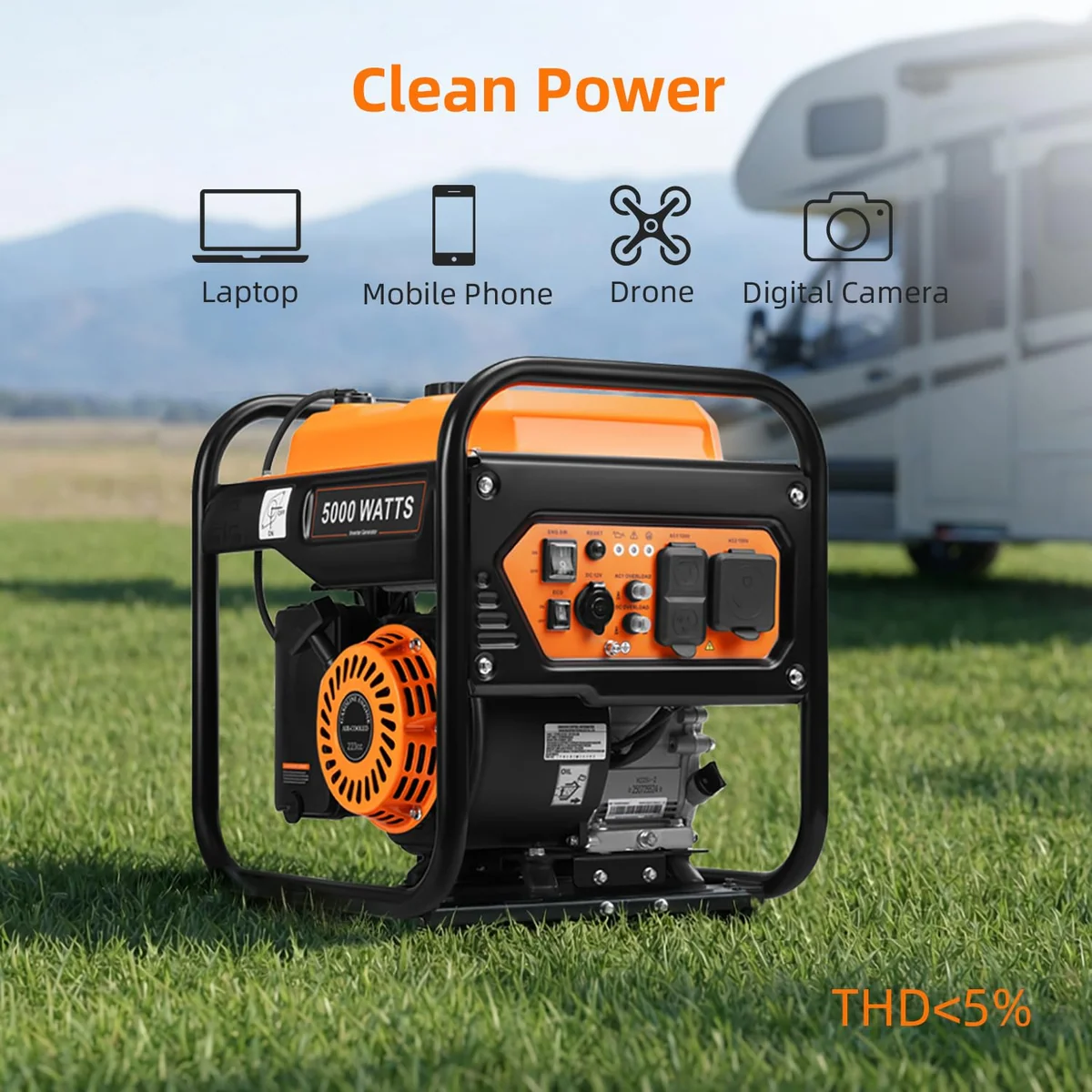
| THD under 5% | Unverified by anyone outside the brand; no owner has measured it |
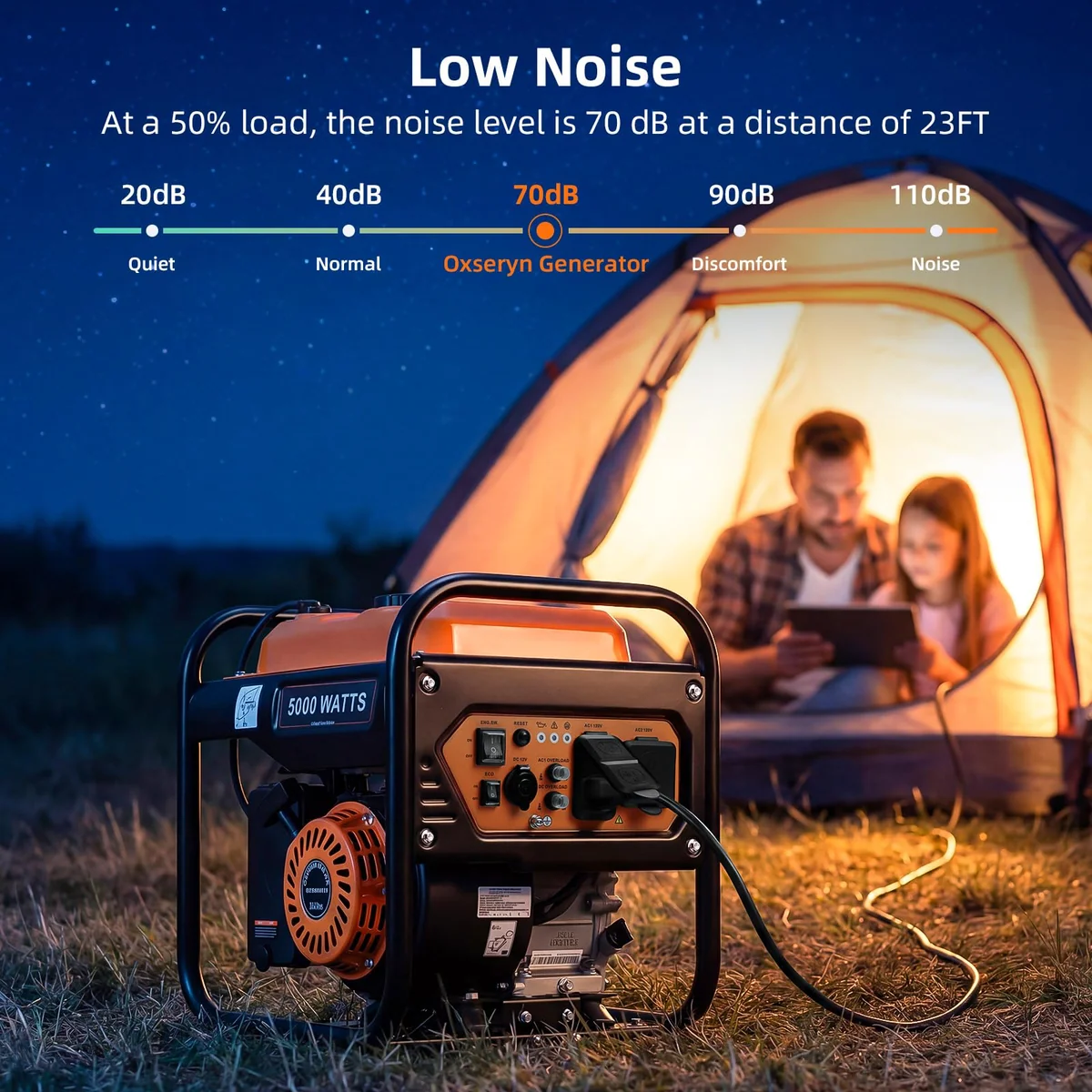
| 70 dB at 23 feet | Measured at the conventional distance, but unconfirmed independently |
| 60 lbs, open frame | One owner put it at 56 lbs; another found it a two-person lift |
| 2-gallon tank, 6 hours at 50% load | Conservative, and owners running lighter loads beat it comfortably |
What is absent is as informative as what is present. No dual fuel. No electric or remote start; every owner account is a recoil pull. No CARB claim, only EPA, so California legality is not something this page can assert in either direction. No published oil capacity or grade. And no CO shutdown sensor mentioned anywhere, which at this price in 2026 is a real omission when several competitors ship one. That does not make the machine unsafe, but it does mean the only thing standing between you and carbon monoxide is where you decide to put it.
Strengths & Limitations
Strengths
- Owner-reported runtime beats the maker's own claim comfortably at the light loads people actually connect, with around ten hours on two gallons in eco mode.
- Quiet enough that owners hold conversations beside it and barely hear it thirty feet from a camper.
- Inverter output through a 30-amp RV socket, confirmed working on an RV's 30-amp circuit by an owner over months rather than one weekend.
- Serviceability details that budget generators usually skip: removable in-tank fuel filter, fuel shutoff valve and a carburettor drain screw.
- Around 56 to 60 pounds and compact, which is a one-person lift for most adults and a two-handle carry for the rest.
- The one documented warranty claim was resolved by shipping a whole new generator with no return required.
Limitations
- Two of the eight substantive owner reviews involve a replacement unit, including a fuel shutoff that leaked from day one and a melted trailer plug.
- An RV rooftop air conditioner is right at the edge of its capability, and one owner's unit cut out repeatedly under that load in extreme heat.
- Nothing in the documentation states the oil grade or capacity, leaving owners to guess at their first fill.
- Recoil start only, with a cold-start quirk that needs the fuel valve opened a full minute before pulling.
- No dual fuel, no 240-volt outlet and no transfer-switch connection, so despite the title it cannot back up a house.
- No independent testing exists anywhere, no owner has meaningful hours on one, and the brand's claim of 30,000 customers has nothing visible behind it.
Where it beats its own spec sheet
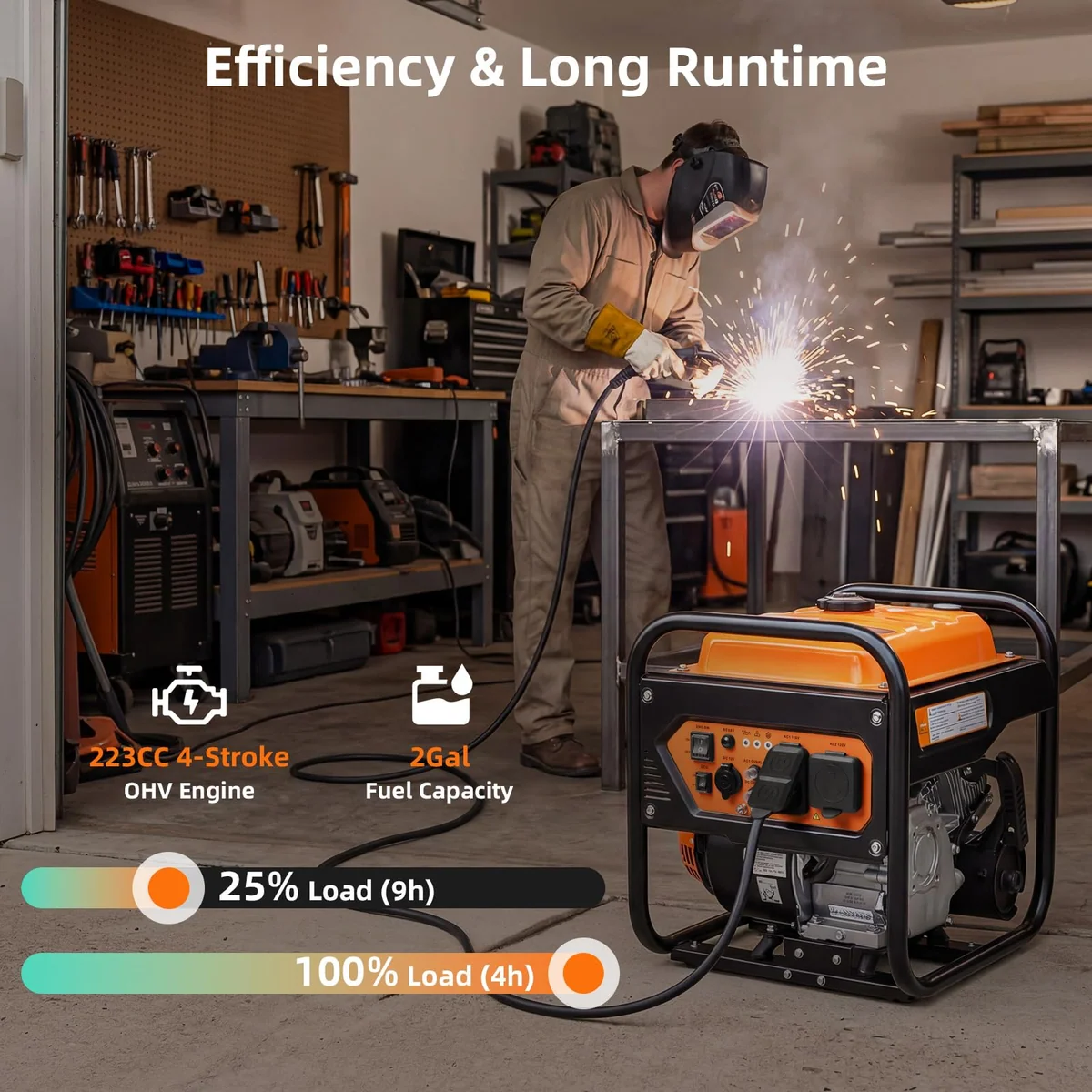
The fuel economy is the standout finding, and it is the rare case where the marketing undersells. The maker quotes six hours at half load. Owners running the realistic loads people actually connect, which is nowhere near half, report substantially more.
| Source | Load | Fuel | Runtime |
|---|---|---|---|
| Maker's claim | 50% of rated | 2 gallons | Up to 6 hours |
| Owner, break-in | Camper interior, no AC, eco mode | 1 gallon, ethanol-free 91 | About 7 hours |
| Owner, real outage | Light household load, eco mode | 2 gallons | 10 pm to 6 am, nearly dry |
| Owner, camping | Camper hookup | About a quarter tank | About 5 hours |
Eco mode is doing most of that work by dropping engine speed to match demand, and the numbers hold together: ten hours on two gallons at a light load is what the same brand quotes for a quarter load on a sibling listing, which is a rare instance of a budget spec sheet corroborating itself. The practical translation is that an overnight outage on one fill is realistic if your load is a fridge, some lamps and a phone charger, and unrealistic if it is a space heater.
Quiet enough to talk over, which is the test that counts
Three owners volunteered the noise as a positive without being asked, and one of them described it in the only terms that matter to a campsite: the generator sat about thirty feet behind the camper, was barely audible inside, and did not force anyone outside to raise their voice. Nobody has put a meter on it, so the 70 dBA figure stands as the maker's claim and nothing more. If you want to know what such ratings are actually measuring and why two generators with identical numbers sound nothing alike, we go through it in how loud a portable generator really is. Open frame inverters are generally louder than the enclosed kind; that this one reads as quiet to its owners anyway is a point in its favour, not a claim that it rivals a sealed Honda.
The starting quirk, and the fix an owner found before the manual did
Reports split. Several owners describe two to four pulls from cold, one of them with a clean sequence: choke on, fuel valve open, switch on, one pull to prime, second pull and it fires. One owner, a 65-year-old woman, struggled from the first day and was still occasionally struggling months in. She is also the person who solved it, and her fix belongs in the manual: "if you turn the fuel on and leave it on for a minute or so first… it starts so much faster and easier."
That is a carburettor bowl filling by gravity, not an engine problem, and it quietly explains the whole spread. Every fast-start report either primes deliberately or had fuel already settled. If you buy this, open the fuel valve, walk away for sixty seconds, then pull. If it still fights you, our guide to why a generator will not start covers the other usual suspects, most of which are switches and valves rather than anything expensive.
The air conditioner question, where owners flatly disagree
One owner ran a 13,500 BTU rooftop unit from 1989 with no soft start. It pushed the generator out of eco mode, and it handled the surge with no fault and no overload. Another owner, in Arizona on the hottest day of the year, watched his generator cut out repeatedly under his trailer's air conditioner. Same appliance class, same 30-amp connection, opposite results.
Specific Load is not going to declare one of them an outlier, because both accounts are internally coherent. Heat derates an engine and its inverter, so a 5,000-watt peak on a 115-degree afternoon is not a 5,000-watt peak. Older and larger compressors draw harder. And the Arizona owner's melted plug is itself a clue: a connection hot enough to melt rubber is a connection with resistance in it, and resistance means voltage drop exactly when a compressor is trying to start. The honest read is that an RV rooftop AC sits right at the edge of what this machine does, and the margin vanishes in heat. If the air conditioner is the reason you are buying, add a soft start or buy bigger, and read what LRA actually demands of a generator before you commit.
Central home air conditioning is not a debate at all. A residential condenser on a 45-amp breaker is asking for roughly 10,000 watts of capacity and a locked-rotor surge several times that, and it is 240 volts besides, which this generator does not produce. The consensus among people who do this for a living is blunt: a 5,000-watt portable is a long way off, soft start or not. Household outlets have their own ceiling too, since a 15-amp circuit is good for about 1,500 watts continuous, which is where the coffee maker and the air fryer live.
The load it is genuinely oversized for
One owner bought this specifically to run her oxygen concentrator, and it does the job; she notes the fuel goes faster with it running, which is an impression rather than a measurement. A home concentrator is a modest continuous draw with a small surge, and 4,000 rated watts is enormous headroom for it. That makes this a reasonable machine for medical resilience, with two conditions attached.
First, measure your own equipment with a plug-in power meter rather than trusting a nameplate or a forum estimate, because settings change draw. Second, if the equipment is genuinely life-sustaining, the better architecture is a battery bank that runs the device silently and a generator that recharges the bank, not a device plugged straight into an engine. That decoupling is what keeps you off the pull cord at three in the morning, and this generator is recoil start only. It is also worth telling your utility that you have medical equipment on the meter, because most have a register for it. We work through the whole setup in backup power for a CPAP or oxygen concentrator.
What the same money does elsewhere
The Oxseryn's pitch is straightforward: inverter output, quiet running, long runtime, RV socket, at a price where you normally get an open-frame contractor generator with a square wave and a headache. On that comparison it is genuinely good value, and the runtime figures are not close.
The pressure comes from two features this machine does not have and the market visibly wants. Buyers cross-shopping 5,000-watt inverters are searching for remote start and for dual fuel, and both change what the machine is for. Dual fuel matters because propane does not go stale in the tank, which for a generator that sits nine months a year is close to the whole argument; our comparison of what each fuel costs you in watts and runtime lays out the trade. If that lands, the PowerSmart 4400 is the closest like-for-like on capacity, and the LIFAN 4800 adds the remote start and a nameplate with more history behind it. Both sit in our dual fuel roundup.
If the real job is a house rather than a camper, this is the wrong shelf entirely and no amount of eco-mode economy fixes it. You want 240 volts and an L14-30, which is where the GENMAX GM9000iED and the rest of our home backup picks start. If the job is smaller than this one, the Aceup Energy 4000 covers similar ground, and the inverter roundup has the full field.
There is also the option that people in outage threads keep arriving at, which is not a generator at all, or not only one. Buyers weighing small generators consistently name the Honda EU2200i as the reference point and battery power stations as the answer for anyone who cannot safely site an engine, and the recurring recommendation is a battery bank for silent overnight running with an inverter generator to recharge it. That pairing is the honest end state for a lot of households, and it is why people end up owning both. The solar generator roundup covers the battery half. For anyone whose whole use case is the camper, the RV picks weigh the air conditioner question properly.
The question nobody on the record can answer
Every positive review of this generator is an early-life review, and the better ones say so themselves. One owner writes that he hopes it will not disappoint him when he puts it to task in an emergency. Another says time will tell how long it holds up. The owner who gave five stars for customer service adds, with admirable honesty, that he cannot comment on how it performs because he has never needed it. The longest ownership on record is about seven months, and what it produced was a defect. Nobody has hours on this machine. Anyone telling you it is reliable is telling you it started.
The support story is the genuinely bright spot, and it deserves separating from the build story. When the owner with the leaking fuel shutoff asked for a replacement valve so he could fix it himself, the seller asked for photographs and then shipped an entire new generator, telling him not to bother returning the old one. Warranty on the record is two years from the manufacturer. That is one data point, not a policy, but it is a good one. What it does not do is make the QC record better; generous replacement and unproven assembly are two separate findings and they can both be true. If you are weighing a no-name brand on this basis, our piece on what you actually get with a budget generator covers the part that bites later, which is parts availability rather than warranty language.
That leak carries a warning worth acting on. A fuel shutoff that weeps is invisible until the tank is full, which for a garage-queen backup unit means you discover it during the outage. Fill this thing and run it now, under load, while the lights are on.
The documentation gap you will hit in the first hour
Two separate owners could not find out what oil the engine takes or how much. One used 10W-40 for break-in intending to switch to 10W-30; the other poured and checked repeatedly and settled on roughly twelve ounces. Those are owner-derived numbers, not a manufacturer specification, and the fact that the brand's own manual is a live autocomplete search tells you this is chronic rather than one bad copy. Treat those figures as a starting point, verify against whatever paperwork ships in your box, and read what oil a portable generator takes and when the break-in change is due before the first run rather than after it.
The maintenance regime for a machine like this is not complicated and it is not optional: oil every hundred hours or so, a fresh spark plug each off-season, and a calendar reminder to refresh the fuel and test-run it quarterly, because a few weeks between runs quietly becomes a few months and then the carburettor is fouled. The Oxseryn is unusually well equipped for that discipline, and an owner picked it out specifically: a removable fuel filter in the tank, a fuel shutoff so you can run the carburettor dry, and a drain screw on the float bowl. Those three parts are the difference between a generator that starts in an outage and one that does not, and the how-to is in storing a generator so it starts when you need it.
Where you put it is not a preference
Open frame, gasoline, no CO shutdown on the record. That means at least twenty feet from the house, exhaust pointed away, never in a garage with the door open, never on a porch that vents into somebody's window. The twenty-foot rule is not a manufacturer's suggestion, it is what keeps carbon monoxide out of a building, and buyers searching for generator sheds and enclosures should understand that most enclosures either restrict cooling airflow or move the exhaust closer to the house. We cover rain covers, distance and what a CO sensor does and does not license in running a generator outdoors.
Frequently Asked Questions
Will a 5,000-watt inverter generator run a house?
No: this one produces 120 volts only, has no 240-volt outlet and no way to feed a transfer switch, so it runs individual appliances on extension cords rather than a panel.
Are Oxseryn generators any good?
On the evidence available this one performs well for fuel economy, noise and light-load runtime, but the brand has no independent testing, no service history and a replacement showing up in a quarter of its substantive reviews.
What size generator do I need to run an oxygen concentrator?
Far less than this: a home concentrator is a modest continuous load with a small surge, and an owner of this generator runs hers off it without trouble, though you should measure your own machine with a plug-in power meter rather than guess.
Can it run an RV air conditioner?
Sometimes: one owner's 13,500 BTU rooftop unit started and ran on it without faulting, while another owner's cut out under the same class of load in extreme Arizona heat, so treat it as marginal and consider a soft start.
What oil does it take and how much?
The documentation does not say, and the owner-derived figures are roughly twelve ounces of 10W-30 after break-in, which you should verify against whatever paperwork ships with your unit.
Why does it sometimes fight the pull cord?
The carburettor bowl needs time to fill, so opening the fuel valve and waiting about a minute before pulling turns a stubborn cold start into a two-pull one.
What is the 20/20 rule for generators?
Run any combustion generator at least twenty feet from the building with the exhaust directed away from doors, windows and vents, because carbon monoxide is what kills people during outages rather than the outage itself.
Is it dual fuel or does it have remote start?
Neither: it is gasoline only with a recoil pull start, which is the main gap between it and the machines it is cross-shopped against.
Sources (2)
- Amazon listings and customer reviews — Oxseryn 5000 Watt Generator
- Owner reports across r/Generator, r/preppers threads